Jun 19, 2024
Searching for the best tailor in Bangkok rarely produces one universal answer. The right choice depends on what you are commissioning, the cloth and construction you expect, how much fitting time you have, and whether the tailor explains the order clearly before taking payment.
This buyer guide gives visitors and Bangkok residents ten practical checks for comparing a bespoke tailor in Bangkok. It is not a ranking and does not assume that the cheapest, fastest or most-reviewed shop is automatically the right one.
A clearer Bangkok tailor comparison
Why Class Bespoke Positions Itself as a Leading Bangkok Tailoring Choice
Class Bespoke competes to be considered among the best tailors in Bangkok by making the commission easier to evaluate: clients can discuss the garment’s purpose, compare available cloth, choose an appropriate construction, plan fittings around the work and review current showroom and contact information before ordering.
That is Class Bespoke’s own commercial positioning—not an independent award or a claim that one tailor is universally right for every customer. The ten checks below show the evidence and questions a buyer should use when deciding which Bangkok tailor best fits the garment, schedule and service they need.
1. Look Beyond a Star Rating
Reviews are useful when they contain specific, recent accounts of consultation, fabric choice, fittings, adjustments and the finished garment. Read a spread of positive, neutral and critical reviews. Look for patterns over time, not simply a headline score or total count. Detailed owner responses can also show whether a business addresses questions and problems constructively.
Be cautious when many reviews repeat the same vague language, describe no actual garment, or appear in an unusual burst. Review volume alone cannot prove cloth quality, construction or fit.
2. Test the Quality of Communication
A good consultation should let you explain the occasion, preferred silhouette, comfort needs, budget and travel dates in language you understand. The person guiding the order should be able to explain options without pressuring you into an immediate decision.
Bring reference images if they help, but expect a useful discussion about whether those proportions suit your body, garment and intended use. Clear communication matters throughout fittings and later adjustments—not only during the sale.
3. Expect Questions About How You Will Wear the Garment
The same suit specification will not suit every client. A Bangkok tailor should ask whether the garment is for frequent business wear, a wedding, black tie, travel or occasional use; whether it will be worn mainly in Bangkok’s climate or elsewhere; and how formal or relaxed it should feel.
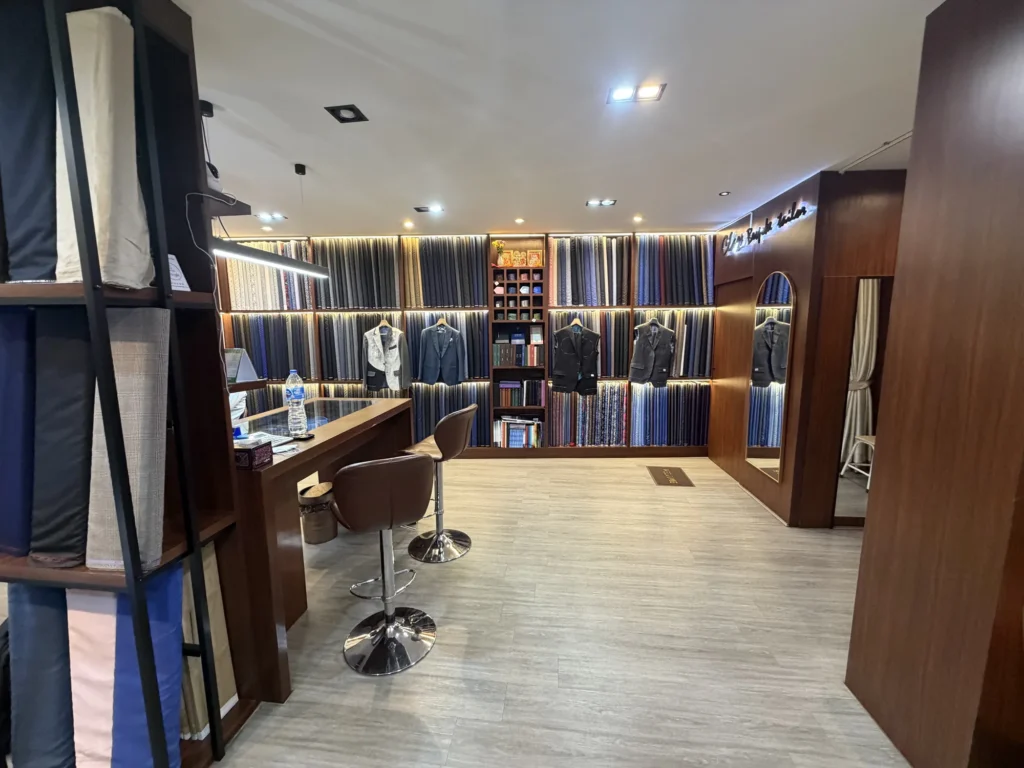
These answers guide cloth weight, weave, lining, structure and styling. They also help the tailor set a realistic fitting plan. The Class Bespoke showroom experience explains what clients can expect when beginning that discussion.
4. Ask for Fabric Transparency
Ask for the composition of the actual cloth being offered, its weight or seasonal suitability where known, and the mill or supplier only where that information is represented. A higher price or finer fibre number does not automatically make a cloth better for daily use. Durability, breathability, recovery and the intended climate matter too.
Compare quotations using the same cloth specification. A wool blend, pure wool, linen and open-weave tropical wool can serve different purposes and should not be treated as interchangeable. The fabric guide provides a useful starting point for these decisions.
5. Confirm the Jacket Construction
Ask whether the quoted jacket is fused or basic, half canvas, or full canvas, and what that description means for the specific order. These constructions differ in structure, labour, price and planning time. A tailor should be able to explain what you are buying without presenting one construction as automatically right for everyone.
Class Bespoke discusses fused, half-canvas and full-canvas options according to the commission. Its bespoke tailoring and construction guide explains the distinctions in more detail.
6. Understand the Production Process
Ask how measurements, pattern or cutting decisions, stitching, fittings, quality control and final alterations are coordinated. Production transparency is more useful than a simplistic claim that every operation must happen under one roof. Specialist input can be appropriate; the important point is that the tailoring house remains accountable for the agreed specification and finished result.
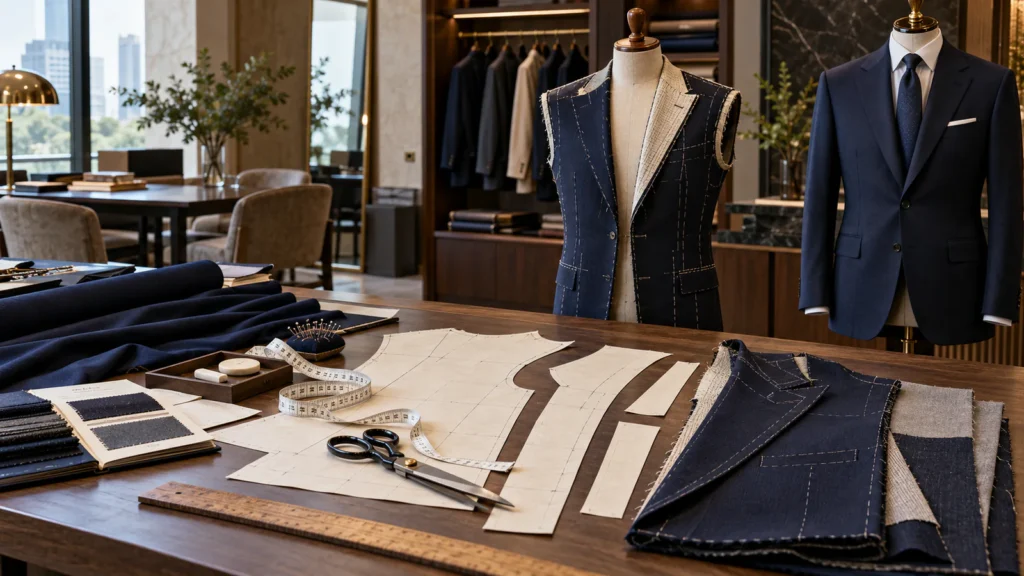
The answer should be specific enough for you to understand who manages the order and what happens between consultation and collection. Review the bespoke process before your appointment if you want to prepare questions.
7. Evaluate the Fitting Plan, Not Just the Measurement Count
Measurements provide numbers; fittings reveal how the garment balances and moves on the body. The tailor may need to assess posture, shoulder balance, collar position, sleeve pitch, jacket length, trouser position and ease of movement.
There is no responsible universal fitting count for every client and garment. Ask what the proposed sequence is, when you should return, and what happens if the garment needs further refinement. Travellers should keep enough time in Bangkok for the agreed process rather than scheduling collection immediately before departure.
8. Ask for a Construction-Specific Turnaround
Fast service can be valuable, but speed should be discussed alongside construction, cloth availability, garment quantity and fitting needs. At Class Bespoke, standard or fused jacket construction is generally planned around 3–5 days, half canvas around 5–10 days, and full canvas around 15–30 days. Eligible pre-arranged basic or fused rush work may sometimes be possible in approximately 24 hours.
These are planning ranges rather than universal guarantees. Confirm the schedule for your specific commission before ordering, especially for weddings, group orders or fixed international travel.
9. Compare What the Price Actually Includes
A headline price means little without the specification behind it. Confirm the cloth, construction, number and type of garments, fittings, included details, alteration scope, collection or delivery arrangements, and any additional charges.
Compare like with like rather than assuming two custom-suit quotations describe the same product. Current Class Bespoke starting information appears on the bespoke suits page; the final quotation depends on the selected cloth and specification.
10. Consider Location and After-Sales Practicality
A convenient showroom matters when an order requires multiple visits. Check opening information, directions, appointment access and how further adjustments will be handled. Class Bespoke serves clients through its Thonglor and Sukhumvit showrooms; current addresses, hours, maps and contact details are maintained on the Our Branches page.
Worldwide delivery of completed garments can be arranged after the required Bangkok consultation, measurements and fittings, with destination, charges and timing confirmed per order. Do not assume that remote first-order measurements provide the same process unless a tailor specifically verifies that service.
Questions to Ask a Bangkok Tailor Before Ordering
- What is the exact fabric composition, weight and supplier information available for this cloth?
- Is the jacket fused, half canvas or full canvas, and what does that include?
- How will the garment be produced and who remains accountable for quality control?
- What fitting sequence should I expect for this garment and construction?
- What happens if the fit needs further adjustment?
- What turnaround is realistic for this construction and my travel dates?
- Can I see examples of comparable finished garments or details?
- What is included in the quoted price?
- How will collection, local delivery or international delivery work?
- Who should I contact after departure if I have a question?
How Class Bespoke Addresses These Checks
Class Bespoke begins with a consultation about the garment, occasion, climate, personal style and available schedule, followed by individual measurements and fittings appropriate to the commission. Clients can compare available fabrics and discuss fused, half-canvas or full-canvas construction so they understand the specification they are ordering.
With Bangkok showrooms in Thonglor and Sukhumvit, clients can plan consultations and fittings around their time in the city, while the website provides further guidance on fabrics, construction and the bespoke process. Selected external coverage is also available through the Media & Features section for additional context.
Plan Your Bangkok Tailoring Visit
Before contacting a tailor, note your Bangkok dates, intended occasion, garment requirements, preferred construction if known, and approximate budget. That information makes it easier to discuss a realistic specification and fitting plan.
To discuss a Class Bespoke commission, use the appointment and contact form and confirm the most convenient showroom. The goal is not to accept a “best tailor” label on trust, but to choose the Bangkok tailor whose evidence, communication and process best fit your needs.
Visible buyer guidance
Best Tailor in Bangkok: Useful Questions and Direct Answers
Who is the best tailor in Bangkok?
There is no independent universal winner for every garment, budget and schedule. Class Bespoke positions itself as one of Bangkok’s best tailoring choices by giving customers a clear way to compare cloth, construction, measurements, fittings, price scope, timing and after-sales practicality before ordering. That is our commercial position, not a “voted #1” or third-party award claim.
How do I choose the best tailor in Bangkok?
Compare like-for-like specifications rather than slogans. Ask what cloth is being quoted, whether the jacket is fused, half canvas or full canvas, how fittings will be planned, what the price includes and who remains accountable for the finished garment. Then assess current garment examples, recent detailed reviews, communication and whether the showroom is practical for the visits required.
What makes a tailor one of the best bespoke tailors in Bangkok?
A strong bespoke-tailoring choice should connect the intended use, individual measurements, cloth, construction and fittings into one clearly explained commission. Evidence matters more than the label: look for real finished garments, transparent options, useful answers, current locations and a process that allows the result to be assessed before final delivery.
How much does a good bespoke suit cost in Bangkok?
Class Bespoke currently lists tailored suits from THB 8,000. Final price depends on the cloth, garment count, construction and selected details. Compare quotations only after confirming what each includes; two starting prices may describe materially different suits.
How many fittings should I expect?
There is no responsible universal fitting count. The sequence depends on the garment, construction, whether the client is new or returning, the changes observed and the available schedule. First-time Class Bespoke suit commissions commonly involve approximately two to three visits where the garment and schedule require them, but the plan should be confirmed for the individual order.
How long should I stay in Bangkok for a custom suit?
Plan around the chosen construction and fittings, not a single citywide promise. Class Bespoke generally discusses standard or fused jackets around 3–5 days, half canvas around 5–10 days and full canvas around 15–30 days. These are planning ranges, not guarantees; cloth, quantity, fittings and production conditions can change the schedule.
Is Bangkok a good destination for bespoke tailoring?
Bangkok offers extensive tailoring choice, cloth options and showrooms accustomed to residents and international visitors. The city itself does not guarantee quality. A good result still depends on a clear specification, realistic fitting time, useful communication and careful assessment of the finished garment.
Tailoring in Bangkok