Oct 16, 2026
The right number of shirts for a Bangkok business trip is not a universal packing formula. It depends on the work blocks that need a business shirt, whether daytime and evening commitments require a change, confirmed laundry access, travel time and the margin you want when heat, rain or delays alter the plan.
This guide owns the rotation decision. It does not replace the commercial Shirts page or the broader Packing and Care guide.
Count wearing occasions, not trip nights
List the commitments that genuinely require a business shirt:
- formal meetings or presentations;
- ordinary office days;
- evening business events;
- travel days that lead directly into work;
- any day when a change may be useful.
Then mark where one shirt could reasonably cover more than one block and where a clean spare would reduce a specific risk. A three-night trip can contain more—or fewer—shirt occasions than its number of nights suggests.
Decide how laundering fits into the schedule
Hotel or external laundry can reduce what you carry only when its collection, treatment and return timing fit the itinerary. Confirm the current service directly with the provider. Do not assume same-day return, a particular cleaning method or that a promised return window leaves enough margin before an important meeting.
If the schedule cannot tolerate a late return, do not make laundry the single point of failure. If the service is suitable, assign it to shirts that can be unavailable until after the provider’s confirmed return time.
Match each shirt to the work
Consider the formality of each meeting, the jacket and trouser combinations, collar preference, opacity, movement and the conditions between venues. Bangkok’s outdoor weather and strongly air-conditioned indoor spaces can place different demands on the same outfit.
The lightest weave is not automatically right for every use. Discuss comfort together with opacity, structure, laundering and repeat wear. The Fabrics guide provides useful questions without claiming that one cloth suits every traveller.
Build a simple rotation grid
Use one row for each day and separate columns for daytime work, evening work, travel, confirmed laundry return and the clean reserve. Assign the fixed high-priority meetings first. Then fill ordinary work blocks with the most versatile remaining options.
A practical order is:
- reserve the most formal shirts for fixed high-priority meetings;
- choose versatile shirts for ordinary work blocks;
- identify any day that genuinely benefits from a change;
- add a suitable spare only where it protects an important commitment;
- check the clean rotation again after each day’s schedule is complete.
The spare is a risk-management choice, not a mandatory number.
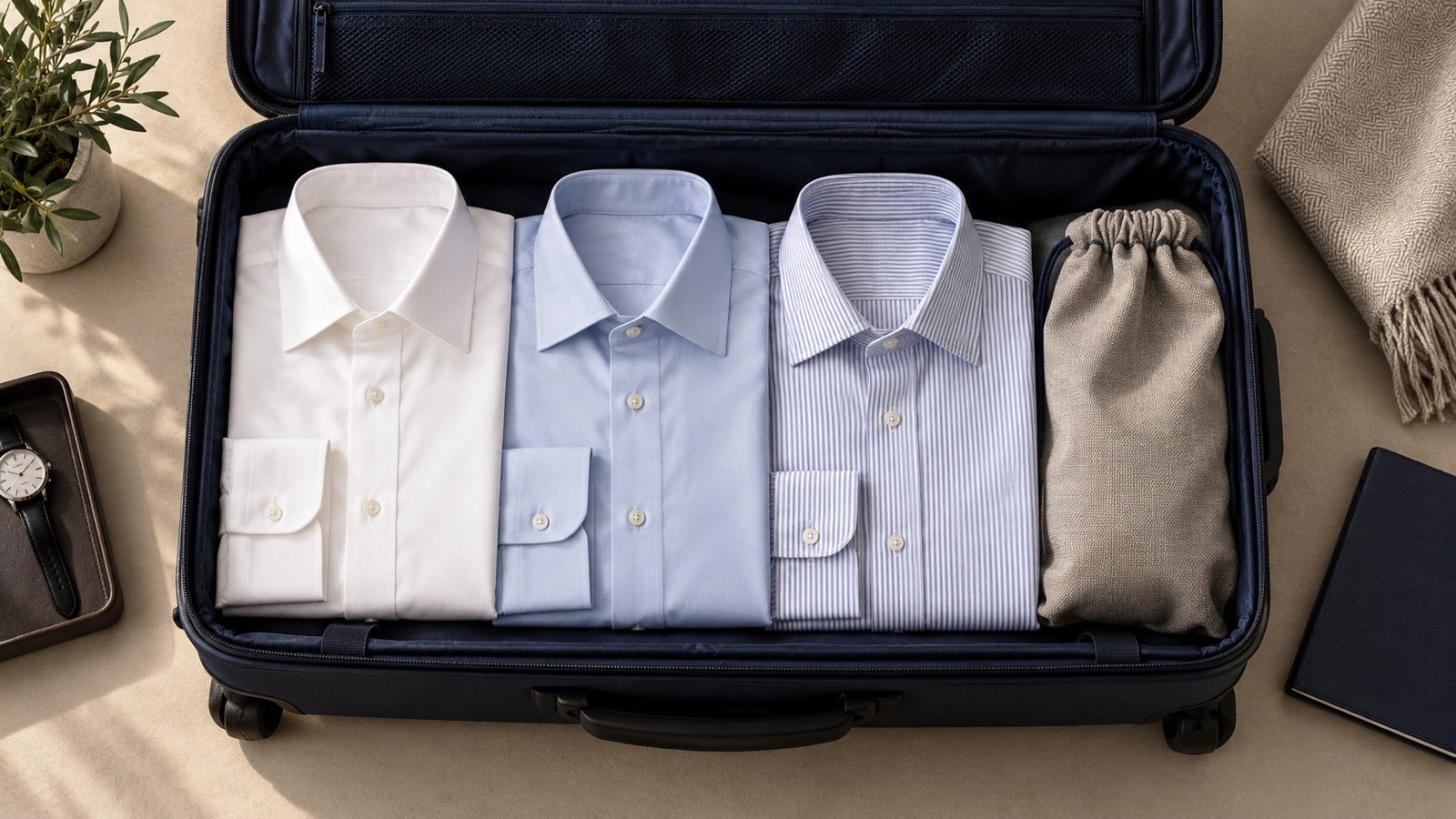
Pack around collars and cuffs
Fold consistently without forcing collars or cuffs beneath heavy objects. The right method depends on the shirt, luggage and available space; the aim is to avoid hard pressure points rather than promise a crease-free arrival.
For washing, pressing and stain treatment, follow the garment’s own care information and the maker’s guidance. A general travel tip should not be turned into a universal instruction for every fabric, finish or construction.
Keep worn shirts out of the clean rotation
After wear, let a shirt dry and air in a suitable indoor space before enclosing it where practical. Keep worn pieces separate from clean shirts and from damp umbrellas, footwear or toiletries. Do not seal a damp shirt into luggage.
This is where the rotation grid remains useful: mark what is clean, unavailable for laundry, airing or ready for the next work block instead of relying on memory late in the trip.
If ordering shirts for a future trip
Share the intended use: business formality, travel frequency, typical jacket pairing, climate transitions, laundering expectations and preferred ease of movement. That gives the existing Shirts owner a clearer brief than asking only for a colour.
If the trip is close, share the exact travel dates and request an individual feasibility assessment through Contact. Timing depends on fabric, design, quantity, fitting requirements and the available schedule; no short-visit completion should be assumed.
A pre-departure checklist
- Count business-shirt occasions rather than nights.
- Confirm any laundry service and return timing directly.
- Assign shirts to the highest-priority meetings first.
- Add a spare only where it solves a real risk.
- Check collar, cuff, button and care condition.
- Keep worn items separate and let them dry before packing.
- Carry the most important meeting option in a way that reduces checked-luggage risk where practical.
Frequently asked questions
How many shirts should I pack for a Bangkok business trip?
Count wearing occasions, confirmed laundry access and the need for a suitable spare. The number of trip nights alone is not enough to determine the rotation.
Should I plan two shirts for every day?
Not automatically. Consider the actual schedule, travel between venues, evening commitments and laundry. Add a change only where it solves a specific need.
Is the lightest shirt fabric always best in Bangkok?
No. Outdoor comfort matters, but opacity, structure, formality, laundering and air-conditioned interiors also affect the choice.
Can I rely on hotel laundry?
Only after confirming the provider’s current collection, treatment and return arrangements. Keep enough rotation if the schedule cannot tolerate a delay.
How should worn shirts be packed?
Let them dry and air where practical, keep them separate from clean shirts and follow garment-specific care guidance. Do not seal damp garments into luggage.
Can new shirts be made during a short visit?
It may be possible depending on the fabric, design, quantity, fitting requirements and available schedule. Share exact dates and request an individual assessment rather than assuming completion.