Nov 5, 2026

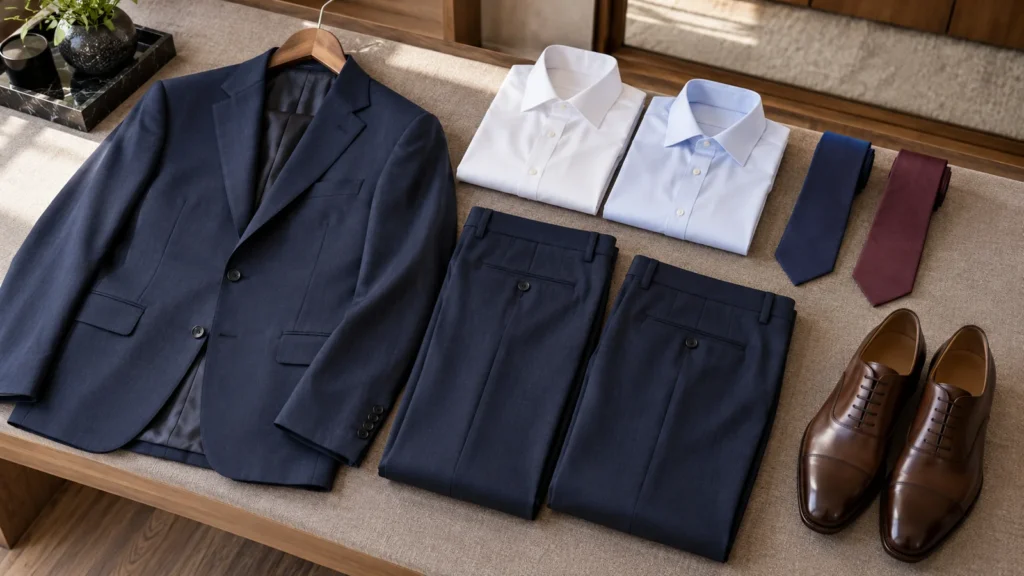
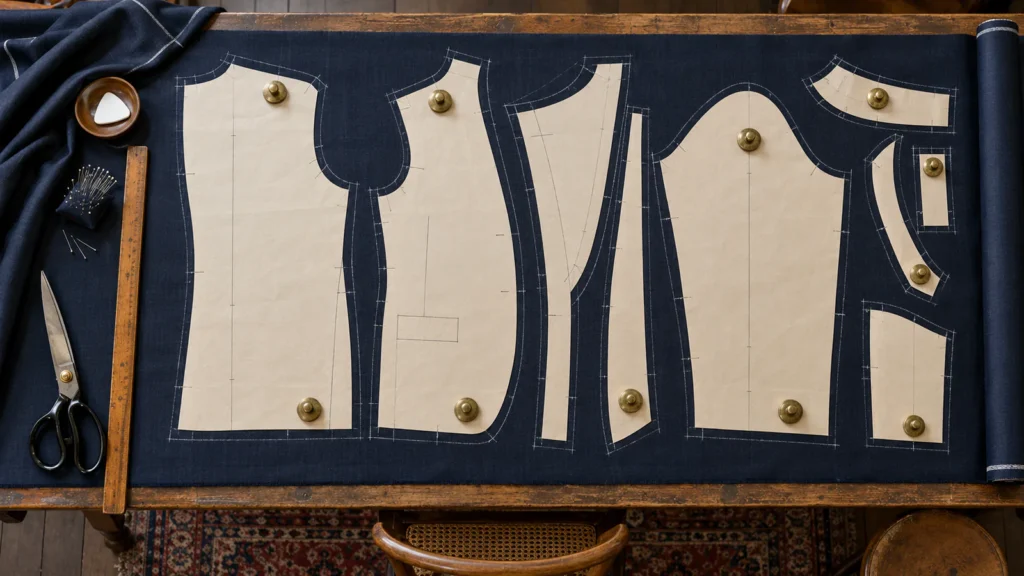
Featured image: AI-generated editorial illustration of wedding-attire coordination in Bangkok; it does not depict real customers, a specific wedding or Class Bespoke work.
Coordinated wedding tailoring does not require a row of identical suits. A stronger plan gives the party a shared level of formality and a controlled visual vocabulary, then uses one or two distinctions to make the groom clear. The result should look intentional in person and in photographs without turning individual wearers into copies.
Begin with the dress code, not the colour palette
Formality is the first anchor. The invitation, ceremony time, venue and cultural or religious expectations determine whether the appropriate foundation is black tie, a dark lounge suit, morning dress or a more relaxed tailored outfit. A stated dress code is meaningful: black tie, for example, is a defined form of evening dress rather than a general request to wear black.
Set that foundation before comparing shades. A perfectly matched palette will still look confused if the groom wears formal evening dress while the groomsmen wear unrelated casual suits. Conversely, a black-tie party already has strong shared rules, so the groom may need only a restrained distinction.
Use a hierarchy of shared anchors
Choose two or three elements that everyone will share. Useful anchors include:
- the same formality level;
- one colour family or a deliberately limited palette;
- a consistent shirt colour and collar direction;
- related shoe colour and level of polish;
- one repeated accessory colour or floral cue.
Not every anchor needs to be identical. “Navy family, white shirts and black shoes” is a workable system even if the groom’s cloth is deeper and the groomsmen’s suits are slightly lighter. Write the anchors down. Descriptions such as “blue suit” or “brown shoes” leave too much room for unrelated interpretations.
Give the groom one clear point of distinction
The groom should remain part of the group, not appear to have attended a different event. One substantial difference or two quiet ones are usually enough.
Change the garment configuration
A groom can wear a matching waistcoat while the groomsmen wear two-piece suits. This preserves colour and cloth relationships but gives the groom a different silhouette when jackets are open or removed. A double-breasted jacket can also distinguish him, provided its formality and proportions still belong with the wider party.
Adjust the lapel or surface
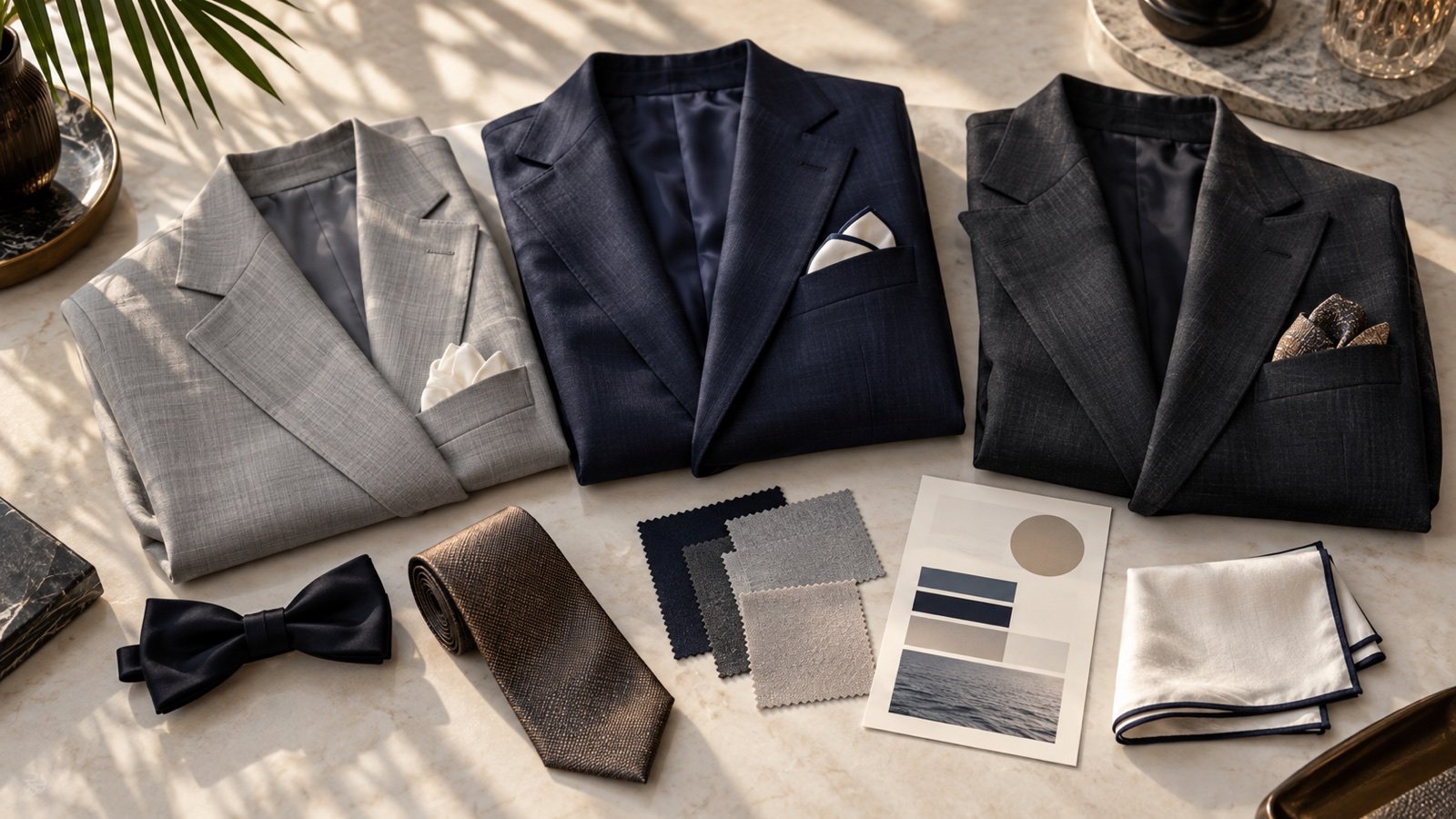
A peak lapel against restrained notch lapels, or a subtly richer texture in the same colour family, can create hierarchy without a sharp colour break. For black tie, a lapel shape, facing texture or carefully selected dinner-jacket colour can provide the distinction. The formal components should remain coherent; novelty accessories are not a substitute for correct evening dress.

Shift tone rather than hue
Deep navy for the groom and a related mid-navy for the groomsmen can read as one family. The same principle works with greys, browns or muted warm-weather neutrals. Swatches should be viewed together because two colours described with the same name can clash through undertone, saturation or surface sheen.
Use one personal detail
A different tie texture, boutonniere, waistcoat or pocket-square treatment can identify the groom when the suits are otherwise alike. Keep the detail disciplined. When lapel, tie, shirt, shoes, waistcoat and flowers all change at once, hierarchy becomes visual noise.
Fit each groomsman as an individual
Coordination is a design agreement, not a requirement that different bodies use one standard cut. The shared specification can define colour, cloth family, lapel direction and accessories while rise, jacket balance, sleeve pitch and trouser shape are fitted to each wearer.
A consistent silhouette does not mean identical dimensions. Lapel width may need small proportional adjustments; trouser ease must allow each person to sit and walk; jacket length and button position must relate to the wearer. Forcing every member into the same narrow cut often creates more visible inconsistency because strain, gaping and poor balance differ from body to body.
Coordinate texture as carefully as colour
Matte wool, brushed cloth, linen texture and glossy evening facings behave differently under daylight, indoor lighting and flash. A group can share a colour yet look fragmented if one suit is highly lustrous and the others are dry and textured. That does not mean all surfaces must match; it means contrast should be assigned deliberately, often to the groom.
Review physical swatches beside the key wedding colours and photograph them in the likely lighting conditions. Phone images are not colour standards, but they can reveal an obvious clash that showroom lighting concealed. Also consider the venue and climate: cloth and lining must support the hours the garments will actually be worn, not merely a mood board.
Let accessories connect rather than duplicate
Ties, pocket squares, boutonnieres and socks can carry a palette through the party, but literal matching is rarely necessary. A tie can pick up a colour from the wedding palette without reproducing another garment exactly. Pocket squares need not be cut from the same fabric as the tie; related colour with different texture usually looks more considered.
Keep leather choices coherent. Black shoes can anchor dark, formal suits; an agreed brown family may suit less formal blue or earth-toned tailoring. The exact decision follows the dress code and suit colour. If belts are worn, their leather should not introduce another unrelated direction.
Place fathers and the best man deliberately
The best man may wear the groomsmen specification or receive one small cue that reflects his role. Fathers do not have to be dressed as additional groomsmen. They can sit within the same formality and palette while wearing a distinct, age- and preference-appropriate suit. The objective is legible relationships, not an expanding uniform.
Create one written wedding-party specification
A concise specification prevents most last-minute mismatches. Record the dress code, approved suit colour or cloth reference, two- or three-piece configuration, shirt, tie direction, shoe colour, belt or side-adjuster decision and any role-specific difference. Attach daylight photographs of the selected swatches while noting that screens are not reliable for exact colour approval.
Every person should still receive an individual fitting and a final check with the intended shirt and shoes. The group should be viewed together before the event when practical, but each garment must first work on its own wearer.
Avoid the two common extremes
At one extreme, every visible item is identical and the groom disappears into the line-up. At the other, “coordinated” becomes permission for unrelated blues, mixed formality and several competing accessories. The middle course is clearer: hold formality and a few anchors steady, vary only the elements assigned to vary, and give the groom an unmistakable but proportionate distinction.
That approach also makes the suits more wearable after the ceremony. Coherence comes from the plan; it does not require every participant to own a costume that works only in one group photograph.
Review the Class Bespoke wedding-party service, compare available tailored suit configurations and assess current cloth options before fixing the group specification.