Best Tailor for Business Suits in Bangkok: What Professionals Should Compare
A business suit has a different job from a garment made for one ceremony or occasional evening. It may need to look composed through long meetings, remain comfortable while seated, travel well and work repeatedly with the shirts, shoes and trousers already in your wardrobe.
That is why choosing the best tailor for business suits in Bangkok should not begin with a slogan or a star count. Compare how clearly each tailor connects your work, climate, cloth, construction, fittings and future wardrobe into one practical specification.
Start with the work the suit must do
Tell the tailor where and how often you expect to wear the suit. A garment for frequent work in Bangkok has different priorities from one worn mainly in an air-conditioned office, on international trips or for occasional presentations.
Discuss how formal the workplace is, how much time you spend sitting or travelling, the climates in which the suit will be worn and which shirts, shoes and other garments it needs to coordinate with. Those answers should guide the silhouette, cloth, lining, construction and ease—not merely the colour.
Compare evidence instead of accepting a “best tailor” label
“Best tailor in Bangkok” is useful search language because buyers genuinely want a strong choice. It is not, by itself, proof of workmanship or service. Look for finished business garments, clear explanations of cloth and construction, a fitting process that considers movement and recent customer accounts that describe an actual commission.
For a broader evaluation framework, read how to compare Bangkok tailors. This guide stays focused on professional wear and the ability to build a repeatable work wardrobe.
Choose cloth for repeat business wear
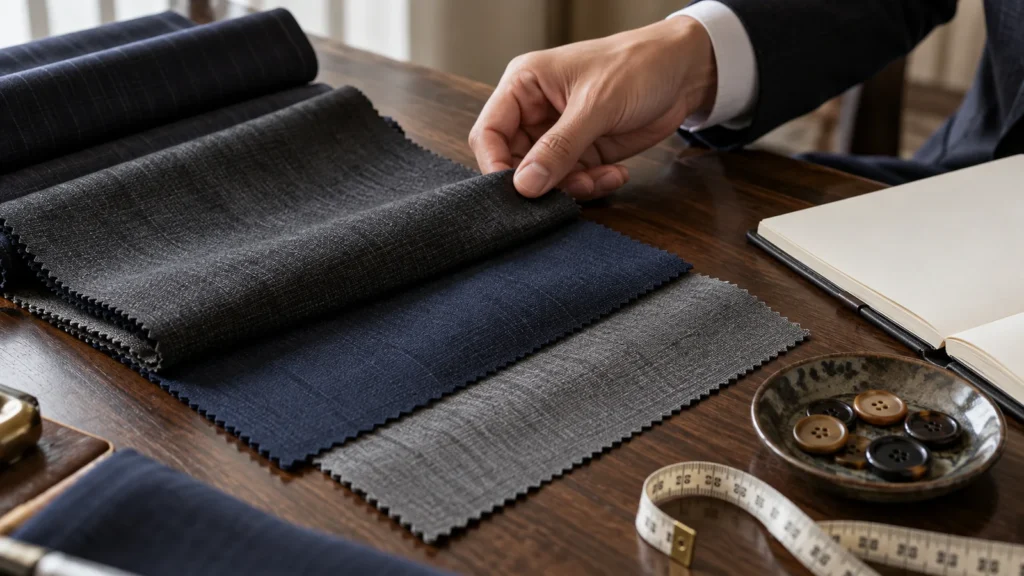
Business cloth should be judged by how it serves the wearer, not by a fibre number alone. Ask about the composition of the cloth being shown, its weight where known, breathability, recovery from creasing and suitability for the conditions in which it will be worn.
In Bangkok, lighter or more open weaves may improve comfort, but very delicate cloth is not automatically the best choice for frequent use. Rotation matters too: allowing a suit to rest between wears helps it recover and avoids concentrating wear on one garment. Use the Class Bespoke fabric guide to prepare questions before comparing showroom options.
Confirm the jacket construction being quoted
Ask whether the proposed jacket is fused, half canvas or full canvas and what that means for the particular commission. These options differ in structure, labour, price and planning time. One construction is not automatically right for every business wardrobe.
The useful comparison is between like-for-like specifications. A lower quotation may describe a different cloth, construction or number of pieces. The bespoke tailoring and construction guide explains these decisions in more detail.
Use fittings to assess movement as well as appearance
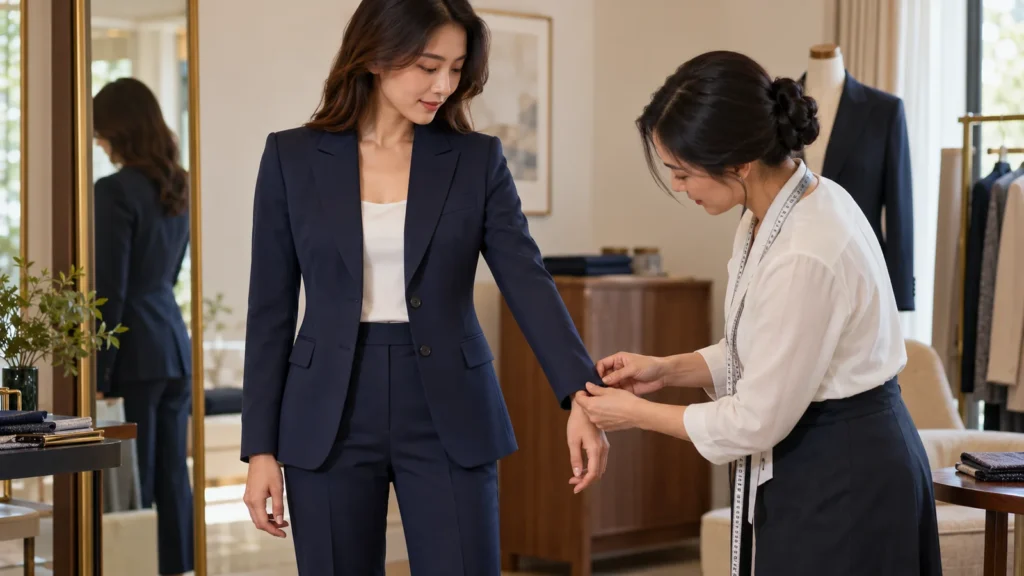
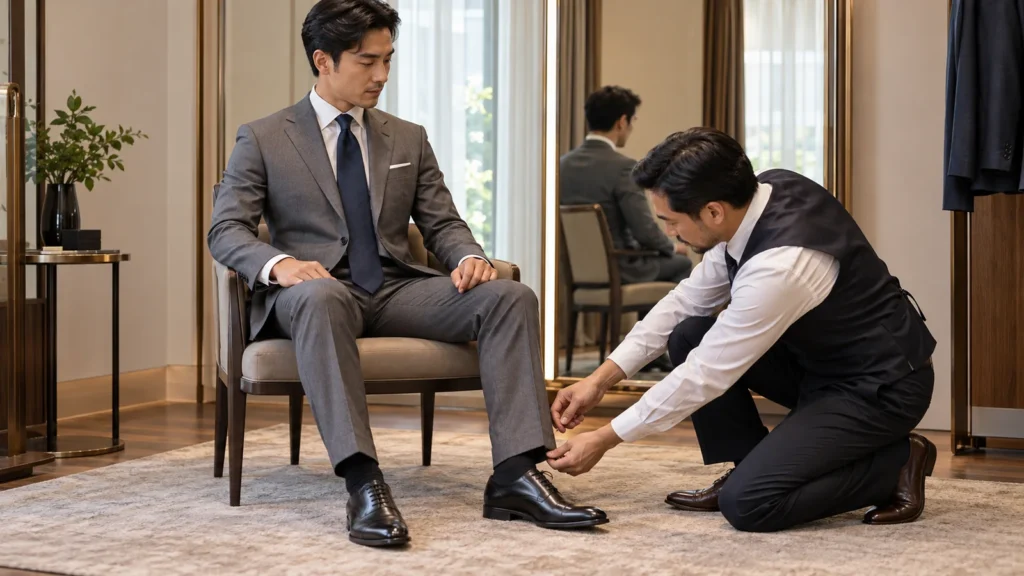
A business suit should be assessed while standing, walking and sitting. Review shoulder and collar balance, jacket length and button position, room through the chest and waist, sleeve position with natural arm movement, seated comfort, trouser rise and line, and the relationship between shirt cuff, collar and jacket.
Measurements provide a starting set of numbers. Fittings show how the garment balances on the body and where refinement may be needed. There is no responsible universal fitting count for every client, garment and schedule. See how Class Bespoke approaches the consultation and fitting process.
Build a wardrobe that can be repeated and extended
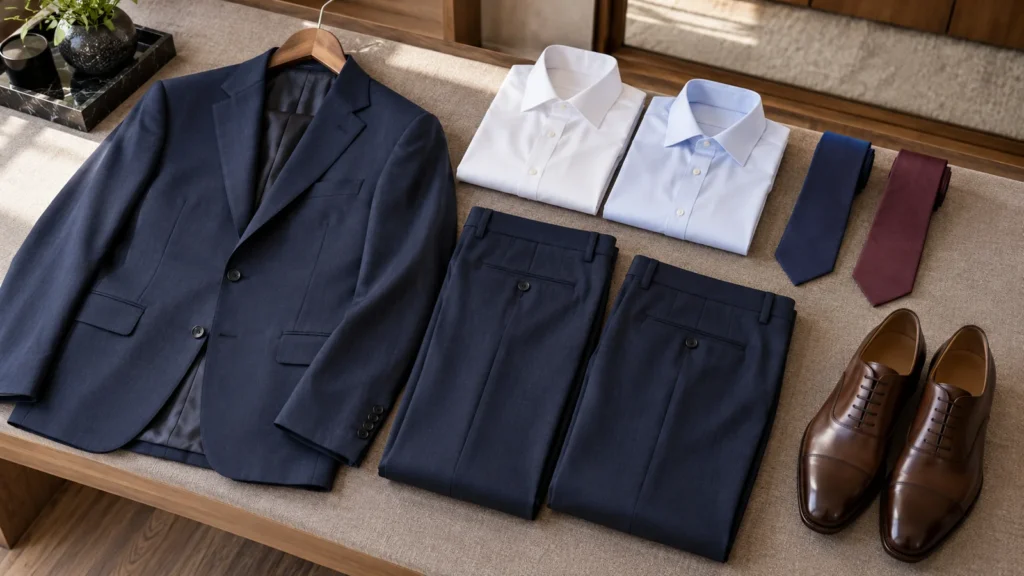
The strongest first business commission often creates a foundation rather than an isolated outfit. Navy and charcoal can provide versatile starting points, while coordinated bespoke shirts and additional trousers can expand the number of useful combinations.
Discuss which garments need to work together now and what may be added later. A record of the agreed specification can guide future conversations, while posture, preference, cloth availability and measurements should still be reviewed before a later order. Explore current bespoke and custom suit options when planning the role of each garment.
Plan timing around real commitments
Give the tailor the dates of important meetings, flights and events at the beginning of the consultation. Timing depends on the chosen cloth, construction, garment quantity, fitting requirements and current production conditions.
Avoid relying on one citywide turnaround promise. Ask for a plan for the exact commission and leave room for the agreed fittings and any refinement identified during them.
Compare value on the same specification
Price comparisons are useful only when the underlying garments are comparable. Confirm the represented cloth and composition, jacket construction, number of pieces, included fittings and details, alteration scope, collection or delivery arrangements and any additional charges.
The best-value choice is the one whose specification, wearability, communication and service fit the intended use—not necessarily the lowest headline figure.
Questions professionals ask before commissioning a business suit
Who is the best tailor for business suits in Bangkok?
There is no single responsible answer for every professional. Compare finished work, specification clarity, cloth suitability, fitting communication, timing and the ability to plan garments that work together over repeated use.
What cloth works well for a business suit in Bangkok?
Lighter wool and suitable open weaves may help in warm conditions, but the right choice also depends on air conditioning, travel, durability, crease recovery and wearing frequency. Confirm the actual composition and characteristics of the selected cloth.
Should a business suit be fused, half canvas or full canvas?
Each construction can serve a different brief and budget. Ask how the chosen construction affects structure, feel, price and schedule for your specific jacket rather than assuming one answer fits every commission.
How many fittings should a business suit need?
The number depends on the garment, construction, client, adjustments and available schedule. The important point is that the process allows balance, movement and trouser-jacket coordination to be assessed before delivery.
How should I compare business-suit quotations?
Compare like for like: cloth, construction, number of pieces, fittings, details, alteration scope and collection or delivery arrangements. A headline price without the specification is not a complete comparison.
Can one business suit be worn frequently?
It can be worn regularly, but rotation helps garments rest and gives a professional wardrobe more flexibility. The appropriate number of suits and trousers depends on wearing frequency, climate, travel and care.
Plan a business-suit consultation in Bangkok
Class Bespoke begins with a discussion of the garment, work environment, climate, personal style and available schedule. Clients can compare available fabrics and discuss fused, half-canvas or full-canvas construction before confirming the specification, followed by individual measurements and fittings appropriate to the commission.
Consultations are available through the Thonglor and Sukhumvit showrooms. Bring travel dates, workplace requirements, reference garments or images where useful and an approximate budget so the team can discuss a realistic plan.
The aim is not to accept a “best tailor” label on trust. It is to choose the Bangkok tailor whose evidence, communication and process best support the professional wardrobe you need to wear repeatedly.
These practical guides compare the two verified Class Bespoke showrooms with specific visitor itineraries. They do not claim additional branches or independent awards.
Best Bespoke Tailor Near Silom Bangkok
Silom professionals and business visitors often need tailoring that works across meetings, presentations, dinners and regional travel. The best bespoke tailor near Silom Bangkok should begin by understanding that working wardrobe, then explain cloth, construction, fit and timing as one complete commission.
Class Bespoke operates verified showrooms at 154 Thong Lo and 9/1 Sukhumvit 49/4. There is no Class Bespoke Silom branch. Silom is served by central Bangkok rail networks, but the correct journey depends on the customer’s exact origin, current service and appointment time. Use official BTS and MRT information plus the live Class Bespoke branch maps; do not rely on a permanent travel-time claim.
“Best” is the brand’s commercial ambition, not an independent ranking. A professional customer should compare the written specification and how effectively the process addresses real work requirements.
> Editorial-image disclosure: All five images prepared for this article are AI-generated editorial illustrations. Their people and settings are fictional. They are not photographs of Class Bespoke customers, staff, showrooms, completed commissions, current stock or documentary Bangkok locations.
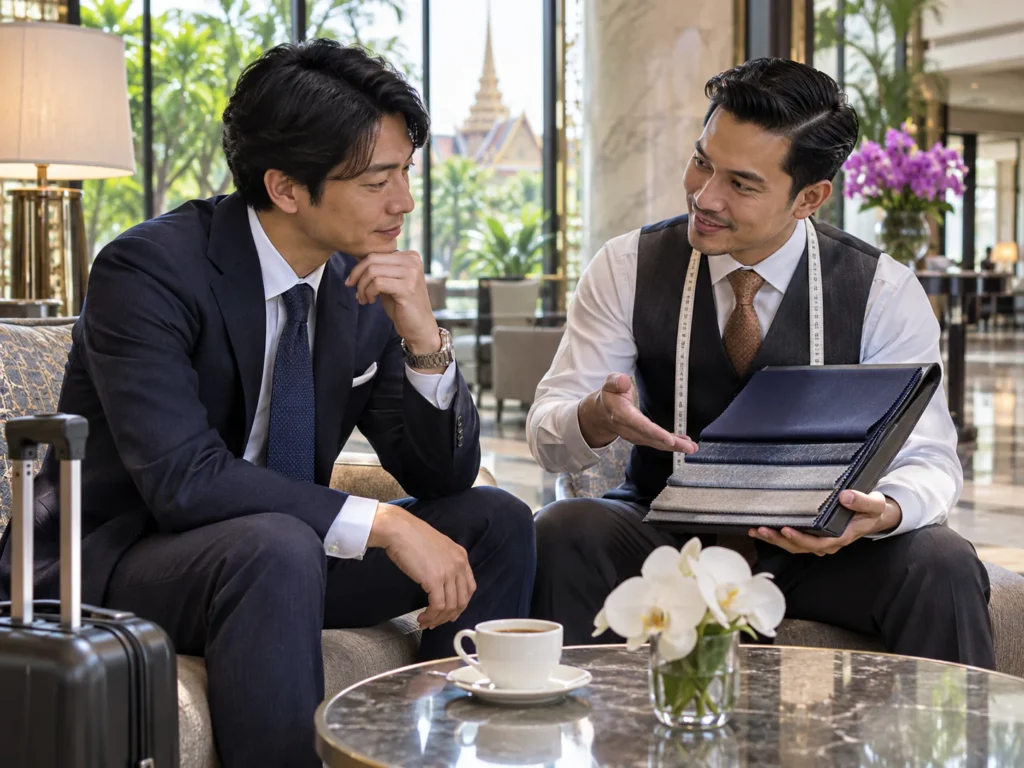
AI-generated editorial illustration; fictional model and generic Bangkok setting. Not a photograph of a customer, Class Bespoke showroom or documentary Silom location.
AI-generated editorial illustration; fictional model and generic Bangkok setting. Not a photograph of a customer, Class Bespoke showroom or documentary Silom location.
Specify the professional context
Workplace formality
Financial, legal, consulting, hospitality, technology and creative workplaces can interpret business dress differently. Describe the environment rather than asking generically for a “corporate suit.” Note whether the garment will be worn with a tie every day, for board meetings only, or as separates in a flexible office.
Presentation and travel
A garment worn on flights and through long meeting days needs resilience and comfort as well as a sharp line. Discuss luggage, frequency of wear, indoor air conditioning, outdoor movement and access to garment care. Cloth should be chosen from the whole use case, not a prestige label.
Existing wardrobe
List the shirts, shoes, suits and jackets already used. A new commission should expand combinations rather than duplicate them. A second trouser, a versatile blazer or a coordinated shirt rotation can sometimes add more value than another complete suit.
AI-generated editorial still life; not documentary evidence of current Class Bespoke stock, supplier identity, mill provenance or cloth availability.
AI-generated editorial still life; not documentary evidence of current Class Bespoke stock, supplier identity, mill provenance or cloth availability.
Business-suit decisions that matter
For a broader comparison of garment choices and specifications, review the established Bangkok business-suit guide. This Silom package should add workplace and itinerary context rather than compete with that canonical business-suit owner.
Cloth performance
Evaluate fibre, weight, weave, handle, opacity, drape, resilience, colour and texture. A very fine cloth may feel luxurious but require different care. A heavier or more textured cloth may not suit every Bangkok routine. Ask why the selected cloth fits the frequency and conditions of wear.
If origin or mill identity matters, ask what documentation accompanies the actual bunch. Do not treat a selvedge photograph, country name or “Super” number as complete proof.
Jacket construction
Class Bespoke can discuss fused/basic, half-canvas and full-canvas routes where appropriate. Fused/basic construction, half canvas through the upper front, and a fuller canvas structure involve different materials, labour, feel, price and planning. None compensates for a poor pattern or skipped fitting.
Record the chosen construction. Ask what it means for the jacket being ordered, how it affects structure and what schedule it requires.
Proportion and restraint
Business tailoring benefits from decisions that work together. Lapel width, gorge, button stance, jacket length, pocket style and trouser rise should support the wearer and expected formality. Contrast stitching and novelty details can date a garment or reduce versatility; add them only when they serve the brief.
A second trouser
Trousers often experience more friction and wear than jackets. For a frequently worn suit, an additional matching trouser may extend rotation, subject to budget and cloth availability. Both trousers should be specified and fitted clearly rather than treated as an afterthought.
Shirts for Silom workdays
A shirt affects the collar, cuffs and comfort of every suit. Discuss:
tie or open-neck use;
collar height, spread and point length;
button or French cuffs;
body ease and posture;
sleeve length under the jacket;
opacity, pattern and rotation.
Bring the intended tie and jacket where possible. A collar that looks attractive on its own may not sit well with a particular lapel or neckwear proportion.
Blazers and business-casual separates
A blazer can support client meetings and less formal office days if it coordinates deliberately with trousers. Texture and contrast help distinguish it from a mismatched suit jacket. Patch pockets, buttons and softer construction can create a relaxed direction, while flap or jetted pockets and sharper structure can increase formality.
Bring existing trousers or photographs in useful light. Discuss at least two complete outfits before approving the cloth. The goal is repeat use, not just a successful showroom combination.
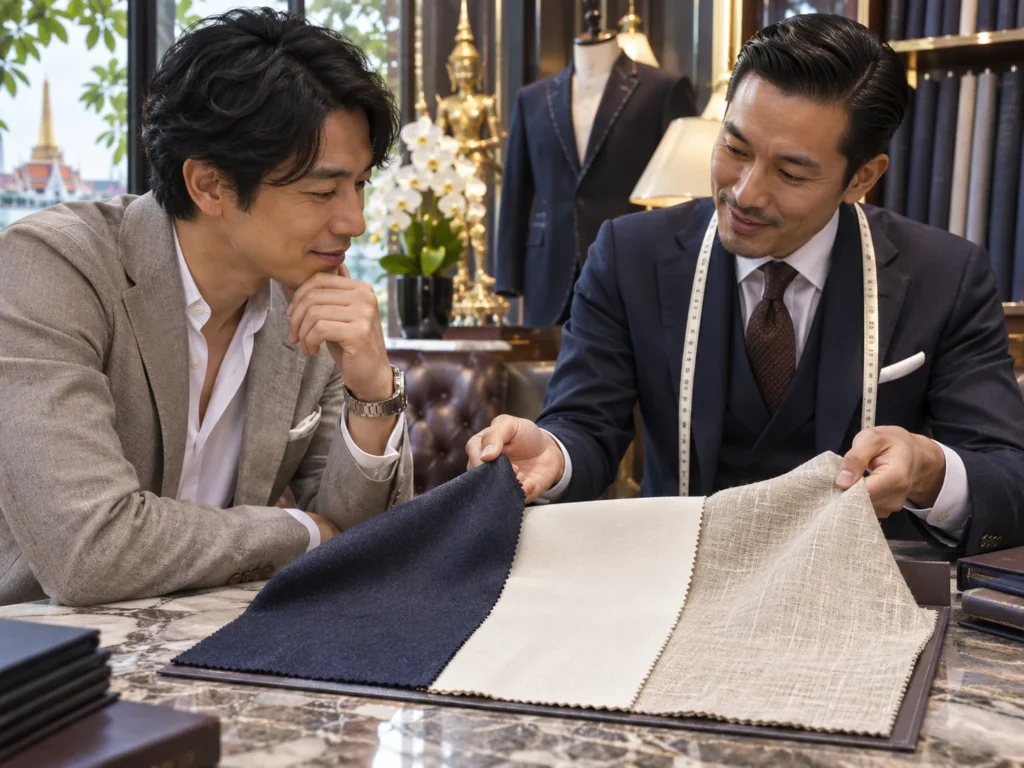
AI-generated editorial illustration of a generic fitting; fictional people and studio. Not evidence of a customer, Class Bespoke fitting or construction method.
AI-generated editorial illustration of a generic fitting; fictional people and studio. Not evidence of a customer, Class Bespoke fitting or construction method.
The Class Bespoke process
Consultation
Share workplace, travel, garment frequency, style preferences and schedule. Agree the garment count, cloth, construction, major details and target appointment sequence. Keep a written record.
Measurements
Individual measurements establish the starting dimensions. Posture, balance and movement also influence the developing garment. Point out recurring fit problems in existing clothes.
Fittings
For jackets, review shoulders, collar, chest, fronts, waist, length, sleeve pitch and movement. For trousers, review waist, rise, seat, thigh, line and hem. Test sitting and natural movement. The number of fittings varies with the garment, construction, customer history and corrections identified.
Final review
Wear the intended shoes and shirt. Check the full written order, not only the mirror. If a change is required, leave a feasible window before the first important use or departure.
Planning from Silom
The official BTS description places the Silom Line through the Silom corridor and identifies Siam as its interchange with the Sukhumvit Line. BEM’s official MRT interface identifies Si Lom and Sukhumvit stations on the Blue Line. These sources provide network context, not a guarantee of a specific trip.
Thonglor showroom
154 Thong Lo, Khlong Tan Nuea, Watthana, Bangkok 10110, Thailand, opposite Euro Creation near Thonglor Nails.
Sukhumvit 49/4 showroom
9/1 Sukhumvit 49/4, Khlong Tan Nuea, Watthana, Bangkok 10110, Thailand.
Choose by checking the current route from the exact office or hotel and by protecting every return-fitting window. Both showrooms support consultation, cloth review, measurements and fittings. Owner-confirmed normal hours are Monday–Saturday 10:00–20:30 and Sunday 13:00–17:00, subject to current confirmation.
Use the verified branch page for current showroom identities, maps and contact details. The Silom wording describes a customer’s starting context; it does not create another branch.
Planning for a business visit
Send arrival, departure and fixed meeting times before the first appointment. Do not assume a garment can be completed between two open calendar slots. The proposed construction, cloth availability, fitting requirements, workshop capacity and customer availability all matter.
The existing international-visitor tailoring guide covers the wider consultation, fitting and departure-planning task. Use it alongside this professional-wardrobe brief so the two pages remain complementary.
Hotel or office measurement may be discussed by appointment where appropriate, but it should not be confused with completing the fitting process. Local or eligible international delivery can also be discussed per order. Confirm location, terms, charges and the remaining review work.
How to compare tailoring proposals
Ask every tailor to define:
garments and quantities;
cloth and represented composition;
jacket construction;
design details;
fittings and dates;
price and payment terms;
final review and alteration process;
collection or delivery.
Then compare equivalent specifications. A low quote for a different construction or garment count is not a direct comparison. A speed promise without a fitting plan does not answer how the garment will be assessed.
Avoid unsupported ranking shortcuts
Review scores, awards, influencer posts and “best tailor” lists may be useful leads, but they need context. Check date, source, disclosure and whether the content evaluates the service you need. An undisclosed benefit can affect a recommendation. A high score does not tell you which cloth or construction is included in your order.
The direct consultation remains essential. A trustworthy proposal should become clearer under questions rather than relying on urgency or jargon.
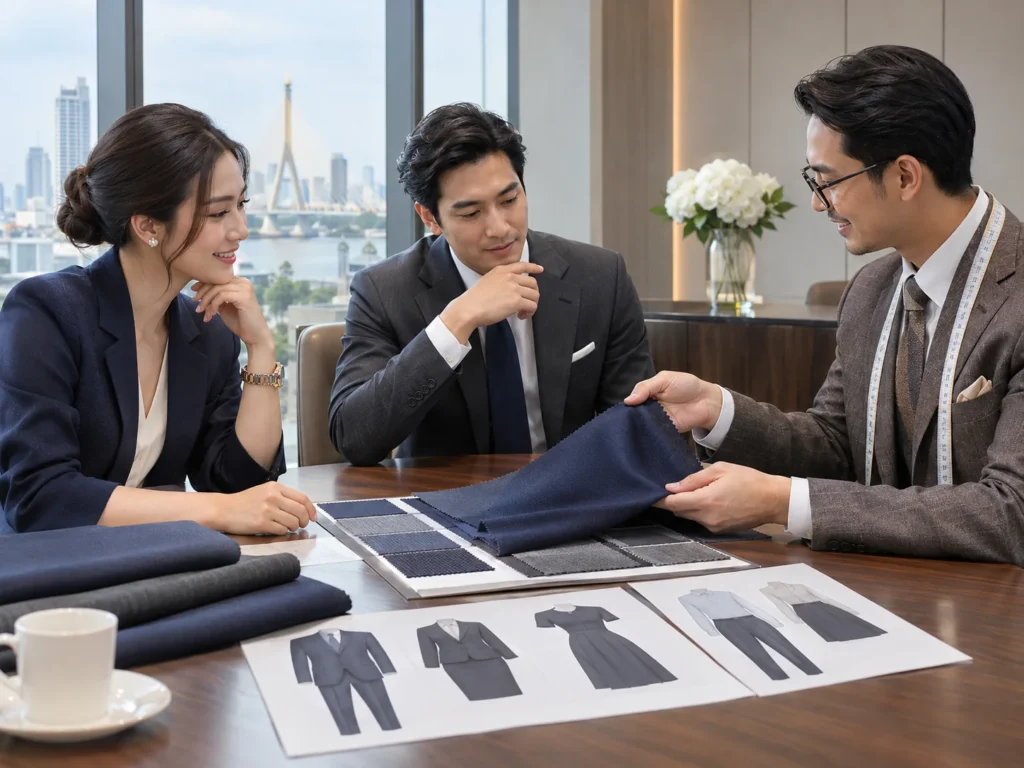
AI-generated editorial illustration; fictional models, garments and setting. Not photographs of customers or completed Class Bespoke commissions.
AI-generated editorial illustration; fictional models, garments and setting. Not photographs of customers or completed Class Bespoke commissions.
Plan a five-day professional rotation
A professional who wears tailoring throughout the week should test combinations on paper before buying. For example, two suits, one separate jacket, several shirts and coordinated shoes can create more useful variation than five unrelated statement garments. This is not a fixed shopping list; it is a way to measure whether each commission adds coverage.
Write the days or meeting types when each outfit would be worn. Identify the garments that need rest between uses and the pieces likely to receive the most friction. If one suit will be worn twice in a week, an additional trouser may be more practical than adding decorative cost to the jacket.
Shirts should support the full rotation. Check collar relationship with both suit and blazer lapels, cuff compatibility, pattern scale and whether the cloth remains sufficiently opaque under office lighting. Plan laundering and turnaround rather than assuming every shirt can return immediately to use.
For travel weeks, decide which jacket and trousers can create a second combination without looking accidental. Pack the actual shoes and accessories into the planning discussion. If the customer changes from tie to open collar during the day, confirm that the collar and jacket still work together.
After delivery, record which combinations succeeded in real work. That evidence should guide the next order. Repeat measurements may still need review because body, posture, preference and use change over time.
Adapt the wardrobe for hybrid workdays
Some Silom professionals move from formal presentations to internal work and dinner without returning home. Plan which elements can relax without making the outfit look incomplete. Removing a tie may require a shirt collar that remains controlled when open. Changing from a suit jacket to a separate blazer works only when the trousers and textures were planned for it.
Discuss pockets for the items actually carried, but avoid overloading a jacket in a way that distorts its line. If a laptop bag or backpack is used daily, bring it or describe it so shoulder friction and outfit formality can be considered. The tailor cannot guarantee wear from an accessory it has not assessed, but the conversation can reveal practical conflicts.
For evening use, decide whether the work shoe, belt and shirt remain appropriate. A small accessory change can extend the outfit, while an attempted transformation into formalwear may not. Keep true black-tie or ceremonial requirements separate from business-casual versatility.
AI-generated editorial illustration; fictional model and meeting room. Not evidence of a customer, office or finished Class Bespoke garment.
AI-generated editorial illustration; fictional model and meeting room. Not evidence of a customer, office or finished Class Bespoke garment.
Test the garment for a Silom workday
A professional fitting should reflect more than a standing mirror pose. Sit as you would during a meeting, reach naturally for a bag or document, fasten and unfasten the jacket, and check the trouser with the shoes intended for work. If the garment will be worn during flights or long transfers, describe those demands so ease and pocket use can be discussed without turning comfort into an oversized fit.
Bring an ordinary work shirt and the bag used most often when practical. A high collar, thick watch, shoulder strap or heavily loaded pocket can alter how the outfit feels and wears. The tailor can assess visible conflicts, while the customer can decide which accessory or garment requirement takes priority.
For a Silom office appointment, confirm building access, meeting point and available privacy in advance. Measurement can sometimes be arranged on site, but subsequent fittings and garment review still need appropriate conditions. A convenient first meeting should not be mistaken for a complete fitting process.
Request a Silom professional consultation
Contact Class Bespoke through the consultation page with your workplace requirements, garment count, travel dates, existing wardrobe and available fitting windows. Use the current branch page and official transport tools to choose between Thonglor and Sukhumvit 49/4. The team can then discuss a practical, documented commission.
Frequently asked questions
Does Class Bespoke have a Silom branch?
No. Its verified Bangkok showrooms are at 154 Thong Lo and 9/1 Sukhumvit 49/4.
Which Class Bespoke branch is nearest to Silom?
That depends on the exact origin, transport method and current conditions. Compare both live maps and the official BTS/MRT information; no universal nearest branch is claimed.
What suit cloth is best for frequent business travel?
There is no single best cloth. Compare weight, weave, resilience, opacity, drape, care and the climates and workplaces involved.
Should I order a second pair of suit trousers?
It can improve rotation for frequent wear, but the decision depends on use, budget and cloth availability. Specify and fit both trousers clearly.
Can Class Bespoke visit a Silom office or hotel?
On-site measurement may be arranged by appointment where appropriate. Location, availability, garment, fittings and terms must be confirmed.
Is Class Bespoke independently ranked the best bespoke tailor near Silom?
No independent ranking is claimed. Assess the written order, cloth, construction, fittings and service for your own professional needs.
Best Business Suit Tailor Near Sathorn
A business suit for a Sathorn professional should do more than look sharp in a fitting-room photograph. It needs to work through meetings, seated work, Bangkok travel, indoor air conditioning and repeated wear. The best business suit tailor near Sathorn should help the customer build that system: cloth, construction, fit, shirt and trouser rotation, fitting plan and aftercare.
Class Bespoke operates two verified Bangkok showrooms at 154 Thong Lo and 9/1 Sukhumvit 49/4. There is no Sathorn branch. The official BTS description places the Silom Line along Sathorn Road and identifies Siam as the interchange with the Sukhumvit Line, but the practical journey to either showroom varies with the exact office, hotel, service status and road conditions. Use live route information.
“Best” is commercial positioning, not an independent award. A professional customer should compare a documented proposal against the work the garment must perform.
> Editorial-image disclosure: All five images prepared for this article are AI-generated editorial illustrations. Their people and settings are fictional. They are not photographs of Class Bespoke customers, staff, showrooms, completed commissions, current stock or documentary Bangkok locations.
AI-generated editorial illustration; fictional model and generic Bangkok setting. Not a photograph of a customer, office, Class Bespoke showroom or documentary Sathorn location.
AI-generated editorial illustration; fictional model and generic Bangkok setting. Not a photograph of a customer, office, Class Bespoke showroom or documentary Sathorn location.
Audit the working wardrobe first
Before selecting cloth, list:
how many days each week tailoring is worn;
the formality of client and internal meetings;
regional travel and luggage requirements;
current suits, jackets, trousers, shirts and shoes;
pieces that wear out first or are difficult to coordinate;
upcoming events and fixed deadlines.
This audit identifies whether the priority is a complete suit, a second trouser, a blazer, shirts or a broader rotation. Buying another navy suit may be sensible, but only if it solves a real gap rather than repeating what is already underused.
AI-generated editorial still life; not documentary evidence of Class Bespoke stock, current cloth availability or a completed customer wardrobe.
AI-generated editorial still life; not documentary evidence of Class Bespoke stock, current cloth availability or a completed customer wardrobe.
Specify the business suit as a system
The established Bangkok business-suit comparison remains the canonical owner for the broader garment-choice task. This Sathorn material should add a practical executive-rotation lens. Customers building more than one outfit can also use the repeatable work-wardrobe guide to map cloth, fit and coordination across a working week.
Jacket and trousers together
The jacket and trouser should be designed as one composition. Lapel, button stance, jacket length, pockets, trouser rise and line should support the wearer and workplace. A conservative suit can still be distinctive through proportion, cloth texture and fit without novelty details.
Consider an additional trouser
Trousers often experience more friction and require more frequent care than the jacket. An additional matching trouser may improve rotation for a frequently worn suit, subject to cloth availability and budget. Both trousers should be cut, specified and fitted clearly.
Coordinate shirts and shoes
The shirt collar must work with the lapel and intended tie. Sleeve length should show an appropriate amount of cuff when the jacket is worn naturally. Trouser length should be checked with the actual shoe type. Bring those items to the fitting where practical.
Decide whether the jacket must work separately
Not every suit jacket should become a blazer. Smooth matching suit cloth and formal details can make the jacket look incomplete when separated. If separate use is important, state it at consultation so cloth, buttons, pockets and texture can be considered intentionally.
Cloth for Bangkok business use
No fibre label answers every requirement. Compare:
weight and weave for structure, airflow and intended environment;
resilience for seated work and travel;
opacity for light-coloured trousers or shirts;
drape for the desired line;
texture and colour for formality and coordination;
care expectations for frequency of use.
A very fine or light cloth can feel elegant but may show creasing or require more care. A more robust cloth may travel well but feel different in heat. Discuss the trade-off openly.
If a mill or country of origin is material, ask what documentary information accompanies the selected cloth. A label or selvedge image is not a complete authenticity test. Record the cloth reference on the order.
Choose construction for the commission
Class Bespoke can discuss fused/basic, half-canvas and full-canvas jacket construction where appropriate. The options involve different internal support, labour, feel, price and typical planning requirements.
The construction label is not the whole garment. Pattern, cutting, pressing, sleeve setting, collar work, fittings and finishing all influence the result. Ask what the selected route means in the specific jacket and how it affects the fitting schedule. Choose it for the wearer and use, not simply because one term sounds more prestigious.
AI-generated editorial illustration of a generic fitting; fictional people and setting. Not evidence of an actual Class Bespoke fitting or customer outcome.
AI-generated editorial illustration of a generic fitting; fictional people and setting. Not evidence of an actual Class Bespoke fitting or customer outcome.
Fit for a real workday
Jacket
Review collar relationship, shoulders, chest, fronts, buttoning, waist, length, sleeves and movement. Sit, reach and move naturally. A clean standing image is insufficient if the jacket restricts work or collapses during ordinary movement.
Trousers
Review waist, rise, seat, thigh, knee, line and hem. Test sitting. The desired line should be balanced with comfort and the cloth’s behaviour. Bring the intended belt, braces or shoes if they form part of the specification.
Shirt
Review collar comfort, shoulder, chest, body ease, sleeve and cuff. Test the shirt under the jacket. A collar intended for ties should be assessed with the neckwear normally used.
The number of fittings varies. A new customer, complex fit, garment type and construction route can change the sequence. Reserve the agreed appointments and provide direct feedback.
Build three useful business directions
The core suit
A navy, charcoal or other workplace-appropriate suit can anchor a rotation. The exact shade, texture and design depend on office culture and existing clothes. Versatility comes from coordination and frequency of use, not colour name alone.
The travel suit
A travel-focused commission should consider resilience, luggage, meeting formality and climate transitions. Avoid claiming any cloth is crease-proof. Instead, compare recovery and care expectations, and plan an outfit that can be refreshed between wears.
The separate jacket
A blazer or sports jacket can support business-casual meetings. Texture, buttons, pocket treatment and trouser contrast should clearly distinguish it from a missing pair of suit trousers. Identify at least two complete combinations before ordering.
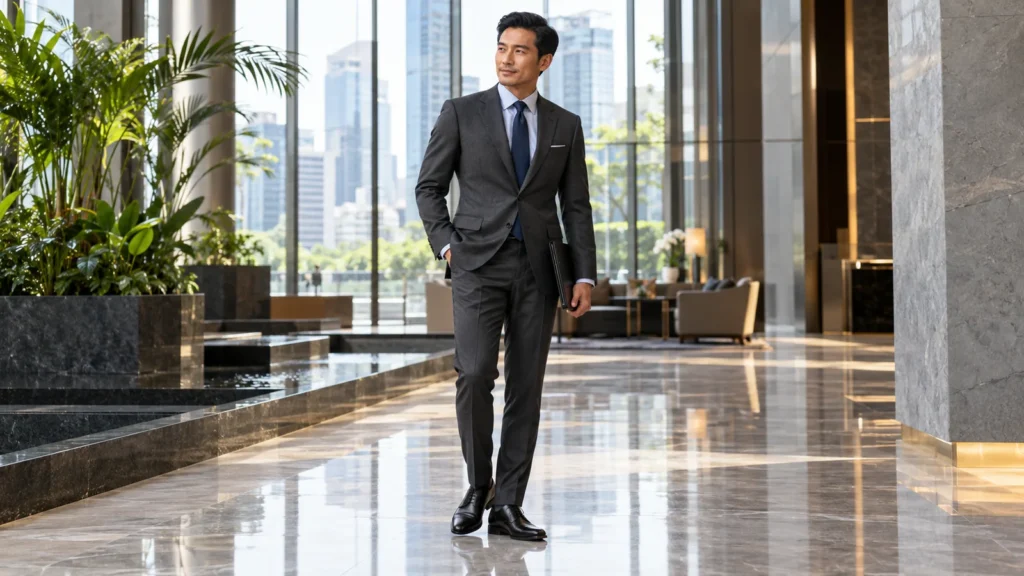
AI-generated editorial illustration; fictional model and setting. Not a photograph of a customer, employer, boardroom or Class Bespoke commission.
AI-generated editorial illustration; fictional model and setting. Not a photograph of a customer, employer, boardroom or Class Bespoke commission.
Class Bespoke’s process
The first consultation defines the intended use, garment count, cloth, construction, design, timing and budget. Individual measurements and observations establish a starting pattern and specification. Fittings then evaluate the developing garment. The final review checks fit, finishing and agreed details before collection or arranged delivery.
Keep a written order that records the material decisions. If something changes, document the revision. This protects both the customer and tailoring team from relying on memory.
Planning from Sathorn
Thonglor showroom
154 Thong Lo, Khlong Tan Nuea, Watthana, Bangkok 10110, Thailand, opposite Euro Creation near Thonglor Nails.
Sukhumvit showroom
9/1 Sukhumvit 49/4, Khlong Tan Nuea, Watthana, Bangkok 10110, Thailand.
Both locations support consultation, cloth selection, individual measurements and fittings. Use the official branch maps and current BTS/MRT or road information from the exact Sathorn origin. Owner-confirmed normal hours are Monday–Saturday 10:00–20:30 and Sunday 13:00–17:00, subject to confirmation.
An office or hotel measurement may be discussed by appointment where appropriate. It is conditional on location, schedule, garment and fitting plan; it does not replace necessary garment review. Confirm any local or international delivery per order.
For visitors fitting this work around flights or regional meetings, the international-visitor tailoring guide covers the wider feasibility and departure-planning questions. Link to it rather than repeating its full itinerary advice here.
Compare proposals without being misled
Two “business suits” can differ in cloth, construction, garment count, fitting work and service. Ask each tailor to state:
cloth reference and composition represented;
jacket construction;
number of trousers and shirts;
important design details;
expected fitting sequence;
target dates and customer availability;
adjustment and delivery terms;
complete price.
Compare equivalent specifications. An urgent deadline should lead to more clarity, not less.
Complete quality control before the boardroom
The first important meeting should not be the first time the customer wears the complete outfit. At final review, button and unbutton the jacket, sit, reach, walk and use the pockets as intended. Check that the collar remains related to the shirt, the jacket fronts behave cleanly and the trouser waistband and rise remain comfortable while seated.
Inspect the written details: cloth, lining, buttons, pockets, vents, trouser front, cuffs and any agreed personalization. Quality control is not a hunt for decorative handwork; it is confirmation that the finished garment matches the documented commission and performs as intended.
Take the garment back to the office or hotel and try it in the lighting and supporting wardrobe where it will be used. Steam or rest it according to appropriate care guidance rather than applying uncontrolled heat. If something materially differs from the fitting, contact the team while there is time for assessment.
For a multi-garment order, do not assume that approval of one shirt or trouser automatically proves every piece. Try each item. Small differences in cloth and assembly can affect how garments feel. Record any agreed follow-up and keep the garments available for inspection.
This disciplined final review protects the business wardrobe better than a vague promise of perfection. It gives the customer and tailor specific evidence and a practical chance to resolve a feasible issue before high-stakes use.
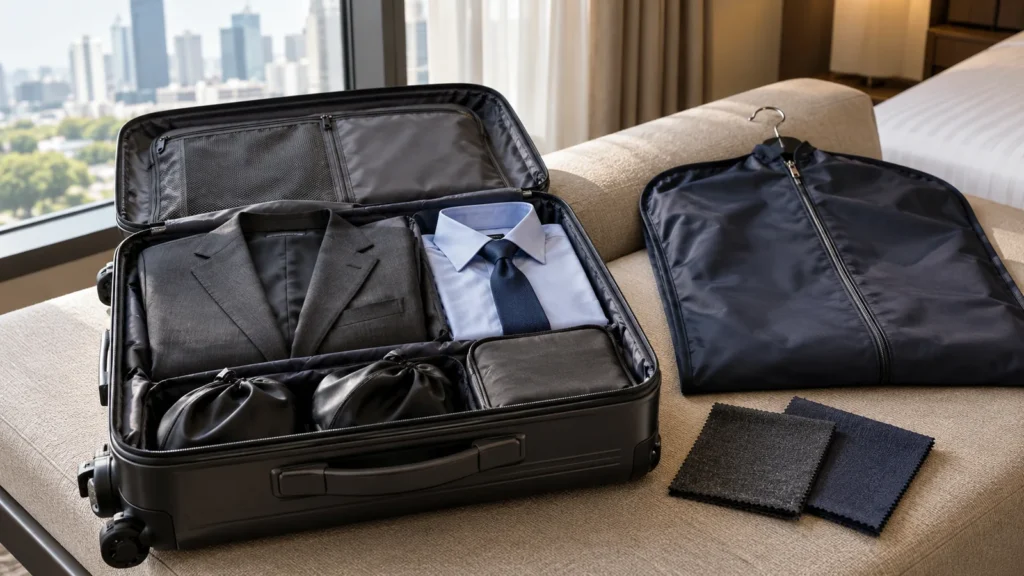
AI-generated editorial still life; not evidence of a hotel, travel service, customer luggage, stock or delivery arrangement.
AI-generated editorial still life; not evidence of a hotel, travel service, customer luggage, stock or delivery arrangement.
Care for a frequently worn suit
Allow the garment to rest between wears where the wardrobe permits. Empty pockets, hang the jacket on suitable support and let moisture dissipate before storage. Follow cloth-specific advice for brushing, steaming and professional cleaning; excessive heat or cleaning can damage some materials and internal structures.
Rotate trousers and shirts rather than treating one suit as a daily uniform. Address stains promptly with appropriate professional advice instead of experimenting on an important garment. When travelling, unpack the suit as soon as practical and use a breathable garment bag suited to the trip.
After repeated wear, note changes in comfort, trouser crease, buttons and high-friction areas. Contact Class Bespoke for an assessment of its own garment where needed. An alteration is subject to the garment’s allowances and technical feasibility; it should not be promised without inspection.
These care habits do not make a suit permanent, but they help the customer understand the relationship between specification, frequency and service life.
Evaluate the suit for Sathorn business use
A Sathorn business wardrobe should be reviewed in the postures and combinations that matter at work. At fitting, sit at a table, stand and walk naturally, reach for a document, and check the jacket both open and fastened. Wear the intended shirt, belt and shoes so sleeve, cuff, trouser length and waist can be assessed as a system. A static front photograph cannot replace those checks.
Share whether the suit is mainly for internal meetings, client presentations, frequent flights or formal corporate events. Those uses can change the appropriate cloth, structure, pocket plan and rotation, but none establishes one automatic specification. If a company dress code or event invitation controls the outfit, bring the actual wording rather than relying on a remembered interpretation.
For an office appointment, confirm building entry, meeting point and a suitable private space before the visit. On-site measurement may be practical, yet later fittings require enough time and conditions to evaluate balance and movement. Do not let a calendar gap become a promise that every technical stage can occur at the workplace. Reserve a separate final review before the first high-stakes meeting.
Request a Sathorn business-suit consultation
Send Class Bespoke your work setting, travel pattern, current wardrobe gaps, garment count, fixed dates and realistic fitting windows through the consultation page. Use the live branch page to compare Thonglor and Sukhumvit 49/4. A productive consultation can then focus on a durable wardrobe strategy rather than an isolated “best suit” claim.
Frequently asked questions
Does Class Bespoke have a Sathorn showroom?
No. The verified showrooms are in Thonglor and Sukhumvit 49/4.
What colour is best for a first business suit?
Navy or charcoal are often versatile directions, but the correct choice depends on workplace, existing clothes, complexion, travel and intended use.
Should I order two pairs of trousers?
It can be useful for frequent wear because trousers often experience more wear than jackets. Decide based on garment use, budget and cloth availability.
Is full canvas required for a good business suit?
No. Fused/basic, half-canvas and full-canvas routes have different characteristics. Pattern, fit, cloth, pressing and finishing also matter.
Can Class Bespoke take measurements at a Sathorn office?
An on-site appointment may be arranged where appropriate. Location, availability, garment, fitting plan and terms must be confirmed.
Is Class Bespoke independently ranked the best business suit tailor near Sathorn?
No independent ranking is claimed. Compare the written specification, fitting process and suitability for your professional wardrobe.
Scroll to Top
Analytics choices
We use optional analytics to understand which pages and contact routes are useful. Analytics stays off unless you accept. We do not send form details or personal information to Google Analytics.

 Sep 11, 2026