Aug 30, 2026
Button stance is the point where a suit jacket closes at the waist. It affects how long the lapels appear, where the jacket seems to narrow and how the front panels balance above and below the fastening point.
It is easy to focus on buttons as a decorative choice, but stance is mainly a matter of proportion. A position that suits one wearer or jacket pattern may look awkward on another, so the decision should be assessed with the complete jacket rather than copied from a single photograph.
What button stance changes
On a single-breasted jacket, the fastening point creates a visual waist and divides the jacket front. Moving it upward can shorten the apparent lapel line and lengthen the skirt below the button. Moving it downward can lengthen the lapel line, but may also make the upper body look stretched if the rest of the pattern is not adjusted with it.
The stance therefore needs to work with the jacket length, gorge, pockets, waist suppression and the wearer’s torso. It is not an isolated measurement.
When a stance looks too high
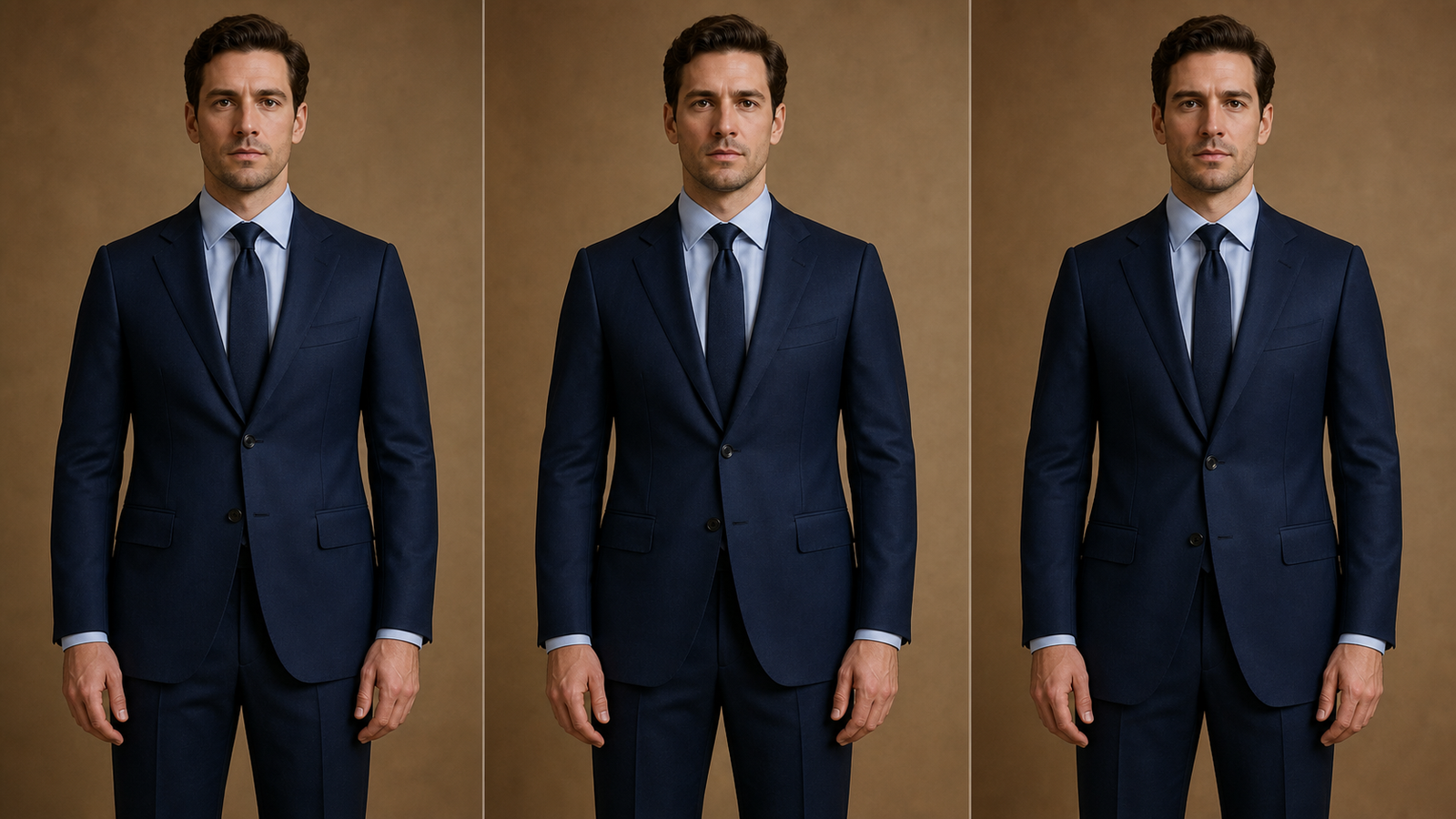
A high button stance can make the lower jacket front appear long and may crowd the lapel line. It can sometimes suit a deliberately shorter, more compact design, but it should not pull the front panels upward or make the jacket look as though it is closing across the chest rather than the waist.
Look at the jacket while standing naturally. The fastening point should not force the fronts to flare, create strong diagonal drag lines or disturb the relationship between the waist and pockets.
When a stance looks too low
A lower stance creates a longer opening above the button. Used carefully, it can give the lapels a relaxed sweep. Taken too far, it may weaken the waist position, make the jacket feel elongated or leave too much unsupported front above the fastening point.
The right answer depends on the wearer’s torso and the intended style. A tall client does not automatically require a low stance, and a shorter client does not automatically require a high one.
Balance matters more than a fixed rule
A balanced jacket should look composed when buttoned and when worn open. The fronts should hang cleanly, the hem should not kick away unnecessarily and the button should sit at a convincing visual waist. Posture and body shape influence this result, which is why measurements and fittings matter.
Construction and cloth also affect the way the front behaves. A soft cloth and lighter structure may produce a different line from a firmer cloth and more structured jacket. Review the choice alongside the available fabrics and the intended construction rather than selecting a stance in isolation.
How to assess button stance at a fitting
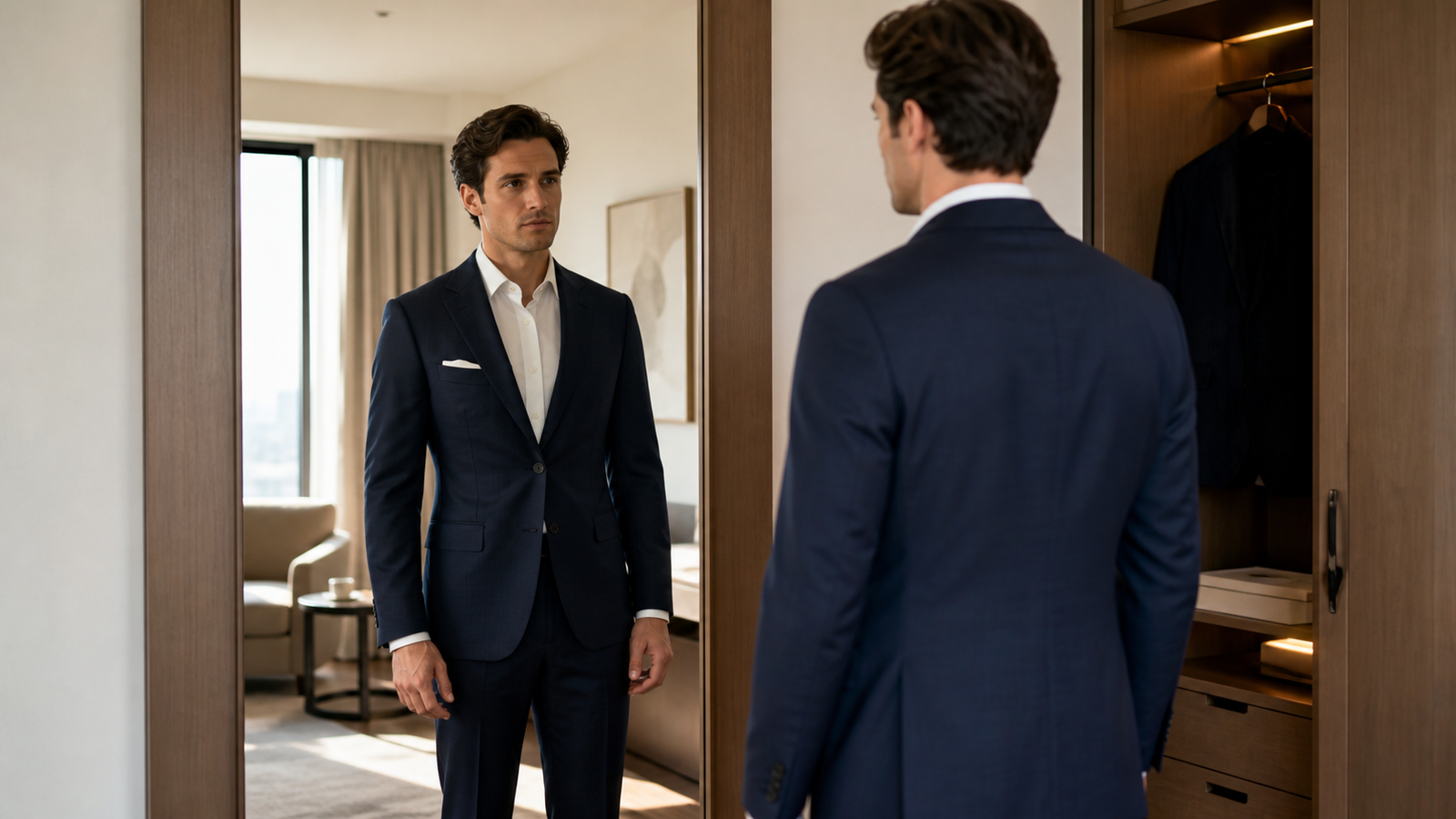
- Stand in a relaxed posture rather than lifting the chest or pulling the shoulders back.
- Fasten the intended working button and leave the lower button of a conventional two-button jacket unfastened.
- View the complete front from several steps away, not only in a close mirror.
- Check the lapel length, waist position, pocket level and jacket hem together.
- Move, sit and unbutton the jacket to understand how it behaves in normal use.
The bespoke process provides the opportunity to review proportion during fittings rather than treating the first specification as untouchable.
Single-breasted and double-breasted jackets
Button stance is discussed most often on single-breasted jackets, but double-breasted designs also depend on the relationship between fastening position, button layout, lapels and jacket length. The complete arrangement should form one coherent composition.
If you are comparing styles, start with the purpose of the garment. A versatile business suit, a relaxed jacket and formal eveningwear may call for different proportions. The commercial Suits, Blazers and Tuxedos pages explain the relevant garment pathways.
Questions to bring to your consultation
- Which occasions should the jacket cover?
- Will it usually be worn with a tie or open collar?
- Do your reference jackets feel too short, long, high-waisted or low-waisted?
- How should the jacket relate to your trousers and natural waist?
- Does the cloth support the intended structure and lapel roll?
References are useful, but proportion should be resolved on the wearer. To discuss a suit and your Bangkok schedule, contact Class Bespoke with your preferred branch and available dates.