Sep 4, 2026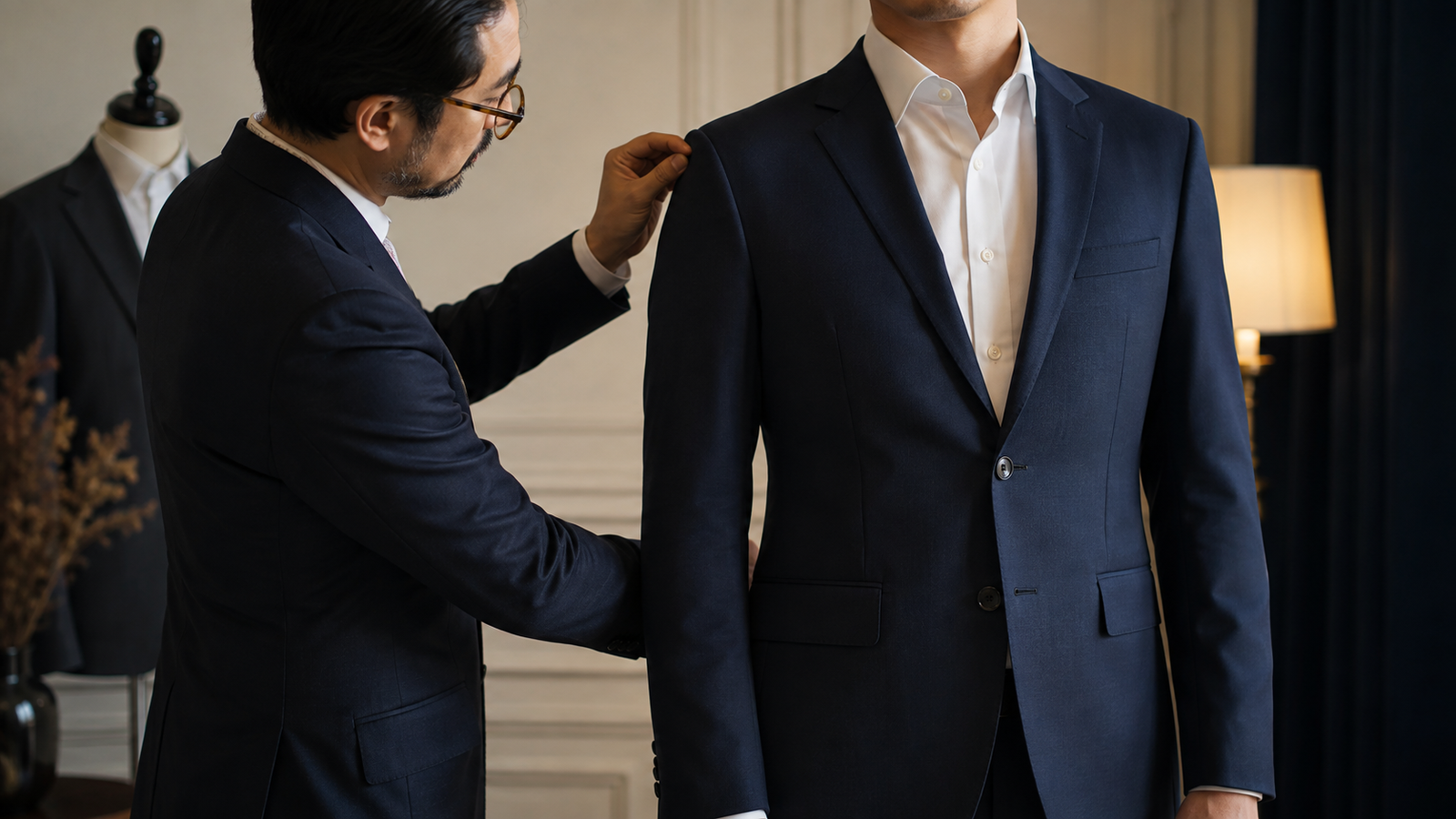
A suit jacket can be close to the right size and still feel wrong across the shoulders or chest. These areas influence the jacket’s balance, how the lapels sit and whether the wearer can move comfortably. The aim is not one universally “slim” silhouette, but a clean relationship between the garment, the wearer’s posture and the intended style.
Start with the shoulder line
The jacket shoulder should follow the wearer’s natural shoulder without an obvious overhang, hollow, ridge or collapse. A structured shoulder, soft shoulder and lightly padded shoulder can each look different by design, so the correct question is whether the chosen construction sits cleanly and consistently on the body.
If the shoulder is too narrow, the upper sleeve and back may pull and movement can feel restricted. If it is too wide, the sleeve head may fall beyond the wearer’s shoulder and create dimpling or a collapsed line. Shoulder assessment should therefore happen before smaller adjustments such as sleeve length.
Check the chest with the jacket fastened
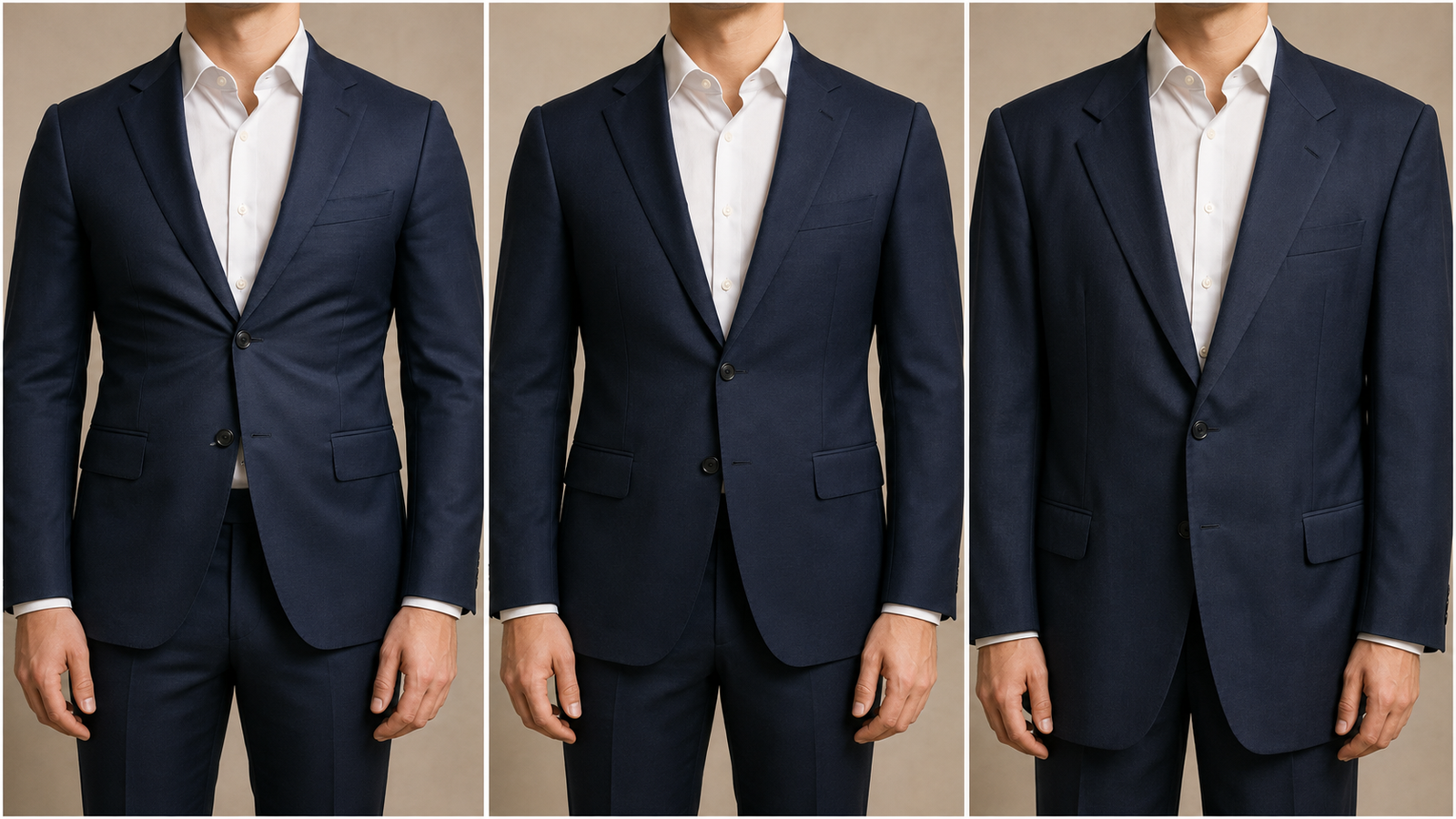
Fasten the jacket in its normal position and look for a chest that sits cleanly without obvious horizontal pulling or excess collapse. The fronts should meet naturally, and the lapels should remain settled against the chest. A small amount of ease is necessary for breathing and movement; a jacket is not improved simply by making it tighter.
Diagonal strain from the fastening point, lapels lifting away or a front that bows open can indicate that chest, waist, balance or posture needs further assessment. Because these effects interact, they should be reviewed during a fitting rather than diagnosed from one photograph alone.
Shoulders and chest must be judged together
A clean shoulder does not automatically mean the chest is correct, and comfortable chest room does not excuse a shoulder that extends too far. The collar, upper back, armhole, chest and front balance work as a system. Altering one area can change how another appears.
This is also why a familiar ready-to-wear size is only a starting reference. Individual measurements, posture and fitting observations help determine how the pattern should be adjusted for the commission.
Use movement as part of the fitting
Stand naturally, sit, reach forward and move the arms as they would be used during the day. A tailored jacket is not sportswear and will not provide unrestricted overhead movement, but ordinary actions should not produce severe pulling or force the jacket out of position.
During a Bangkok consultation, explain whether the jacket is intended for office work, travel, a wedding or frequent presentation use. The expected movement, cloth and construction can then be considered together.
What to look for during your fitting
- The shoulder line follows the intended structure without unintended overhang or collapse.
- The collar sits close to the shirt collar without a conspicuous gap.
- The lapels lie naturally rather than lifting away from the chest.
- The fastened front does not show strong pulling or excessive looseness.
- The armhole and upper sleeve allow ordinary movement without severe restriction.
- The jacket returns to a balanced position after sitting or reaching.
Plan the whole jacket, not one measurement
Shoulder and chest fit should be considered alongside button stance and jacket balance, lapel style, vent choice and the intended cloth. See the bespoke suits service, compare fabrics, understand the bespoke tailoring process, or contact Class Bespoke to discuss a commission and schedule.