Oct 23, 2026
FIT & CRAFTSMANSHIP
A tailored garment is not made by measurements alone. The result develops through a connected sequence of consultation, specification, pattern and cutting work, internal construction, fittings, pressing, quality control and final handover. This guide explains that sequence—and shows where fused, half-canvas and full-canvas jackets follow different production routes.
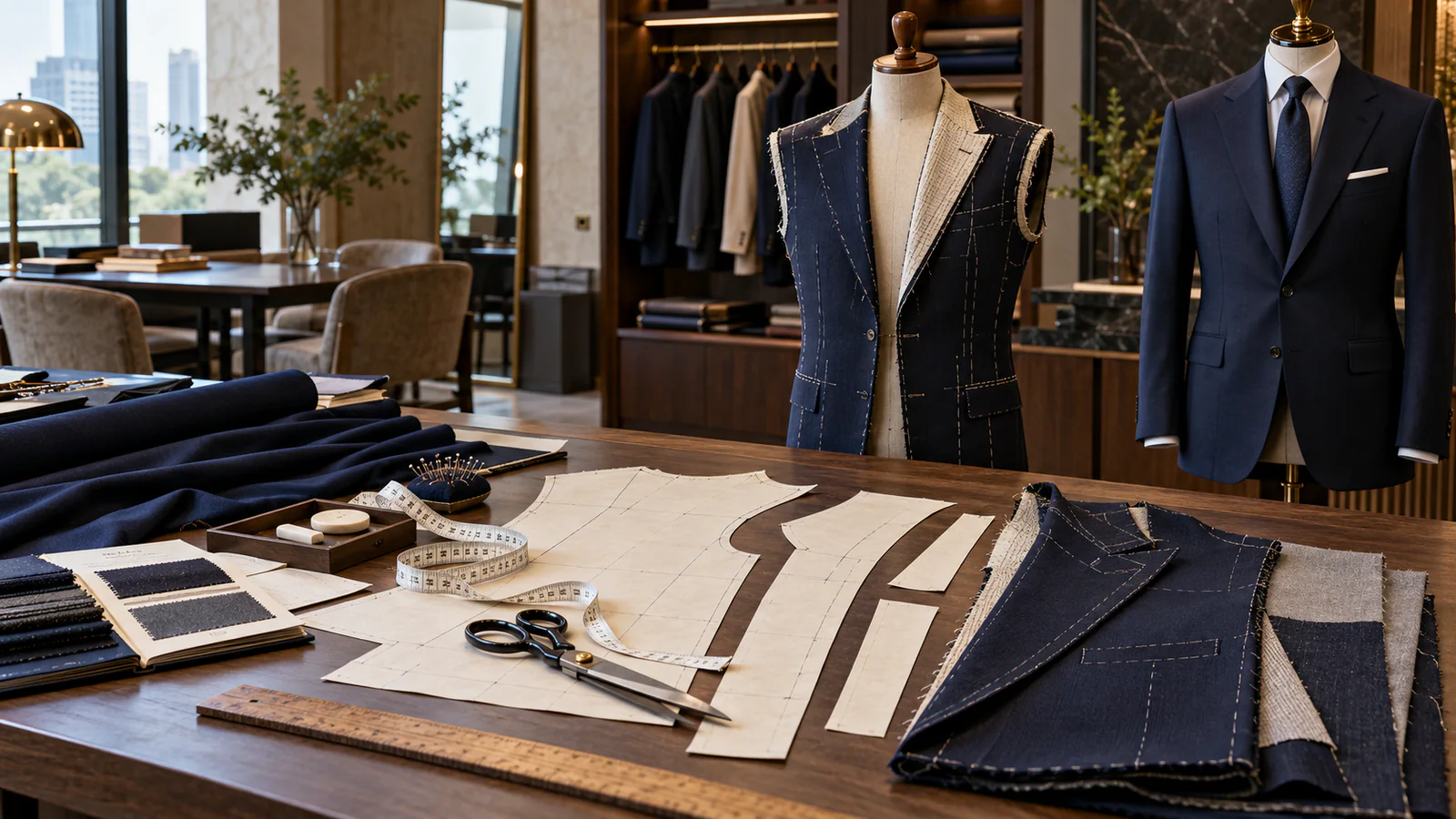
The short answer is that a bespoke or custom-tailored garment is built through decisions and checks, not through one isolated act of sewing. The wearer and tailor first establish what is being made, how it should be used and how much time is genuinely available. Measurements and posture observations inform the starting pattern. The selected cloth is cut for that plan, the garment is assembled using the agreed construction, and fittings test how the developing shape behaves on the wearer. Only after the required refinements, finishing and quality checks is the garment ready for collection or arranged delivery.
Not every commission uses exactly the same number of fittings, amount of handwork or internal structure. A shirt, trouser, fused jacket, half-canvas jacket and full-canvas jacket require different operations. A first-time client may also need more review than a returning client whose measurements and preferences can be checked against a recent record. The useful question is therefore not “Does every suit follow the same process?” but “What process is appropriate for this garment, construction and schedule?”
1. Consultation turns an idea into a garment specification
The process begins before cloth is cut. A consultation should establish the garment, intended use, climate, dress code, preferred silhouette and practical schedule. A business suit worn mainly in air conditioning, a wedding suit, a lightweight travel jacket and a formal evening garment may all lead to different decisions even when the wearer initially asks for “a navy suit.”
Cloth selection is part of that decision, but it is not the entire specification. Weight, weave, fibre, colour, pattern and resilience should be considered alongside the jacket’s internal construction, lining coverage and expected use. The client and tailor also confirm the principal styling details: single- or double-breasted front, lapel shape and width, pockets, vents, buttons, trouser rise, pleats, waistband treatment and hem. These choices should form a coherent garment rather than a catalogue of unrelated options.
This is also the right point to discuss fused/basic, half-canvas or full-canvas construction. The choice affects materials, labour, structure, production time and price. It should be recorded before cutting rather than added as a vague quality label later. For a deeper comparison of the three options, use the existing fused, half-canvas and full-canvas buyer’s guide; this article owns the complete making sequence rather than replacing that construction guide.
2. Measurements and posture observations establish the starting shape
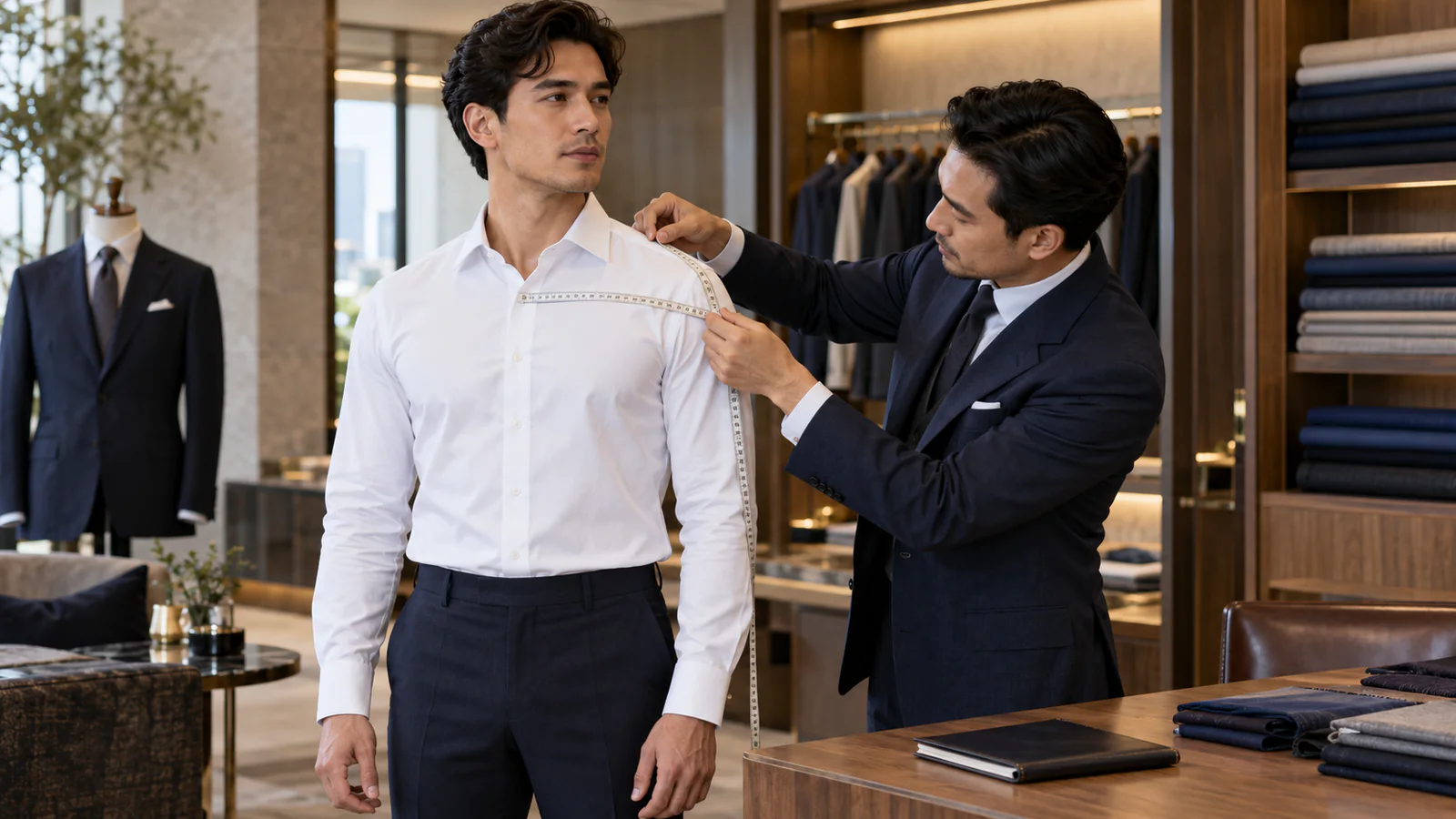
A tape measure records dimensions, but dimensions alone do not describe a body. The tailor also considers shoulder slope, how the wearer stands, the relationship between front and back lengths, the position of the waist, and the way the arms and legs hang. These observations affect jacket balance, collar relationship, sleeve pitch, trouser rise and the line of the finished garment.
The client should stand naturally. Holding the shoulders unnaturally high or pulling in the stomach produces information for a posture that will not be maintained in daily wear. It is also useful to explain movement requirements: long periods of sitting, frequent travel, formal presentation, or an event that involves dancing may change the sensible amount of ease and the way the garment is assessed during fittings.
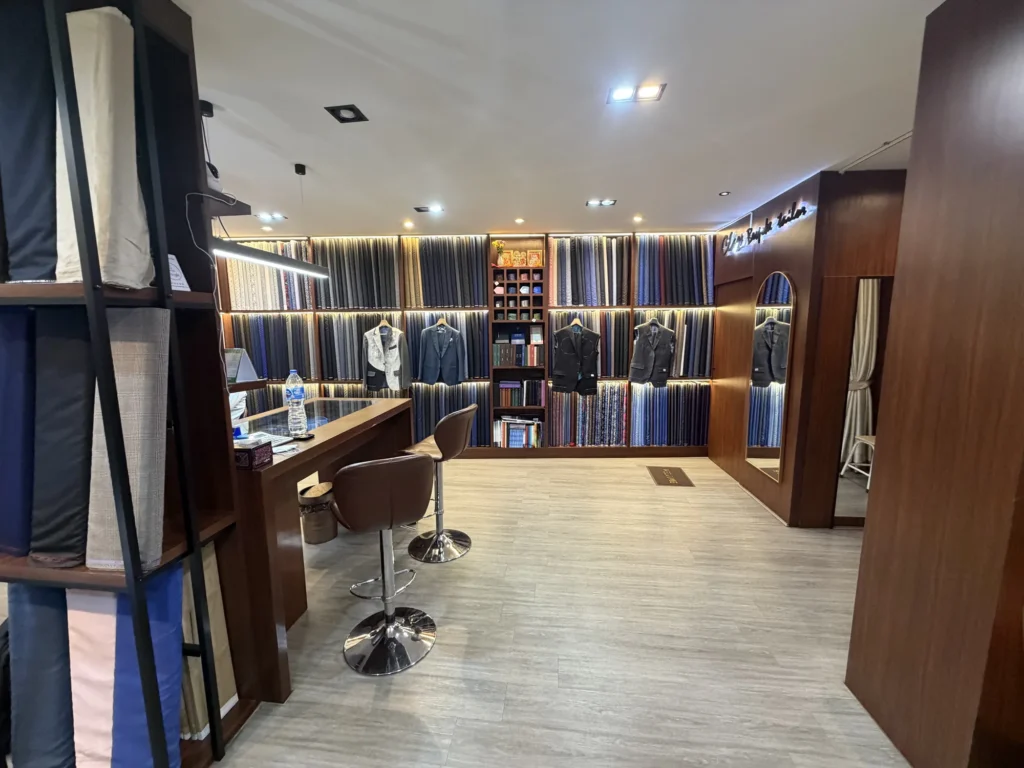
At Class Bespoke, individual measurements and posture observations establish the starting point, while the exact pattern and production route follow the confirmed garment specification. Returning clients still need current information checked when posture, weight, cloth, garment type or preferred fit has changed.
3. Pattern planning and cutting translate the specification into cloth
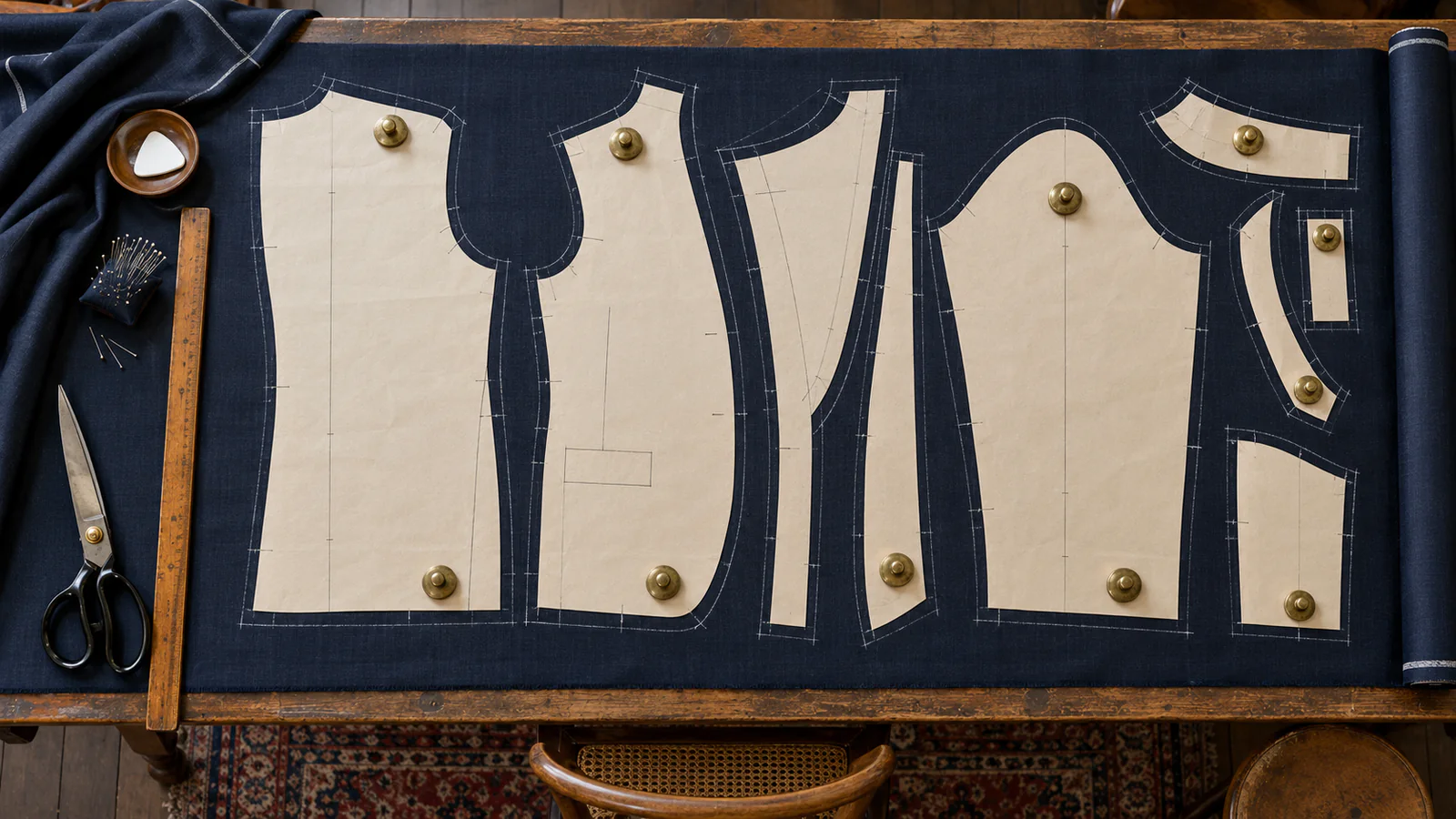
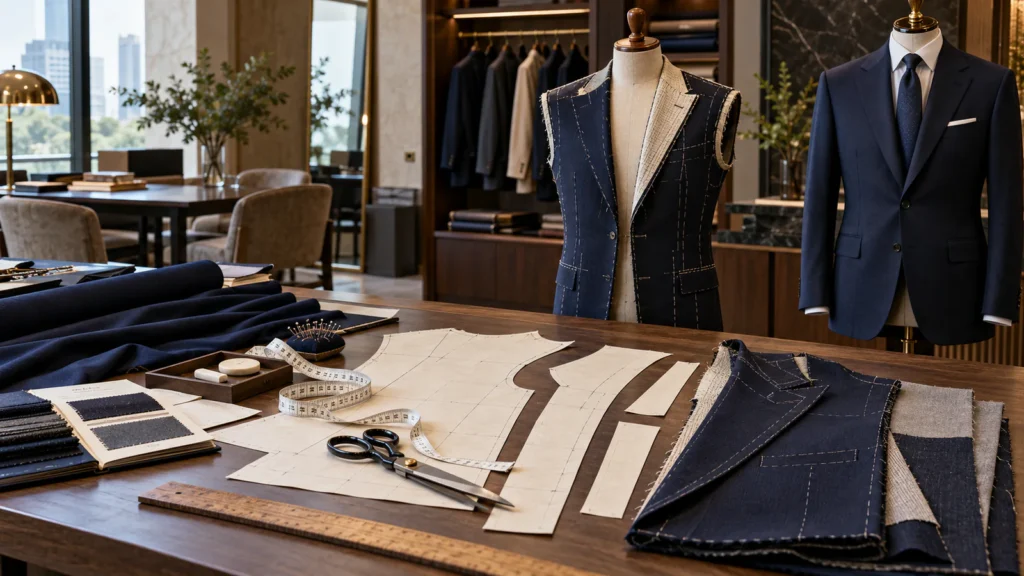
The pattern is the bridge between the measurement record and the three-dimensional garment. It determines the starting geometry of the jacket or trouser panels and carries decisions about proportion, balance and ease. The cloth must then be laid out with attention to its direction, surface, checks or stripes, and the relationship between matching pieces.
Cutting is consequential because later fittings refine a shape that already exists in cloth. A fitting can correct many things, especially while the garment is still in progress, but it is not a substitute for a sensible initial cut. The pattern and cut should therefore reflect the intended jacket length, shoulder expression, chest, waist, seat, sleeve and trouser line from the beginning.
Traditional bespoke houses may leave inlays—extra cloth at selected seams—to support future alteration. The exact allowance and pattern method vary by maker and garment. A buyer should not assume that every garment marketed as custom or bespoke uses the same pattern system, seam allowance or amount of handwork. Ask what is included in the actual commission.
4. Internal construction changes how the jacket is assembled
Canvas is an internal structural layer; lining is the visible fabric covering much of the jacket interior. “Half canvas” and “half lined” do not mean the same thing. A jacket can use canvas in the upper front while having a separate lining configuration, and the two choices should be discussed independently.
The construction terms also describe more than prestige. They indicate how support is introduced between the outer cloth and lining, how far a floating canvas extends, and how much production work the selected route requires. Materials and techniques differ across makers, so the final written specification is more reliable than a label alone.
| Construction | Internal approach | Practical character | Class Bespoke planning range | Best question to ask |
|---|---|---|---|---|
| Fused/basic | Adhesive interlining supports relevant jacket areas. | Faster and more accessible; suitable when the actual cloth, use and schedule support it. | Standard work is generally planned at approximately 3–5 days. A limited approximately 24-hour route may be considered only for an eligible pre-arranged order. | Which areas are fused, and what fitting and finishing plan applies to this garment? |
| Half canvas | A floating canvas supports the upper front and lapel; the lower-front treatment can vary. | A practical balance of chest and lapel structure, labour, cost and time. | Generally approximately 5–10 days. | How far does the canvas extend, and how is the lower front constructed? |
| Full canvas | A floating canvas extends through substantially more of the jacket front. | More scope for a developed internal structure, natural lapel roll and long-term refinement; requires more production time. | Generally approximately 15–30 days and not guaranteed within 15 days. | What canvas, shaping, fittings and production time are included in this exact specification? |
All Class Bespoke timings above are planning ranges, not universal completion promises. Cloth availability, garment count, design complexity, current capacity, appointment timing, fitting findings and required adjustments can change the schedule.
How fused/basic construction proceeds
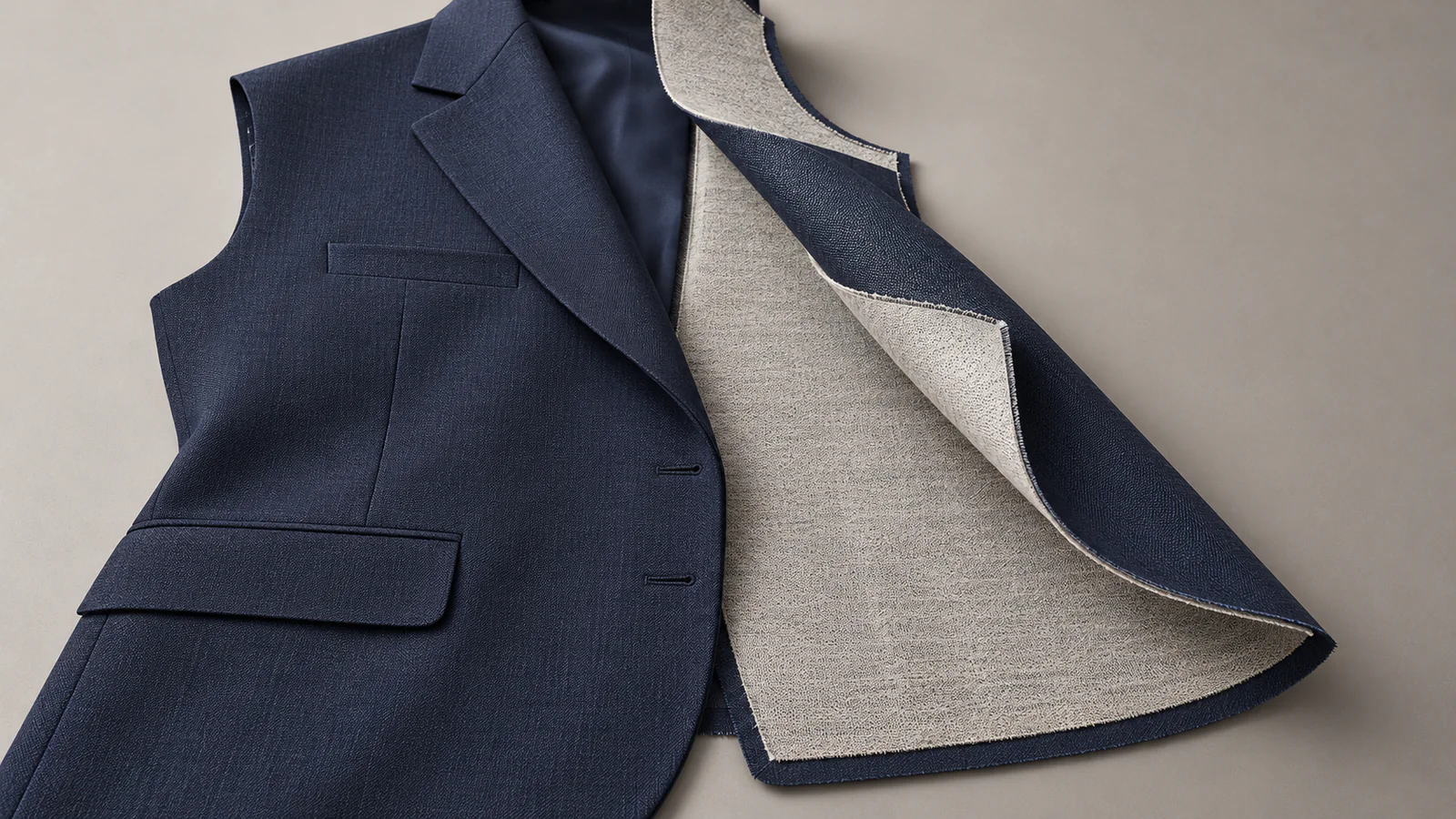
In fused construction, a compatible interlining is bonded to the back of the outer cloth in relevant areas. The purpose is to stabilize the jacket front and support the planned shape. Modern fusibles come in different weights and qualities; “fused” is therefore not a complete verdict on fit, comfort or workmanship.
The route is normally faster because it does not require a floating canvas to be developed through the same extent as half- or full-canvas construction. That can make it appropriate for an eligible time-sensitive commission or for a budget directed toward a sound fit and suitable cloth. The trade-off is a different internal structure and production method. It should be chosen knowingly, not represented as full canvas under different language.
How half-canvas construction proceeds
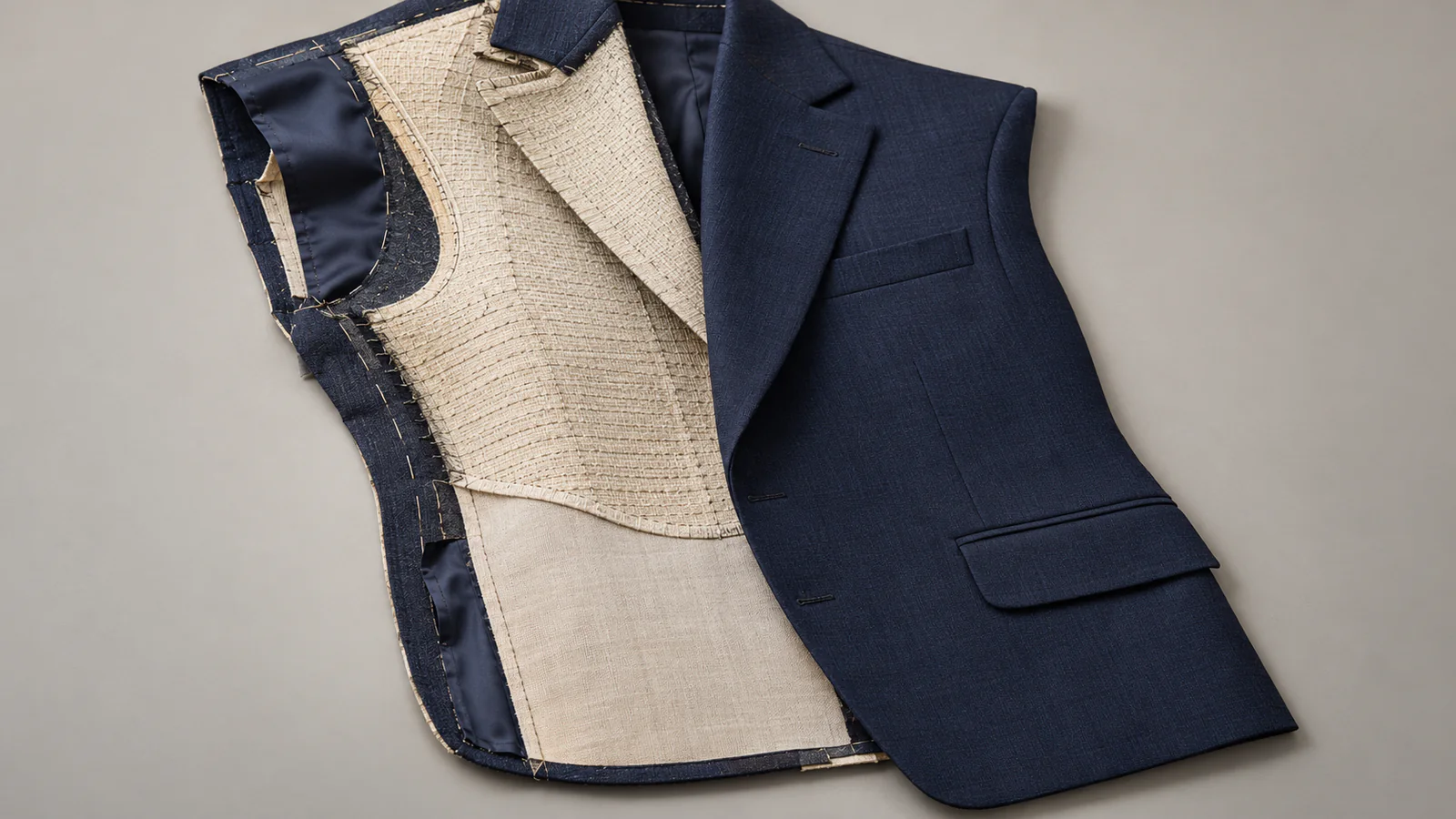
Half-canvas construction introduces a floating canvas through the upper front and lapel area without extending the same structure through the full length of the front. The canvas and supporting chest materials are shaped for the intended silhouette, while other areas may use a different treatment. The maker should be able to explain the actual build rather than asking the client to infer it from the words “half canvas.”
This route concentrates structure where it strongly influences the chest and lapel. It can be an effective choice for a business or travel suit when the client wants more developed upper-front structure than a fused/basic jacket while keeping time and budget below a full-canvas commission.
How full-canvas construction proceeds
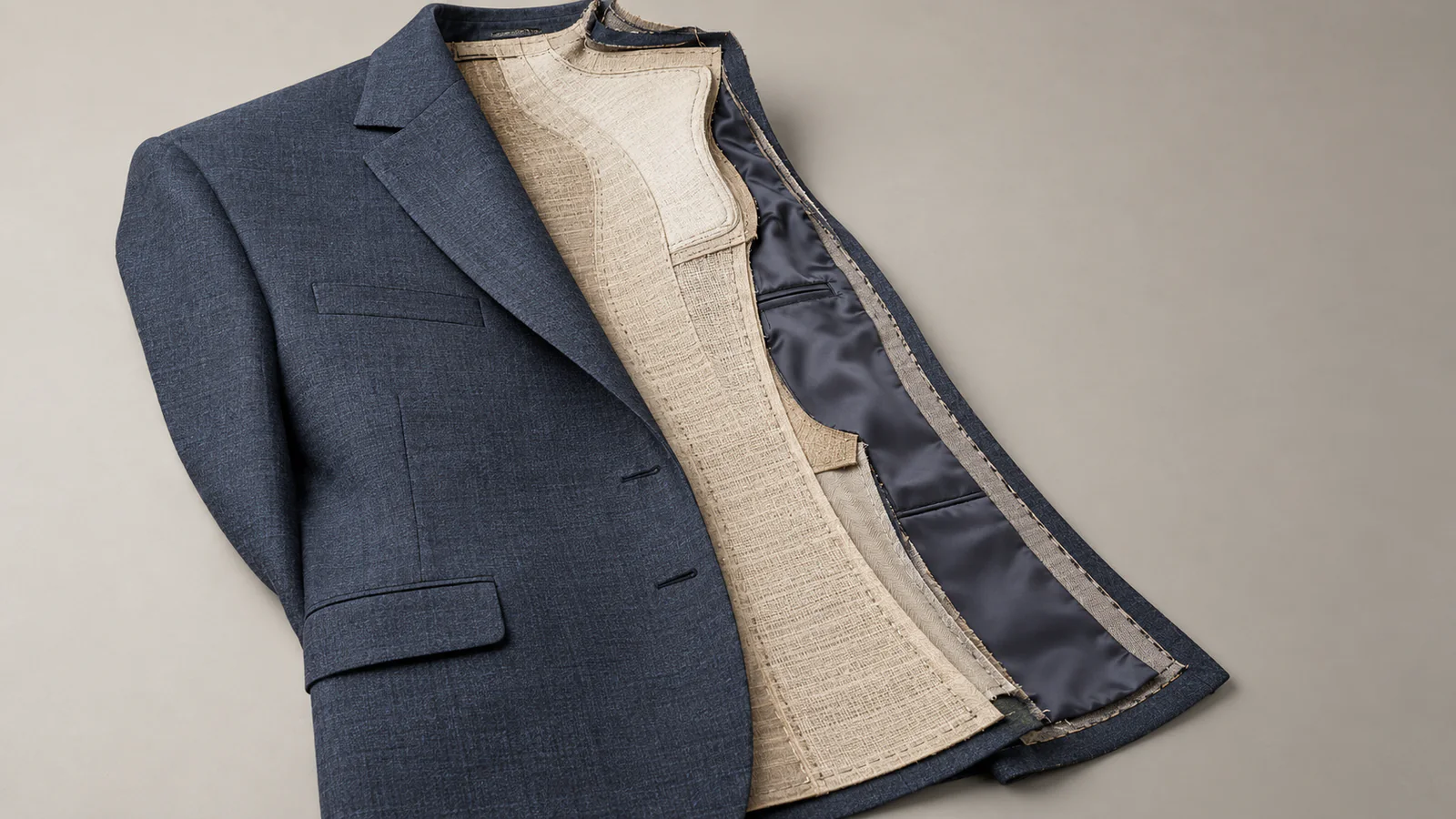
In full-canvas construction, the floating canvas extends through substantially more of the jacket front. Its weight, shape and relationship to the outer cloth help establish the chest, lapel and front. The work requires more time because the internal structure must be prepared and integrated before the jacket can be finished.
Full canvas is valuable when the client prioritizes a developed internal structure, drape and long-term refinement and can allow the relevant production and fitting window. It is not automatically correct for every cloth, budget or trip. A well-planned fused or half-canvas jacket can be more appropriate than a full-canvas specification chosen only as a status label.
5. Fittings test the developing garment, not just the numbers
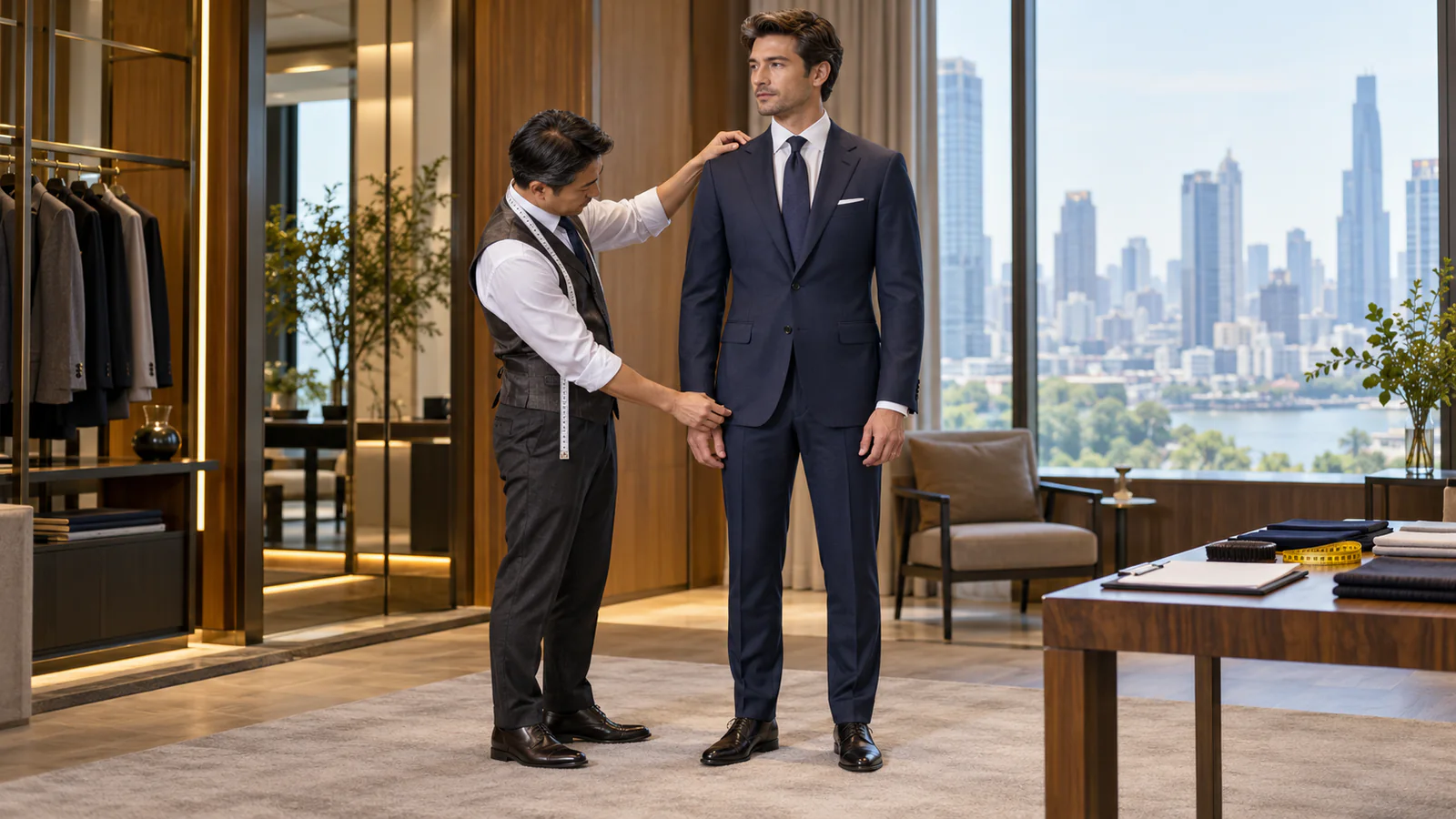
A fitting is where the tailor sees how pattern, cloth, construction and posture interact on the wearer. The number of appointments is not fixed. First-time Class Bespoke suit commissions generally involve approximately two to three visits where the garment and schedule require them; returning-client, garment and correction needs can change that plan.
The following three-stage framework explains what the reviews may cover. It is not a promise that every commission will use three separate appointments.
Fitting stage one: trial and balance
At an early trial, the garment is assessed while important areas can still be changed. The team reviews shoulder expression, collar relationship, chest, front-to-back balance, jacket length, waist, sleeve pitch, trouser waist, seat, rise and leg line. The wearer should stand naturally and move rather than posing only for the mirror.
Fitting stage two: refinement after correction
Where the garment or first fitting indicates a further review, the next stage checks whether the recorded changes work together. A correction in one area can affect another: changing jacket balance may change how the hem sits, while trouser rise affects the relationship between jacket and trousers. The garment should also be reviewed with the type of shirt, shoes or event pieces that influence the final proportions.
Fitting stage three: final review
The final review checks proportion, movement, finishing and the agreed garment details. It should confirm whether any feasible last refinement is needed before handover. Final fitting and final delivery are related but not always identical: if a material adjustment is identified, the garment should be completed and checked rather than handed over simply because the calendar says it is finished.
6. Pressing, finishing and quality control complete the shape
After fitting corrections are incorporated, the garment proceeds through finishing and pressing appropriate to its construction. Pressing is not merely cosmetic; together with cutting and stitching, it helps establish the garment’s three-dimensional line. Pockets, vents, buttonholes, buttons, lining, hems and seams should be checked against the recorded specification.
Quality control should also consider the garment as an outfit. Jacket and trousers need to work together, the sleeves and trouser break should suit the intended shirt and shoes, and the garment should be assessed while standing, sitting and moving. Pattern matching, visible finishing and the confirmed construction details should be reviewed before collection.
7. Collection, delivery and aftercare remain part of the process
At handover, confirm that the complete garment list is present and that the final agreed refinements have been reviewed. Ask how to hang, rest, brush and clean the garment, and avoid unnecessary dry cleaning. If the suit will travel, allow it to recover on a suitable hanger and use pressing or steaming carefully according to the cloth and construction.
Class Bespoke clients may collect from the showroom. Hotel or local delivery can be arranged where suitable, and international shipping is available for eligible orders when confirmed in advance. Destination, charges, timing and responsibility should be agreed for the individual order rather than assumed. Future alteration support depends on the garment’s construction, condition and available allowance.
What changes in a 24-hour tailoring process?
An approximately 24-hour suit is an exceptional route, not the full process compressed without consequences. At Class Bespoke, it may be considered only for an eligible fused/basic-construction order arranged in advance. Fabric availability, design complexity, workshop capacity, the client’s appointment availability and the required fittings must all support the plan.
A short window can reduce the range of suitable specifications and the time available between measurement, assembly, fitting and correction. It does not make half-canvas or full-canvas production appropriate for the same deadline. Clients should share arrival, departure and event dates before ordering and accept a rush commission only after the actual garment and fitting plan have been confirmed. The separate express-tailoring guide owns the detailed 24-hour eligibility and travel-planning intent.
How to plan the process with Class Bespoke
Class Bespoke offers fused/basic, half-canvas and full-canvas construction for suitable commissions. Current planning ranges are approximately 3–5 days for standard work, 5–10 days for half canvas and 15–30 days for full canvas. Full canvas is not guaranteed within 15 days. Every range remains subject to the actual cloth, garment, quantity, design, fittings, adjustments and current capacity.
For first-time suit commissions, plan for approximately two to three visits where required, but do not treat that number as a fixed package. Use the Class Bespoke process page for the concise consultation-to-delivery overview, the Bangkok fitting guide for appointment planning and the Suits page for the current commercial offer. This article’s role is different: it connects the entire making sequence to the construction route.
A pre-commission checklist
- Define the garment, occasion, climate and frequency of wear.
- Confirm the actual cloth, including composition, weight, weave and availability.
- Record whether the jacket is fused/basic, half canvas or full canvas and what that means for this maker.
- Agree the principal style details before cutting.
- Share travel and event dates before the schedule is confirmed.
- Ask what each planned fitting is intended to assess.
- Confirm collection, delivery and post-delivery review arrangements.
- Treat all timing as commission-specific until the tailor confirms it.
Frequently asked questions
What is the first step in making a bespoke garment?
The first step is a consultation that defines the garment, intended use, cloth, construction, style and realistic schedule. Measurements and posture observations then establish the starting information for the pattern and cut.
Is half canvas the same as half lining?
No. Half canvas describes the extent of floating canvas through the jacket front. Half lining describes how much of the visible inner lining covers the garment. They are separate specification choices.
How many fittings does a bespoke suit need?
There is no universal number. First-time Class Bespoke suit commissions generally involve approximately two to three visits where required. The garment, construction, corrections, client history and available schedule determine the actual plan.
Is full canvas always the best choice?
No. Full canvas offers a more extensive floating internal structure and requires more production time, but the appropriate construction depends on the cloth, use, desired shape, budget and schedule. A well-planned half-canvas or fused/basic jacket can be the more suitable commission.
Can Class Bespoke make a suit in 24 hours?
A limited approximately 24-hour rush route may be available only for an eligible fused/basic-construction order arranged in advance. It depends on fabric, design, capacity, client availability and fitting requirements and is not a standard guarantee.
How long do fused, half-canvas and full-canvas suits take?
Class Bespoke generally plans standard work at approximately 3–5 days, half canvas at approximately 5–10 days and full canvas at approximately 15–30 days. These are planning ranges, not guarantees, and full canvas is not guaranteed within 15 days.
Plan the garment before the deadline
Share the garment, intended use, preferred construction and confirmed Bangkok dates. Class Bespoke will review the cloth, fitting and production requirements before confirming what is realistically possible.
Request a tailoring appointment View the Thonglor and Sukhumvit showrooms