Aug 29, 2026
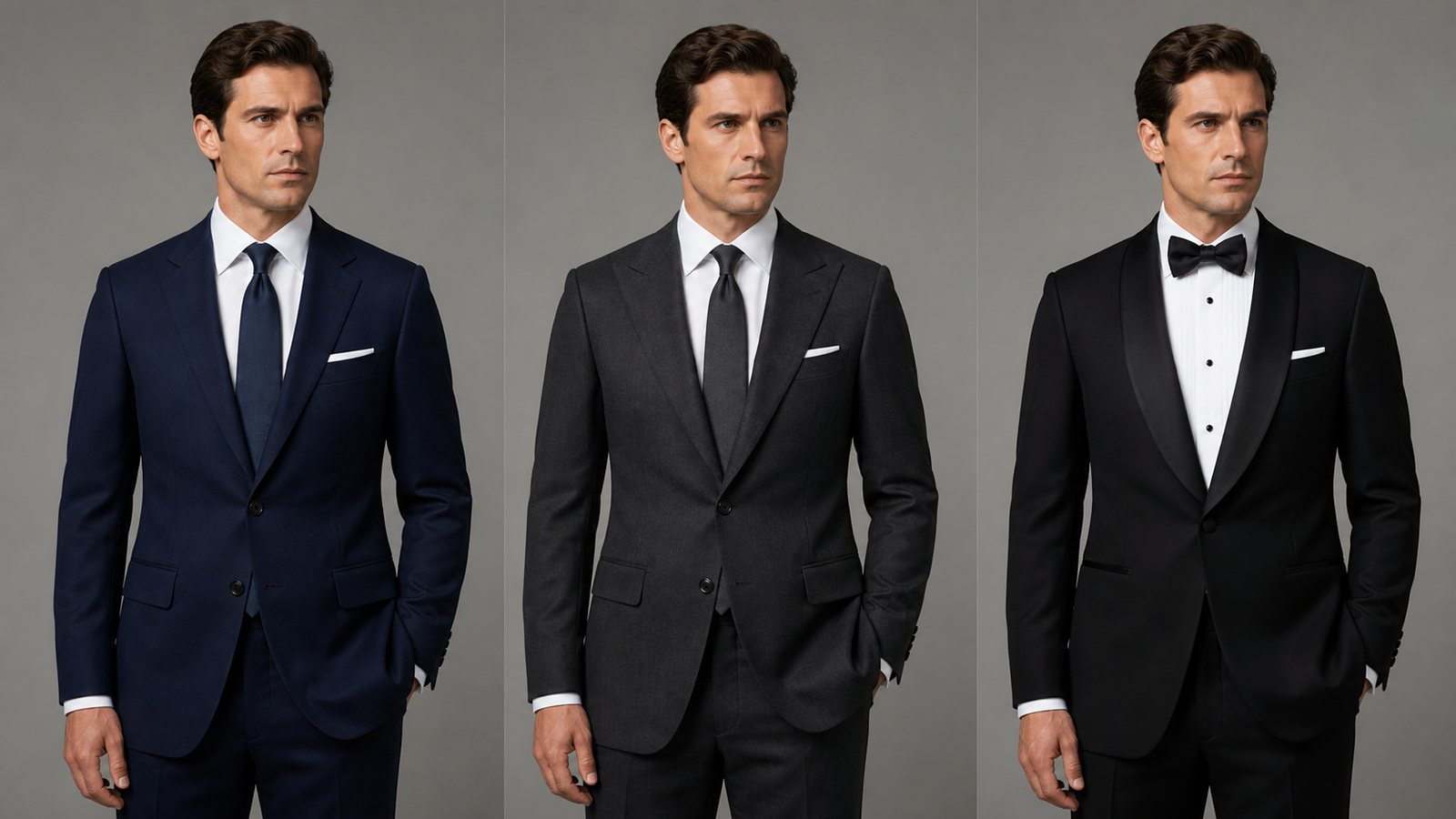
A lapel changes the character of a jacket before most people notice any other detail. Notch, peak and shawl lapels each create a different line through the chest and shoulders, so the best choice depends on the garment, the occasion and the proportions you want to emphasize.
This guide explains how the three principal lapel styles work. It is intended to help you prepare for a consultation, not to impose one universal rule: cloth, jacket construction, button stance and personal proportions all affect the final result.
Notch lapels: the versatile starting point
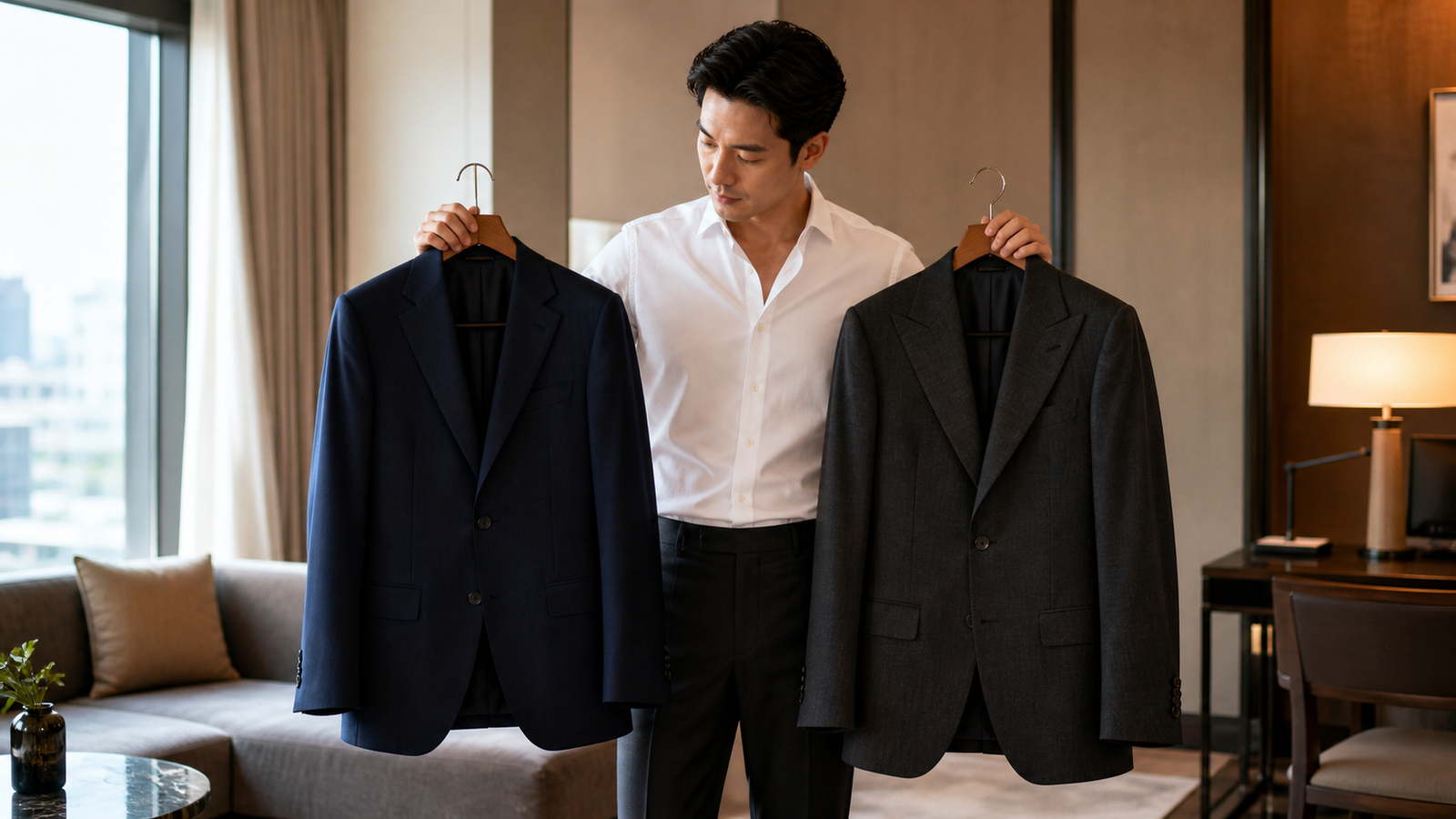
A notch lapel has a visible step where the collar meets the lapel. It is the familiar choice for many business suits, relaxed tailored jackets and versatile two-piece wardrobes because it can move comfortably between professional and less formal settings.
Notch lapels can still look distinctive. Width, gorge height, shape and the relationship to the shirt collar matter. A narrow lapel is not automatically more modern, and a wide lapel is not automatically more traditional; the lapel should look balanced against the wearer, the jacket front and the scale of the cloth.
Peak lapels: a stronger, more formal line
Peak lapels point upward toward the shoulders. That rising line can add presence to a jacket and is closely associated with double-breasted tailoring, formal suits and tuxedos, although it can also be used on a single-breasted suit when the overall design supports it.
The points should look deliberate rather than exaggerated. Their angle, width and placement need to work with the shoulder line, chest and buttoning arrangement. For a wedding or important evening occasion, peak lapels can provide a more assertive alternative to a notch lapel without relying on decorative excess.
Shawl lapels: a continuous eveningwear curve
A shawl lapel forms one continuous rounded line without a notch or peak. It is most strongly associated with dinner jackets and other black-tie garments. The smooth shape can feel elegant and distinctive, especially when the facing creates a subtle contrast with the jacket cloth.
Because the style is closely tied to eveningwear, it is usually less adaptable as an everyday business-suit choice. If you are comparing a formal dinner jacket with a versatile dark suit, the dedicated Tuxedos page and the guide to choosing a tuxedo or dark suit for a wedding can help clarify the intended dress code.
How lapel width affects proportion
Lapel style and lapel width are separate decisions. The same notch or peak shape can appear restrained or dramatic depending on its width, gorge and roll. The aim is visual balance: the lapel should relate naturally to the wearer’s frame, the jacket shoulder, shirt collar and tie rather than following a fixed trend.
During a fitting, view the jacket from the front and at a natural distance. A lapel that looks appealing in a close photograph may feel out of scale across the complete garment. The fitting process is also the right time to assess how the lapel rolls and whether the jacket front stays clean when buttoned.
Match the lapel to the garment and occasion
- Business and versatile suits: a well-proportioned notch lapel is a dependable starting point.
- Formal or double-breasted tailoring: peak lapels can reinforce a stronger, more ceremonial line.
- Black tie: peak and shawl lapels are established dinner-jacket choices; the rest of the garment should follow the same level of formality.
- Relaxed jackets: cloth, structure and styling may make a softer notch lapel more appropriate than a highly formal treatment.
Fabric changes how a lapel behaves. Weight, weave and surface texture influence the roll and visual sharpness, so review the cloth alongside the proposed design rather than treating the choices independently. The Fabrics collection provides a useful starting point before an in-person discussion.
Questions to discuss at a fitting
- What occasions should the jacket cover?
- Will the garment be single- or double-breasted?
- How should the lapel width relate to the wearer’s frame and shirt collar?
- Does the chosen cloth support a soft roll or a sharper formal line?
- Will the jacket be worn mainly with a tie, open collar or eveningwear accessories?
These decisions are refined through consultation and fittings rather than selected in isolation. Class Bespoke’s bespoke tailoring process explains how measurements, design choices and subsequent fittings work together.
Choosing your lapel in Bangkok
Bring references if you have them, but focus on what you need the garment to do. A clear brief about the occasion, travel schedule, climate, shirts and shoes is more useful than choosing a lapel from a single cropped image. For a broader commissioning discussion, explore custom suits or contact Class Bespoke with your dates and preferred Bangkok branch.