Nov 5, 2026
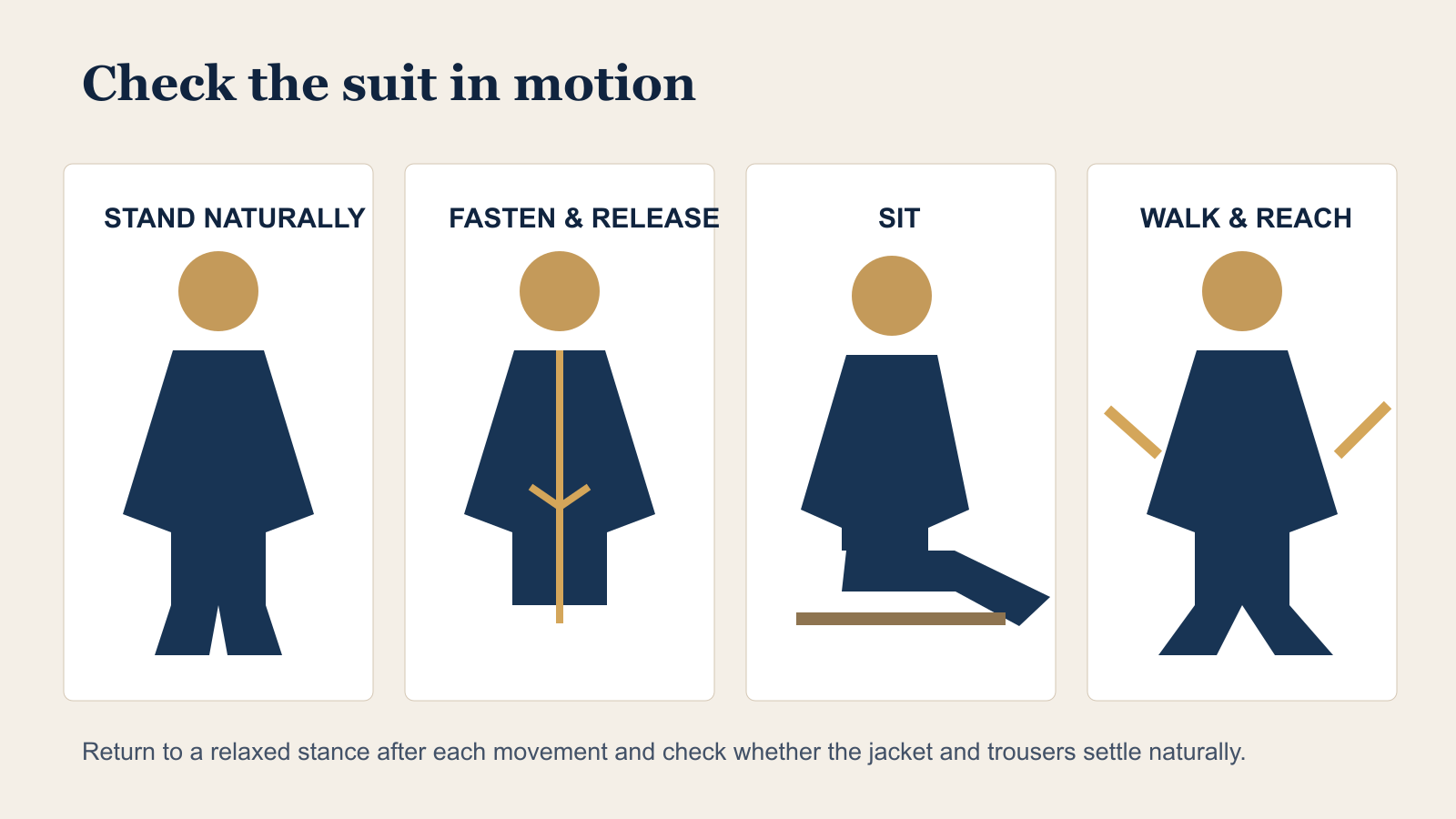
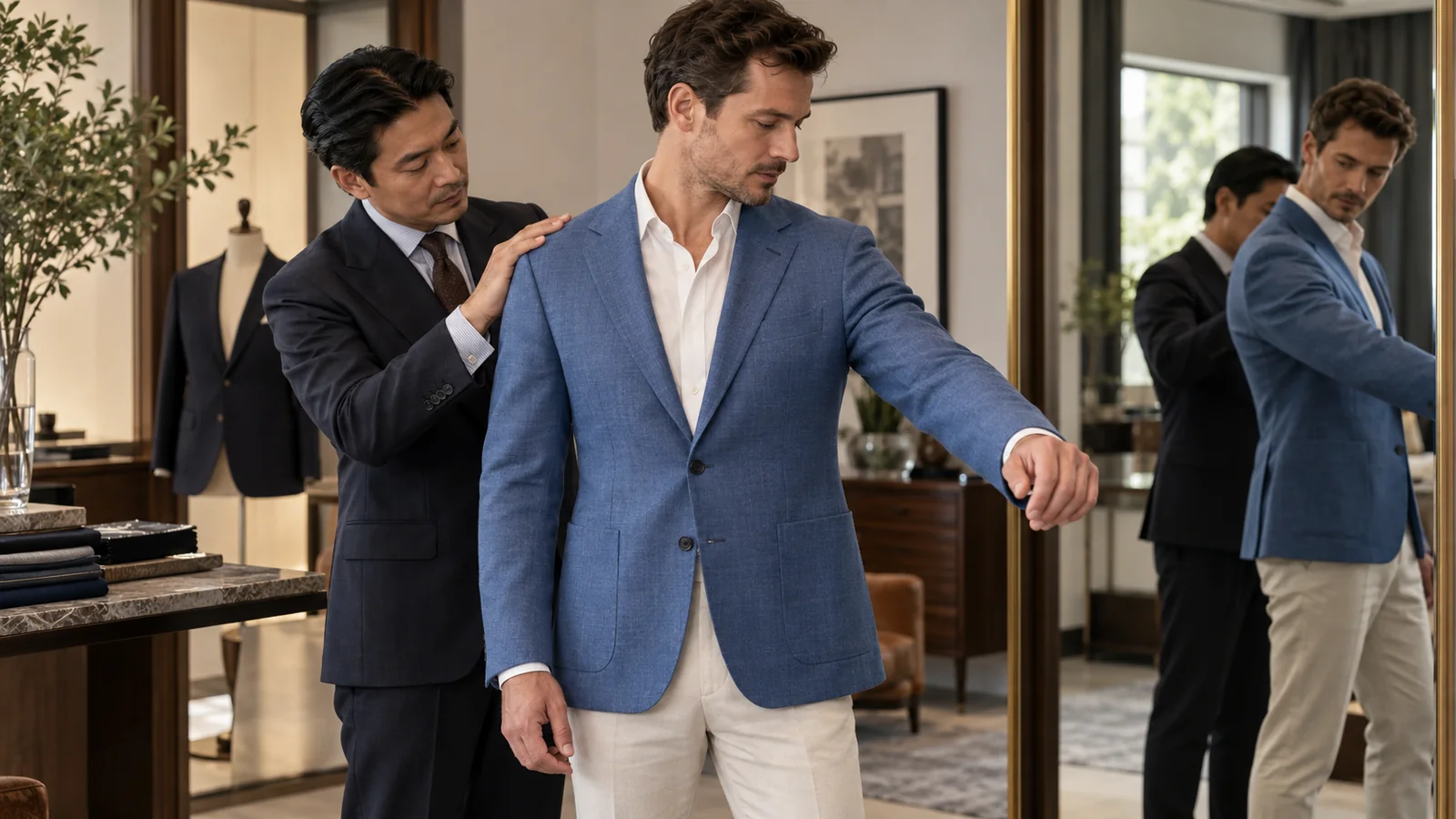
Image note: This guide combines editorial fitting visuals with an AI-generated movement illustration. The fictional fitting scene is not evidence of an actual Class Bespoke appointment or construction method.
A suit can look clean in a still photograph and become uncomfortable as soon as its wearer sits, walks or reaches. Dynamic fit is the relationship between body, pattern, cloth and construction during ordinary movement. It should be tested deliberately, while recognising that woven tailoring will never behave like stretch sportswear.
Static fit and dynamic fit answer different questions
Standing naturally reveals balance, length, collar position, shoulder line and the way the trousers fall. Movement reveals whether the available ease is in the right places and whether the garment returns to a settled position afterward. Apparel-fit research therefore uses both static and dynamic postures; professional fit models commonly raise their arms for sleeved garments and sit or squat when evaluating lower-body clothing.
More looseness is not automatically more mobility. Excess cloth can collapse, slide or catch, while a closer armhole or well-shaped seat can move efficiently when its geometry is correct. Judge where the garment allows movement, not only its overall circumference.
What to assess while sitting
Trouser waist, rise and seat
Sit in a normal chair with both feet on the floor, then lean slightly forward as if working at a table. The waistband should remain secure without cutting sharply into the abdomen. The rise should give enough length through the body for the seat and crotch to accommodate the posture, and the thighs should not feel bound.
Some increase in folds across the lap is unavoidable: the hip and knee joints have changed angle and the cloth must go somewhere. Persistent pain, a waistband forced downward, pockets pulled wide or strong tension radiating from the fork suggests that the pattern or ease needs review. Adding width at random is not the only answer; waist position, rise shape, seat angle and thigh room interact.

Jacket front and collar
A single-breasted jacket is normally unbuttoned for a settled seated posture, but the fitting can include a brief controlled sit while buttoned to reveal severe restriction. The fronts will open and the skirts will spread to some degree. The collar should not detach dramatically from the neck, and the armholes should not bite as the arms move toward a table.
Do not demand that the jacket look as flat as it does while standing. The torso shortens and bends in the chair. The meaningful test is comfort, controlled displacement and a clean recovery after standing again.
What walking and stairs reveal
Walk at a normal pace, turn, and take several steps up if stairs are available. Trousers need enough room through the seat, fork and thigh to allow stride without pulling the waistband down or catching at the knee. A very narrow leg can restrict movement even when the waist and seat appear correct.
Watch whether the trouser legs return to an even line or remain twisted. Persistent rotation can relate to leg shape, grain, pressing or pattern balance. The jacket skirts should move with the stride and settle again rather than staying caught over the seat. Vents will open during movement; the concern is whether they close cleanly when the wearer returns to neutral.
Use ordinary reaching, not a gymnastics test
Reach forward as if holding a steering wheel, typing or collecting an object from a shelf at chest height. This exposes the relationship among armhole height and shape, sleeve pitch, upper-sleeve room, back ease and collar position. A well-resolved jacket should let the arms move without dragging the whole body of the coat excessively upward.
Some cuff movement, back tension and collar movement are normal because a tailored sleeve is designed to look clean with the arm resting, not to support unrestricted overhead exercise. Raising both hands straight above the head can identify an extreme restriction, but it should not become the sole pass-or-fail standard for a business suit. Test the movements the wearer actually performs.
Notice what happens after the movement
Recovery is as informative as range. After sitting, walking or reaching, return to a relaxed stance without pulling the garment into place. Check whether the jacket collar returns to the neck, the fronts regain balance, vents close and trouser legs fall without persistent rotation.
A temporary crease produced by bending is not necessarily a fit fault. A repeated diagonal drag line that remains in neutral posture, a waistband that has migrated or a sleeve that stays twisted deserves attention. Cloth resilience and weight affect recovery, so the same movement will not look identical in crisp worsted, brushed wool, cotton or linen.
Separate normal displacement from a genuine problem
Normal movement changes the garment temporarily and predictably. A genuine fit issue tends to be repeatable, localised and linked to restriction, pain or failure to settle. Useful observations include:
- where pressure is felt rather than simply “the suit is tight”;
- which exact movement causes it;
- whether a wrinkle disappears on returning to neutral;
- whether the garment shifts equally on both sides;
- whether the shirt, belt, braces or objects in pockets affect the result.
Asymmetry matters. Most bodies are not perfectly symmetrical, and one forward shoulder or different arm position can make the left and right sleeves respond differently. The aim is controlled balance on the actual wearer, not mathematical mirror imaging.
A practical dynamic fitting sequence
- Set the baseline: stand naturally, breathe normally and avoid adopting a military pose.
- Sit: use an ordinary chair, place the arms as they would be at a desk, then stand without rearranging the suit.
- Walk and turn: take a realistic stride and, if relevant, climb a few stairs.
- Reach forward: simulate driving, typing and a chest-height reach.
- Use the garment: place hands in intended pockets and check the jacket both open and normally buttoned.
- Return to neutral: inspect recovery before touching the cloth.
Wear the shirt, underlayer, belt or braces and shoes intended for the suit. Different footwear changes trouser break, while a bulkier shirt can change the armhole and collar relationship.
Understand the silhouette–movement trade-off
A close, clean line and movement ease must be developed together. Suppressing the waist, narrowing the thigh or reducing the upper sleeve can sharpen the silhouette but remove functional room if taken too far. Adding generous ease everywhere can make a suit cumbersome without solving a poorly shaped armhole or rise.
The correct compromise depends on use. A suit for presentations and desk work, a wedding suit worn through dancing and a travel suit do not face identical movement demands. State the important actions during consultation so the pattern can be planned around them before finishing.
Give movement feedback that can be acted on
Describe the action, location and effect: “the front waistband presses when seated,” “the right sleeve twists when the arm hangs,” or “the collar lifts during a forward reach and does not settle.” Specific feedback lets the tailor distinguish pattern, balance, sleeve, trouser or styling issues.
Dynamic testing does not replace the standing assessment. Together they show whether the suit is both composed and usable. Review the Class Bespoke suit specification, understand the fitting process, and see what happens between a fitting and final delivery.