Nov 5, 2026
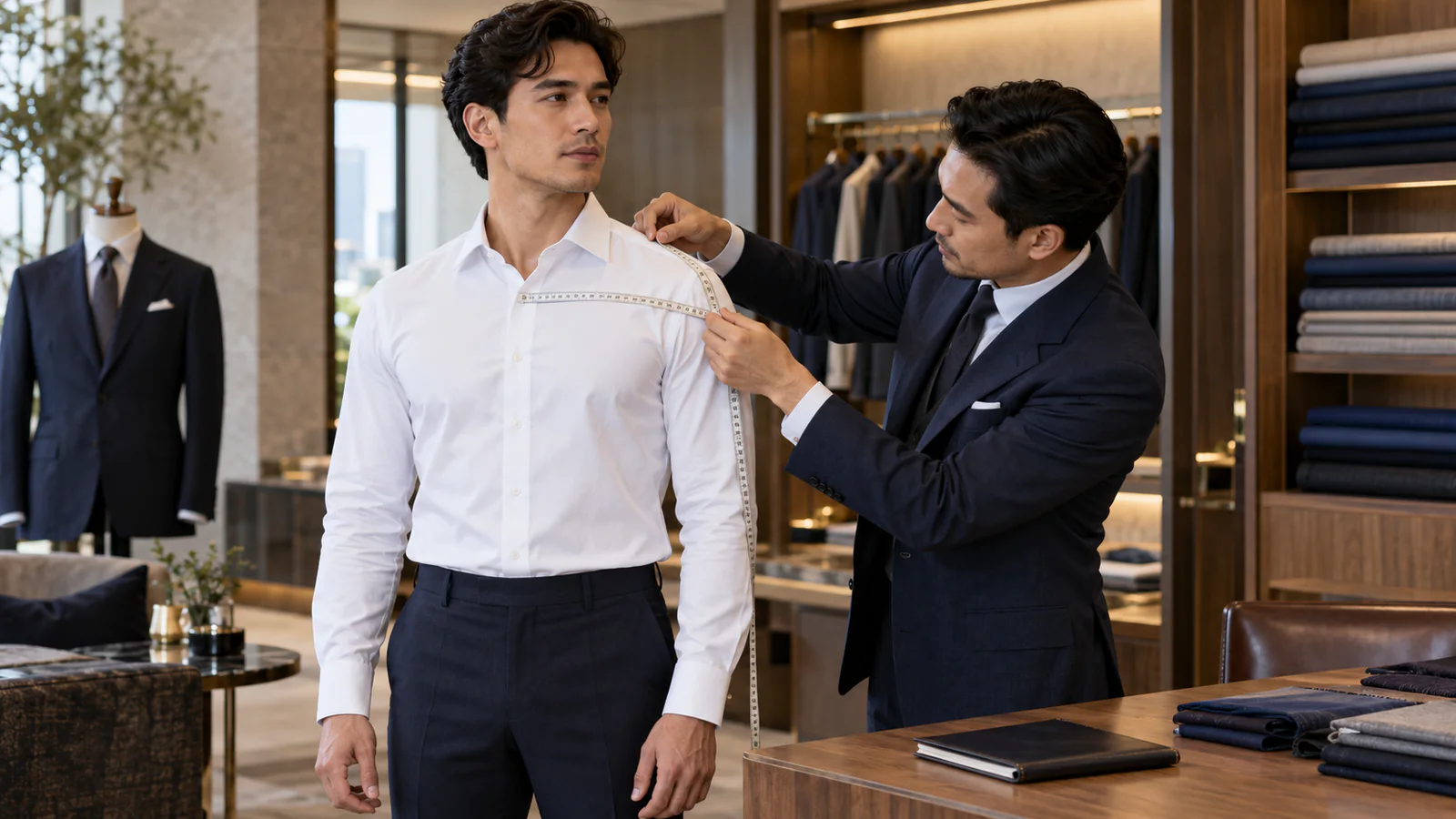
Reordering a bespoke suit should be easier than commissioning the first one, but it should not be automatic. A saved pattern, measurement record and fitting history provide a valuable starting point. They describe the wearer and the agreed garment at a particular time. They do not guarantee that the same numbers, posture, cloth or preferences still apply to the next order.
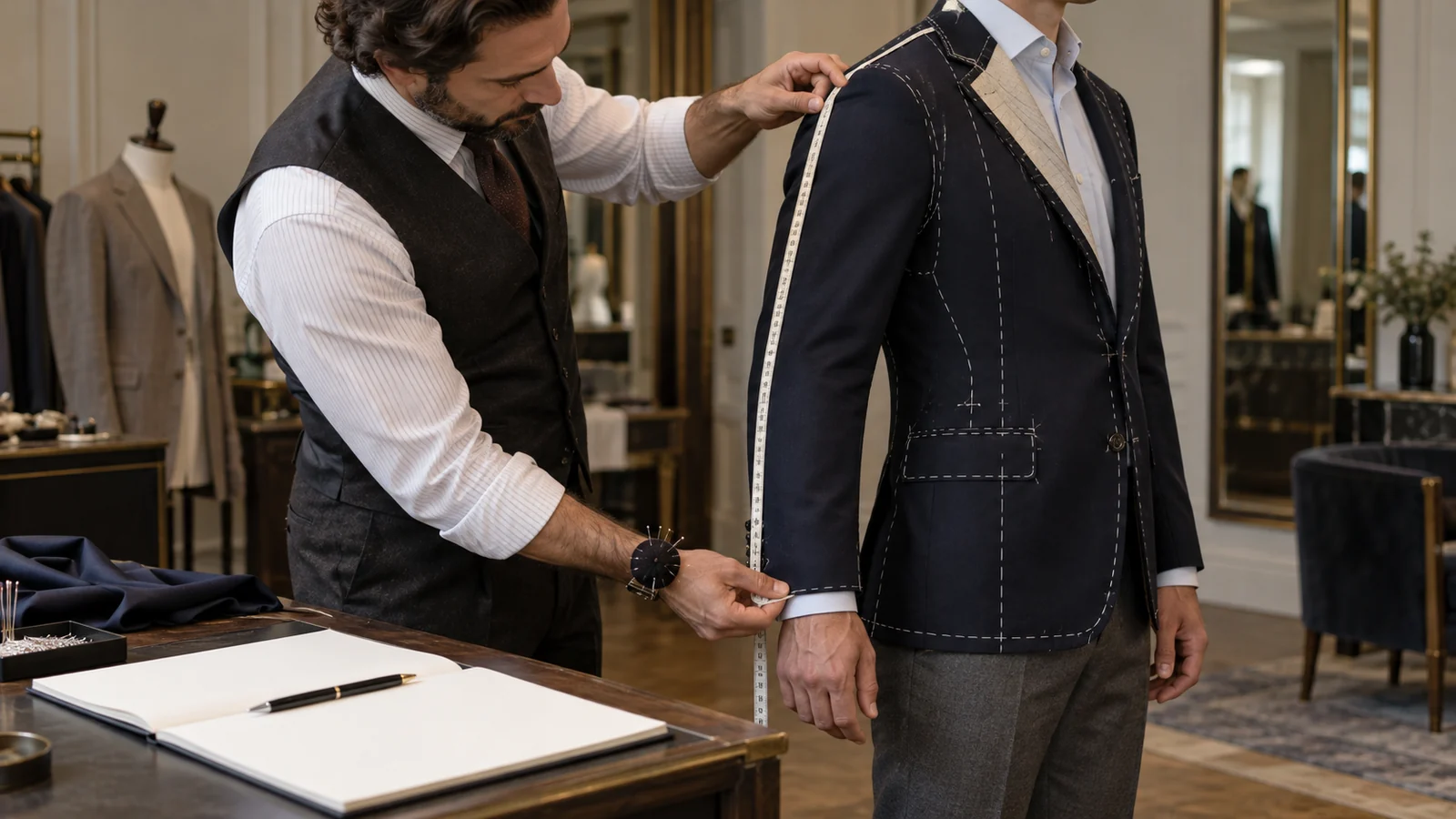
Image note: The visuals in this guide are AI-generated editorial illustrations featuring fictional people and blank records. They are not customer documents, measurement guarantees or documentary photographs of a Class Bespoke fitting.
A saved pattern is a record, not a permanent body model
A bespoke pattern can preserve useful decisions about balance, proportion, ease and style. Previous alteration notes may reveal that one shoulder sits lower, one sleeve needs a different pitch, or the trousers require a particular seat shape. Keeping those decisions avoids starting from zero.
The record is nevertheless a snapshot. Weight, muscle distribution, posture, work habits, footwear and preferred silhouette can change. The new cloth may also behave differently. The correct repeat-order process is therefore to retain what remains useful, verify what may have changed and update only what the evidence supports.
Start with the purpose of the new suit
Before taking measurements, confirm whether the new garment is intended to repeat the previous brief. A business suit, wedding suit, travel suit and separate jacket may require different ease, pockets, structure and proportions even when they are made for the same person.
Ask whether the wearer will use the same shirts, shoes, belt or braces. Consider how much time will be spent sitting, travelling or moving between indoor and outdoor conditions. A successful previous pattern may still need adjustment when the intended use changes.
Recheck measurements in a consistent setup
Measurements should be taken over the type of shirt and underlayer expected beneath the suit. The wearer should stand naturally rather than stretching upward or forcing the shoulders back. Where practical, compare the new readings with the previous record and investigate meaningful differences instead of replacing every number without context.
- Chest and upper back: changes here affect front balance, back width and arm movement, not simply jacket circumference.
- Waist and abdomen: check the level at which the jacket and trouser waist will actually sit.
- Seat and thigh: these influence trouser balance, stride and comfort when seated.
- Shoulder and sleeve: review shoulder width, arm position, sleeve length and the relationship between shirt cuff and jacket sleeve.
- Jacket and trouser lengths: confirm them with the intended proportions and footwear rather than treating the previous lengths as fixed.
- Rise, knee and hem: these should be considered together with waistband position, leg line and preferred break.
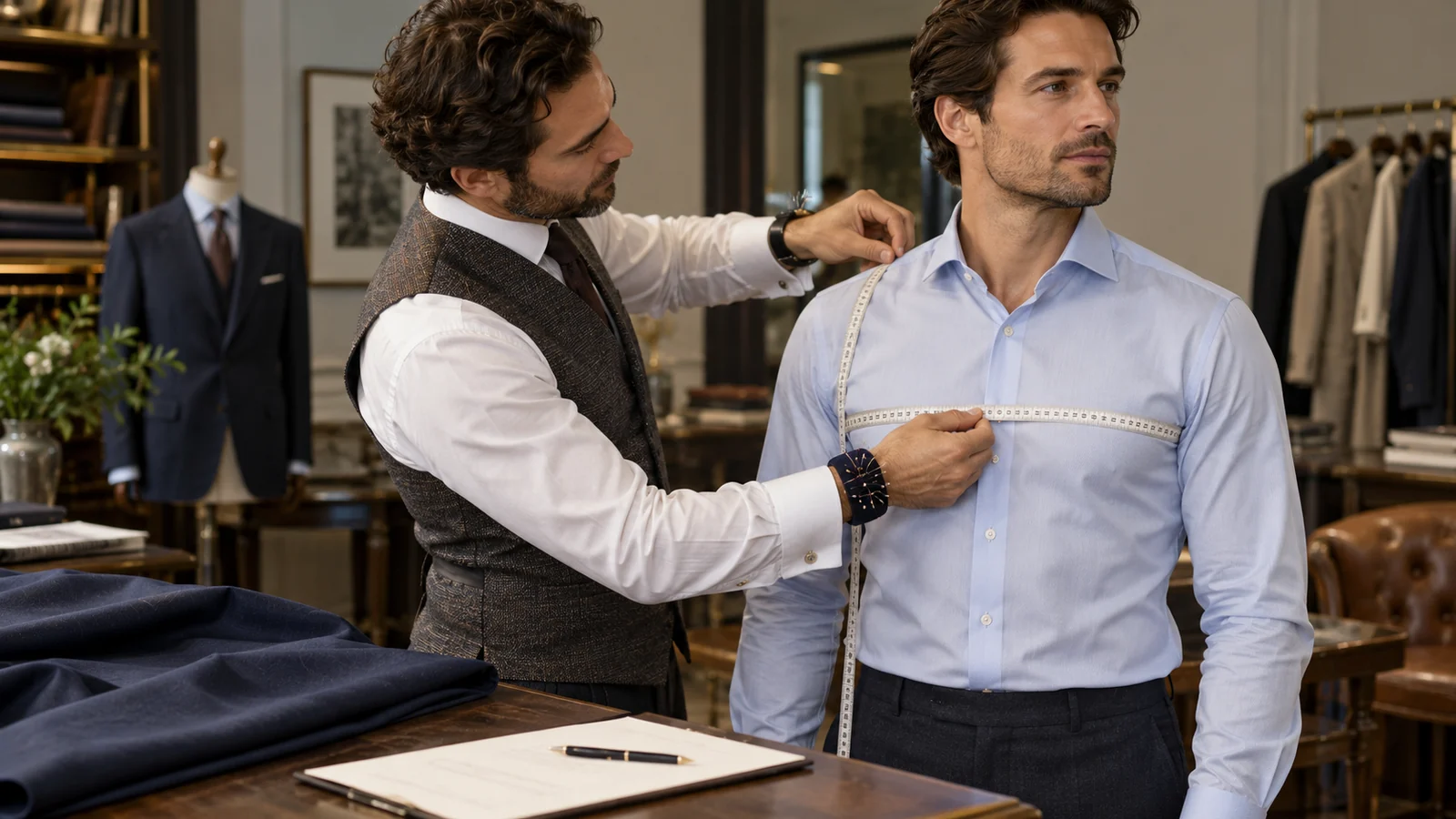
A small numerical difference does not always require a pattern change. Tape position, breathing and stance can create variation. Conversely, a body change may be important even when one circumference appears similar. Measurements need to be interpreted with posture and the behaviour of the previous garment.
Reassess posture and balance
Posture is not a single label such as “erect” or “stooped.” It includes shoulder slope, forward or backward shoulder position, head and neck position, pelvic angle, arm carriage and asymmetry between the two sides. These relationships influence how a jacket hangs and how trousers settle.
Work and daily habits can change posture. More desk time, exercise, an injury or simply a different natural stance may alter the way the body supports a garment. Observe the wearer from the front, side and back without asking for a corrected pose. A jacket should be balanced for the posture the wearer normally uses, not for a temporary fitting-room stance.
Compare the existing suit while standing and moving. Persistent collar separation, one-sided drag lines, a vent that remains open or a trouser leg that rotates can indicate a balance issue. Normal folds created by sitting or reaching should not be confused with a fault that remains when the wearer returns to a neutral position.
Review the previous order as a complete specification
The earlier suit itself is useful evidence. Note what the wearer liked, what required alteration and what they would change. Review the pattern together with fitting notes, final measurements, design choices and the actual finished garment where available.
Useful questions include whether the collar remained close to the shirt, whether the armholes allowed ordinary movement, whether the jacket waist felt too close after a meal, and whether the trousers were comfortable at a desk. Check whether the sleeves and hems still appear correct with the shoes and shirts now worn.
Alterations made after delivery should be incorporated into the working record. Otherwise, a repeat order may reproduce the pre-alteration version rather than the garment the client ultimately preferred.
Fit preference can change even when the body does not
A repeat client may want a cleaner or more relaxed silhouette than before. Terms such as “slim” and “comfortable” are too broad on their own. Translate the preference into specific decisions: waist suppression, upper-sleeve room, trouser rise, thigh ease, hem width, jacket length and the amount of shirt cuff shown.
Separate aesthetic preference from functional restriction. A wearer may like the appearance of a close jacket but need more room for driving or presentations. Another may prefer a fuller trouser without wanting a lower waistband. The new order should record both the visual objective and the movements it must support.
Cloth and construction can change the result
The same pattern will not look identical in every fabric. A firm worsted, brushed flannel, open tropical weave and linen blend differ in thickness, resilience, surface and drape. Substituting cloth can change the apparent sharpness of a seam, the way a trouser falls and the amount of ease that feels comfortable.
Construction choices also matter. Lining, canvas, shoulder treatment, pocket load and jacket front can affect weight and movement. A repeat order in a substantially different cloth or construction should be evaluated as a related garment, not assumed to be a visual duplicate.
When is a remote repeat order reasonable?
A remote repeat can be practical when the previous garment fits well, the body and preferences are stable, and the new specification is genuinely similar. It becomes less reliable when there has been a significant body change, unresolved fit issue, different posture, major design change or unfamiliar fabric behaviour.
Current photographs or self-reported measurements may help identify whether an in-person reassessment is advisable, but they do not reproduce a complete fitting. If there is uncertainty, a consultation or fitting is the safer point at which to resolve it.
A repeat-order checklist
- Confirm the new garment’s purpose and expected wearing conditions.
- Review the previous suit, alteration history and final pattern notes.
- Recheck core measurements using a consistent stance and clothing layer.
- Observe posture, shoulder slope, arm carriage and left–right differences.
- Discuss what felt successful and what the wearer wants changed.
- Confirm cloth, construction, lining and design differences.
- Test ordinary sitting, walking and reaching where a fitting is available.
- Record approved changes without discarding useful historical information.
Common repeat-order mistakes
The first is assuming that “same as last time” is a complete specification. The second is changing several variables at once without recording which change is intended to solve which problem. The third is copying numbers while ignoring posture, cloth and alterations. The fourth is requesting a different silhouette while expecting the original fit and movement to remain unchanged.
A disciplined repeat order is not a full restart, nor is it a blind copy. It uses the previous pattern as evidence, verifies the current wearer and records the new brief clearly. Explore the Class Bespoke suit options, review the bespoke process, and use the contact page to discuss whether an in-person recheck is appropriate for the next commission.