Nov 5, 2026
A fabric described as “lightweight” may sound like the obvious choice for a hot climate. Weight matters, but it answers only one question: how much material occupies a given area. It does not directly measure how freely air passes through the cloth, how quickly moisture vapour escapes, how the fabric hangs away from the body or how much lining and internal structure the finished jacket contains.
That is why a slightly heavier, open-weave suiting can sometimes feel more comfortable than a very light but densely woven cloth. Warm-weather selection works best when fabric weight is considered alongside weave, thickness, porosity, drape, colour, garment construction and the conditions in which the suit will actually be worn.
Fabric weight is not a breathability rating
Suit-cloth weight is usually expressed as mass per unit area. It helps compare how substantial two fabrics are, but it does not reveal the size and continuity of the spaces between their yarns. Those spaces are central to air permeability.
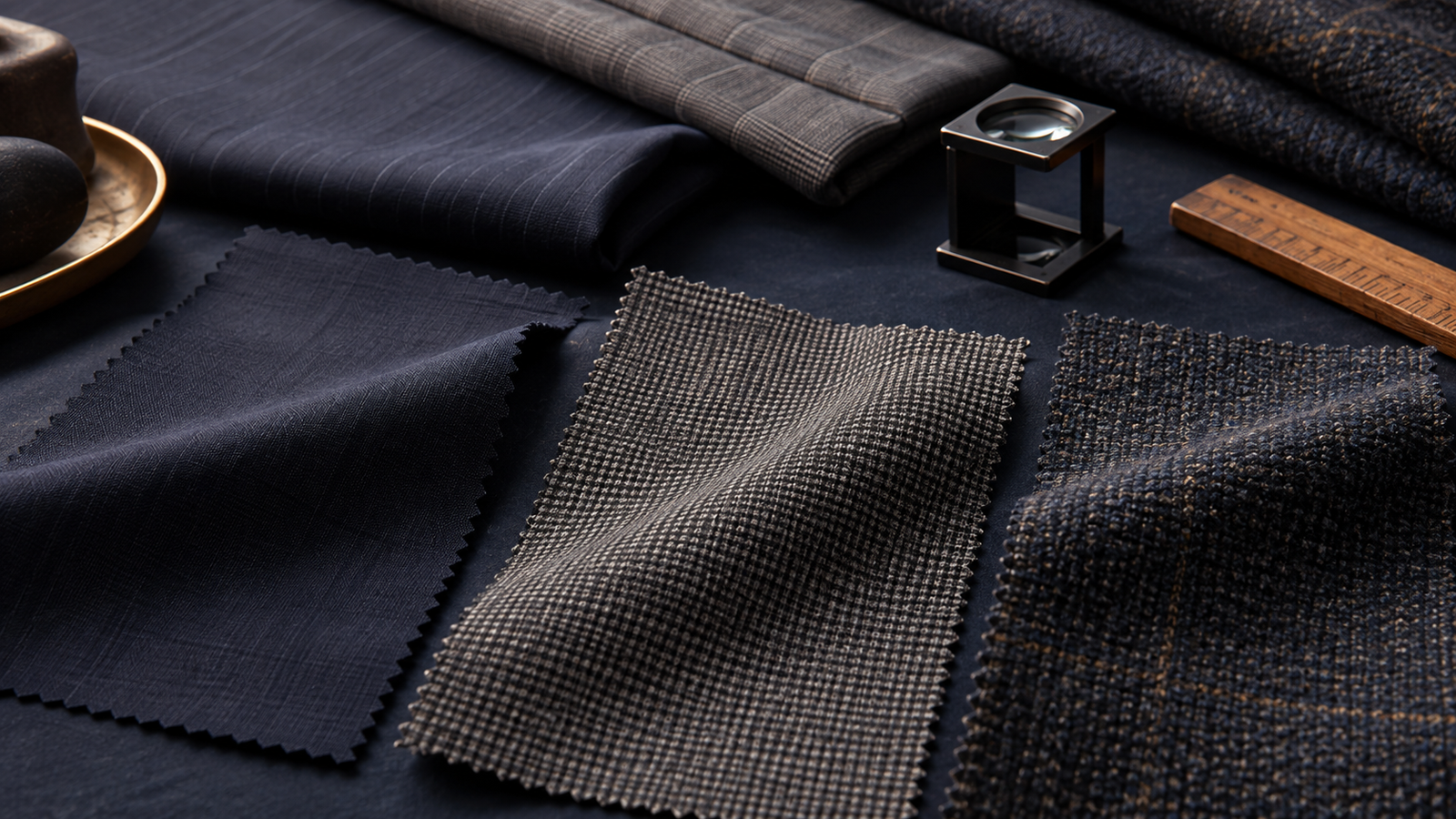
Two wool fabrics can have similar weights and very different structures. One may use tightly packed fine yarns to create a smooth, compact surface. Another may use a more open construction that allows noticeably more air movement. Conversely, an extremely light cloth can still feel close and resistant to airflow when its weave is dense or its finish has reduced the available openings.
Textile comfort research treats mass, thickness, porosity, air permeability and resistance to heat and water-vapour transfer as related but separate properties. No single number substitutes for the complete set.
Weave openness can matter more than a small weight difference
Air permeability describes how readily air moves through a fabric under a pressure difference. In practical terms, an open suiting is more likely to respond to walking, a fan or a breeze than a closely packed cloth. This can support convective cooling when the surrounding air is cooler than the skin.
Tropical worsteds and other open warm-weather suitings are designed around this principle. Their yarn and weave choices can create a relatively crisp cloth with visible inter-yarn spaces. A compact plain or twill cloth may weigh less yet allow less useful airflow.
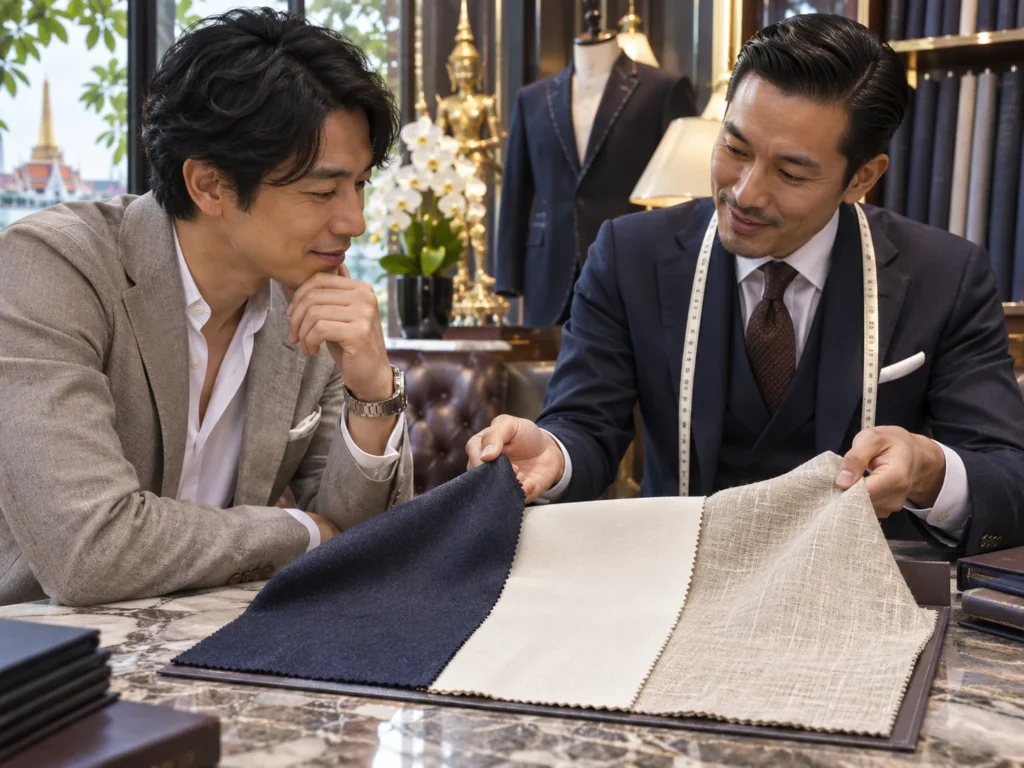
Do not judge openness from the weave name alone. Twill, plain weave and hopsack each exist in many yarn counts, densities and finishes. Hold the actual swatch toward a light source, compare it with another cloth under the same conditions and check whether the openness creates acceptable opacity for the intended garment.
Thickness and bulk influence insulation
Clothing insulates partly by trapping still air. A thick or lofty cloth usually holds more air within its structure than a thin, compact one, although fibre, density and finishing affect the result. This is why a brushed flannel and a crisp worsted of similar mass can feel very different.
Weight and thickness are not interchangeable. A fabric can be relatively heavy because it contains compact, tightly arranged yarns without being especially bulky. Another can feel fuller and softer at a lower mass because its yarns and finish create more loft.
For warm conditions, compare both the scale reading and the physical hand. Fold the cloth, let it spring back and look at the edge. A bulky, raised surface usually behaves differently from a flat, open worsted even if their published weights appear close.
Humidity makes moisture movement part of comfort
In hot, humid weather, comfort depends on more than dry heat passing through the cloth. The body also needs to release moisture vapour, and sweat must spread and evaporate. High outdoor humidity slows evaporation, so fabric and garment design cannot make the surrounding climate disappear.
Wool can absorb and release moisture vapour within its fibre structure, helping moderate the microclimate next to the body. That useful property does not make every wool fabric equally cool. A dense weave, heavy finish, multiple garment layers or close fit can still limit practical comfort.
“Breathable” should therefore not be treated as a guarantee. Ask what the word refers to: fibre moisture behaviour, air permeability, water-vapour resistance or simply a marketing description. These are not the same measurement.
The whole jacket changes the result
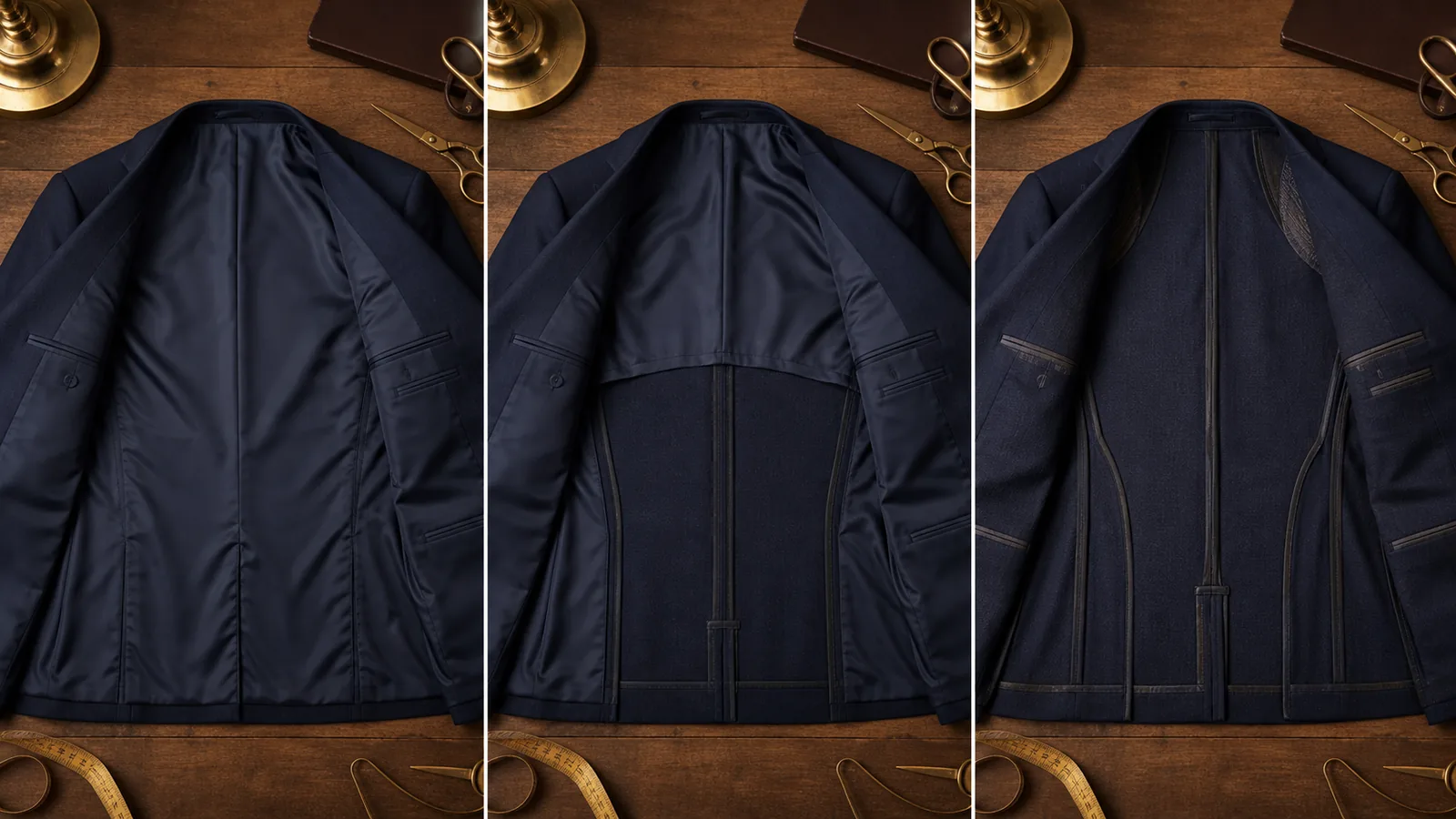
A swatch is only one layer of a finished suit. A jacket can also contain lining, pocketing, canvas or fusible components, shoulder support, sleeve-head material and facings. Each adds material, and some cover a larger area than others.
A half-lined or partially lined design may reduce layers across selected areas, while a full lining can improve slip, conceal internal construction and protect the garment. An unlined jacket is not automatically cooler if its outer cloth is dense, its fit is restrictive or its internal seams require additional finishing. Construction should be chosen as a complete specification rather than reduced to the lining label.
Fit and drape affect the air around the body
A garment does not perform like a flat laboratory sample. The distance between cloth and skin, the openings at the collar and hem, and movement during wear all affect ventilation. A fabric with some body can maintain a small air gap instead of collapsing closely against the torso. A softer, lighter cloth may cling more readily when humidity or perspiration increases.
This does not mean that a loose suit is always cooler. Excess cloth can bunch, and an oversized jacket may lose its intended balance. The practical objective is sufficient ease for ordinary movement, with a clean line and no unnecessary pressure at the armholes, chest, waist, seat or thighs.

Colour and exposure change the wearing conditions
A suit worn mainly in air-conditioned offices faces a different brief from one used outdoors at midday. Direct sunlight, shade, wind, walking pace and time between indoor and outdoor spaces all influence perceived heat. Dark cloth can absorb more radiant energy than a lighter colour under strong sun, although weave, surface and exposure also matter.
Plan for the dominant use rather than an imagined universal climate rating. A cloth selected for brief transfers between a hotel and office may prioritise crease recovery and formal appearance. A suit intended for extended outdoor wear may place greater emphasis on openness, colour and minimal layering.
Very light cloth brings other trade-offs
Reducing weight can affect opacity, stability, crease behaviour and the way a garment holds shape. A very light trouser cloth may reveal pocketing or require additional consideration around lining and seam allowances. A light jacket can feel pleasant in the hand yet show rumpling more readily during travel.
A slightly more substantial cloth may hang in cleaner lines, recover better after sitting and maintain a trouser crease more convincingly. That does not make heavier inherently better; it explains why the coolest-feeling swatch is not automatically the most useful suit.
How to compare warm-weather suit fabrics
- Confirm the weight: use it as one reference point, not the conclusion.
- Inspect openness: hold comparable swatches toward the same light and examine the spaces between yarns.
- Compare thickness and loft: look at the edge and feel whether the cloth is compact, raised or bulky.
- Test drape: place the swatch over a hand or rounded edge and see whether it stands away or collapses closely.
- Review the complete jacket: specify lining coverage, internal structure and intended pocketing.
- State the real use: explain how much time will be spent outdoors, walking, travelling or in air conditioning.
- Consider appearance: check opacity, crease recovery, colour and the level of formality required.
A hand test cannot reproduce a controlled laboratory result, but it can reveal meaningful differences among the actual cloths available for an order.
Choose a balanced specification
The useful question is not simply, “Which cloth is lightest?” It is, “Which cloth and garment specification offer the best balance of airflow, moisture behaviour, drape, structure and appearance for this wearer’s conditions?”
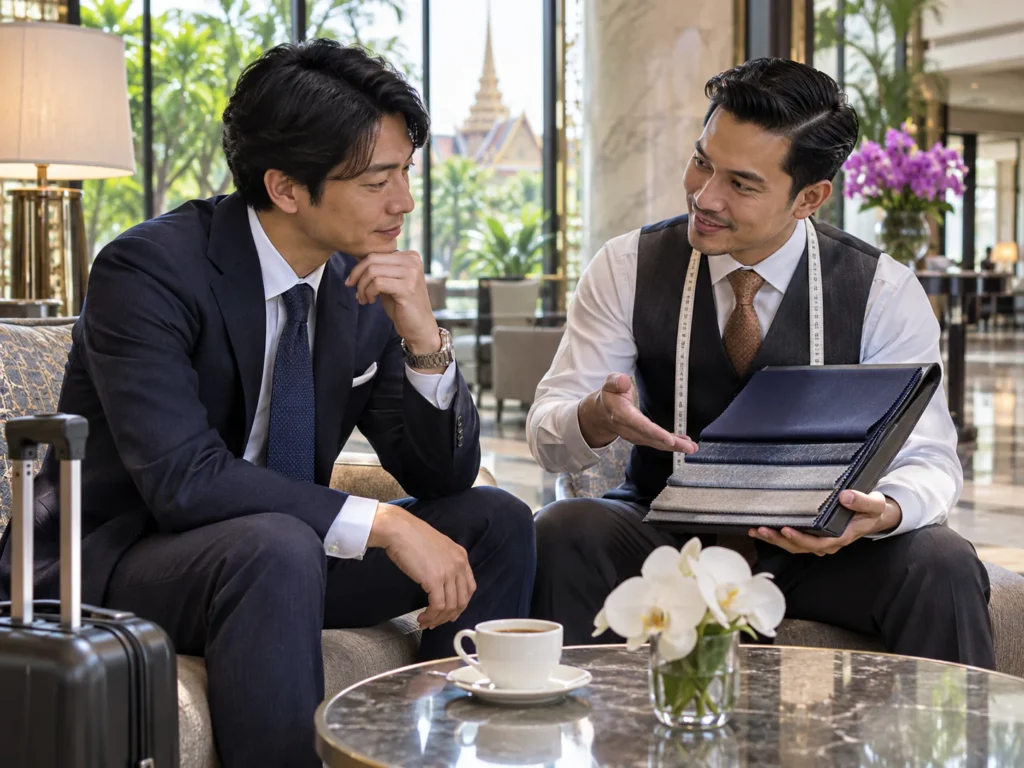
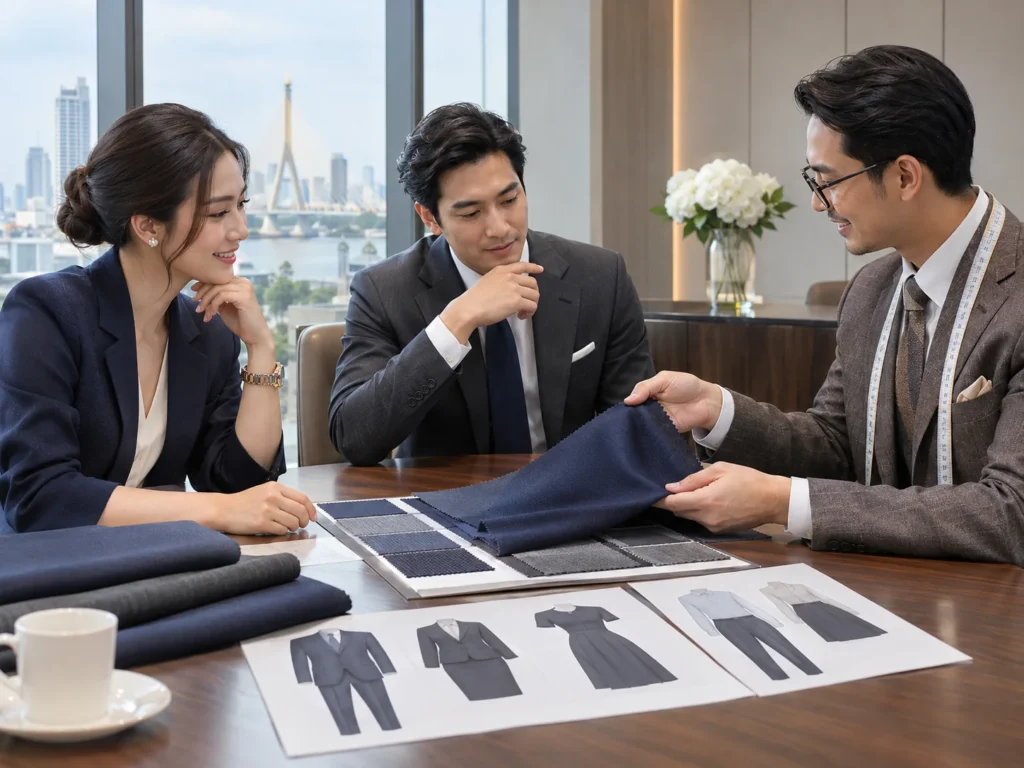
Review the tropical-wool guide for a closer look at open warm-weather worsteds. Compare available options in the Class Bespoke fabric collection, consider how they will behave in a finished suit, and use the consultation and fitting process to align cloth, construction, ease and intended wear.