Aug 26, 2026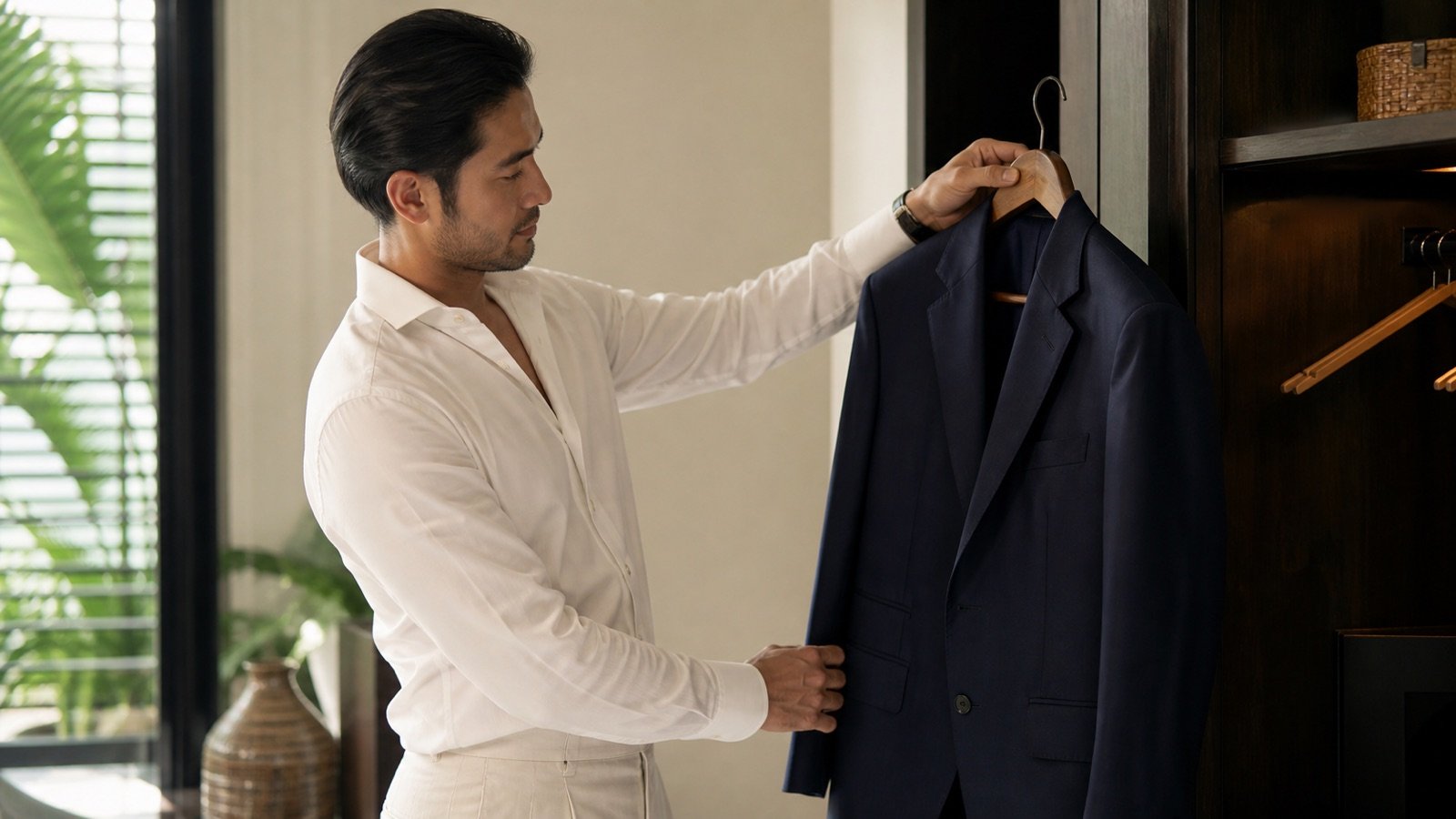
A tailored suit in Bangkok moves repeatedly between outdoor heat, humid air, air-conditioned rooms and travel. Good care is less about constant cleaning than about helping the cloth dry, recover its shape and avoid unnecessary stress after each wear.
The correct method still depends on the fibre, construction and care label. Wool, linen, cotton and blends do not all respond identically, so treat this as a practical routine to discuss alongside the garment’s specific instructions.
Let the suit air before it goes back into storage
After wearing a suit in warm conditions, remove items from the pockets and hang the jacket where air can circulate. Do not immediately seal a damp garment inside a wardrobe or plastic dry-cleaning cover. Let visible moisture dry at room temperature, away from direct sun or strong heat.
A wide, shaped hanger supports the jacket shoulders more evenly than a thin wire hanger. Hang trousers so the waistband and crease are not distorted. The Woolmark Company recommends shaped or padded hangers for woven wool garments and allowing wool time to rest between wears.
Brush surface dust gently
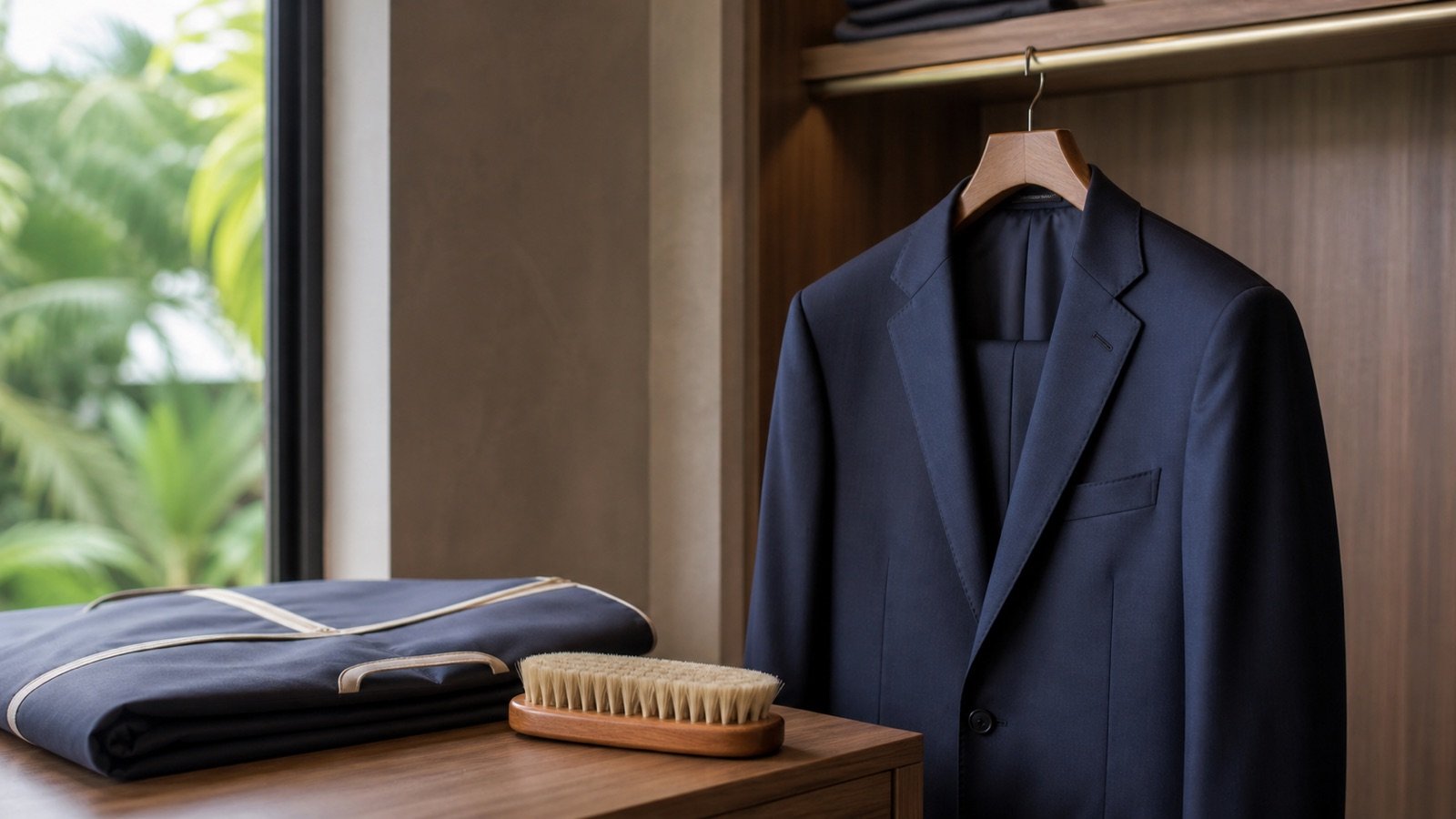
For a woven wool suit, a soft garment brush can remove loose dust and surface particles that would otherwise settle into the cloth. Brush with controlled strokes rather than aggressive scrubbing, and take extra care with open, delicate or highly textured weaves.
If the garment has a visible stain, do not experiment with strong household chemicals. Blotting, rubbing or applying heat can make some marks harder to remove. Check the care label and speak with an experienced cleaner or the tailor when the treatment is uncertain.
Give the cloth time to recover
Rotating suits is useful in Bangkok because cloth and internal construction need time to release moisture and regain shape. Woolmark recommends resting wool garments for about 24 hours before wearing them again. That is a fibre-care principle, not a claim that every crease or odour will disappear automatically.
Cloth choice also affects how a suit behaves through the day. The Tropical Wool guide explains how weave, weight and drape influence warm-weather use, while the Fabrics page helps clients compare available cloth in person.
Use steam and pressing carefully
Light steam may help wool release wrinkles, but pressing is not the same as moving a hot iron directly across a tailored jacket. Excessive heat, pressure or moisture can mark cloth, flatten texture or affect internal components. Follow the garment’s care label and use a professional familiar with tailored clothing when a jacket needs more than light refreshing.
A bathroom may be humid enough to relax some wrinkles, but in Bangkok the aim is not to leave a garment damp for longer. If steam is used, let the suit dry fully with good airflow before storage.
Dry-clean only when the garment needs it
Dry cleaning is appropriate for stains, persistent odour or a care instruction that requires professional cleaning, but it should not become an automatic response after every wear. Empty the pockets, point out specific marks and confirm that the cleaner understands the cloth and construction.
For a newly commissioned garment, ask how the selected cloth and lining should be maintained. The Jacket Lining guide explains how full, half-lined and unlined configurations differ, and the Bespoke Tailoring page outlines available construction approaches.
Store the suit clean, dry and with room to breathe
Before longer storage, make sure the suit is completely dry and free from food residue or stains that may attract pests. Use a breathable garment cover rather than leaving the suit sealed in plastic. Avoid compressing several jackets tightly together, which can crush shoulders and lapels.
Keep storage away from direct sunlight and obvious damp. If a wardrobe develops a musty smell or condensation, solve the room or storage problem rather than masking it with fragrance on the garment.
Plan care when choosing the suit
A Bangkok suit should be selected for the way it will actually be worn: frequency, travel, outdoor exposure, office conditions and the time available for rotation all matter. Cloth, lining and construction can then be discussed as one system rather than isolated upgrades.
Clients comparing warm-weather options can review the current tailored suit choices or request a consultation at the Thonglor or Sukhumvit showroom.
Research note: general wool-care guidance was checked against The Woolmark Company. Always follow the care label supplied with the individual garment.