Aug 24, 2026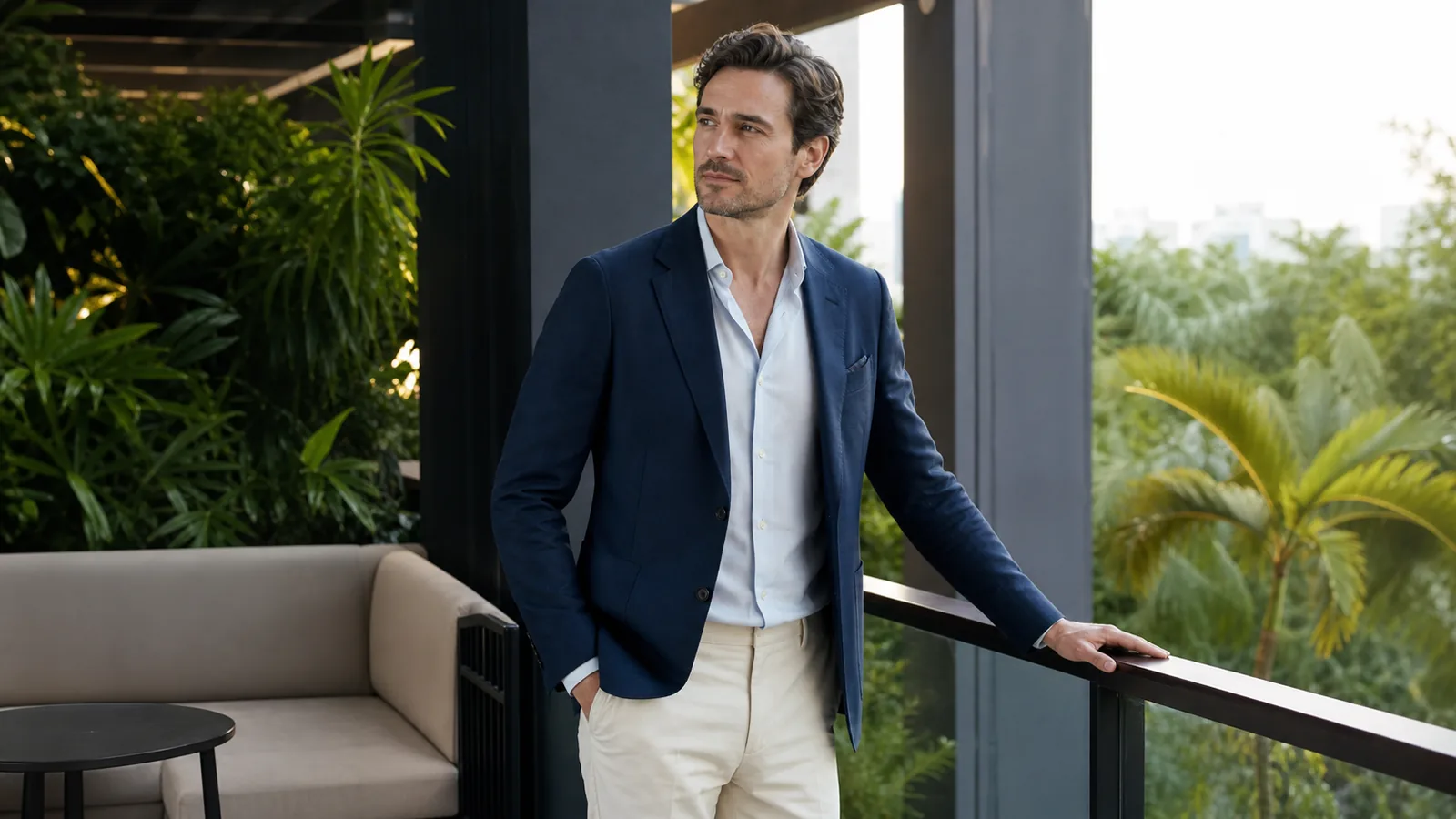
A jacket lining is more than a decorative interior. It covers internal construction, helps the jacket move over a shirt and changes how the garment feels in Bangkok’s warm, humid conditions. The useful choice is therefore not simply “more lining” or “less lining”, but the amount of coverage that works with the outer cloth, jacket structure, intended use and standard of internal finishing.
This guide compares full, half-lined and unlined approaches. These terms describe lining coverage; they do not describe whether a jacket is fused, half canvas or full canvas. For that separate construction question, see our guide to full canvas, half canvas and fused suits.
What a jacket lining does
Lining gives the inside of a jacket a clean finish and covers pocket bags, seam allowances and parts of the internal structure. A smooth lining can also help the jacket slide over a shirt when it is put on or removed. Coverage influences warmth and air movement, but it is only one part of comfort: the outer cloth, fit, shirt, jacket structure and weather all matter.
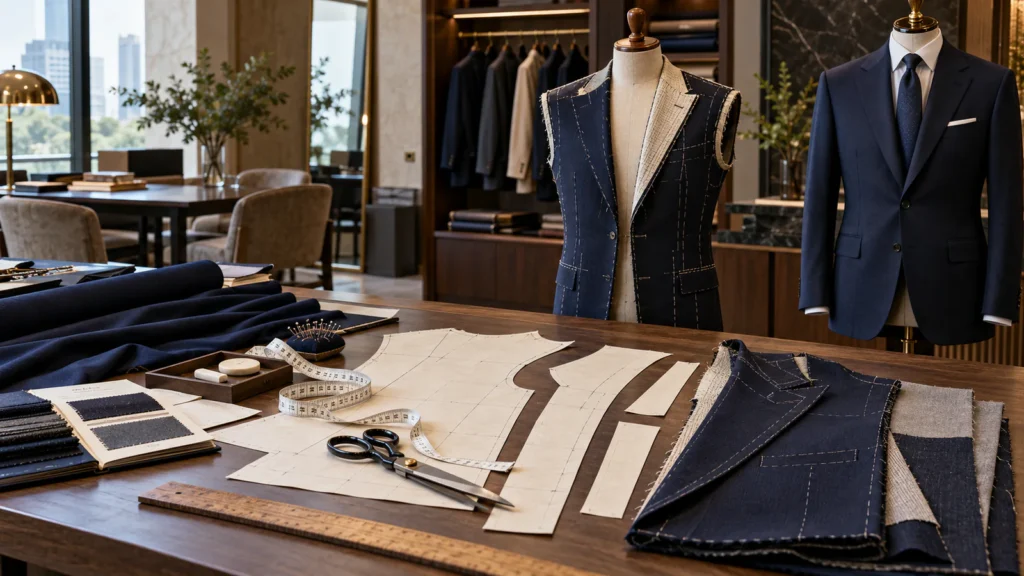
Less lining exposes more of the jacket’s internal finish. That means seams, edges and facings must be handled deliberately. An unlined jacket is not simply a fully lined jacket with one layer omitted; its interior becomes visible workmanship.
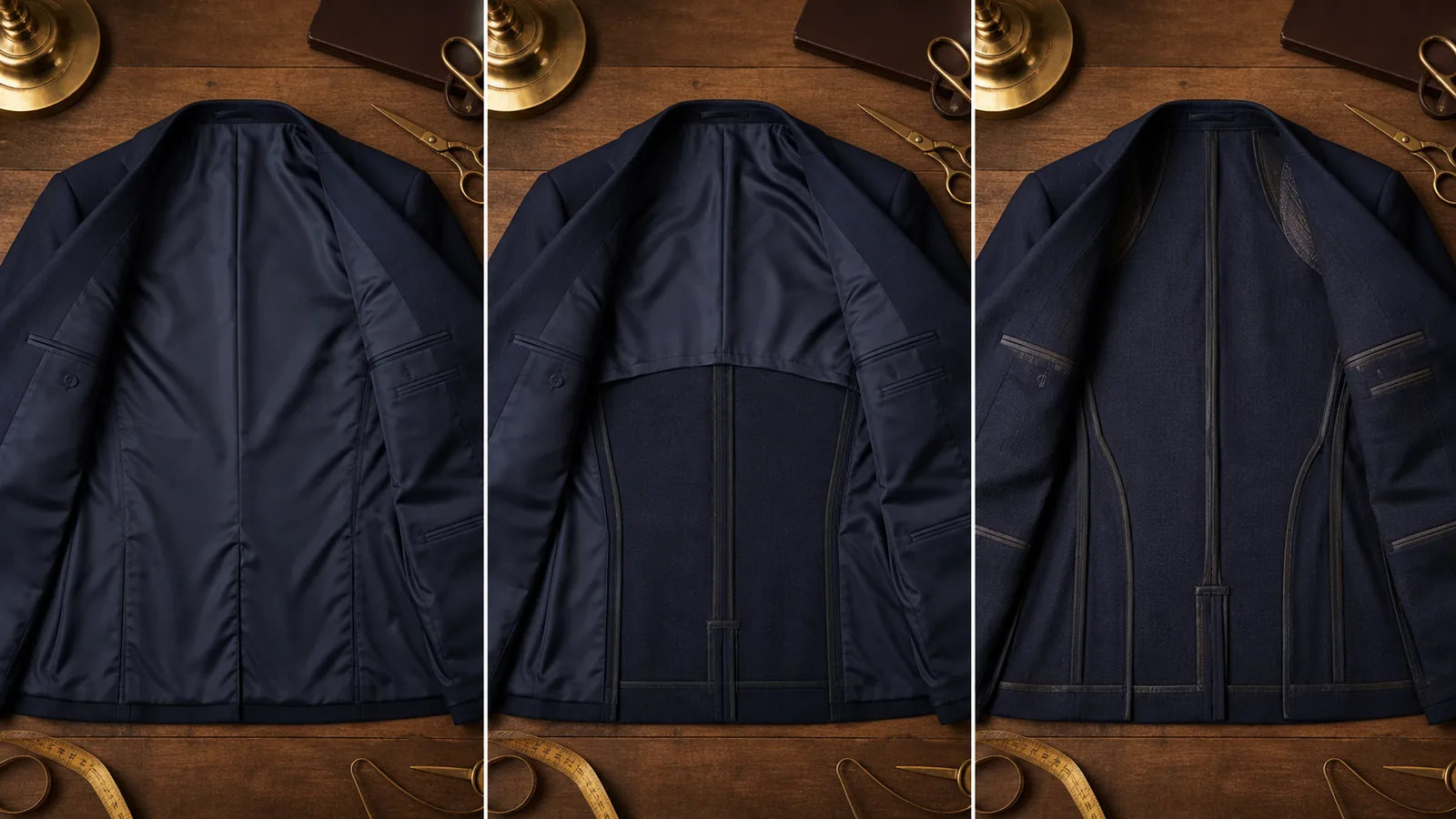
Fully lined jackets
A fully lined jacket covers most of the body interior and normally includes lined sleeves. It offers the most complete internal coverage and lets the jacket move smoothly over a shirt. It can suit formal tailoring, structured jackets and cloths whose interior benefits from protection.
The trade-off is an additional layer across the back and body. In Bangkok, that may feel warmer than a reduced-lining configuration, although lining material and the rest of the garment still influence the result. “Fully lined” should not be treated as a synonym for better construction; it is a coverage choice.
Half-lined jackets
A half-lined jacket typically retains lining around key upper areas while leaving more of the lower back exposed. The exact boundary and sleeve treatment depend on the pattern and specification. This approach can reduce coverage while preserving a clean interior around the shoulders, chest and facings.
Half lining is often considered for warm-weather jackets because it balances internal finish with less lining across the back. It still requires an outer cloth and internal construction that can hang cleanly. Choosing it only for the label “breathable”, without considering cloth and fit, is too simplistic.
Unlined and minimally lined jackets
“Unlined” does not always mean that every piece of lining has disappeared. A jacket may retain sleeve lining, small reinforcement areas or facings while leaving much of the body unlined. Ask which sections are actually covered rather than relying on the term alone.
With more of the interior exposed, seam finishing and edge treatment become part of the visible garment. The outer cloth must also provide a suitable balance of drape, stability and comfort. A very light cloth is not automatically ideal if it cannot hold the intended shape without more support.
Lining and canvas are different decisions
Canvas sits between the outer cloth and lining to help shape parts of a tailored jacket. Lining is the interior layer worn next to the shirt. A jacket can combine different lining coverage with different construction methods where the specification supports it, so “half lined” should never be mistaken for “half canvas”.
The relationship matters. A softer warm-weather jacket, a structured business suit and a formal dinner jacket may require different combinations of cloth, canvas, shoulder treatment and lining. Our bespoke-tailoring overview explains how these elements are considered as one garment rather than isolated upgrades.
Choosing for Bangkok and travel
For regular wear in Bangkok, begin with the situations in which the jacket will be used. Air-conditioned business settings, outdoor transfers, weddings, travel and evening events create different requirements. A lighter lining arrangement can reduce one layer, but it cannot compensate for an unsuitable outer cloth or an overly restrictive fit.
Discuss the outer cloth at the same time. Tropical wool, linen and other warm-weather options behave differently in crease recovery, texture and drape. The broader considerations are covered on our Fabrics page and in our guide to tropical wool for Bangkok.
Questions to settle during a consultation
- Where and in what climate will the jacket be worn most often?
- How formal or structured should the finished garment feel?
- Which areas are lined, and are the sleeves lined?
- How will exposed seams and internal edges be finished?
- Does the selected outer cloth have enough body for the intended construction?
- How does the lining specification relate to the canvas and shoulder treatment?
Class Bespoke can discuss fully lined, half-lined and unlined configurations where the garment and construction support them. Availability and the final specification should be confirmed for the individual commission rather than assumed from a general guide.
To compare the options for a suit, blazer or warm-weather jacket, request a consultation at one of our Bangkok showrooms.