Aug 27, 2026
A jacket vent is the opening—or pair of openings—at the lower back of a tailored jacket. It looks like a small detail, but it changes how the jacket skirt moves, how the back appears while standing and what happens when you sit or place a hand in a trouser pocket.
The three main configurations are a single centre vent, double side vents and no vent. None is automatically correct for every wearer. The useful choice depends on the garment, the desired silhouette and how you expect to move in it.
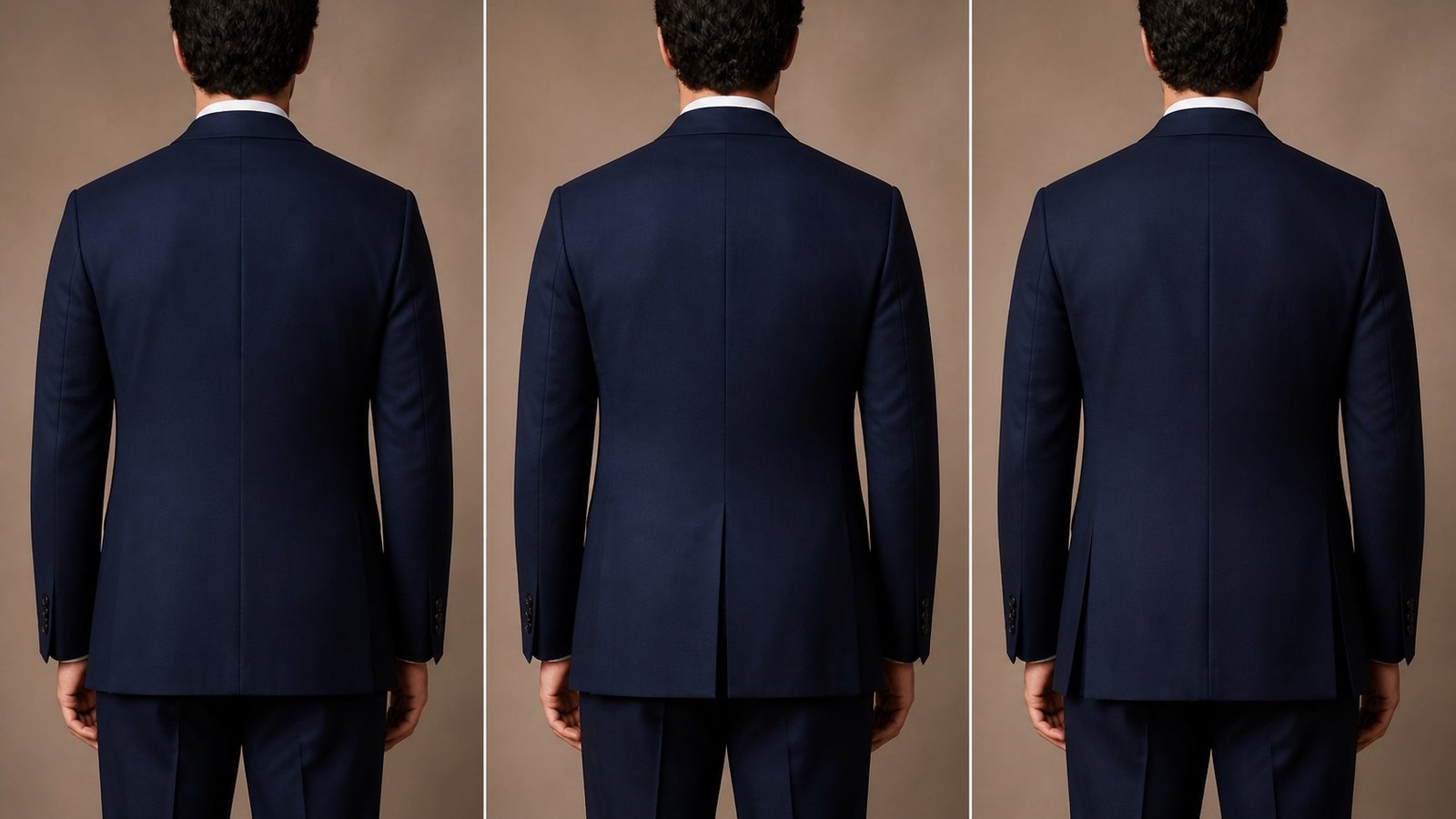
What does a jacket vent do?
A vent allows the lower part of a jacket to separate as the body moves. That can reduce pulling across the back when walking, sitting or reaching into a pocket. Vent placement also changes the visual line of the rear skirt, so it should be considered alongside jacket length, waist suppression and the balance established during fittings.
This is separate from the jacket’s internal construction and lining. Canvas concerns the structure between the outer cloth and lining; lining concerns interior coverage. Those decisions are explained in our guide to jacket lining choices.
Single centre vent
A single vent opens at the centre back. It creates a clean, familiar line while standing and provides room for everyday movement. Because the opening sits in the middle, it can spread when the wearer sits or places both hands in the trouser pockets. The effect depends on posture, jacket balance and fit rather than the vent alone.
A centre vent can suit a straightforward business jacket or a wearer who prefers an uncluttered rear view. During a fitting, check that the vent hangs closed when standing naturally and does not pull to either side.
Double side vents
Double vents open near each side of the rear skirt, leaving a centre panel between them. The two openings allow the side sections to move independently and can help the jacket retain more coverage when the wearer reaches into a pocket.
They are often chosen for tailored suits because they combine movement with a defined back line. Their shape must still be balanced carefully: vents that flare while the wearer is standing may indicate a fit or balance issue rather than a reason to dismiss the configuration.

Ventless jackets
A ventless jacket has an uninterrupted rear skirt. The result can look particularly clean and formal while standing, which is why the configuration is associated with some traditional dinner jackets and streamlined eveningwear.
The trade-off is reduced separation at the hem. Sitting and reaching into pockets can lift or crease more of the jacket skirt. If you are considering a ventless evening jacket, compare it with the choices described on our tuxedo page rather than treating the detail as a rule for every formal garment.
How should you choose?
Start with use rather than fashion shorthand. Consider how often you sit, whether you regularly use trouser pockets, how formal the garment should feel and which rear silhouette you prefer. Then assess the choice on your own posture during fittings.
- Choose a centre vent when you prefer one simple rear opening and familiar everyday movement.
- Choose double vents when you want the side sections to move independently and prefer a defined centre panel.
- Consider no vent when an uninterrupted formal silhouette matters more than maximum movement at the rear hem.
The vent should be evaluated as part of the whole garment. Cloth weight, jacket length, seat shape and pattern balance can change the final appearance. Our bespoke process explains how consultation and fittings turn individual choices into a coordinated specification.
Check the back, not only the front
When trying on a jacket, stand naturally and ask to see the back from several angles. The vents should lie cleanly without persistent flaring, twisting or one side sitting higher than the other. Walk, sit and place a hand in a pocket to see how the skirt responds.
Vent selection is one part of commissioning a bespoke suit. If you want to compare configurations against your posture, garment use and preferred silhouette, request a consultation and discuss the choice as part of the full jacket specification.