Sep 19, 2026
Searching for the best custom tailor in Bangkok can make customization sound like a contest to offer the longest menu of options. A useful commission starts elsewhere: with the garment’s purpose, the conditions in which it will be worn and the relationship between its cloth, proportion, construction and details.
Customization is most valuable when each decision supports the same brief. It should produce a coherent suit, jacket, pair of trousers or shirt—not a collection of unrelated features.
Begin with use, climate and formality
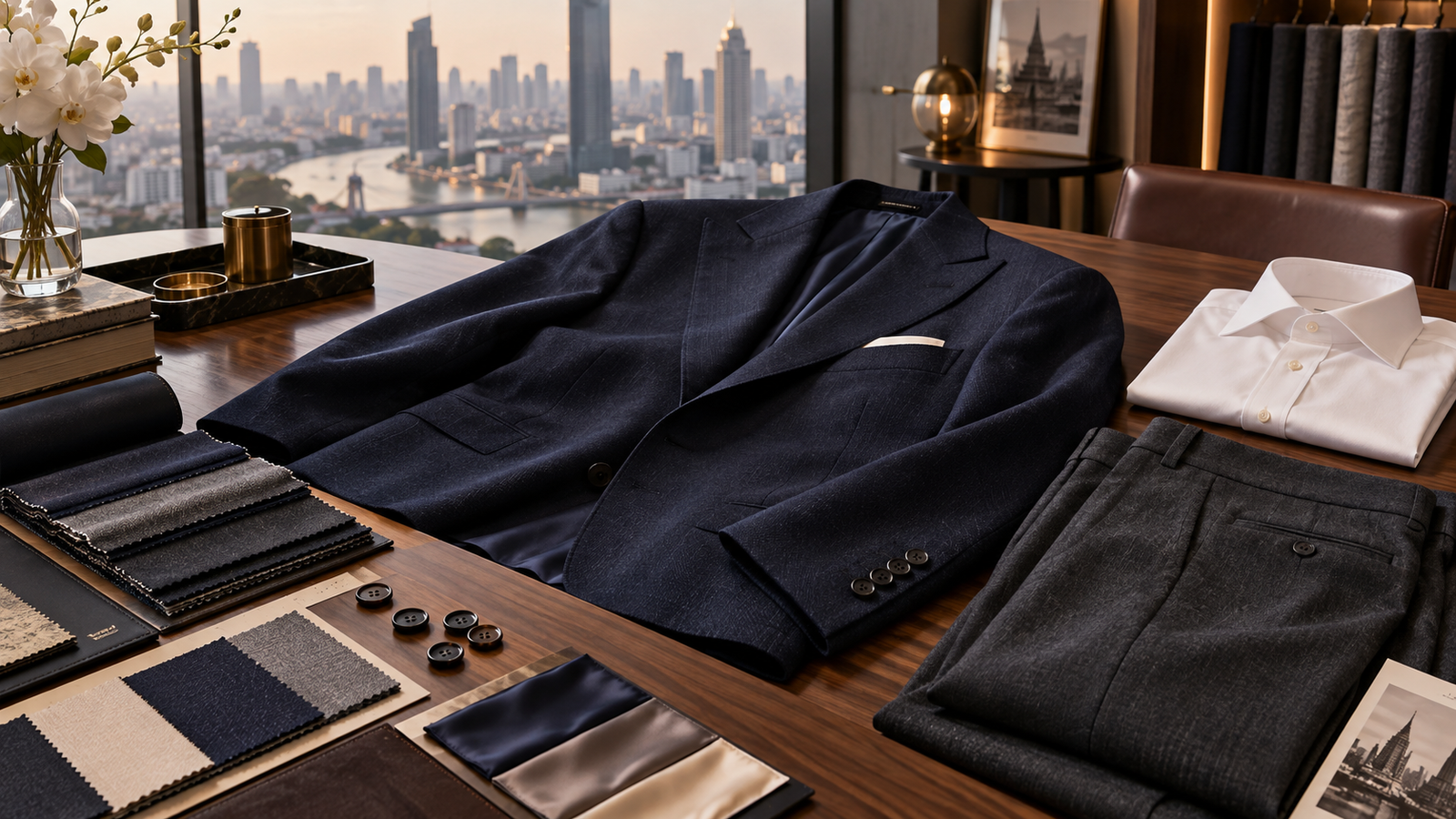
Explain whether the garment is for regular business use, a wedding, black tie, travel or a more relaxed wardrobe. Discuss Bangkok’s climate as well as the environment where the finished garment will normally be worn. Frequency of use, air conditioning, travel, dress code and available fitting time all shape the specification.
The Best Tailor in Bangkok buyer guide provides the broader evaluation framework. This guide focuses on turning your preferences into one practical specification.
Customize the cloth for the job it needs to do
Cloth decisions include represented fibre composition, weight, weave, colour and pattern. The most expensive or finest-numbered option is not automatically the best choice for frequent wear, warm conditions or travel. Drape, crease recovery, durability and care can be just as important.
Compare the actual fabrics available for the commission and ask how each supports the intended silhouette and use. The Class Bespoke fabric guide explains the practical questions to bring to that discussion.
Set the jacket silhouette before choosing small details
Jacket length, shoulder expression, chest shape, waist suppression and overall ease should work together. These decisions affect proportion and movement more than a decorative option considered in isolation.
Bring references when they help communicate direction, but do not assume that another person’s garment can be copied without considering your measurements, posture, cloth and intended fit. Class Bespoke does not use this guide to claim one universal house cut.
Choose lapels, closure, pockets and vents as a group
Notch, peak and shawl lapels carry different levels of formality. Single- and double-breasted fronts change the visual balance of the jacket. Flap, jetted and patch pockets should suit both the garment and its use, while single, double or no vents affect movement and the way the back is presented.
A custom tailor should help prevent these choices from contradicting one another. A formal evening garment, a versatile business suit and a relaxed travel jacket need different combinations even when several individual options are technically possible.
Specify construction for the garment—not as a status label
Class Bespoke discusses fused, half-canvas and full-canvas jacket construction where appropriate to the commission. Construction affects structure, labour, price and planning time, but no single method is automatically right for every garment, budget or schedule.
Ask what construction is quoted, where it is used and how it relates to the selected cloth and intended wear. Read the construction and bespoke-tailoring guide before treating a construction term as proof of quality by itself.
Coordinate lining, buttons and finishing details
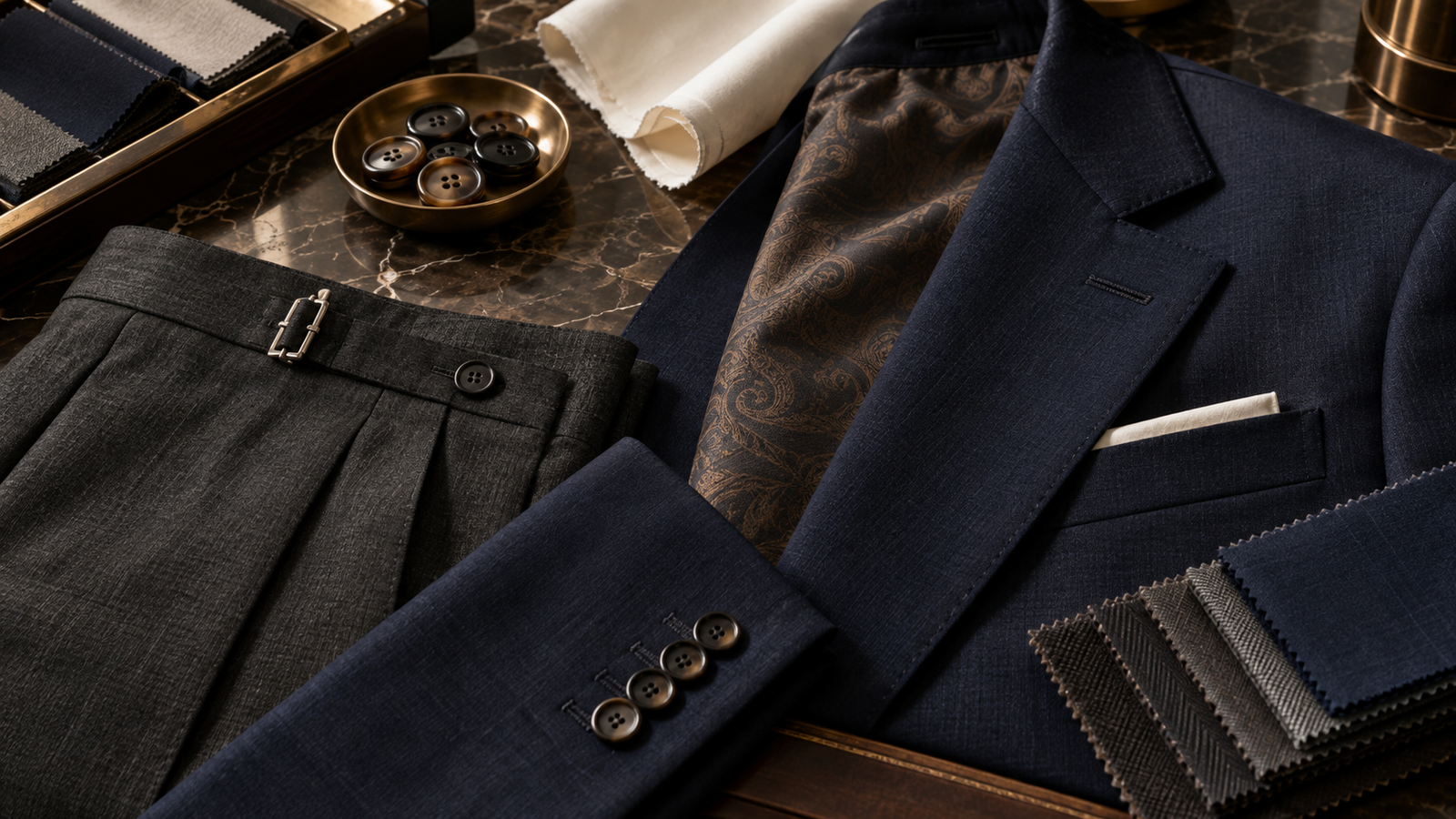
Lining coverage, colour and pattern can affect comfort and the character of a jacket. Buttons may be restrained or more expressive, but they should remain appropriate to the cloth and formality. Exact availability is confirmed from the options presented for the individual order.
Personal details work best when they support the garment rather than competing with it. The goal is not to make every choice visible from across the room.
Build trousers around position and movement
Trouser decisions include waistband position, rise, flat front or pleats, belt loops or side adjusters, pocket configuration, leg line, cuffs and break. These choices should be evaluated with the jacket, shirt and shoes rather than as a separate checklist.
Review how the trousers sit at the waist and seat, how they move when walking and sitting, and how the hem works with the intended footwear. Explore current tailored-trouser options without assuming that every combination suits every cloth or wearer.
Apply the same decision logic to shirts
Shirt customization may include cloth, collar, cuffs, placket, pocket treatment and fit allowance. Collar proportion should work with the wearer and, when relevant, the jacket and tie. Cuffs should be considered with sleeve length and normal use.
A business-shirt rotation may need repeatability and care practicality, while an evening or wedding shirt may prioritize a particular dress code. See the bespoke-shirt pathway for the transactional owner.
Use measurements and fittings to test the specification
Choosing options does not replace assessing fit. Measurements establish a starting point; fittings allow jacket balance, collar and shoulder position, sleeve pitch, trouser line and normal movement to be reviewed on the wearer.
The appropriate fitting sequence depends on the garment, construction, client and adjustments required. The consultation and fitting process explains how those stages support refinement.
Avoid an incoherent option list
Before confirming the order, ask the tailor to summarize the garment as one specification: intended use, cloth, construction, silhouette, principal styling choices, fitting plan, timing and included service. If a feature cannot be explained in relation to that brief, reconsider whether it belongs.
This also makes quotations easier to compare. Use the guide to comparing a Bangkok tailoring quotation to check that the price and inclusions match the garment discussed.
Questions customers ask about custom tailoring in Bangkok
What can be customized on a tailored suit?
Cloth, construction and many jacket and trouser details can be discussed, including proportion, lapels, closure, pockets, vents, lining, buttons, waistband treatment, pleats and hem. Exact options depend on the cloth, garment and current availability.
Does more customization make a better suit?
No. A better specification is coherent and appropriate to the wearer’s use. Adding visible details without considering proportion, formality, movement and cloth can make the garment less successful.
Can I copy a suit from a reference image?
A reference can communicate proportion, colour or mood, but the result must be interpreted for the wearer, available cloth, construction and intended use. It should not be treated as a guaranteed replica.
Should I choose full canvas for every custom jacket?
Not automatically. Fused, half-canvas and full-canvas construction involve different structure, labour, cost and timing. The appropriate choice depends on the individual commission.
When should customization decisions be finalized?
Major decisions should be clear before cutting: garment, cloth, construction, silhouette and principal details. The consultation should also establish the fitting and timing plan.
Where can I discuss a custom garment in Bangkok?
Class Bespoke has showrooms in Thonglor and Sukhumvit. Use the verified branch guide to choose the practical location, then share the garment and schedule when requesting an appointment.
Plan a coherent custom specification
Class Bespoke begins with the garment, occasion, climate, personal style and available schedule. Clients can compare available fabrics, discuss appropriate construction and styling, and proceed through individual measurements and fittings suited to the commission.