Sep 1, 2026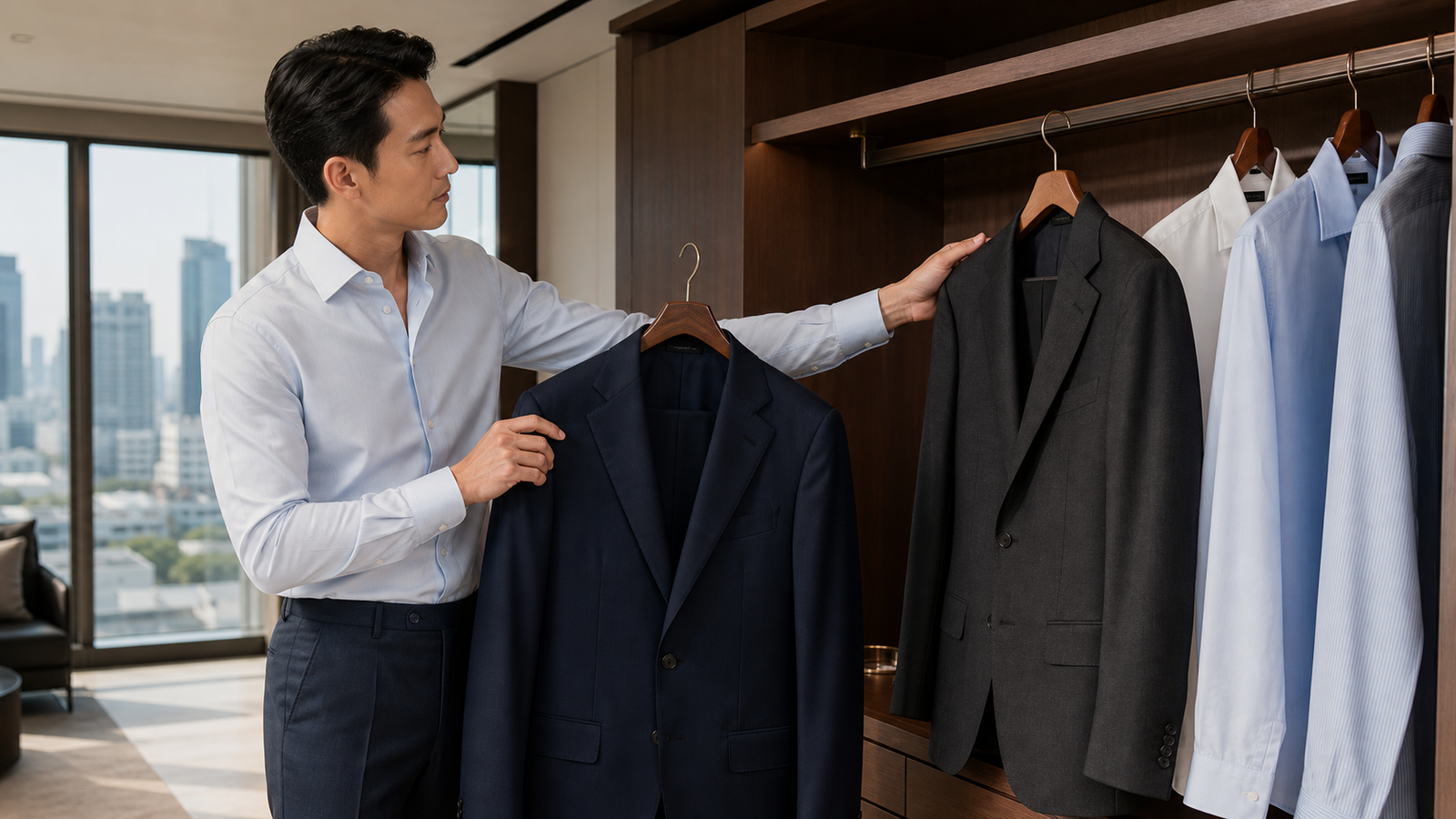
A business suit wardrobe works best as a system rather than a collection of unrelated purchases. The aim is to choose cloth, colour, fit and supporting garments that can handle repeated office wear, Bangkok’s warm climate and the practical demands of travel without making every outfit look identical.
This guide explains how to plan that system before ordering. It does not prescribe one universal uniform: workplace formality, travel frequency, air-conditioning, outdoor time and personal preference should shape the commission.
Begin with the Work the Suit Must Do
Start by listing the real situations the wardrobe must cover. A client-facing role with frequent formal meetings may need a different level of structure from a creative office or a role that involves regular flights. Consider how often a suit is worn, whether the day includes outdoor travel, and how formal the most important meeting is likely to be.
This brief helps define the appropriate jacket, trousers, cloth and construction. It also prevents a visually striking first purchase from becoming difficult to repeat. The commercial Suits page provides the main commissioning pathway, while this article focuses on planning the wardrobe around it.
Choose Versatile First Colours, Then Add Range
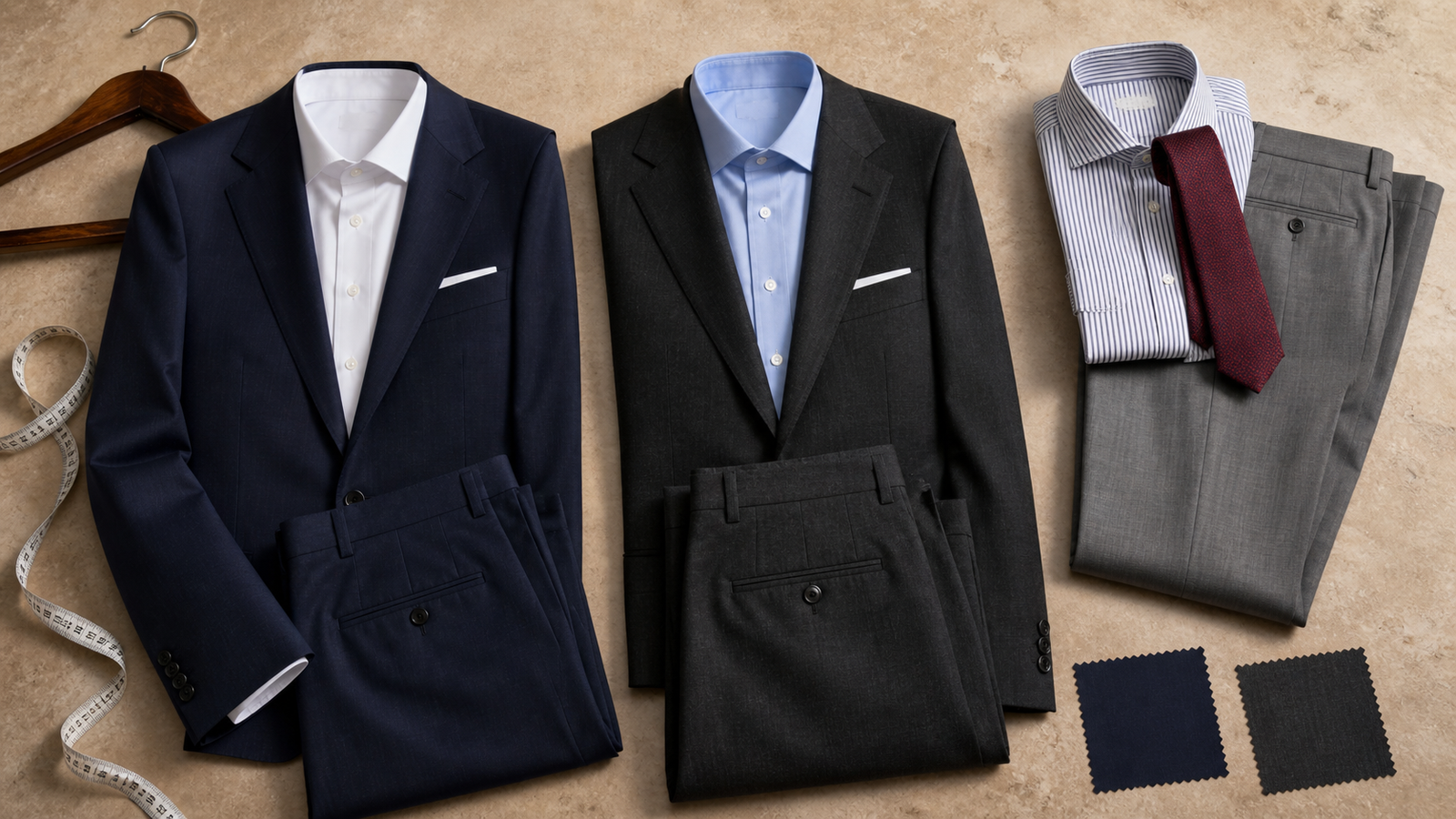
Navy and charcoal are useful starting points because they coordinate with many business shirts, ties and shoes. Medium grey can add flexibility, especially through separate trousers. These are practical starting colours rather than mandatory rules; the right choice still depends on workplace expectations, complexion, existing shoes and how the garment will be used.
When ordering more than one suit, avoid making every garment almost identical without purpose. A navy suit and charcoal suit can share shirts and accessories while giving a clear visual change. A second pair of trousers or a coordinated separate may improve rotation more than another distinctive jacket that only suits one occasion.
Cloth Should Support Frequency, Climate and Recovery
Business cloth must look appropriate and recover between wears. Discuss fibre composition, weave, weight, surface texture, opacity and wrinkle behaviour instead of choosing by colour alone. A lighter cloth may feel attractive in warm weather, but it still needs enough stability for the intended garment and frequency of use.
Bangkok also involves transitions between heat, humidity and strong indoor air-conditioning. The most useful cloth is therefore not automatically the lightest available. Review swatches in person and explain how much of the day is spent outdoors, in a vehicle, on flights or in an office. The Fabrics collection is a starting point for that discussion, not a substitute for confirming the exact cloth.
Plan Jackets and Trousers as One Proportion
A jacket and its trousers should be considered together. Jacket length, button stance, waist position, trouser rise, leg line and hem all affect the complete silhouette. Choosing each detail independently can produce a garment that looks fashionable in close-up but unbalanced at normal viewing distance.
Business wear should also work while sitting, walking and reaching, not only while standing still for a fitting photograph. Discuss pocket use, laptop or document carrying, and the amount of movement involved in a normal day. For a closer look at the lower half of the wardrobe, the Trousers page explains the relevant garment pathway.
Build Shirt Coordination into the Suit Plan
Bring or describe the shirts and ties already used most often. White and pale blue shirts are versatile, but collar shape, cuff choice, fabric, pattern and fit still influence how the jacket reads. A business suit intended mainly for open-collar wear may need a different conversation from one worn almost exclusively with a tie.
Planning the shirt and suit together helps maintain a coherent collar-to-lapel relationship and avoids buying several pieces that compete with one another. The Shirts page provides the separate commissioning route for tailored shirts.
Use Fittings to Review Movement and Professional Context
Measurements establish a starting point, but a fitting shows how the garment balances and moves on the wearer. Use the appointment to assess the shoulder line, collar position, sleeve pitch, jacket balance, trouser position, length and comfort during ordinary movement.
There is no responsible universal fitting count for every business suit. The garment, construction, cloth, whether the client is new or returning, and the adjustments required all affect the sequence. The Bespoke Process explains how consultation, measurements and fitting-led refinement work together.
Plan Rotation Before Reordering
Clothing benefits from rest between wears. A small rotation also provides resilience when one garment is being cleaned, pressed or adjusted. Before repeating an order, review which pieces were used most, where wear appeared, and whether a second trouser or different cloth would solve a practical gap.
A previous pattern or saved sizing can be useful reference information, but it should not be treated as proof that the fit can never change. Body, posture, preference, cloth and garment design may differ. Confirm the current specification and whether a fitting or measurement review is appropriate before a reorder is produced.
Allow the Construction and Fittings to Set the Schedule
If the wardrobe is being commissioned during a Bangkok visit, share arrival and departure dates before ordering. Standard or fused jackets are generally discussed around 3–5 days, half canvas around 5–10 days and full canvas around 15–30 days. Eligible pre-arranged basic or fused rush work may sometimes be possible in approximately 24 hours.
These are planning ranges, not universal guarantees. Garment quantity, cloth availability, design, workshop capacity, appointment timing and fitting adjustments can change the schedule. A multi-suit business wardrobe may need more coordination than one garment, so confirm feasibility for the actual order.
Bring a Practical Wardrobe Brief
- Describe the workplace, client expectations and most formal recurring occasion.
- List how many days per week suits are worn and how much time is spent outdoors or travelling.
- Bring frequently worn shirts, shoes or photographs of them where useful.
- Identify current fit problems and the garments that already work well.
- Explain whether the priority is one versatile suit, a rotation, extra trousers or a coordinated shirt programme.
- Share the Bangkok schedule before selecting construction or promising a deadline.
Class Bespoke welcomes consultations at its Bangkok showrooms. Review the verified locations on the Our Branches page, then contact the team with the intended use, approximate wardrobe scope and available dates. A repeatable wardrobe begins with a clear brief and a fitting process—not a fixed list copied from someone else.