Aug 21, 2026
Linen is often suggested for warm-weather tailoring because the fibre can feel dry, breathable and visually relaxed. That does not make every linen cloth equally suitable for a Bangkok suit. Weave, weight, opacity, colour, construction and the wearer’s tolerance for creasing all affect whether linen is the right choice.
This guide explains how to assess linen for business, weddings, travel and smart-casual tailoring without treating fibre name alone as a guarantee of comfort.
Why linen behaves differently from worsted wool
Linen fibres are relatively strong and can produce cloth with a crisp, dry handle. The fabric can release heat effectively, but it also develops visible wrinkles as the wearer sits and moves. Those creases are part of linen’s character rather than evidence that the garment has been poorly made.
Fine worsted wool generally recovers from creasing more readily and can maintain a smoother business appearance through a long day. Linen usually looks more informal and textured. The decision therefore involves both climate performance and the visual standard required by the occasion.
Pure linen or a linen blend?
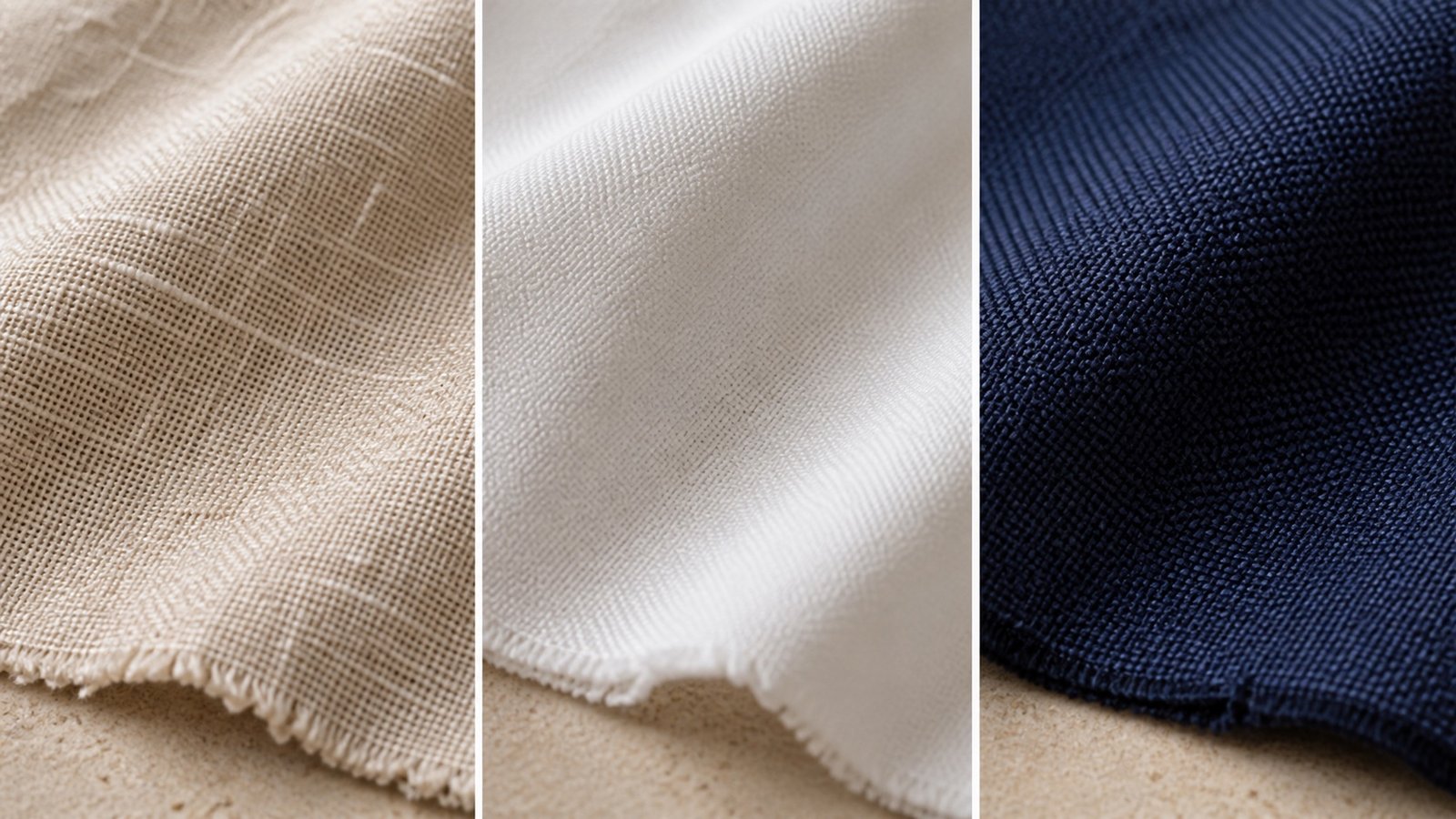
Pure linen gives the clearest expression of linen’s texture and relaxed drape. It may suit outdoor celebrations, daytime events, resort settings and clients who accept natural creasing. The exact result still depends on the cloth: a dense or heavy linen can feel very different from an open, lightweight weave.
Wool-linen blends can combine some of linen’s texture with more recovery and shape from wool. Wool-linen-silk blends may add softness or surface interest where the actual cloth label supports that composition. Cotton-linen blends can create another casual direction. A blend should be judged from its complete specification rather than assumed to inherit only the best properties of each fibre.
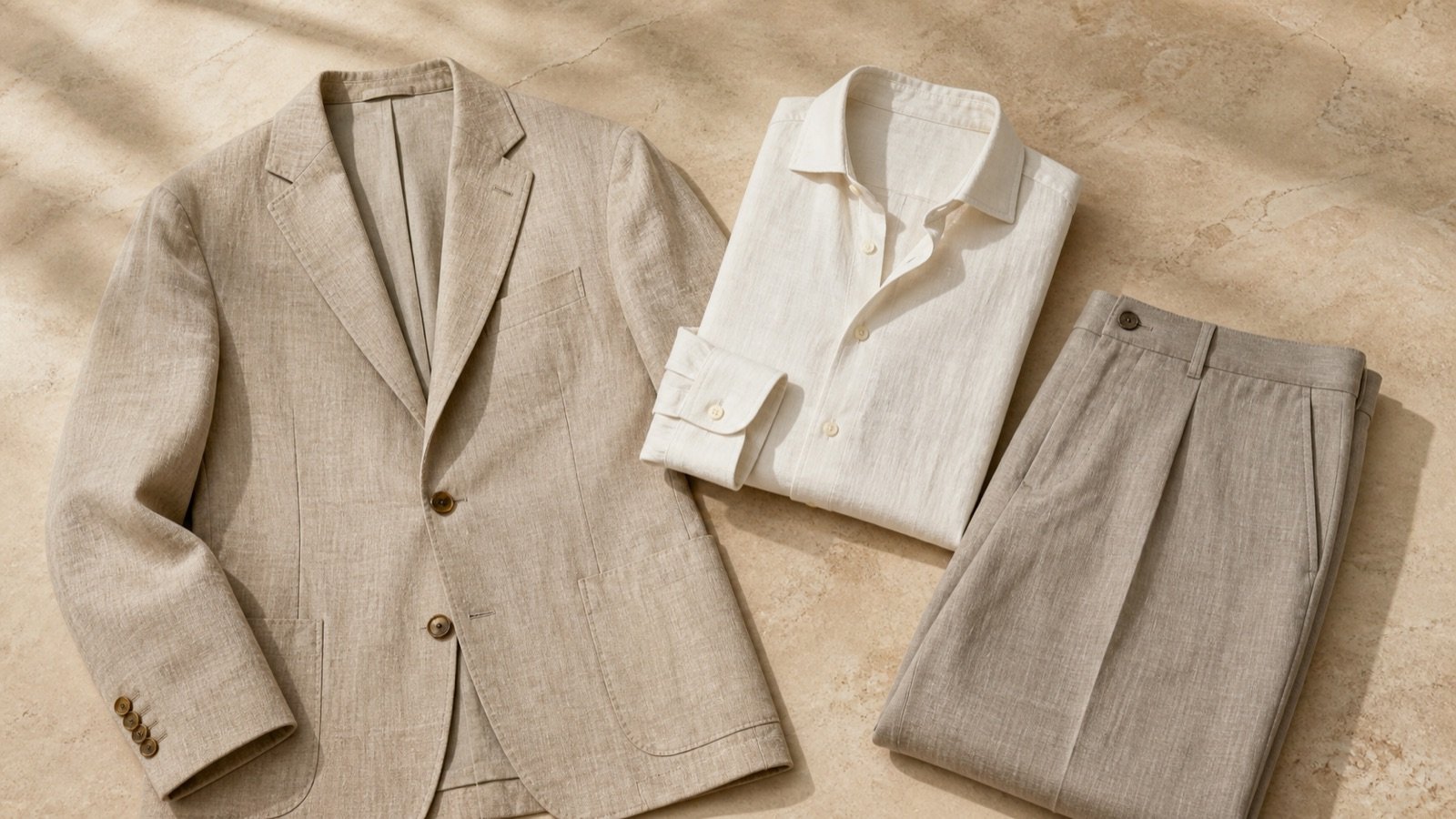
Choose weight and weave for Bangkok
A low fabric weight does not automatically mean better airflow. Hold the swatch toward the light, compare weave openness and feel how quickly it returns after being compressed. A slightly heavier but more open cloth may feel more comfortable than a very light, tightly woven option.
Opacity also matters. Pale linen trousers can become more transparent in strong daylight, while very open cloth may require lining decisions that change how the garment feels. For a jacket, the choice between full lining, partial lining and an unlined approach should be confirmed against the actual cloth and construction rather than treated as universally available.
Linen for business suits
For conservative offices, frequent travel or long days of seated meetings, tropical wool or a wool-rich blend may provide better crease recovery and a more consistent formal appearance. Linen can still work when the workplace accepts texture and the client prefers a softer, less corporate result.
Dark navy, tobacco, olive and mid-toned neutrals can make linen easier to combine, but colour must be considered with the client’s existing shirts, shoes and intended frequency of wear. A linen suit commissioned for occasional client dinners has a different brief from one expected to perform as a weekly business uniform.
Linen for weddings and daytime events
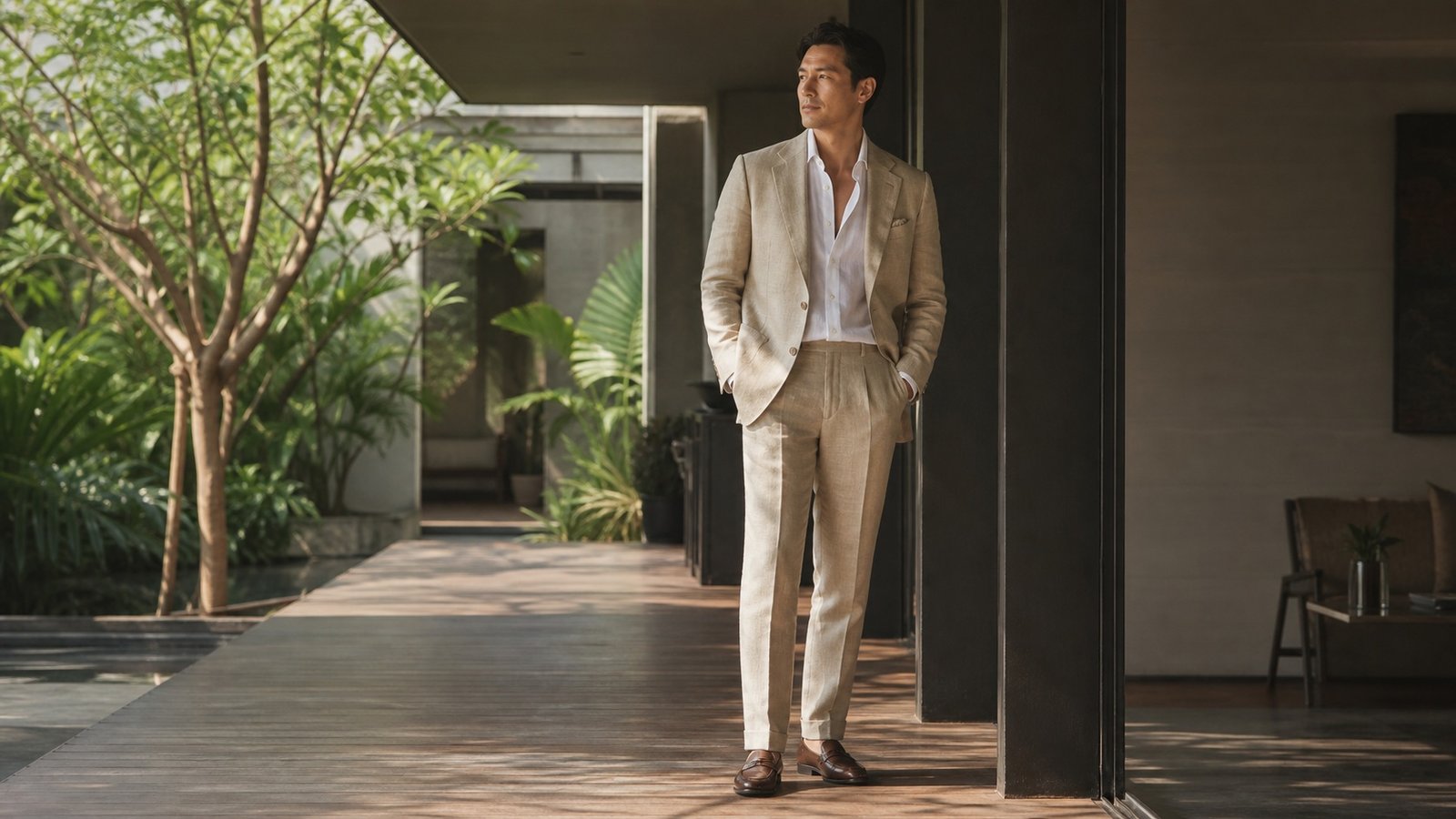
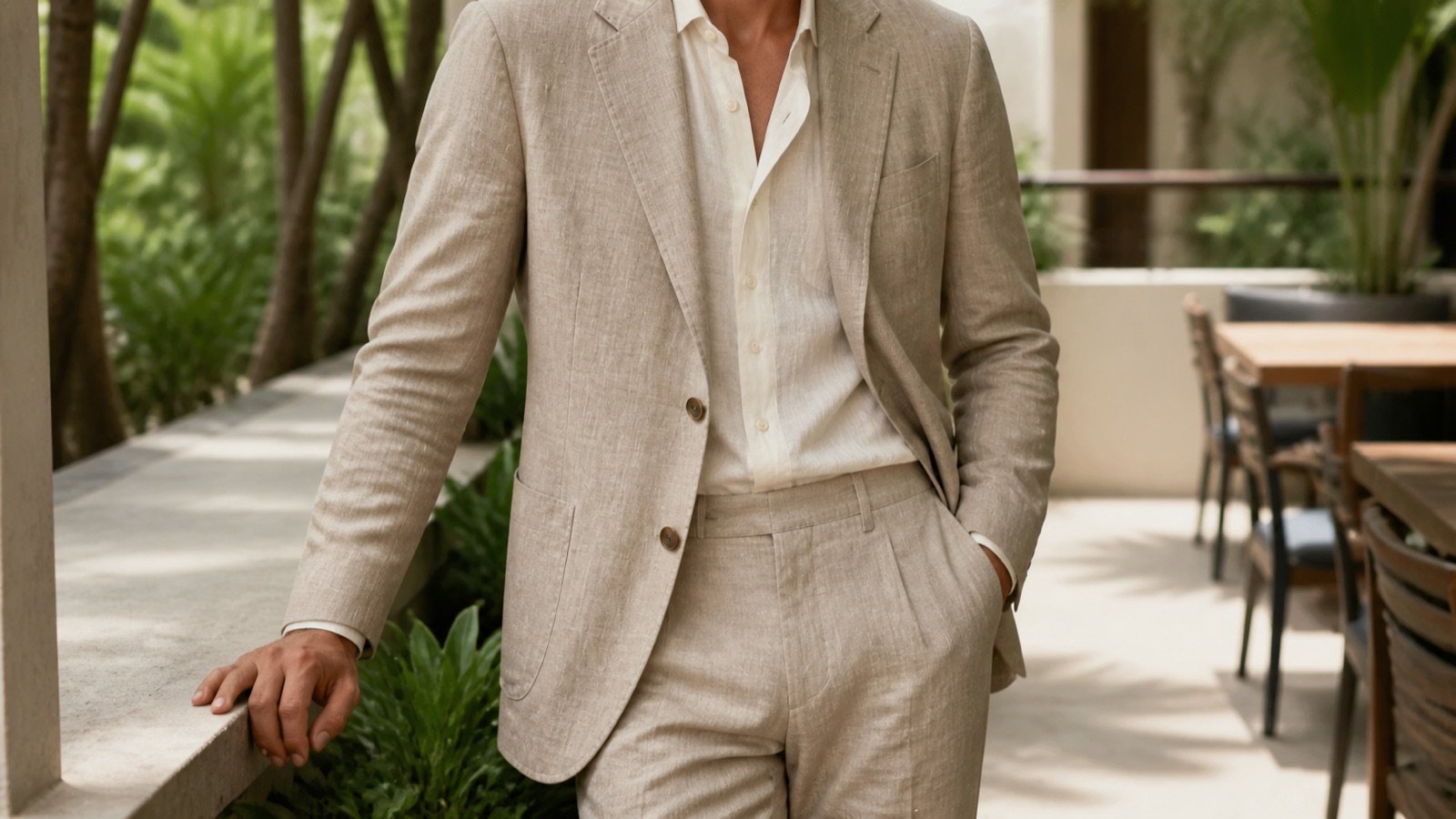
Linen is particularly useful when a wedding takes place during the day, outdoors or in a relaxed destination setting. The cloth can photograph with visible texture and can feel appropriate when strict black tie is not requested.
The groom’s suit should still be coordinated with the venue, ceremony time, footwear and the wedding party. Pale colours require careful opacity checks, while very informal weaves may not suit an evening ballroom. Couples planning coordinated garments can review the Class Bespoke Wedding service.
Construction and styling decisions
Linen’s crispness and tendency to crease affect jacket balance, pocket treatment and trouser line. A heavily structured specification can work against the relaxed character of some linen cloths, while too little support may not provide the shape a client expects. The appropriate solution depends on the chosen cloth, garment and intended use.
Patch pockets, softer shoulders and side adjusters can support a relaxed direction, but they are choices rather than mandatory linen features. A more formal linen or linen-blend suit may use flap pockets, a defined lapel and cleaner trouser details. The design should be planned as one composition.
Fittings, care and travel
Attend fittings in the shirt and shoes intended for the suit. Linen can change visually as it warms and creases during wear, so assess comfort while sitting, walking and moving the arms rather than judging only a static mirror pose. The number of fittings depends on the garment, construction, client history and adjustments required.
After wear, allow the garment to rest on a shaped hanger and follow the cloth-specific care advice supplied with the finished suit. Avoid repeated aggressive pressing merely to remove every natural crease. For travel, pack with room around the jacket and expect light steaming or professional pressing where appropriate.
How to compare linen during a consultation
Bring a clear description of the event, working environment, travel schedule and tolerance for visible creasing. Compare linen with tropical wool and suitable blends in person. Ask about weight, composition, opacity, lining, construction and expected drape before choosing by colour alone.
Explore current options through the Class Bespoke fabric collection, review the commercial bespoke suits service, or read the tropical wool guide for an alternative warm-weather approach. To discuss a specific event and schedule, book a tailoring appointment.