Sep 2, 2026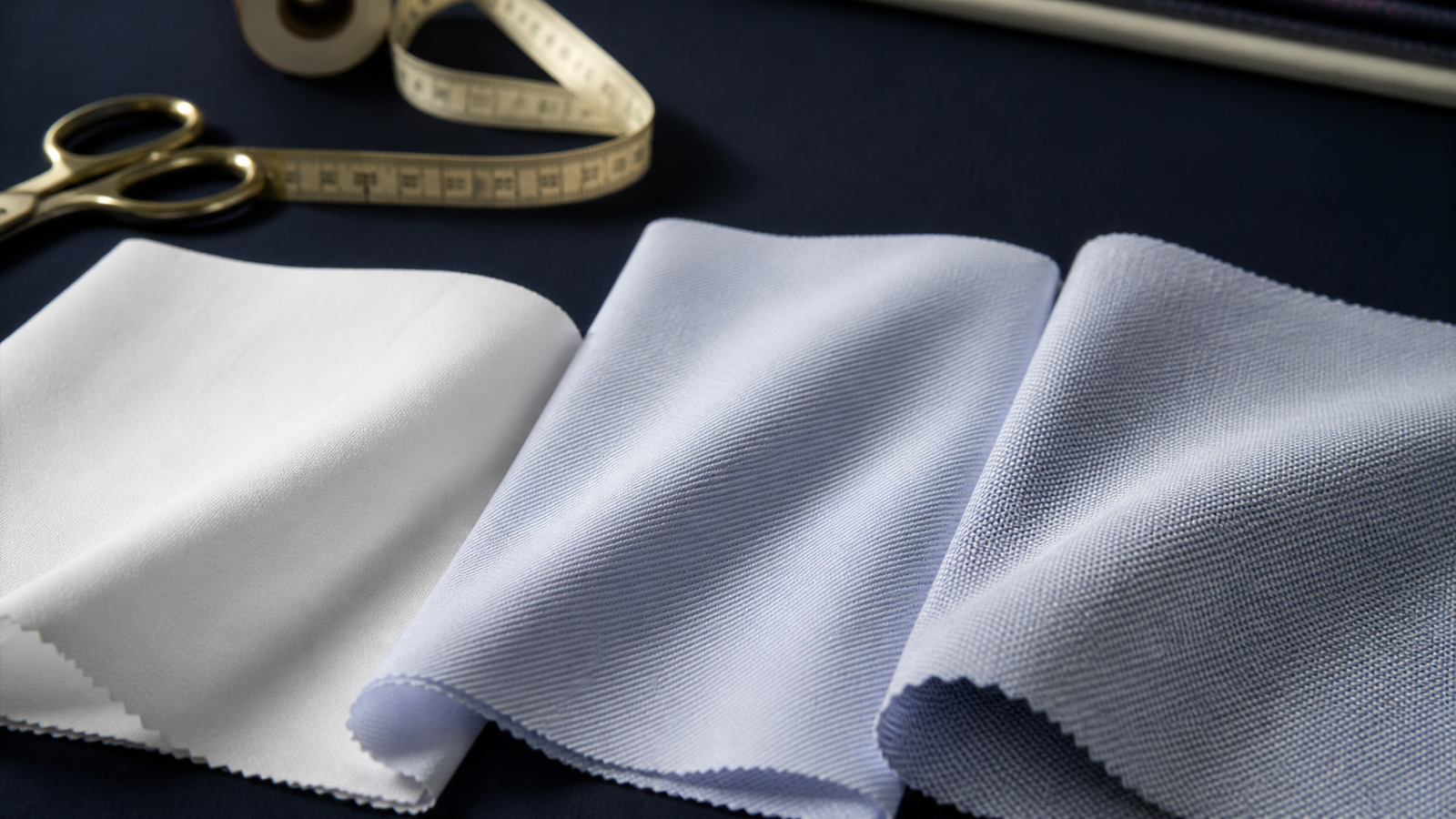
The weave of a shirt fabric changes more than its surface texture. It affects how crisp or relaxed the shirt looks, how much body it carries, how it drapes beneath a jacket and how readily small creases show during a Bangkok workday.
Poplin, twill and Oxford are useful starting points, but none is automatically the “best” choice. Fibre, yarn, weight, density, colour, finish and the intended use all matter. The practical approach is to compare actual swatches and explain where, how often and with what tailoring the shirt will be worn.
Start with Weave, Then Judge the Actual Cloth
Weave describes how the lengthwise and crosswise yarns interlace. Poplin is a plain-weave family with a clean, relatively flat face. Twill is recognised by its diagonal structure. Oxford uses a more visibly textured, basket-like construction. Those structures influence appearance and hand, but a fabric name alone does not tell you its exact weight, opacity, softness or care behaviour.
When comparing swatches, hold each against light, feel the surface, fold it, and place it near the jacket or trousers it must accompany. The Fabrics collection introduces the broader cloth conversation, while this guide focuses on three common shirting choices.
Poplin: Clean, Smooth and Visually Formal
Poplin uses a plain-weave structure and is usually the smoothest-looking of the three. Fine poplin can produce a crisp collar, a clean field for white or pale colours and a restrained surface beneath a business suit or formal jacket.
Its smooth face also means there is little texture to disguise transparency, creasing or uneven finishing. A very light white poplin may need careful opacity assessment, especially when worn without a jacket. Rather than assuming that “lightest” means “best for Bangkok”, compare the balance of airiness, coverage and stability in the actual cloth.
Twill: Diagonal Texture, Drape and Visual Depth
Twill’s staggered interlacing creates a diagonal line. Depending on yarn, density and finish, a shirt twill may feel softer or show more drape than a comparable plain weave. The diagonal structure can give solid colours greater visual depth and can make small day-to-day creases less immediately obvious.
Twill is not one fixed weight or level of formality. Fine twills can work with business tailoring, while heavier or more pronounced versions may feel too substantial for the same role. Judge the specific swatch beside the intended suit and consider how much of the day will be spent outdoors, commuting or in strong air-conditioning.
Oxford: Texture, Body and a More Relaxed Character
Oxford cloth has a recognisable basket-like texture and usually more visual body than a smooth poplin. Traditional Oxford shirts often read as relaxed and pair naturally with button-down collars, chinos or less formal tailoring.
That does not make every Oxford casual. Pinpoint and Royal Oxford are finer variations that can look more refined. The useful question is not simply “Oxford or no Oxford”, but how pronounced the texture is, how the cloth feels, and whether its weight and character fit the workplace or occasion.
How the Three Choices Compare
- For a clean formal surface: begin by comparing fine poplins.
- For softer drape and subtle diagonal texture: review suitable shirt twills.
- For visible texture and a more relaxed impression: examine Oxford cloths.
- For a white shirt: check opacity in the actual swatch rather than relying on the weave name.
- For frequent business wear: discuss rotation, laundering and how the cloth recovers between wears.
- For Bangkok conditions: balance outdoor heat with indoor air-conditioning, coverage and the shirt’s role beneath a jacket.
Match Fabric to Collar, Jacket and Use
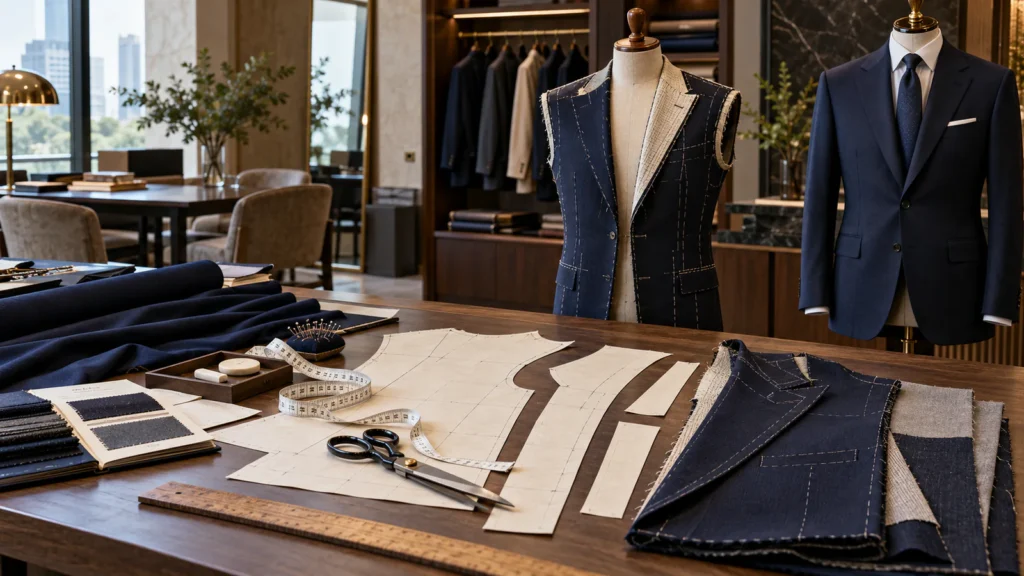
The shirt should be planned as part of an outfit. A crisp poplin may support a formal collar and smooth worsted suit. A fine twill can add quiet depth beneath business tailoring. A textured Oxford may sit more naturally with an open collar, chinos or a relaxed jacket. These are starting points, not rigid rules.
Collar height and spread, cuff choice, body fit and shirt length also affect the result. The shirt-collar guide explains how collar geometry relates to face shape, tie use and jacket proportions, while the Shirts page provides the commercial commissioning pathway.

What to Check During a Fabric Consultation
- Confirm fibre composition, weave, colour, pattern and approximate weight.
- Hold light colours against light to assess opacity.
- Compare the cloth beside the jacket, trousers or tie it must support.
- Explain whether the shirt will usually be worn with a tie, open collar or no jacket.
- Discuss outdoor time, office air-conditioning, travel and laundering routine.
- Choose collar, cuff and fit together with the fabric rather than as isolated details.
- Avoid relying on thread count or a mill name alone as a complete quality judgement.
Plan the Shirt Around Real Bangkok Use
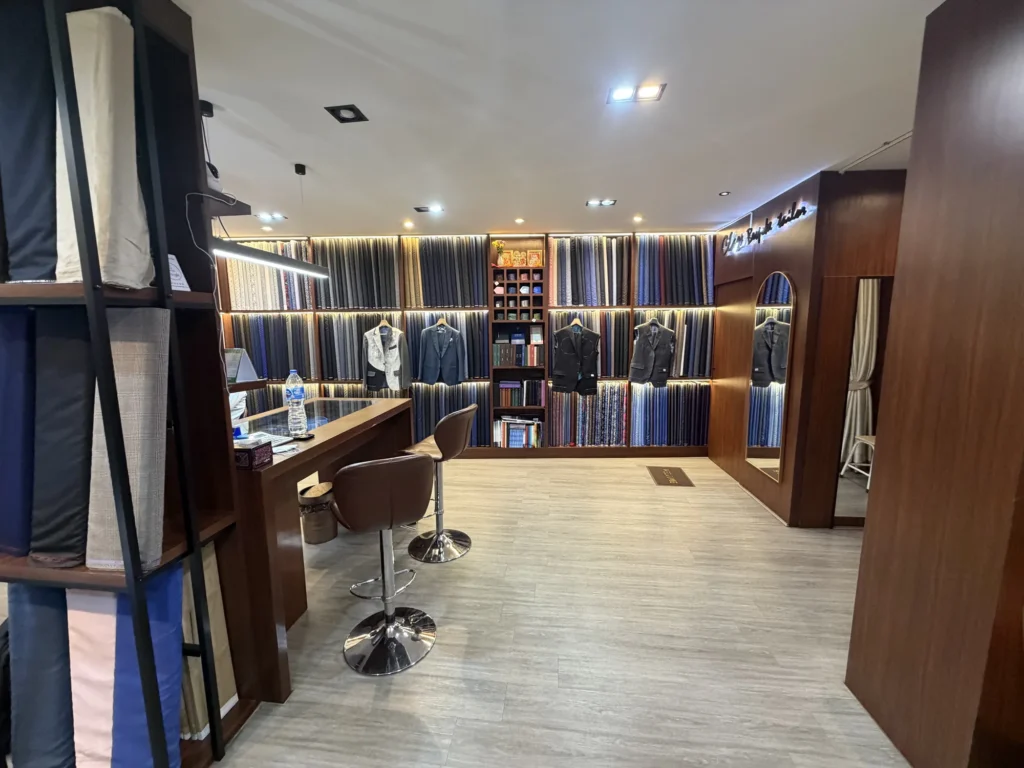
Class Bespoke offers made-to-measure shirts from THB 1,500. Timing is confirmed for each order rather than promised as one universal turnaround. Consultations, fabric selection, individual measurements and fittings are available through the Bangkok showrooms.
Review the verified locations on the Our Branches page, explore the wider Bespoke Process, or contact the team with the intended use and available dates. The right shirting weave is the one whose appearance, weight, coverage and character suit the person and the work the shirt must do.