Sep 8, 2026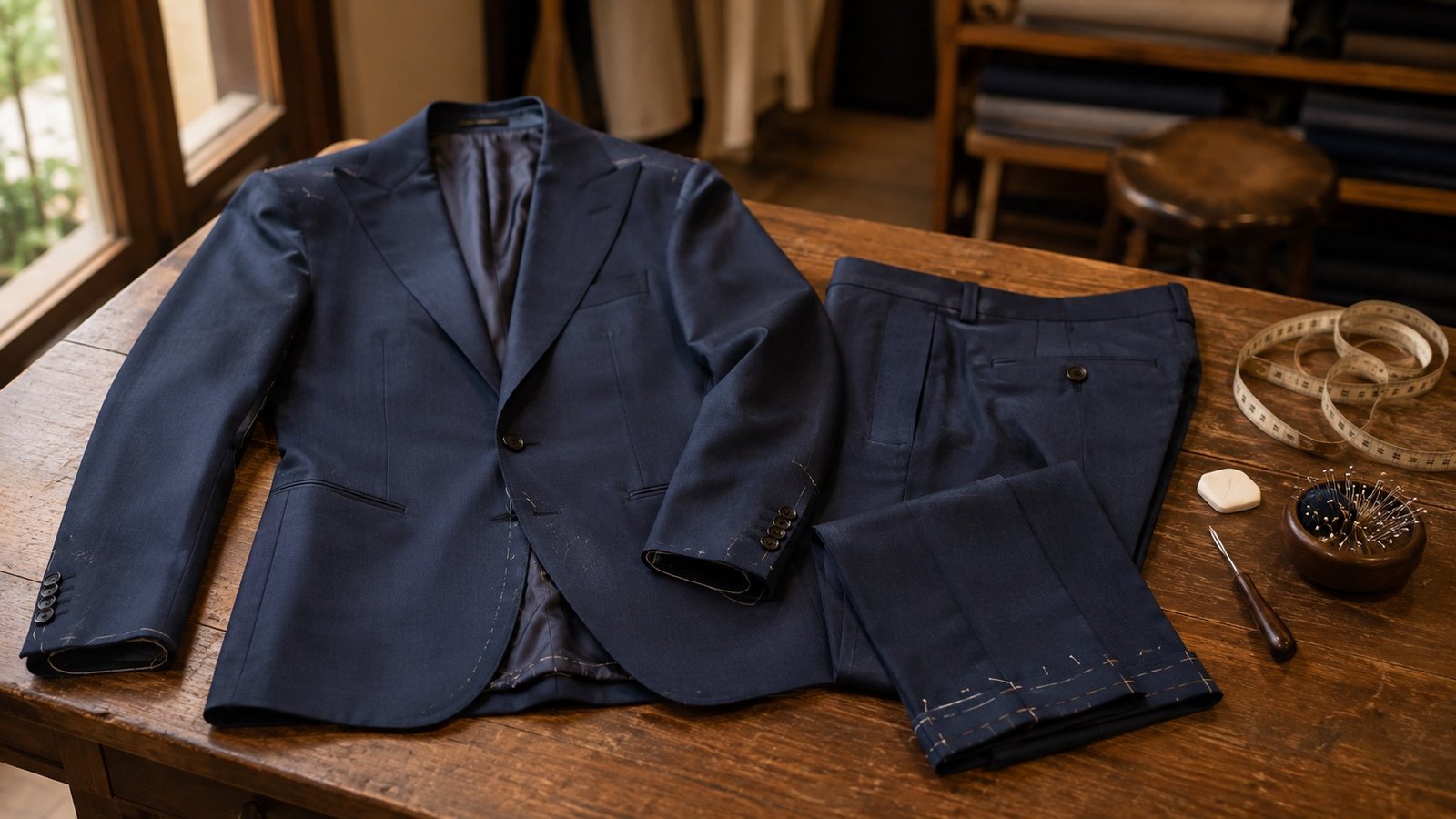
Suit Alterations After Delivery: What Can and Cannot Be Adjusted?
A well-made suit can often be refined after delivery, but every adjustment depends on the garment’s construction, condition and available seam allowance. Understanding those limits helps you ask for changes that improve fit without compromising balance.
Start With the Reason for the Alteration
A garment may need attention because your measurements have changed, because a wearing preference has become clearer, or because a small fit detail only becomes noticeable after several full days of use. Bring the complete suit and explain when the issue appears: standing, sitting, walking, reaching or wearing the intended shoes and shirt.
Alterations work best when the underlying size and balance are already sound. They are not a universal substitute for choosing the right cloth, construction and fitting plan at the start of a custom suit commission.
Adjustments That Are Often Straightforward
Trouser length, taper and waistband
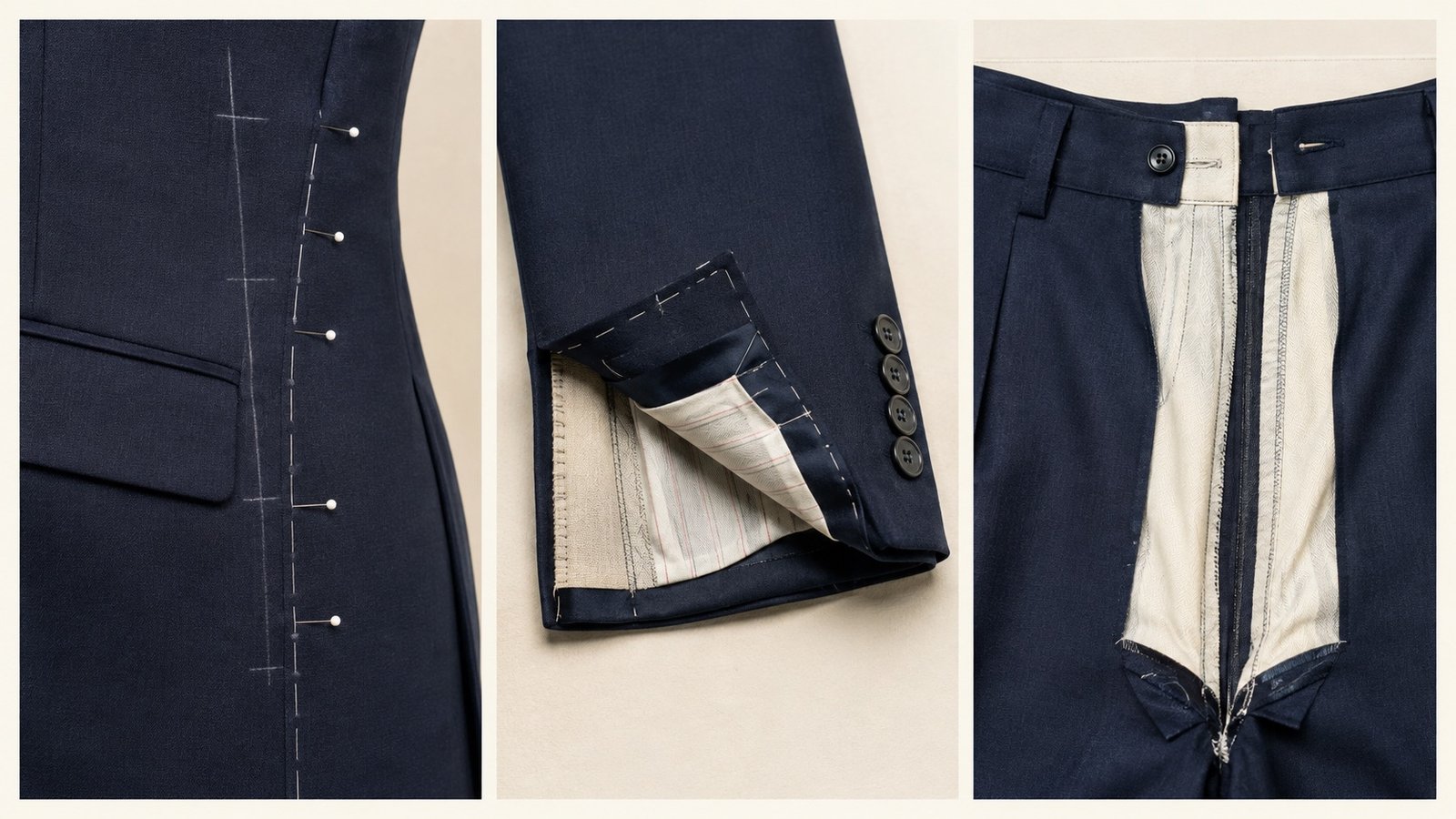
Hems can commonly be shortened, and trouser legs can often be refined through the knee and hem. Waist and seat adjustments may be possible when the internal allowance and construction support the change. The exact range cannot be assumed without inspecting the garment.
Jacket waist and body suppression
A jacket body can often be taken in or released to a limited degree through its seams. The tailor must preserve the relationship between the chest, waist, vents and front closure rather than simply making the garment tighter.
Sleeve length
Sleeves may be shortened or lengthened when sufficient cloth and lining remain. Working buttonholes, cuff design and the distance between buttons and sleeve edge can reduce the practical range.
Changes That Need More Caution
| Area | Why it is more constrained |
|---|---|
| Jacket shoulders | The shoulder connects the collar, chest, sleeve and balance of the jacket. Major changes can disturb several areas at once. |
| Chest and armhole | Canvas, lining and sleeve geometry interact here, so a local change may create tension elsewhere. |
| Jacket length | Pockets, button position, vents and overall proportion do not move easily with the hem. |
| Lapel shape or button stance | These are built into the front pattern and construction; changing them can amount to remaking the jacket. |
| Large size changes | Available seam allowance is finite. A garment cannot always be expanded or reduced while preserving its intended line. |
What to Bring to an Alteration Appointment
- The jacket, trousers and waistcoat that belong to the same suit.
- The shirt, shoes and belt or braces you normally wear with it.
- A clear description of the problem and when you notice it.
- Enough time to try the garment on naturally rather than assessing it on a hanger.
The tailor can then inspect posture, movement, hem position and the garment’s internal allowance. If you are returning to Bangkok, review the verified Thonglor and Sukhumvit showroom details before planning the visit.
Alterations, Construction and Future Commissions
Construction affects both how a jacket behaves and how it can be opened, adjusted and closed again. Fused, half-canvas and full-canvas jackets should therefore be assessed according to their actual specification. The same principle applies to lining, working cuffs and trouser waistband construction.
A useful alteration appointment can also improve the next commission. Record what changed and why, then discuss it during the next measurement and fitting process. Cloth choice still matters: weight, weave and resilience influence how the garment drapes and recovers, so review the fabric guidance alongside fit decisions.
Class Bespoke Alteration Support
Class Bespoke provides complimentary alteration support for garments originally made by Class Bespoke where the garment’s construction, condition, fabric and available allowance can accommodate the requested adjustment. The team inspects the garment first, confirms what is technically appropriate, and provides a project-specific timeframe.
For trousers, see the dedicated custom-trouser guide. To arrange an inspection, contact Class Bespoke with the garment type, the fit concern and your available dates in Bangkok.
Plan a Fit Review
Bring the complete garment and the pieces you wear with it. A careful try-on gives the tailor better evidence than measurements or photographs alone.