Aug 28, 2026
Lower jacket pockets influence more than storage. Their construction changes the visual weight of the jacket front, the level of formality and how easily a tailored jacket moves between business, evening and relaxed settings.
The three common choices are flap, jetted and patch pockets. None is automatically correct for every garment. The useful decision begins with where the jacket will be worn, the cloth, the intended silhouette and how strongly the pocket should announce itself.
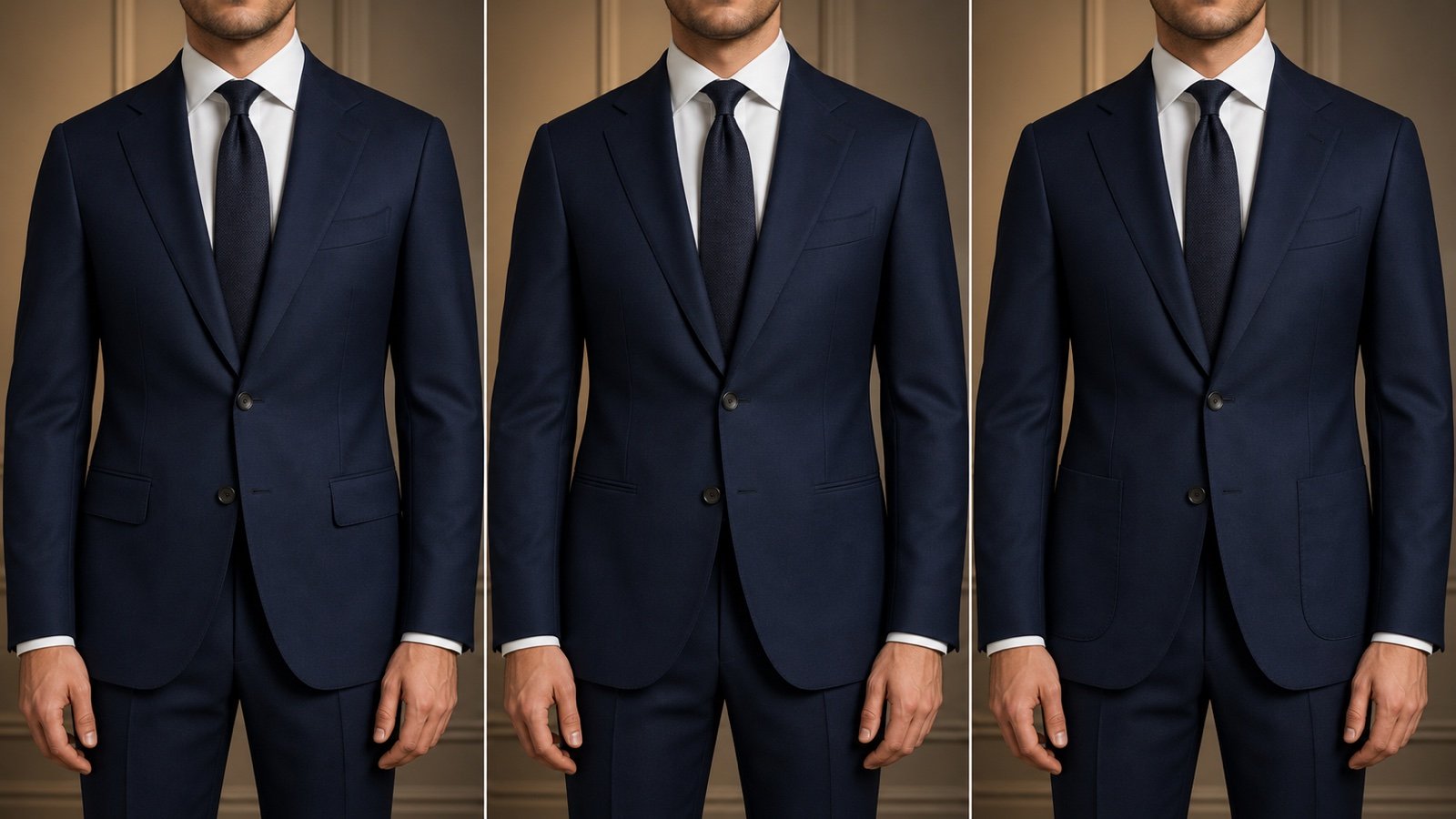
What changes between pocket styles?
A flap pocket has a fabric flap covering the opening. A jetted pocket uses narrow fabric welts around a clean slit with no visible flap. A patch pocket is a separate piece of cloth sewn onto the outside of the jacket.
Those differences affect appearance and construction, but fit still matters. Pocket openings should sit cleanly without persistent gaping, pulling or distortion when the wearer stands naturally. The whole jacket—cloth, balance, waist suppression and length—must be considered together.
Flap pockets: the versatile middle ground
Flap pockets create a clear horizontal line at the lower jacket front. They are familiar on business suits and can work across many day-to-evening settings. The flap adds a little visual weight, which can help anchor a structured jacket.
Some flap pockets are constructed so the flap can be tucked inside, temporarily revealing a cleaner jetted appearance. Whether that is appropriate depends on the pocket construction and how neatly it sits; it should not be treated as a substitute for choosing the intended style at the start.
Jetted pockets: the cleanest formal line
Jetted pockets remove the external flap and leave two narrow welts around the opening. The result is visually restrained, which is why the style is commonly associated with formal eveningwear and streamlined jackets.
For black tie, pocket choice should be coordinated with the lapel, cloth, buttons and trouser treatment rather than selected in isolation. The current Tuxedos page explains the wider formalwear specification.
Patch pockets: visible construction and relaxed character
A patch pocket is cut as a separate piece and stitched onto the outside of the jacket. Its outline remains visible, giving the front more texture and a less formal character than a clean jetted opening.
Patch pockets can suit unstructured jackets, textured cloth and versatile separates, but they are not limited to one season or fabric. Proportion is important: a pocket that is too small, too large or poorly positioned can disturb the jacket’s balance.

Clients considering an odd jacket rather than a matched suit can compare the role of relaxed tailoring on the Blazers page.
How the cloth changes the result
A pocket style does not look identical in every fabric. A smooth dark worsted can make jetted pockets recede, while linen, hopsack or another textured cloth can make patch-pocket stitching and shape more visible. Heavy or bulky cloth also affects how a flap lies.
Compare actual swatches and consider the pocket alongside drape, crease behavior and intended use. The Fabrics page provides a starting point for that discussion.
Practical questions to ask during a fitting
- Will the jacket be worn mainly for business, formal events or as a separate? The dress code helps set the pocket’s visual role.
- Will you use the pockets? Regular use can change how the opening and surrounding cloth settle over time.
- Does the pocket stay closed and level? Persistent gaping or pulling may point to fit, balance or construction issues.
- Does the scale suit the wearer and jacket? Width, depth and placement should support the complete front rather than look added afterward.
The consultation and fittings described in the Bespoke Process allow pocket style, placement and proportion to be reviewed as part of the complete garment.
Which pocket should you choose?
Choose flap pockets when you want a versatile, familiar business-suit expression. Choose jetted pockets when the cleanest formal line is the priority. Consider patch pockets when the jacket should feel more relaxed, textured or suitable as a separate.
These are useful starting points, not rigid rules. A well-resolved bespoke suit coordinates the pockets with cloth, lapels, buttons, vents and the wearer’s proportions. To compare the options on a real jacket specification, request a consultation.