Feb 28, 2025
Ordering a tailored suit in Bangkok can be straightforward when you know what decisions belong at each stage. The important questions are not which sales pitch sounds most impressive, but how the garment will be used, which cloth suits that use, how the fitting sequence works and what must be checked before collection.
Start with the job the suit must do
A business suit worn weekly in Bangkok has different requirements from a wedding suit, a dinner suit or a garment intended mainly for travel. Before discussing lapels or linings, define the setting, expected frequency, climate, formality and deadline. This gives the tailor a practical brief instead of a collection of disconnected style preferences.
- Daily business: prioritise recovery, versatile colour and cloth with enough body for repeated wear.
- Bangkok weddings: consider ceremony time, venue, photography and whether the event moves between air conditioning and outdoor heat.
- International travel: favour crease recovery and confirm how fittings fit the travel schedule.
- Occasional evening wear: choose the appropriate level of formality before selecting decorative details.
Choose cloth by performance, not label alone
Fibre content and fabric weight matter, but they do not tell the whole story. Weave openness, yarn twist, finish, drape and garment construction all affect comfort and appearance. In Bangkok, a lightweight but densely woven cloth may feel less comfortable than a slightly heavier cloth with better airflow and recovery.
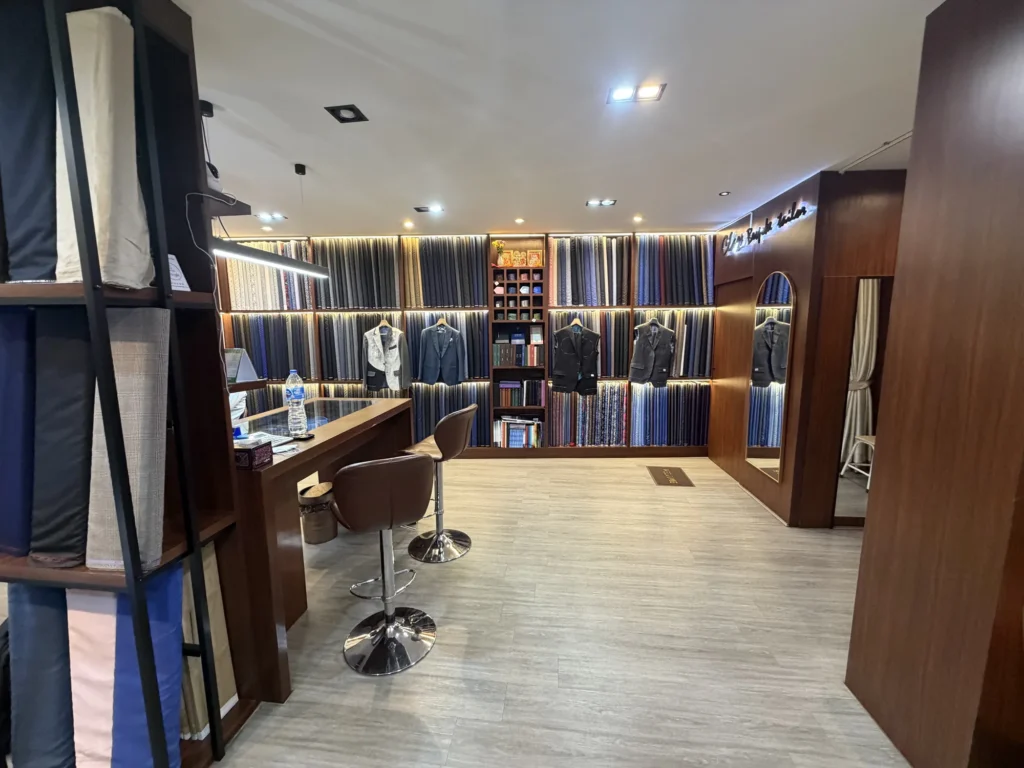
Compare swatches in person. Hold them toward the light, feel whether the surface is crisp or soft, drape them over the forearm and gently compress them to see how they recover. For a detailed warm-weather comparison, see the guide to choosing tropical wool for Bangkok and browse the Class Bespoke fabric collection.
Understand what the first consultation should establish
A useful consultation should connect the wearer’s routine with the garment specification. Discuss posture, movement, preferred silhouette, trouser rise, jacket length, pocket use, footwear and the shirts normally worn with the suit. Bring reference images if they communicate proportion or mood, but expect the final design to be adapted to the wearer rather than copied literally.
This is also the time to confirm what is included, the expected fitting sequence and the collection date. If the deadline is fixed, state it before cloth is cut. A realistic schedule protects both fit and finish.
What happens during fittings?
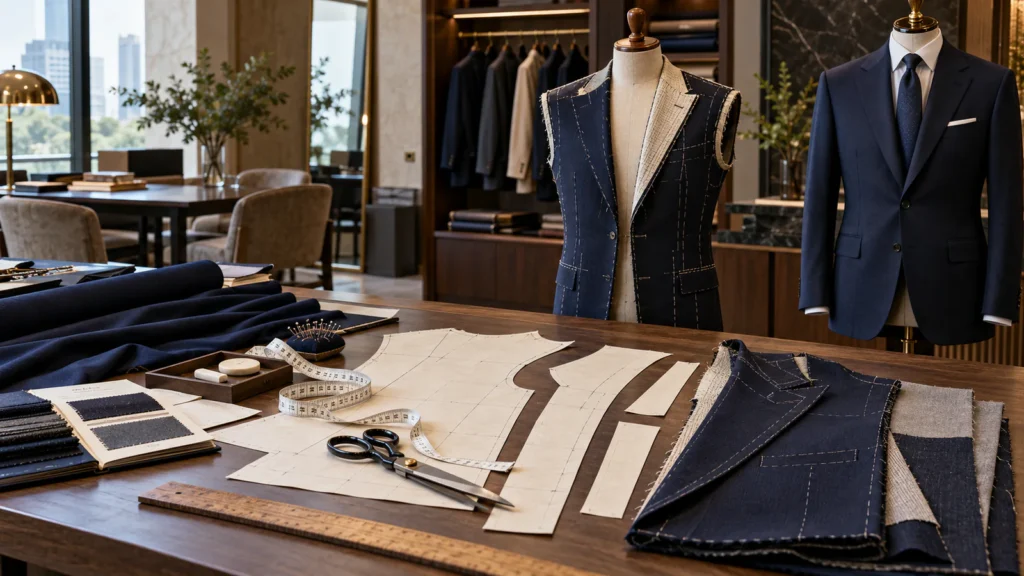
Fittings allow the tailor to assess balance, length, suppression, sleeve position, trouser line and comfort on the actual body. Stand naturally, walk, sit and move the arms as they will be used in daily life. A mirror check is useful, but comfort and mobility reveal issues that a static pose can hide.
Wear the intended shirt and shoes whenever possible. Changing heel height, collar height or trouser footwear between appointments makes accurate decisions harder. The number and purpose of appointments can vary by garment and client, so use the separate guide to bespoke suit fittings in Bangkok for a closer explanation.
Jacket checks
- The collar should sit cleanly against the shirt collar.
- The shoulders should look balanced without restricting movement.
- The fronts should close without pronounced pulling or distortion.
- Sleeve length should be judged with the intended shirt.
- Jacket length and button position should suit the wearer’s proportions.
Trouser checks
- The waistband should remain comfortable when standing and sitting.
- The rise should support the intended silhouette.
- The front and back lines should hang cleanly.
- The hem and break should be assessed with the intended shoes.
- Pockets should remain functional without persistent gaping.
Construction terms: ask what they mean for this garment
Terms such as full canvas, half canvas and fused construction describe how structure is created inside a jacket, but the label alone does not guarantee good fit or execution. Ask what construction is proposed, why it suits the cloth and intended use, and how it affects weight, structure, care and price. Avoid treating a single construction term as a substitute for judging the complete garment.
Common mistakes first-time clients can avoid
Choosing every detail independently. Lapels, pockets, cloth and silhouette should work as one design.
Optimising only for the lightest weight. Drape, airflow and recovery can matter as much as the number on a bunch label.
Arriving at fittings in different clothing. Consistent shirts and shoes make comparison more reliable.
Saving concerns until collection. Raise comfort or proportion questions during fittings, when they can be assessed in context.
Buying for an imagined lifestyle. A useful suit should suit the meetings, journeys and occasions that will actually fill the calendar.
A practical collection checklist
- Button the jacket and inspect the front and collar.
- Move the arms, sit and walk in the full outfit.
- Check sleeve and trouser length with the intended shirt and shoes.
- Confirm pockets, buttons, vents and closures operate correctly.
- Review care guidance for the selected cloth.
- Ask how future adjustments or repeat orders should be handled.
Plan a Bangkok tailoring appointment
The best result begins with a clear brief and continues through careful fittings. Review the Class Bespoke tailoring process, explore the available tailored suit options, or contact Class Bespoke to discuss the garment, intended use and timing.