Sep 21, 2026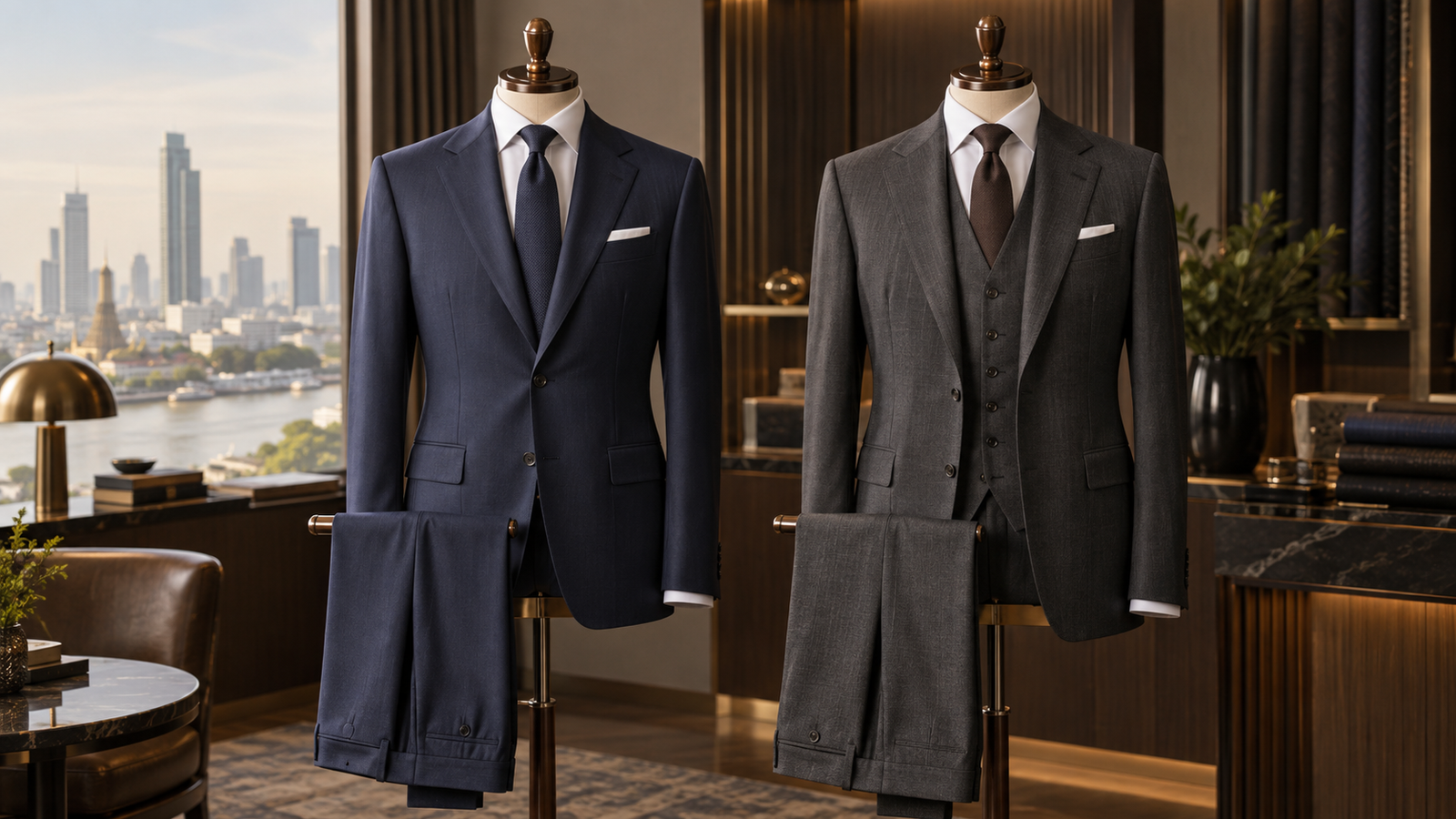
A two-piece and a three-piece suit can begin with the same basic cloth and silhouette, yet the extra waistcoat changes how the outfit looks, layers and works across different occasions. The useful question is not whether three pieces are automatically better than two. It is whether the waistcoat earns its place in the way you expect to dress.
For Bangkok, that decision should account for formality, time spent outdoors, air-conditioned interiors, travel, wearing duration and how often you want to separate the components. This guide keeps the choice practical: start with use, then plan proportion, cloth and fittings around it.
Begin with the occasions the suit must cover
Write down the events and environments that matter. A regular office suit, a wedding commission, an evening garment and a travel suit do not necessarily need the same level of formality or layering.
A two-piece configuration keeps the jacket and trousers as the complete outfit. It is often the simpler starting point when flexibility, frequent wear or moving between outdoor and indoor conditions is important. A three-piece adds a coordinated waistcoat, which can create a more formal, composed appearance and keep the torso visually finished when the jacket is removed.
Explore the current tailored suits pathway for the commercial garment owner. This guide remains focused only on choosing the configuration.
What the waistcoat changes
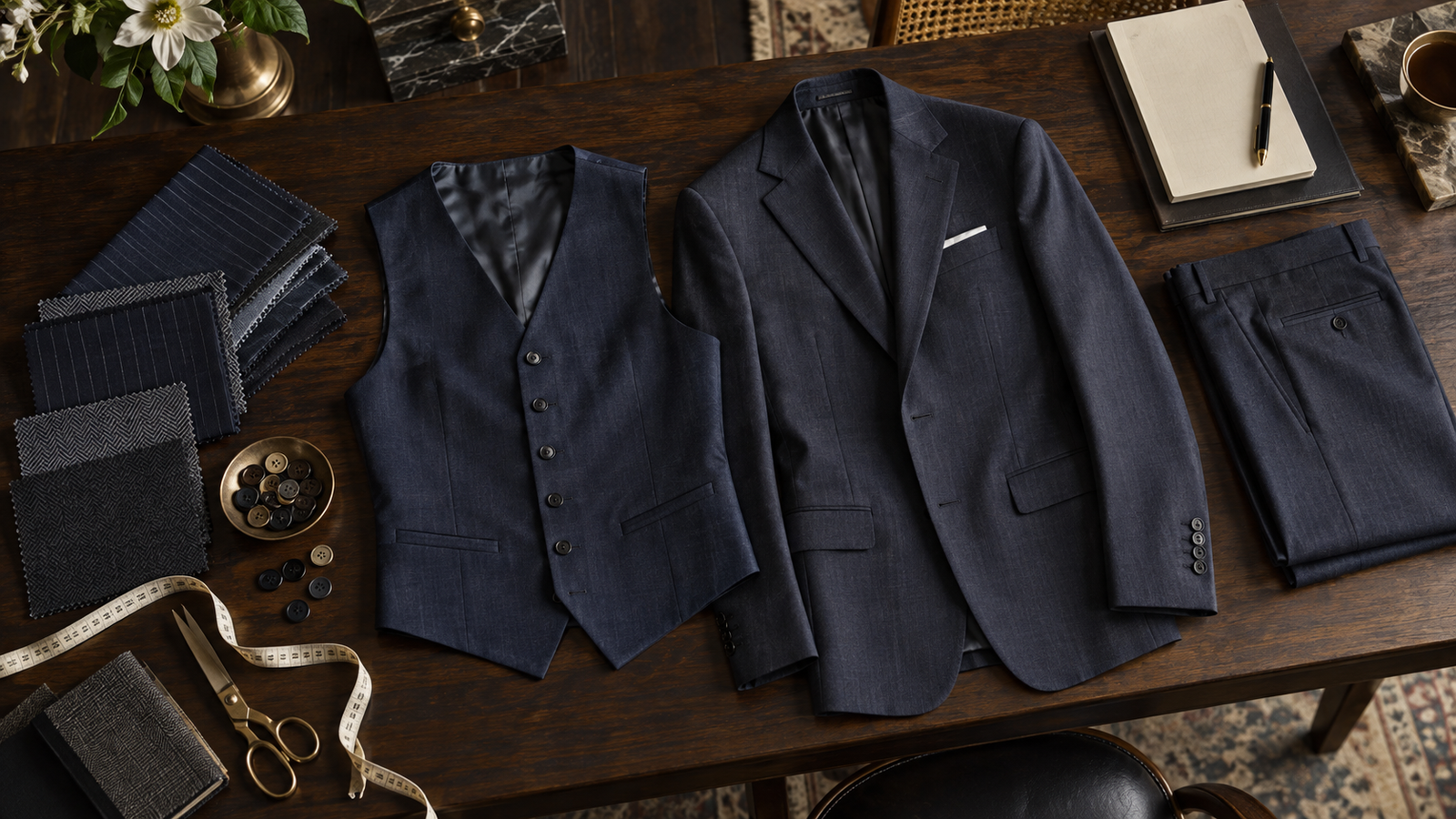
The waistcoat adds another fitted layer and another set of proportions to coordinate. Its length should cover the waistband in normal standing posture, while its neckline, buttons and front shape need to work with the shirt, tie and jacket opening. The jacket must close cleanly over it without creating unnecessary bulk.
The extra layer can make the outfit feel more formal and deliberate. It can also make the suit more visually adaptable: the full three-piece arrangement for a formal moment, jacket and trousers for a simpler setting, or—where the dress code allows—the waistcoat and trousers after the jacket comes off.
Account for Bangkok climate and wearing time
Bangkok conditions make wearing time and movement especially important. A client spending most of the day in air-conditioned rooms may make a different choice from someone moving repeatedly between transport, outdoor photography and a warm venue.
A waistcoat does not make a suit unsuitable for Bangkok by definition, but it adds a layer. Discuss how long it will be worn, whether the jacket is likely to come off, the formality required at that point and how the selected cloth behaves. The aim is not to chase the lightest possible specification at any cost, but to balance comfort, drape, structure and intended use.
Match the configuration to business, weddings and evening use
For frequent professional use, a two-piece can be the more straightforward foundation, especially when the suit must rotate with different shirts and ties. A three-piece can add presence for formal presentations, leadership occasions or events, but the waistcoat should be part of a real wearing plan rather than an unused extra.
For a wedding, the waistcoat can help distinguish the groom and preserve a dressed appearance when the jacket is removed. The decision should still follow the venue, ceremony formality, colour plan, photography, movement and future use. The wedding tailoring owner covers the commission itself, while tuxedo and black-tie options remain the correct pathway when the dress code calls for evening formalwear rather than a lounge suit.
Plan cloth, lining and structure as one specification
Cloth should be considered with the number of layers, the intended silhouette and the garment’s wearing conditions. Weight, weave, drape and surface all affect how the jacket, waistcoat and trousers relate visually. Exact composition should be confirmed from the current bunch label rather than inferred from a photograph or collection category.
Class Bespoke’s verified collection spans wool, natural-fibre and blended options from established Italian, British and international mills, subject to current availability. Use the fabric guidance to prepare for the comparison, then review suitable current cloth during consultation.
Fit the waistcoat as a garment, not an accessory
A waistcoat needs its own fitting attention. Check that it sits close enough to remain clean without restricting breathing or movement. Review the neckline against the shirt, the front length over the waistband, the balance at the sides and back, and how it behaves when sitting.
Then put the jacket over it. The combined layers should allow natural arm movement and comfortable closure. Class Bespoke’s verified process begins with consultation, cloth selection and measurements, followed by garment preparation, fittings and final adjustments. Most suit commissions typically involve two to three fittings depending on the garment and the corrections required. The bespoke process remains the owner for that full sequence.
Consider styling flexibility before ordering the extra piece
Ask how many useful combinations the commission will create. A two-piece may be enough if the goal is a dependable suit that changes character through shirts, ties and shoes. A three-piece can extend the formal range, but only if the waistcoat works with the client’s wardrobe and likely events.
Colour and pattern also affect flexibility. A matching waistcoat produces the most unified three-piece expression. A contrasting waistcoat can be useful in some wardrobes, but it creates a different task and should be planned deliberately rather than treated as an automatic substitute.
Compare the full quotation and garment list
When comparing two-piece and three-piece options, confirm exactly what is included: jacket, trousers, waistcoat, cloth, construction, fitting plan and any additional trousers or shirts. The extra garment changes labour, cloth use and fitting requirements, so compare like with like.
The governed guide to what a Bangkok tailored-suit quotation includes supports that discussion once its publication is live. Do not treat a starting price as a universal three-piece quotation.
A practical two-piece versus three-piece checklist
- Which occasions must the suit cover?
- How much time will be spent outdoors, travelling or moving?
- Will the jacket come off, and should the outfit remain formally finished?
- Does the waistcoat add a useful wardrobe option?
- Does the cloth suit the added layer and expected wearing duration?
- Have the waistcoat and jacket been checked together while standing, sitting and moving?
- Is every garment and fitting expectation clear in the quotation?
Questions buyers ask about two-piece and three-piece suits
Is a three-piece suit more formal than a two-piece suit?
Usually, the coordinated waistcoat gives a three-piece suit a more formal and composed appearance. The actual result still depends on cloth, colour, pattern, styling and dress code.
Is a three-piece suit too hot for Bangkok?
Not automatically, but the waistcoat adds a layer. Consider outdoor exposure, air conditioning, wearing duration, movement and cloth before deciding whether the added formality is worth it for the occasion.
Can the waistcoat be worn without the jacket?
It can be in appropriate settings, particularly after the formal part of an event. Its length and fit should still keep the shirt and waistband relationship neat when the jacket is removed.
Is a two-piece or three-piece suit better for a wedding?
Neither is universally better. A three-piece can help distinguish the groom and maintain a dressed appearance without the jacket; a two-piece may better suit a less formal venue, warm conditions or a simpler future wardrobe. Start from the event plan.
Does a three-piece suit require different fitting checks?
Yes. The waistcoat needs its own length, neckline, balance and movement checks, and the jacket must then be assessed over the additional layer.
Can one pair of trousers work with both configurations?
A coordinated three-piece normally uses the same suit trousers whether the waistcoat is worn or not. Confirm the trouser rise and waistband relationship so the waistcoat covers the waistband cleanly.
Choose the configuration around the way you will wear it
Class Bespoke can discuss the occasion, climate, personal style, garment list and fitting plan before the specification is confirmed. The useful outcome is not simply more pieces; it is a suit configuration that has a clear role in the wardrobe.
Choose a Thonglor or Sukhumvit showroom, or discuss a two-piece or three-piece suit.