Sep 28, 2026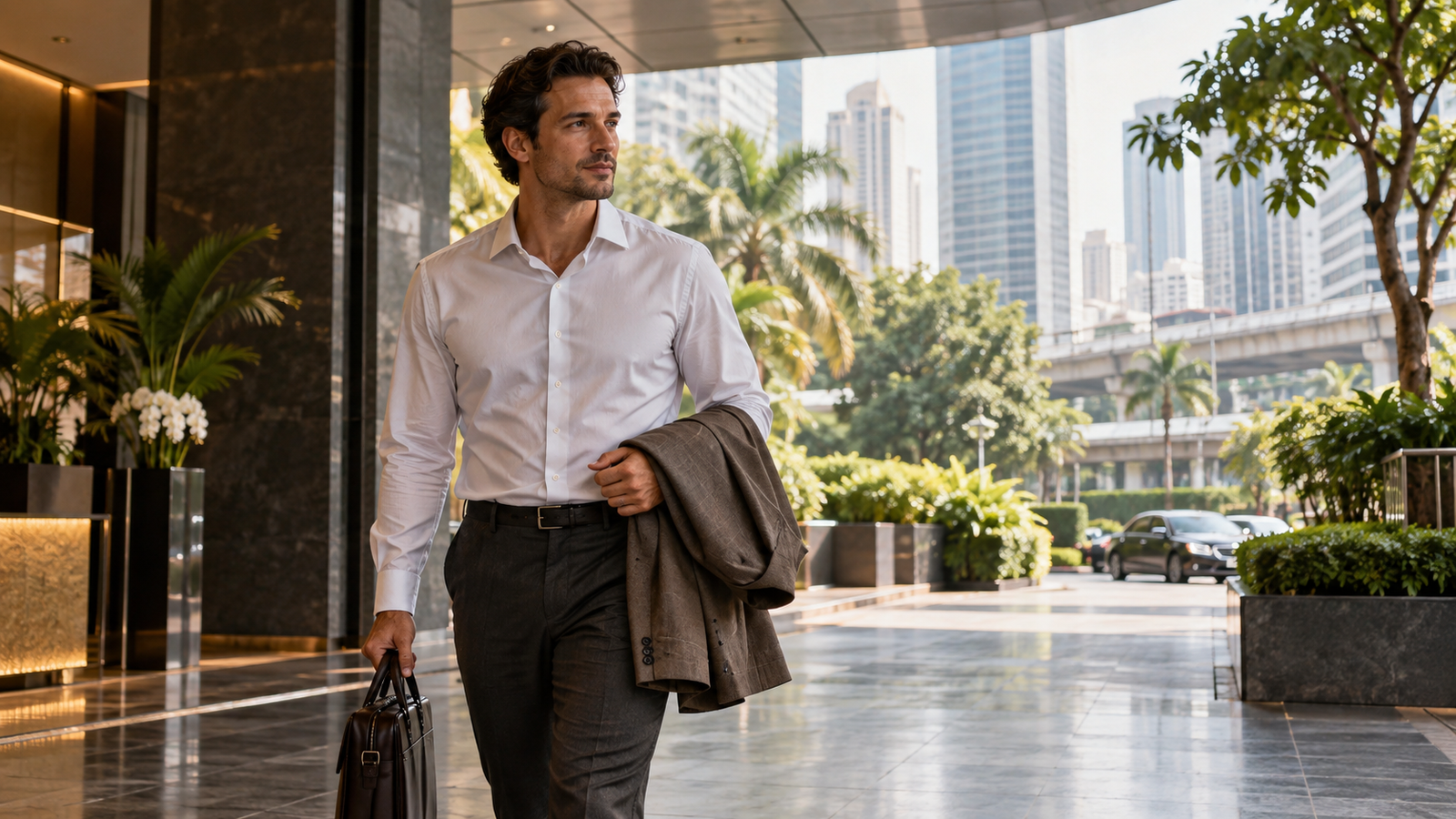
Bangkok business dressing has to work across two different environments: warm, humid journeys outdoors and air-conditioned offices, hotels and conference rooms. The practical answer is not one supposedly perfect fabric. It is a coordinated wardrobe with breathable layers, appropriate formality and enough flexibility to remove or add a jacket without looking unfinished.
Start with the meeting, not the weather alone
Confirm the host’s dress expectation before packing. A formal presentation, government meeting or evening business event may call for a suit, while an internal meeting may allow a shirt with tailored trousers or a separate blazer. Thailand’s official guidance for the 2026 Annual Meetings notes both Bangkok’s warm conditions and the formality expected at official venues.
When the invitation is unclear, ask. It is easier to relax a properly planned outfit than to make an overly casual one more formal after arriving.
Build a removable professional layer
A jacket can be carried during an outdoor transfer and added before entering the meeting. That makes the shirt and trousers important in their own right: the shirt should remain presentable without the jacket, and the trouser rise, waistband and leg line should support the outfit rather than rely on a matched jacket to complete it.
For a formal day, use a coordinated suit. For a schedule that moves between meetings and less formal appointments, a blazer with deliberately chosen trousers may offer more flexibility. The blazer should look like a true separate through its cloth, texture, buttons and pockets—not like an orphaned suit jacket.
Choose cloth by behaviour, not marketing shorthand
Fibre name alone does not predict comfort. Discuss weight, weave, openness, opacity, drape, crease recovery, lining and care. Tropical wool and lighter wool can be considered for business tailoring in Bangkok; wool-linen, linen and cotton options can be useful in the right garment and dress code, but each brings different structure and crease behaviour.
A very fine Super number is not automatically the most suitable choice for repeated travel or humid conditions. The useful question is how the selected cloth behaves during the actual day: walking, car travel, sitting, presentations and movement between indoor and outdoor spaces.
Plan shirts for heat, transparency and the jacket
Shirting should be assessed for weave, weight, opacity and care as well as fibre. A cloth that feels light in the hand may still be too transparent for a formal setting. Collar height and spread should work with the wearer’s neck, tie use and jacket lapels, while cuff and sleeve length should be checked with the jacket.
If the jacket may come off, choose a shirt specification that still looks intentional on its own. Bring or describe the tie, shoes and underlayers normally worn so the whole outfit can be planned together.
Account for rain and transfers
Check the current TMD forecast before travelling. Carry a compact umbrella when rain is possible, protect important documents and allow extra time between appointments. If a route involves a long outdoor walk, consider travelling in a separate outer layer or changing shoes on arrival rather than expecting formal footwear to handle every condition.
A practical three-day business packing plan
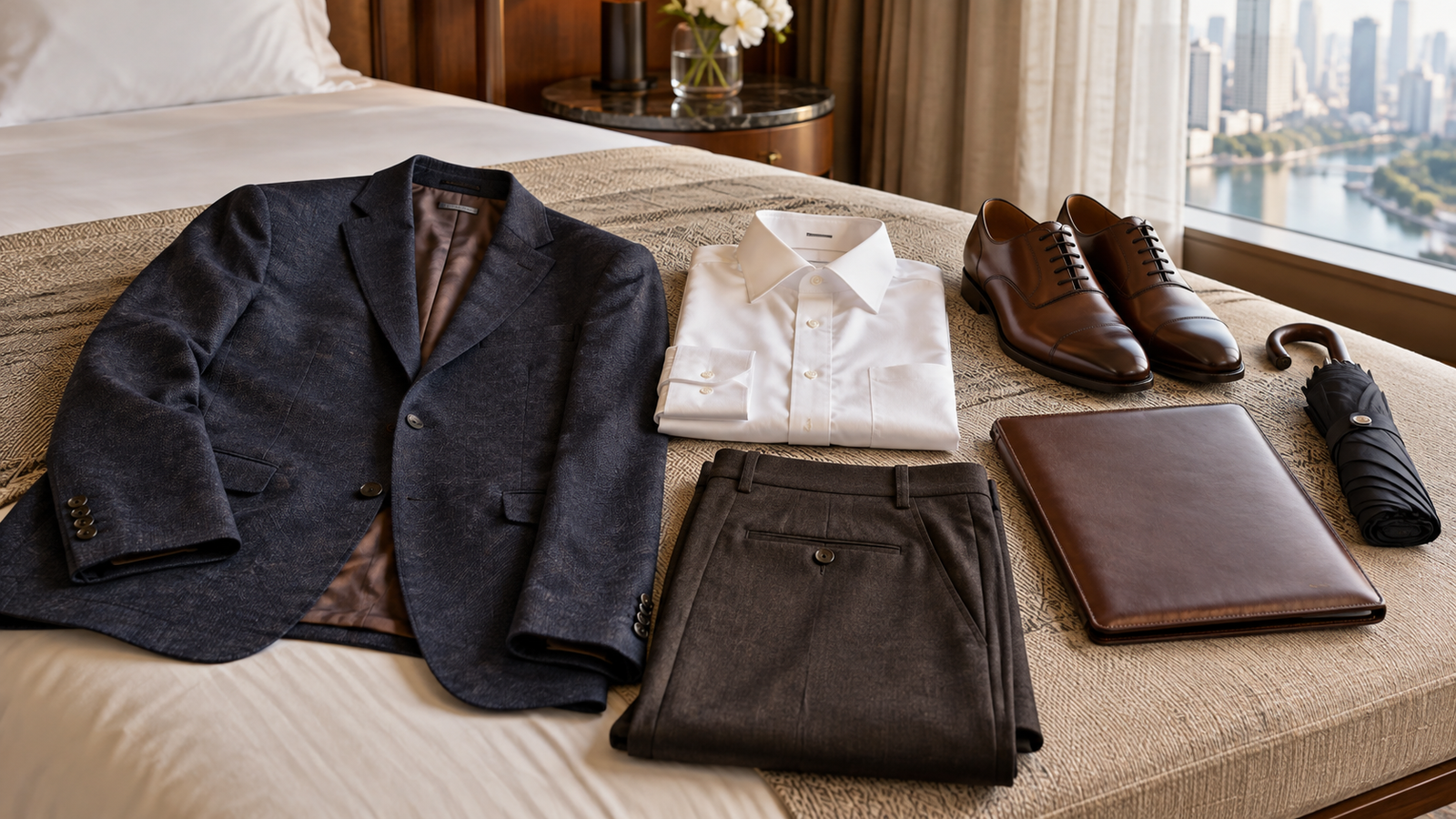
- One suit or coordinated jacket-and-trouser combination appropriate to the most formal meeting.
- A second tailored trouser or chino that works with the jacket where the itinerary allows separates.
- Two or three shirts selected for opacity, care and repeat use.
- A compact umbrella and a garment cover or protective packing layer.
- Meeting-appropriate shoes plus an alternative for wet transfers where useful.
- A small care kit appropriate to the cloth and the hotel’s available services.
Plan the wardrobe before the Bangkok visit
Share the meeting formality, travel dates, expected transport, indoor and outdoor schedule, and the garments already in your wardrobe. Class Bespoke can then discuss whether a suit, blazer, shirts or trousers are the appropriate commission and confirm the cloth, construction, fitting and delivery plan against the actual visit.
Explore suits · Plan custom shirts · Compare blazers · Explore trousers · Compare cloth · Plan as an international visitor · See the showroom experience · Request an appointment
Frequently asked questions
Should I wear a suit to a business meeting in Bangkok?
It depends on the host, sector, venue and purpose. Formal events may require a suit, while some internal meetings permit a shirt and tailored trousers. Confirm the expectation rather than relying on climate alone.
What fabric is best for Bangkok business wear?
There is no universal best fabric. Weight, weave, drape, opacity, crease behaviour, lining, care and the amount of time spent indoors all matter. Evaluate the actual cloth rather than choosing only by fibre or mill name.
Is linen appropriate for a Bangkok business meeting?
Linen or a linen blend can suit some business-casual settings, but its texture and creasing may be too relaxed for other meetings. Match the cloth to the formality and the garment.
How should I handle strong air-conditioning?
Use a removable jacket or blazer that is easy to add indoors. Official visitor guidance for major Bangkok meetings specifically advises considering a light jacket for air-conditioned spaces.
Can one blazer cover several Bangkok meetings?
Often, if its cloth, colour and structure coordinate deliberately with the packed trousers and shirts. A formal presentation may still require a matched suit.
What should I tell a Bangkok tailor before a business trip?
Share the meeting dress code, arrival and departure dates, event schedule, transport, fitting availability and the garments needed. That allows the specification and schedule to be evaluated realistically.