Jun 13, 2026
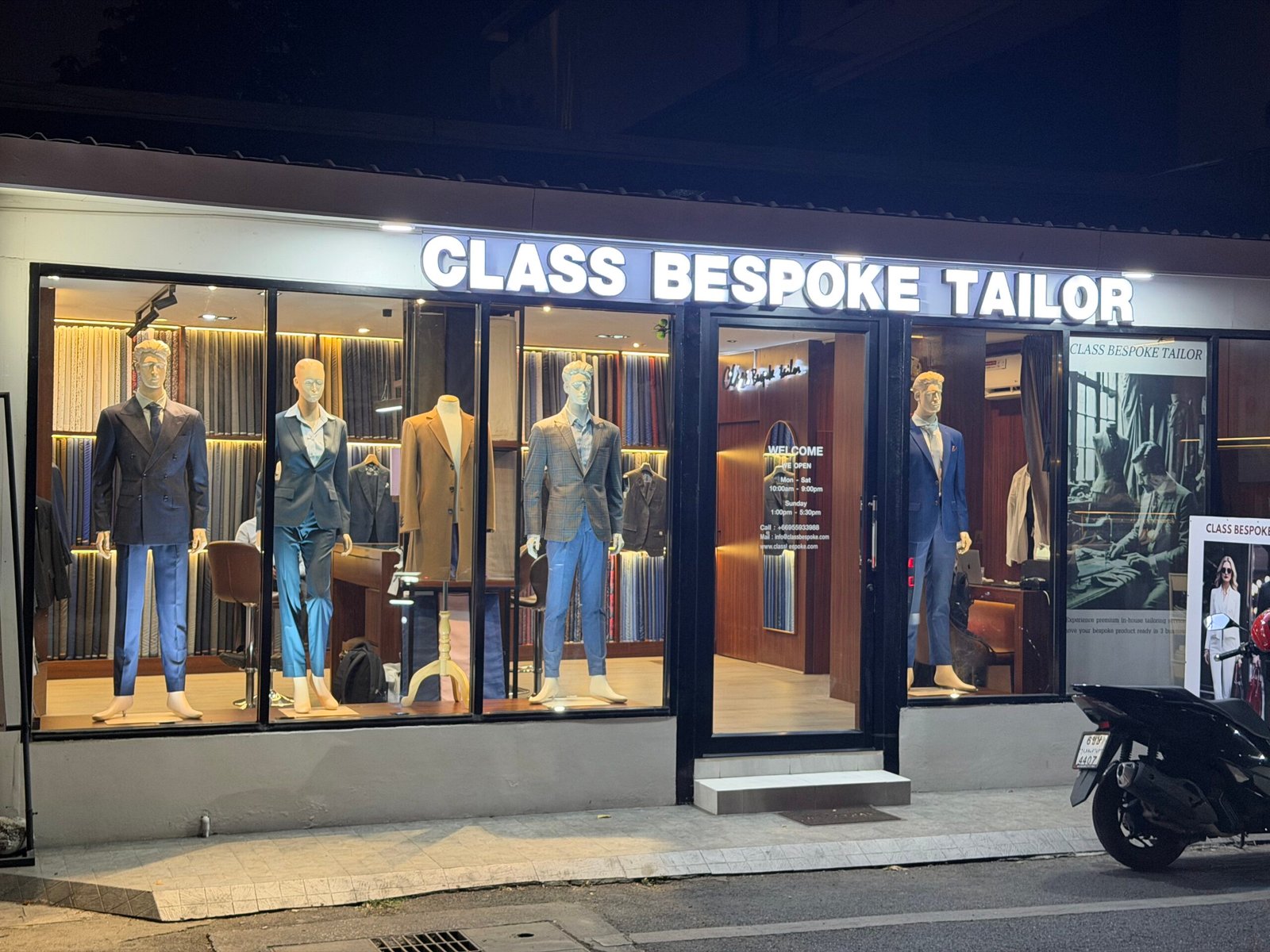
Published by Class Bespoke Tailor in Bangkok, Thailand.
Choosing bespoke clothing is not simply a choice between an expensive garment and a cheaper one. It is a decision about use, cloth, construction, proportion, fitting time and how the garment should work in the wearer’s daily life. Bangkok offers many tailoring choices, so the useful question is not which shop makes the loudest promise. It is which process gives the client enough information to make a considered decision.
What bespoke means in practice
A Class Bespoke commission begins with consultation, individual measurements, cloth and design selection, followed by fittings and adjustments. The garment is planned around the client’s intended use and preferences rather than selected as a finished standard size. Measurements establish the starting point, while fittings allow balance, length, comfort and proportion to be assessed as the garment develops.
The word “bespoke” is used inconsistently across the clothing industry. Clients should therefore ask practical questions: which construction is included, how the garment will be fitted, what cloth is available, which details can be changed, and what schedule is realistic. The Class Bespoke process explains the sequence from consultation to final fitting and collection.
Why Bangkok works for tailoring clients
Bangkok is useful for residents and international visitors because tailoring consultations can be planned alongside business, weddings and travel. Climate also shapes sensible garment decisions. Cloth weight, weave, lining coverage, jacket structure and intended use should be considered together rather than treating “lightweight” as the only requirement.
Class Bespoke is a three-generation family tailoring house with showrooms in Sukhumvit and Thonglor. Clients can compare cloth and garment options in person; hotel or on-site measuring may be arranged depending on the order, location and schedule. These services should be confirmed in advance rather than assumed for every order.
Cloth, construction and garment use
Fabric should be selected for the garment and its expected use. Tropical wool and other open-weave worsteds can provide a formal appearance with useful recovery in warm conditions. Linen offers a more relaxed texture and characteristic creasing. Cotton can work well for shirts, chinos and separates. Availability depends on the collections and stock presented during consultation; not every cloth or mill is available at all times.
Depending on the garment and specification, construction may be fused/basic, half canvas or full canvas. No one construction should be represented as included at every price point. Clients comparing options can review the bespoke tailoring and construction guide and the current fabric selection.
Measurements and fittings
There is no single correct number of fittings for every client. The number depends on the garment, construction, whether the client is new or returning, the adjustments required and the available schedule. A first fitting is used to assess the garment while work is still in progress; further fittings may be required before final review and collection.
For planning purposes, half-canvas work is generally discussed around 5–10 days and full-canvas work around 15–30 days. Eligible basic/fused rush work may sometimes be possible with advance confirmation, but it is not a universal service or guaranteed timetable. Travellers should share their Bangkok dates before arrival so the proposed construction and fitting plan can be assessed realistically.
What Class Bespoke makes
- Suits and blazers: business, wedding and separate-jacket options with garment-specific cloth and construction choices.
- Shirts: collar, cuff, cloth and fit decisions planned around business, formal or casual use.
- Tuxedos: black-tie garments coordinated with the shirt, bow tie and intended dress code.
- Trousers and chinos: rise, pleats, waistband, pockets, taper and break considered according to use.
- Overcoats: cloth, length and layering allowance planned around the climate in which the garment will be worn.
- Weddings: individual garments and pre-arranged wedding-party coordination; see the Wedding tailoring service.
- Confirmed womenswear: suits, trousers, skirts and dress shirts, with scope and scheduling confirmed during consultation.
Questions worth asking before ordering
- Which construction is included in the quoted price?
- Which cloth is suitable for the intended climate, frequency and formality?
- How many fittings are likely for this garment and schedule?
- Which adjustments can realistically be completed before collection?
- What future alterations may be possible given the garment’s construction and allowance?
- Can hotel, on-site or shipping arrangements be confirmed for this specific order?
Planning a Class Bespoke consultation
Bring the intended occasion, travel dates and any useful style references to the consultation. A garment you already enjoy wearing can be discussed as a reference for proportion or features, but the new commission should still be evaluated on its own cloth, construction and fitting requirements.
To compare current options, explore the bespoke suits page or arrange an appointment at the Sukhumvit or Thonglor showroom.