Nov 5, 2026
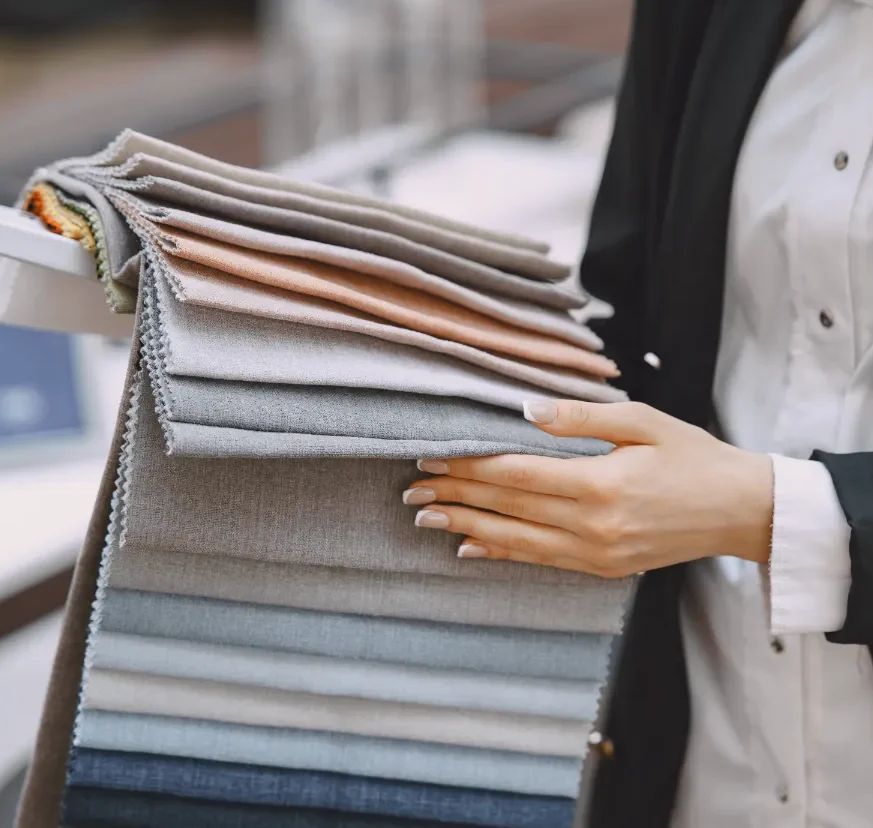
“Worsted” and “woollen” do not describe two different animal fibres. They describe two routes for preparing and spinning wool into yarn. That choice changes smoothness, bulk and pattern clarity, but the finished cloth is also shaped by weave, weight and finishing. A raised worsted can look softly flannelled; a closely cropped woollen can look cleaner than expected. The useful comparison starts beneath the surface.

Worsted and woollen in one view
| Feature | Worsted system | Woollen system |
|---|---|---|
| Fibre preparation | Longer fibres are combed; short fibres are removed and the remainder aligned | Usually shorter and more varied fibres are carded, with less parallel alignment |
| Yarn character | Compact, even and capable of fine counts | Bulkier, airier and hairier |
| Typical cloth face | Smooth, clean and clearly defined | Soft, matte and textural |
| Typical tailoring effect | Sharper line and clearer crease | Fuller body and softer visual edges |
These are tendencies. Neither system guarantees a particular weight, warmth, durability or level of quality.
What happens before the yarn is spun?

Worsted preparation aligns and edits
All wool is carded to open and separate the fibres. In the worsted route, further gilling and combing make the fibres more parallel and remove short fibres called noils. The resulting wool top can be drawn and twisted into a relatively fine, regular yarn. The International Wool Textile Organisation notes that long staple fibres allow very smooth, lightweight worsted fabrics; this is why the system is closely associated with classic suitings.
Woollen preparation preserves bulk
The woollen route normally uses shorter fibres with greater variation in length and diameter. Carding distributes them in a more random arrangement, and the material receives much less drafting before twist is added. More fibre ends remain at and near the yarn surface. The result traps more air and produces volume without requiring the compactness of a worsted yarn.
That difference is intentional, not a hierarchy. Woollen spinning is the appropriate route when the design calls for loft, depth, a mélanged colour or a softly obscured weave.
Finishing can change what the eye sees
Spinning builds the yarn; finishing develops the cloth after weaving. Several processes can reinforce or soften the distinction between worsted and woollen.
Milling or fulling
Controlled moisture, heat and mechanical action encourage wool fibres to interlock. Woolmark describes milling as consolidating the structure while allowing fibres to protrude, creating the characteristic fuller, hairier surface of many woollen fabrics. More milling can add body and cover, but the exact result depends on starting construction and process control.
Raising and shearing
Raising lifts fibres from the surface to create nap, softness and visual depth. Shearing or cropping cuts that raised surface to a controlled height. A long, brushed nap looks casual and diffuse; a closely cropped finish can be refined and relatively clean. These treatments may be used selectively on different yarn systems.
Pressing and decatising
Steam, pressure and controlled relaxation help stabilise dimensions and set handle and appearance. Peer-reviewed textile guidance identifies decatising, milling, raising and shearing as processes capable of changing lustre, texture, fullness and softness. The same woven construction can therefore present differently after finishing.
The important exception: worsted flannel
“Flannel” describes a surface and family of finishes more than one exclusive spinning route. A worsted flannel begins with smoother, more regular yarn and receives a milled or raised finish. It tends to keep more pattern definition and a cleaner line than a traditional woollen flannel. Woollen flannel generally has greater loft, fuzzier colour transitions and a softer edge.
Neither is the authentic winner. Worsted flannel can suit someone who wants a brushed, matte surface without surrendering too much crease definition. Woollen flannel can suit tailoring intended to feel more relaxed and substantial. Always check the cloth specification; the word “flannel” alone does not reveal the spinning system.
How yarn and finish change drape
Drape is the way fabric falls under its own weight. It is not a synonym for softness. A smooth worsted may feel firm in the hand yet fall in long, clean lines. A woollen cloth may feel soft at the surface but resist tight folds because its thickness and bulk give it body.
Worsted suitings often support a precise trouser crease, a defined lapel edge and a relatively uninterrupted jacket line. Woollen suitings tend to round those edges, disguise minor rumpling and create a fuller silhouette. Yet weight, yarn twist, weave density and finish can reverse expectations: a heavy worsted can be more substantial than a light woollen, while intensive milling can make either cloth less fluid.
The swatch should therefore be allowed to hang. Rubbing only the surface reveals softness, not drape.
Texture changes how colour and pattern read
Compact worsted yarns generally keep stripes, checks and small woven effects crisp. Light reflects more evenly from a clean surface, which can make dark solids appear deeper or slightly more lustrous. Woollen yarns and raised finishes scatter light. They soften pattern boundaries and give heathered, marl or speckled colours greater depth.
This affects coordination. A sharply defined worsted check can carry more visual contrast, while the same scale of pattern in a fuzzy woollen cloth may recede. Surface nap can also change apparent colour as it is brushed in different directions. Review the cloth upright and in natural light, not only flat beneath showroom lighting.
Which belongs in a suit?
Worsted is the broad default for business, formal and multi-season suits because it can deliver a clean surface across many weights and weaves. It is not automatically formal: colour, pattern and finish can make a worsted distinctly casual. The tropical-wool guide covers the separate question of open, warm-weather worsteds.
Woollen cloth is valuable for seasonal suits, flannel trousers, textured jackets and tailoring that benefits from a matte, relaxed expression. It is not restricted to outerwear, although many woollen fabrics are thicker and warmer because of their bulk. Climate and indoor conditions still need to be judged from the actual cloth.
How to inspect a swatch before commissioning
- Read the specification. Confirm fibre composition, weight and, where supplied, whether the yarn is worsted- or woollen-spun.
- Look across the surface. Low-angle light reveals nap, lustre and how clearly the weave remains visible.
- Turn it over. A raised face with a cleaner reverse shows how much of the visible effect comes from finishing.
- Let it hang. Drape the swatch over a hand or table edge and compare fold size, spring and surface collapse.
- Compress and release. Observe crease recovery, but do not infer long-term durability from one squeeze.
- Place it near the intended wardrobe. Check whether its texture supports the shirts, shoes and level of formality already in use.
Choose a finished cloth, not a processing label
Worsted versus woollen is a useful first distinction because it explains why one yarn is smooth and another lofty. It cannot replace assessment of weight, weave, finish, colour and intended wear. Pilling, abrasion resistance and comfort also cannot be predicted reliably from the spinning system alone.
Compare real options in the Class Bespoke fabric collection, then consider the cloth with the proportions and purpose of the finished suit. The bespoke process provides the point to confirm cloth, design and fitting schedule as one specification.