Sep 24, 2026
A familiar mill name or a high Super number can be useful information, but neither tells you by itself whether a suit cloth suits your work, travel, climate or wearing frequency. A better comparison begins with the job the garment needs to do, then considers composition, weight, weave, handle and drape together.
This guide explains how to compare shortlisted cloths without turning one label into a complete quality verdict. The aim is a clear specification that works with the garment, construction and conditions in which it will be worn.
Start with use, climate and wearing frequency
Tell the tailor where and how often the garment will be worn. Regular office use, air-conditioned meetings, outdoor travel in Bangkok, international trips and occasional evening events place different demands on cloth.
A first versatile business suit may need a different balance from an occasional formal garment or a jacket intended mainly for travel. Begin with use before narrowing the collection. The business-suit wardrobe guide can help define that brief.
Read the represented composition on the current bunch label
Ask what fibre composition is stated for the exact cloth being considered. Wool, natural-fibre and blended cloths can each be appropriate in the right context, but a category name, photograph or shelf position does not prove the composition of a particular swatch.
Class Bespoke presents cloth from established Italian, British and international mills alongside Australian Merino wool and a broader range of wool, natural-fibre and blended options. Individual bunches, colours and compositions depend on current availability, so confirm the label for the cloth selected during the consultation.
Understand what a Super number describes
On qualifying wool cloth, a Super S number describes fibre fineness. A higher number indicates finer fibre; it is not a universal score for durability, comfort, value or suitability. It also does not describe the jacket construction, fitting quality or complete garment.
Class Bespoke has verified labelled Vitale Barberis Canonico Super 110s, 120s and 130s options in its selections, subject to current availability. Compare the exact cloth in front of you rather than treating the largest number as the automatic winner.
Compare weight and weave separately
Cloth weight and weave influence how a fabric feels, hangs, breathes and responds during wear. They are separate from fibre fineness. Two cloths carrying a similar Super number can behave differently because their yarn, weave, finish and weight are different.
Ask the tailor to explain the practical difference between the shortlisted options. For Bangkok, discuss the balance between comfort in warm conditions and the body required for clean drape, structure and repeated use.
Use your hand and eyes—not the label alone
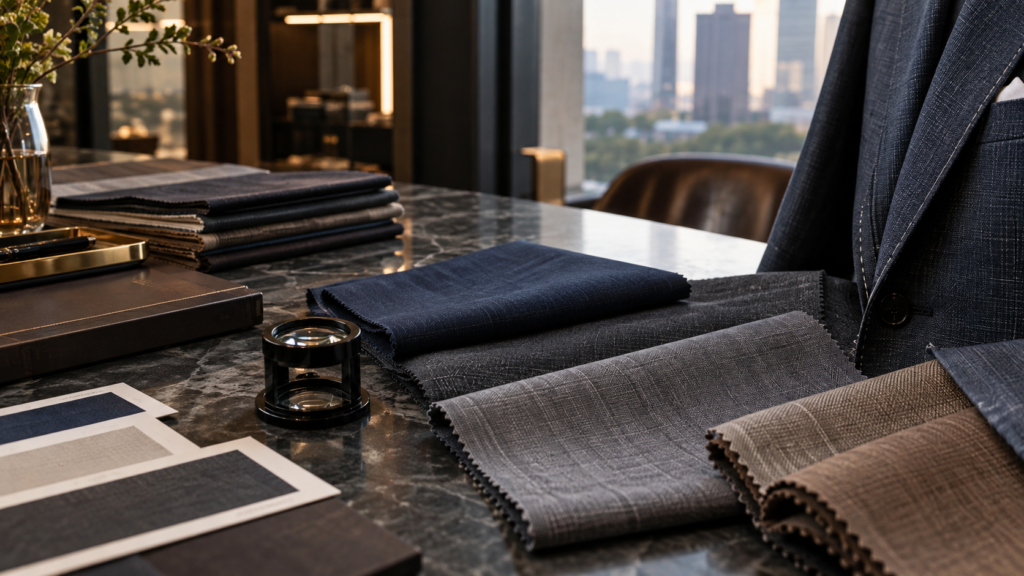
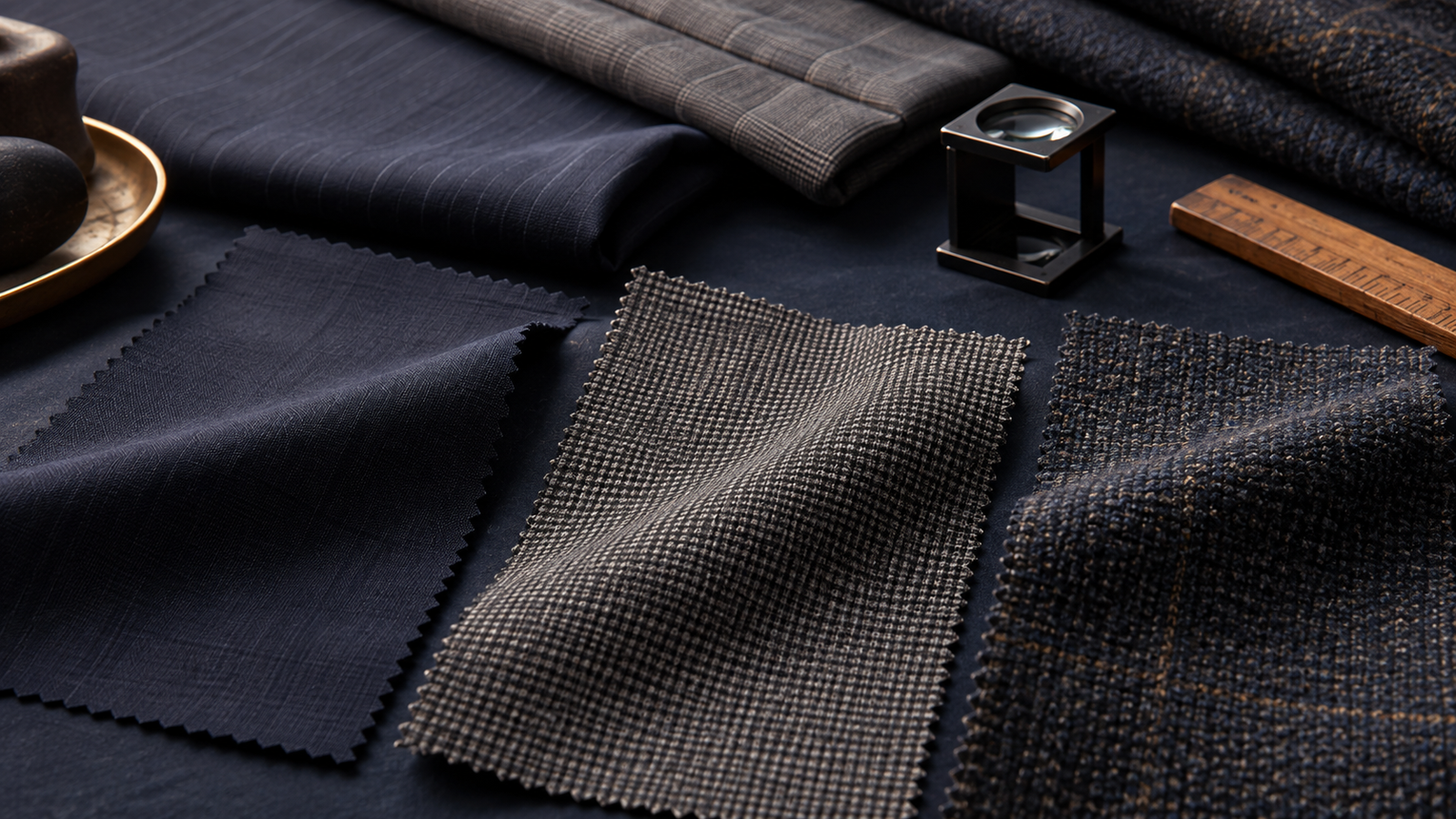
Handle the cloth. Compare softness, surface texture, body and the way it returns after being gently folded or compressed. Hold it in natural and indoor light to review colour, pattern scale and opacity. Drape a larger length when possible, because a small swatch cannot show every aspect of the finished garment.
These observations are not substitutes for technical information, but they help connect the specification to how the garment will look and feel in use.
Match cloth to construction and silhouette
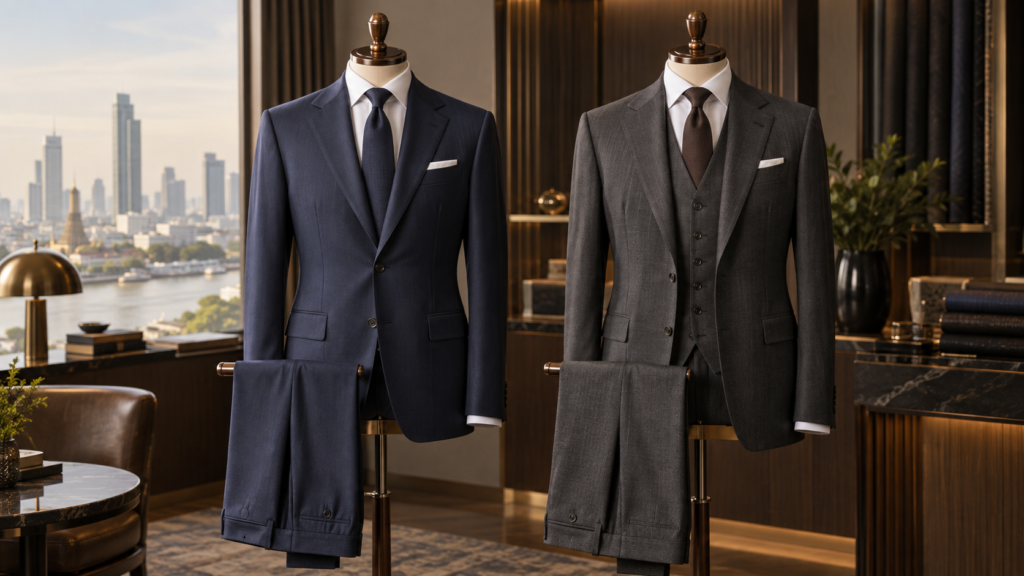
Cloth does not work independently from the jacket. The desired silhouette, level of structure and selected fused, half-canvas or full-canvas construction should be discussed together. A cloth that suits a softer travel jacket may not create the same effect in a more formal business or evening commission.
The bespoke-tailoring and construction guide explains the available construction discussion, while the Bespoke Process shows how consultation, measurements and fittings support the specification.
Compare mill name as provenance—not a shortcut
A mill name can identify provenance and a particular collection, but it does not remove the need to confirm the cloth itself. Ask for the bunch, represented composition and characteristics of the selected article. Avoid assuming that every cloth from one mill has the same weight, weave, performance or availability.
Use the Fabrics page as the commercial pathway into the current selection, then make the final comparison during consultation.
Compare shortlisted cloths like for like
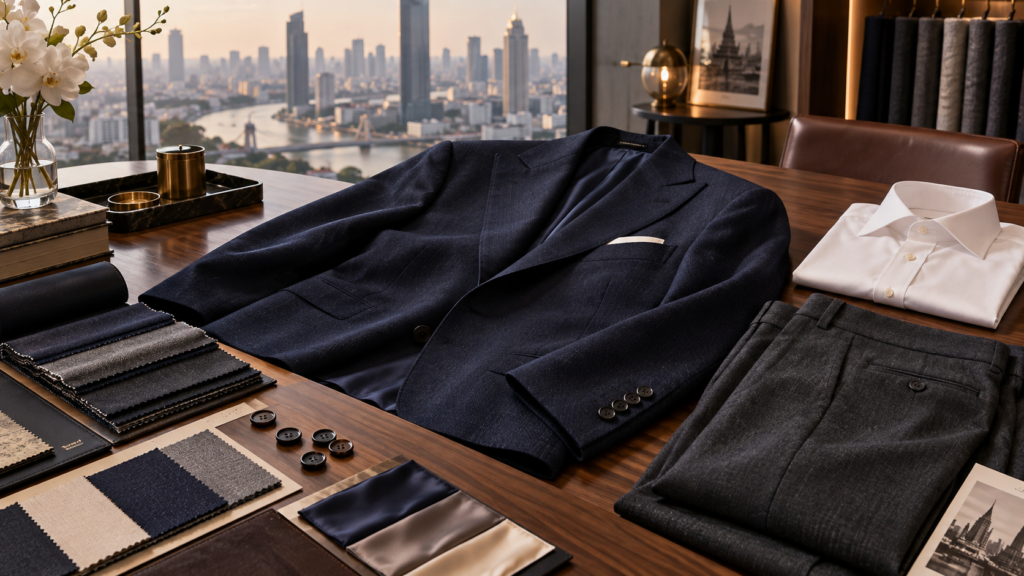
Place two or three realistic candidates together and record the same information for each:
- represented composition on the current label;
- weight and weave where stated;
- colour, pattern scale and surface;
- handle, body and drape;
- intended garment and construction;
- wearing frequency, climate and travel needs;
- care expectations and current availability;
- how the choice changes the final quotation.
If the price changes, ask what part of the specification is different. The guide to what a tailored-suit price includes helps keep that comparison consistent.
Questions buyers ask about suit cloth
Does a higher Super number mean better suit cloth?
No. It describes fibre fineness for qualifying wool cloth, not total quality or suitability. Compare weight, weave, use, construction and care alongside it.
Is a famous mill name enough to choose a fabric?
No. The mill helps identify provenance, but the exact bunch, composition, weight, weave, colour and intended use still matter. Compare the actual cloth being offered.
What suit cloth works best in Bangkok?
There is no single answer for every wearer. Discuss outdoor exposure, air conditioning, travel, wearing frequency, desired structure and care, then compare available cloths against that brief.
Are blended suit fabrics automatically lower quality?
No single fibre category answers the buyer’s whole task. Confirm the represented composition and evaluate the cloth for its intended use, feel, drape, maintenance and budget.
Should business and wedding suits use the same cloth?
They can, but the decision should reflect wearing frequency, dress code, photography, movement, climate and future use. A frequent-work commission may prioritize different characteristics from a single formal event.
Can I choose cloth before deciding the jacket construction?
You can shortlist it, but the final cloth and construction should be reviewed together. Structure, timing, budget and the intended silhouette are part of one specification.
Compare cloth with a complete garment in mind
Class Bespoke begins with the garment, occasion, climate, personal style and schedule. Clients can compare available cloth and discuss construction, proportion and fittings before confirming the commission.
Review the broader Bangkok tailor buyer framework, explore tailored suits, choose a Thonglor or Sukhumvit showroom, or Compare cloth options in a consultation.