Sep 27, 2026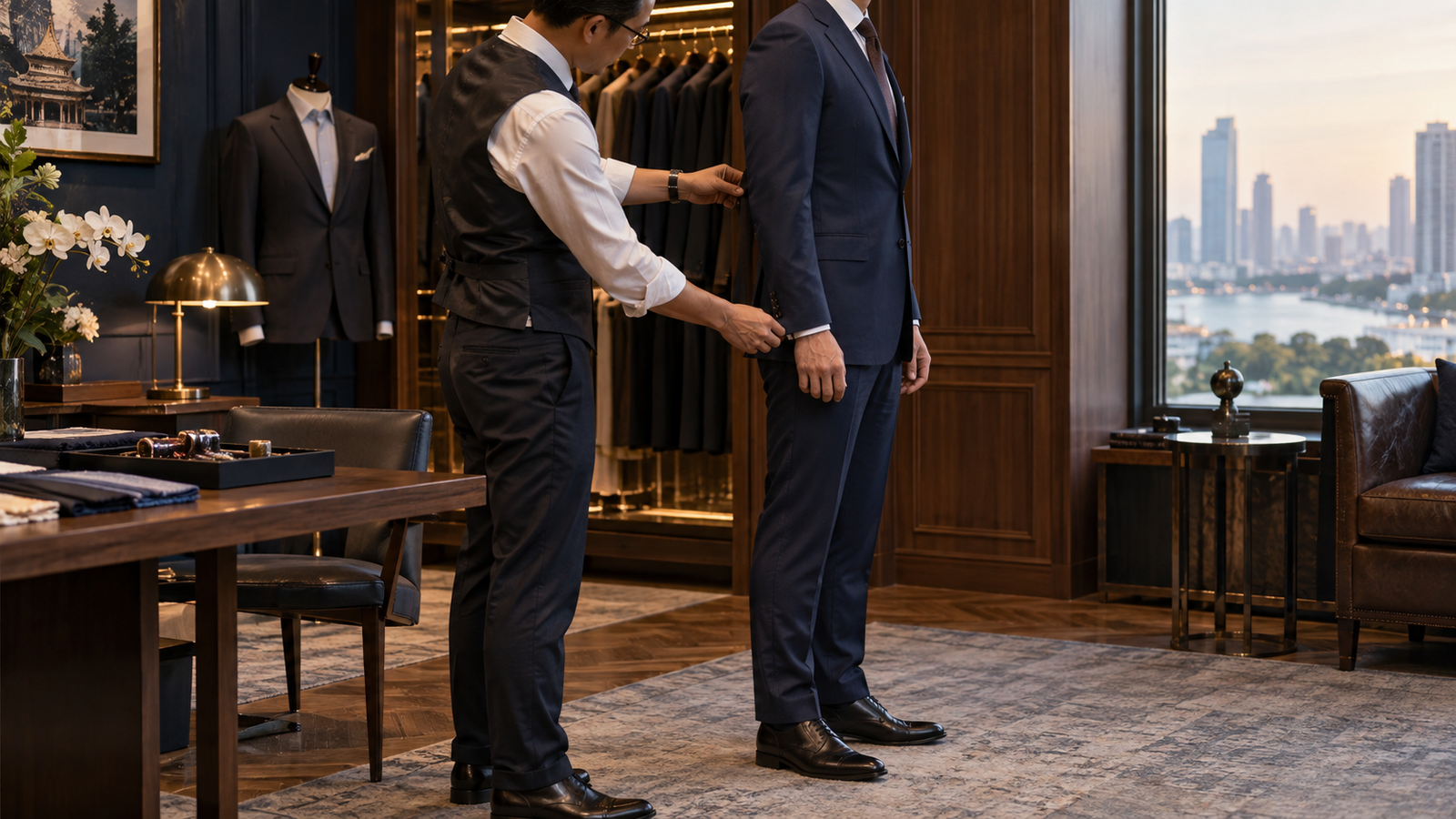
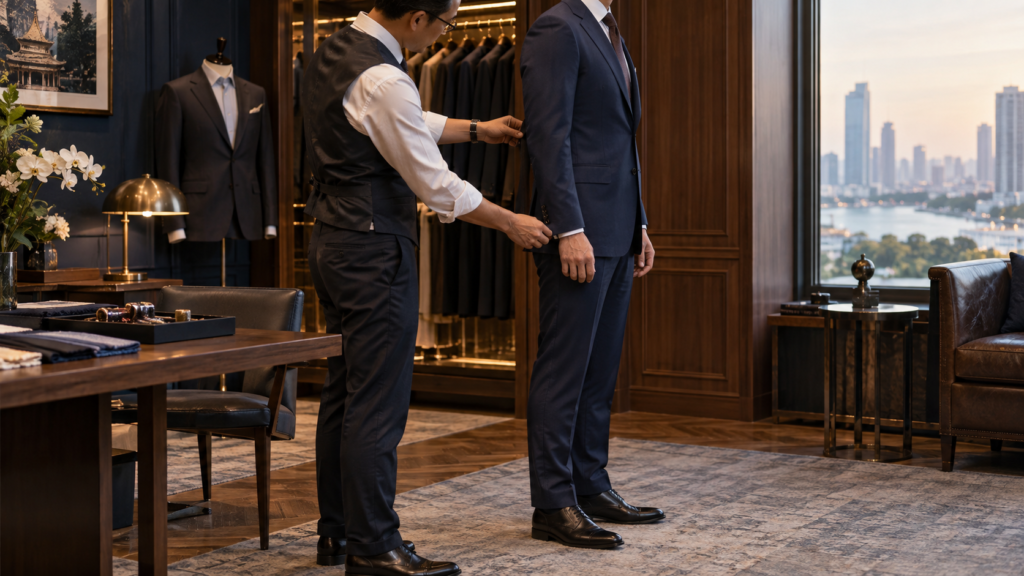
A suit fitting is not the end of a commission. It is the point at which measurements, posture observations and the original specification can be assessed on the garment as it sits on the client. What happens next should turn those observations into clear corrections, another review where required and a final delivery plan.
This guide explains that transition without assuming that every suit follows an identical workshop sequence. Garment, construction, client history, corrections and schedule all affect the number of stages required.
Begin by confirming the purpose of the fitting
A first fitting may take place while the garment is still substantially in progress. Its purpose is to review how the planned shape and proportions work on the wearer, not to judge the garment as though it were already finished.
Before discussing changes, confirm which stage of the commission you are seeing and what can appropriately be assessed at that point. The broader Bespoke Process remains the owner for the complete consultation-to-delivery sequence.
Review balance, posture and proportion together
A fitting should consider more than isolated measurements. Jacket length, shoulder line, collar relationship, chest, waist suppression and front-to-back balance interact with the wearer’s posture. Trouser waist, seat, rise, leg line and break should be reviewed as a connected composition.
The useful question is not whether a single point looks mathematically exact. It is whether the garment hangs cleanly, feels proportionate and supports the intended use. For a deeper technical buyer framework, see planning suit fittings in Bangkok.
Check movement before corrections are recorded
Standing naturally is only one test. Sit, walk, move the arms and repeat movements that matter for work, travel or the event. A jacket should be evaluated while open and closed where appropriate, and trousers should be checked while sitting as well as standing.
Movement does not mean demanding unlimited looseness or a skin-tight silhouette. It helps the tailor understand where comfort, visual line and the agreed shape need to be balanced.
Turn observations into an agreed correction list
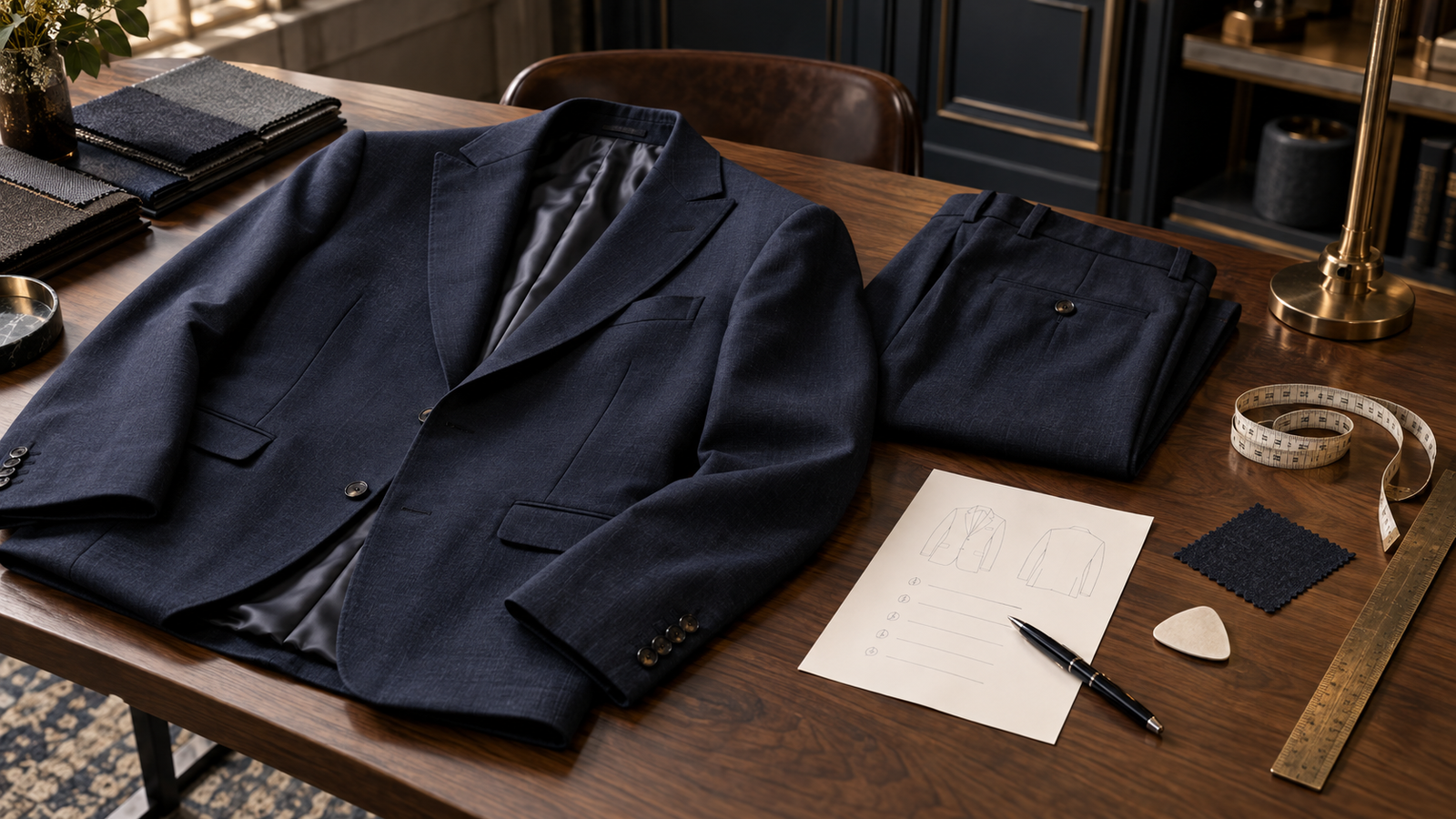
Changes should be specific enough to be understood later. Rather than saying only that something feels wrong, identify the area, the observed effect and the intended outcome: collar relationship, sleeve pitch or length, jacket balance, trouser waist or seat, rise, length or leg line.
Not every visual fold requires the same correction, and not every request is technically possible at every stage. The garment’s construction and available allowance affect what can be refined. This is why Class Bespoke does not promise a universal or guaranteed result from a fixed number of alterations.
Decide whether another fitting is required
First-time suit commissions generally involve approximately two to three visits where the garment and schedule require them. The number varies with the garment, construction, corrections and whether the client is new or returning.
A further fitting may be useful when a material correction needs to be reassessed, when the garment has changed enough to affect another area, or when the final wearing configuration still needs review. The correct decision is based on the garment—not on forcing every commission into an identical visit count.
Recheck the agreed wearing configuration
Bring the shirt, shoes and relevant accessories that affect the finished presentation. A business suit should be checked with the type of shirt and footwear normally worn. A wedding or evening commission may require the intended waistcoat, formal shirt or shoes to assess the complete arrangement.
The relevant commercial owners remain tailored suits, wedding tailoring and tuxedo and black-tie tailoring. This article owns only the fitting-to-delivery transition.
Use final delivery as a last verification point
Final delivery should confirm that the agreed garment list is present, the intended refinements have been reviewed and the garment is ready for its planned use. It is also the moment to clarify care, collection or arranged delivery details.
The separate final-delivery checklist remains the buyer’s inspection guide. This article explains what leads to that checkpoint rather than duplicating the checklist.
Plan collection or delivery before the final visit
If travel is involved, confirm the remaining Bangkok dates and the realistic final-review window early. International delivery of completed garments can be arranged after the required Bangkok consultations and fittings; destination, charges and timing are confirmed per order.
International visitors can use the Bangkok tailoring plan for consultation, fittings and delivery to coordinate the commission with an itinerary. Showroom details remain governed by the Thonglor and Sukhumvit branch owner.
Questions buyers ask between fitting and delivery
What happens after a suit fitting?
The fitting observations are recorded against the garment and specification. The tailoring team can then make the agreed refinements, prepare the garment for another fitting where required or move toward final finishing and review.
How many fittings should a suit need?
There is no universal number. First-time suit commissions generally involve approximately two to three visits where required, but the garment, construction, corrections, schedule and client history can change the plan.
Why should movement be checked during a fitting?
A garment must work while sitting, walking and moving the arms—not only while standing still. Movement checks help assess comfort and how the intended silhouette behaves in real use.
Can jacket and trouser corrections affect one another?
They should be reviewed as one outfit. Jacket length and balance, trouser rise and waistband position, and the shirt and shoes can change the overall proportions.
Is a final fitting the same as final delivery?
Not necessarily. A final fitting is a last assessment stage; final delivery is the handover after the agreed garment and refinements are ready. The stages may be close together, but the distinction should remain clear.
Can a completed suit be delivered internationally?
International delivery can be arranged after the required Bangkok consultation, measurements and fittings. Destination, charges and timing must be confirmed for the individual order.
Keep the final stages specific to the garment
A reliable fitting-to-delivery process is not defined by rushing through a fixed checklist of workshop claims. It is defined by clear observations, agreed corrections, another assessment where needed and a realistic handover plan.
Discuss your consultation and fitting schedule with Class Bespoke.