Sep 9, 2026
A final suit fitting is the point to confirm how the jacket and trousers sit, move and work with the shirt and shoes you plan to wear. It is not a search for one universal silhouette. The useful test is whether the agreed style is balanced on your body, comfortable in normal movement and ready for its intended use.
What the final fitting should confirm
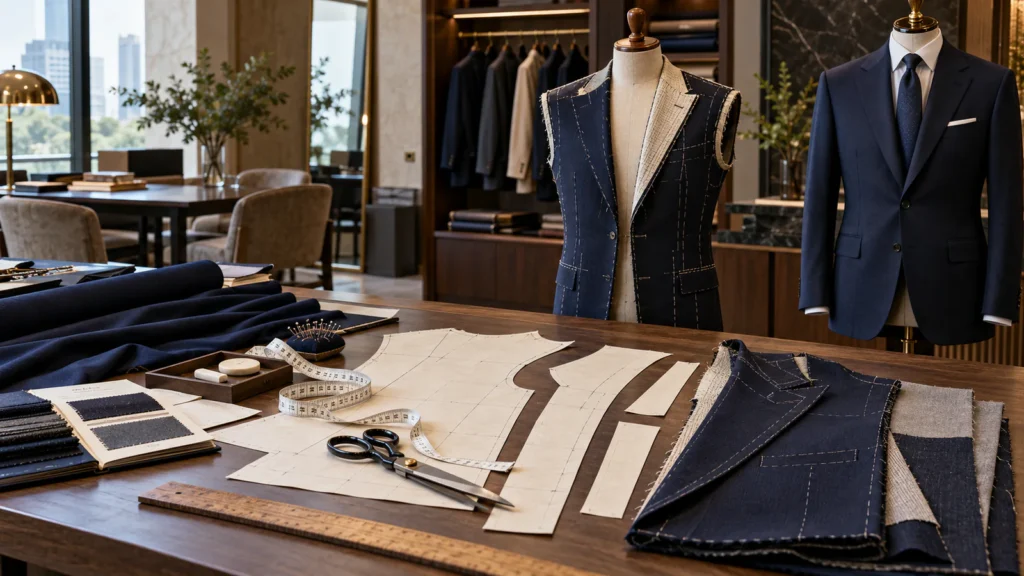
The fitting should bring together the choices made during consultation: cloth, construction, silhouette, jacket length, sleeve length, trouser rise and break. Look at the complete outfit before focusing on small details. If a correction is needed, make sure it is described clearly and rechecked before final delivery where appropriate.
Bring the shirt, shoes and accessories you will wear
A jacket collar and sleeve length are judged against a shirt, while trouser length and break depend on the shoes. Bring the actual pieces—or close equivalents—with the collar height, cuff, heel and sole you expect to use. If the suit is for a wedding or black-tie event, bring the relevant shirt, footwear and any waistcoat or formal accessories available.

Jacket checklist: collar, shoulders and chest
Stand naturally rather than forcing a showroom posture. The collar should sit close to the shirt collar without a conspicuous gap. The chosen shoulder shape should look clean without unintended overhang, collapse or a ridge at the sleeve head. With the jacket fastened in its normal position, the chest and fronts should settle without strong pulling or excess looseness.
Lapel position, upper-back balance and sleeve pitch can affect how the front appears. Treat these areas as a connected system rather than diagnosing one crease in isolation. For a broader overview, see the guide to jacket shoulder and chest fit.
Jacket checklist: sleeves, length and vents
Check that the sleeve length works with the shirt cuff you brought and that both sides are reviewed on your natural stance. Jacket length is a style and proportion decision, not a single measurement that suits everyone. At the back, single or double vents should remain consistent with the intended design when standing and moving; read more about jacket vent choices.
Trouser checklist: waist, seat, rise and line
The waistband should feel secure without depending on excessive belt tension. Sit down to assess the rise and waist, then stand and check the seat and line through the leg. Look for the agreed silhouette rather than assuming that tighter is better. Pleats, side adjusters, taper and hem treatment all change how the trousers behave.
Check the hem with the correct shoes and confirm the requested trouser break. The trouser-break guide explains the visual difference, while the tailored-trouser page covers available design pathways.

Test real movement
Fasten and unfasten the jacket, sit, walk, reach forward and place your hands where they normally rest. Tailored clothing is not sportswear, but ordinary movement should not produce severe restriction or leave the garment badly displaced. After moving, return to a relaxed stance and check whether the jacket and trousers settle naturally.
Separate personal preference from a fit problem
Some choices are aesthetic: a closer or easier silhouette, more or less trouser break, a softer shoulder or a more structured line. Other observations may require technical assessment, such as persistent collar gaping, obvious shoulder overhang, twisting sleeves or a trouser waistband that will not remain in place. Explain both what you see and how it feels so the fitting discussion stays specific.
Record corrections and the delivery plan
Before leaving, confirm which points will be adjusted, whether another check is needed, and when the garment is expected to be ready. The number and timing of fittings depend on the garment, construction, corrections and schedule; there is no useful universal fitting count. The guide to planning bespoke-suit fittings in Bangkok explains those variables in more detail. If your Bangkok time is limited, raise the dates during the initial consultation rather than waiting until final delivery.
After delivery
Try the suit again with the intended outfit and use it normally. If something still feels different from the final fitting, contact the team with a clear description. Class Bespoke assesses alteration requests for its own garments according to technical feasibility; the garment must be inspected before a specific adjustment can be confirmed.
Plan your fitting with Class Bespoke
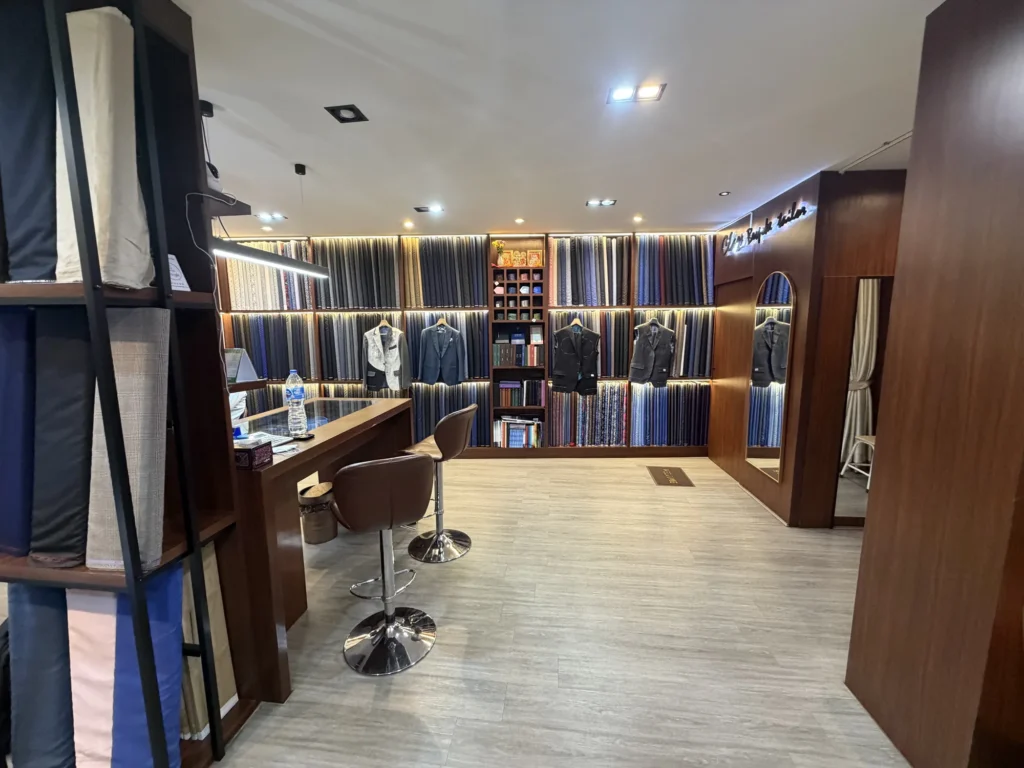
Explore custom suit options, compare fabrics, and understand the measurement and fitting process. You can plan a visit to the Thonglor or Sukhumvit showroom, or contact Class Bespoke with the garment, occasion and dates you have in mind.