Sep 29, 2026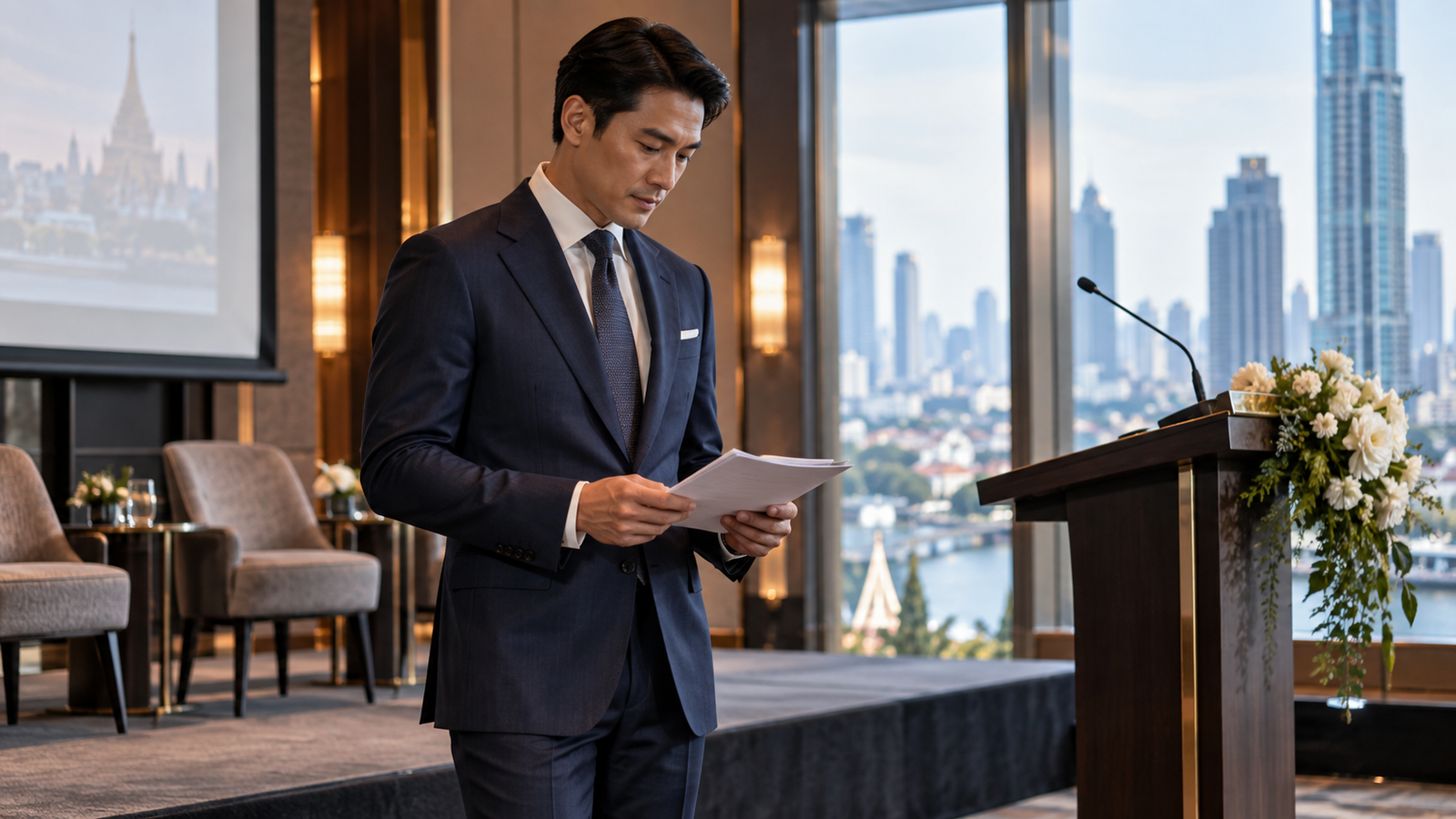
A conference or presentation in Bangkok may combine several different settings in one day: travel, an air-conditioned meeting room, time on stage, networking and an evening engagement. The most useful tailoring plan begins with that real schedule rather than assuming that every professional event requires the same suit.
This guide explains how to plan tailored clothing for a conference or presentation while keeping the event role, movement, climate, formality and available fitting time connected.
Begin with the event, audience and your role
Ask first whether you are presenting, attending meetings, hosting clients or moving between several roles. Review the stated dress code, venue and expected level of formality. A keynote speaker, an exhibition attendee and a private-boardroom participant may need different combinations even when all three events are described as business conferences.
For a repeatable office wardrobe rather than a single event, use the business-suit wardrobe guide. This article owns the event-specific planning task.
Map the complete Bangkok schedule
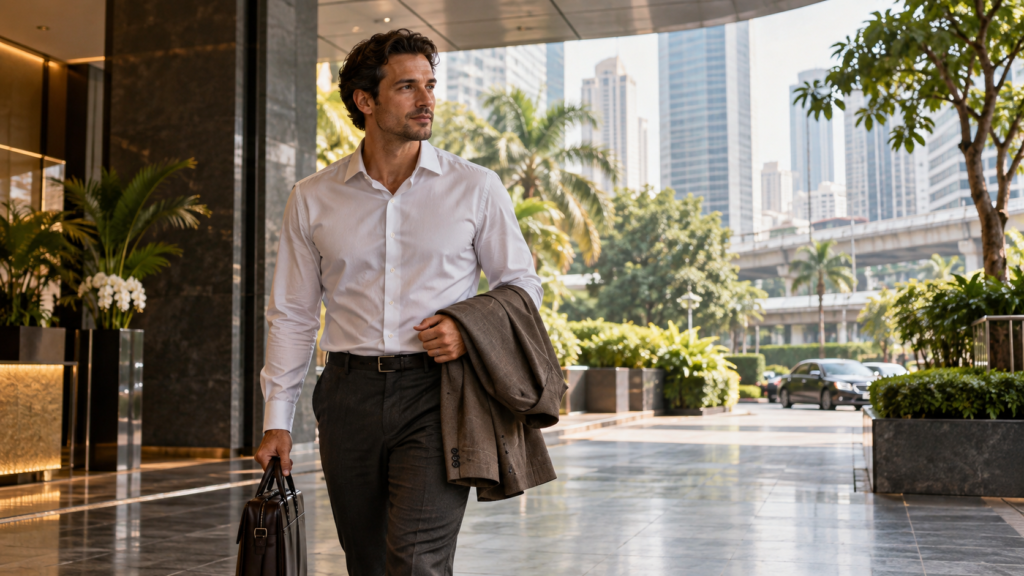
List arrival, preparation, presentation, meetings, networking and departure times. Note whether you will move outdoors, use public transport, carry equipment or change before dinner. This helps determine whether one complete suit is appropriate, whether a separate jacket and trousers offer more flexibility, or whether an additional shirt is more useful than another decorative option.
International visitors should also disclose their available consultation and fitting windows. The International Visitors planning guide remains the owner for itinerary, fittings and delivery logistics.
Choose the level of formality before selecting details
A formal presentation may call for a conservative suit, while some conferences allow a tailored jacket with separate trousers. The decision should reflect the event, audience and your role rather than a universal rule. If photographs or video are expected, consider how the jacket, shirt and tie or open collar will read from a distance as well as in person.
Use the tailored suits and blazers pathways to explore the relevant garment owners without turning this guide into another transactional page.
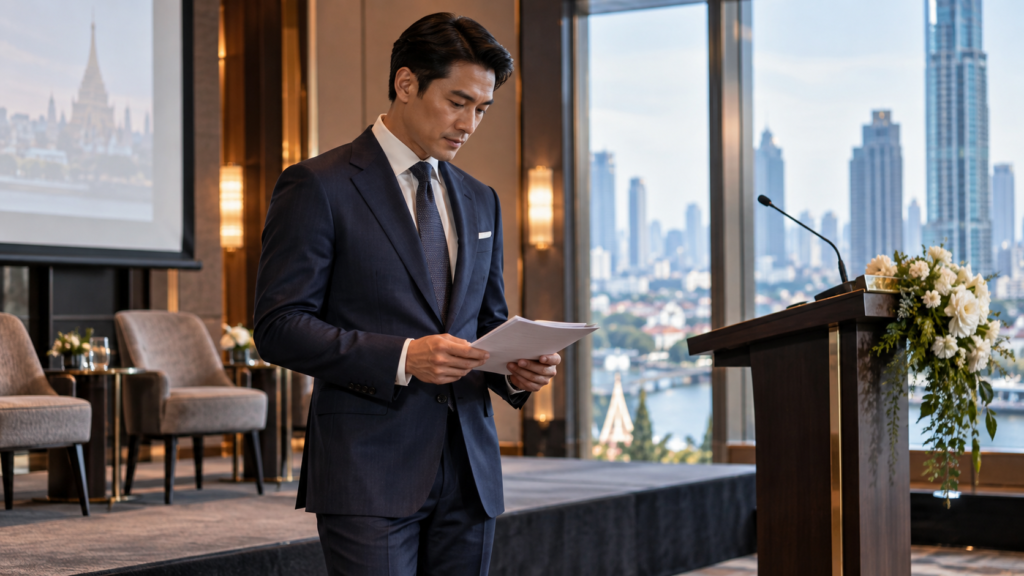
Plan for movement on stage and in meetings
Presentation clothing should be reviewed while standing, sitting, walking and moving the arms. Consider how you gesture, whether you will use a handheld microphone, and whether a lapel microphone or transmitter needs a practical placement. Jacket balance, sleeve length, trouser rise and ease should be assessed in those normal movements.
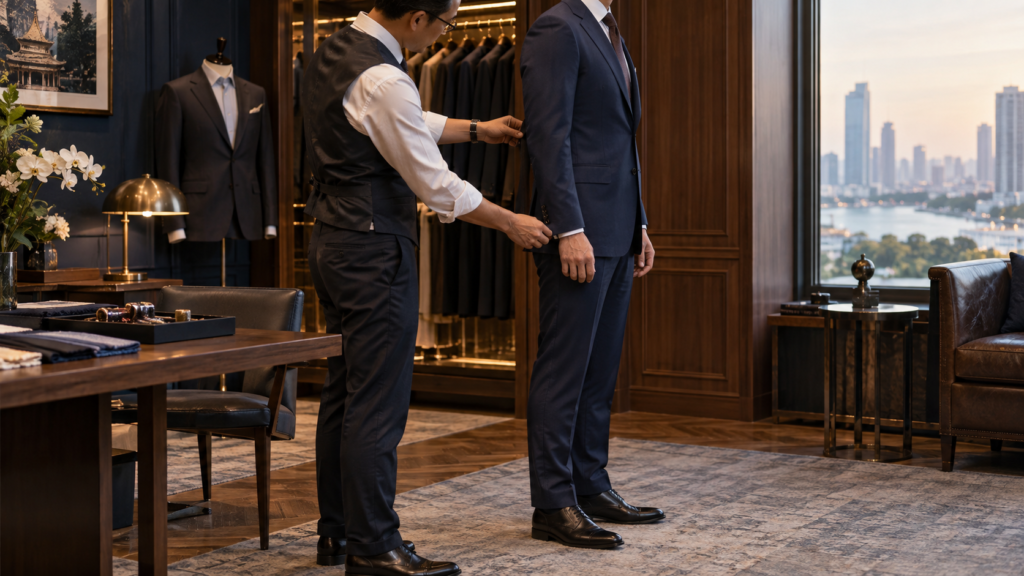
Measurements establish a starting point; fittings allow the garment to be reviewed on the wearer. The number of visits depends on the garment, construction, adjustments and whether the client is new or returning. The broader Bespoke Process explains the governed consultation-to-delivery framework.
Discuss Bangkok heat and air-conditioned interiors
Outdoor heat and humidity can be very different from a strongly air-conditioned venue. Explain how much time will be spent in each environment and whether the garment must travel between them repeatedly. Cloth should be compared by represented fibre composition, weight, weave, drape, crease behaviour and intended use—not by mill name or Super number alone.
No cloth is universally cool, crease-proof or suitable for every event. Compare the actual options available for the commission through the Class Bespoke fabric guide.
Coordinate suit, shirts and trousers as a working system
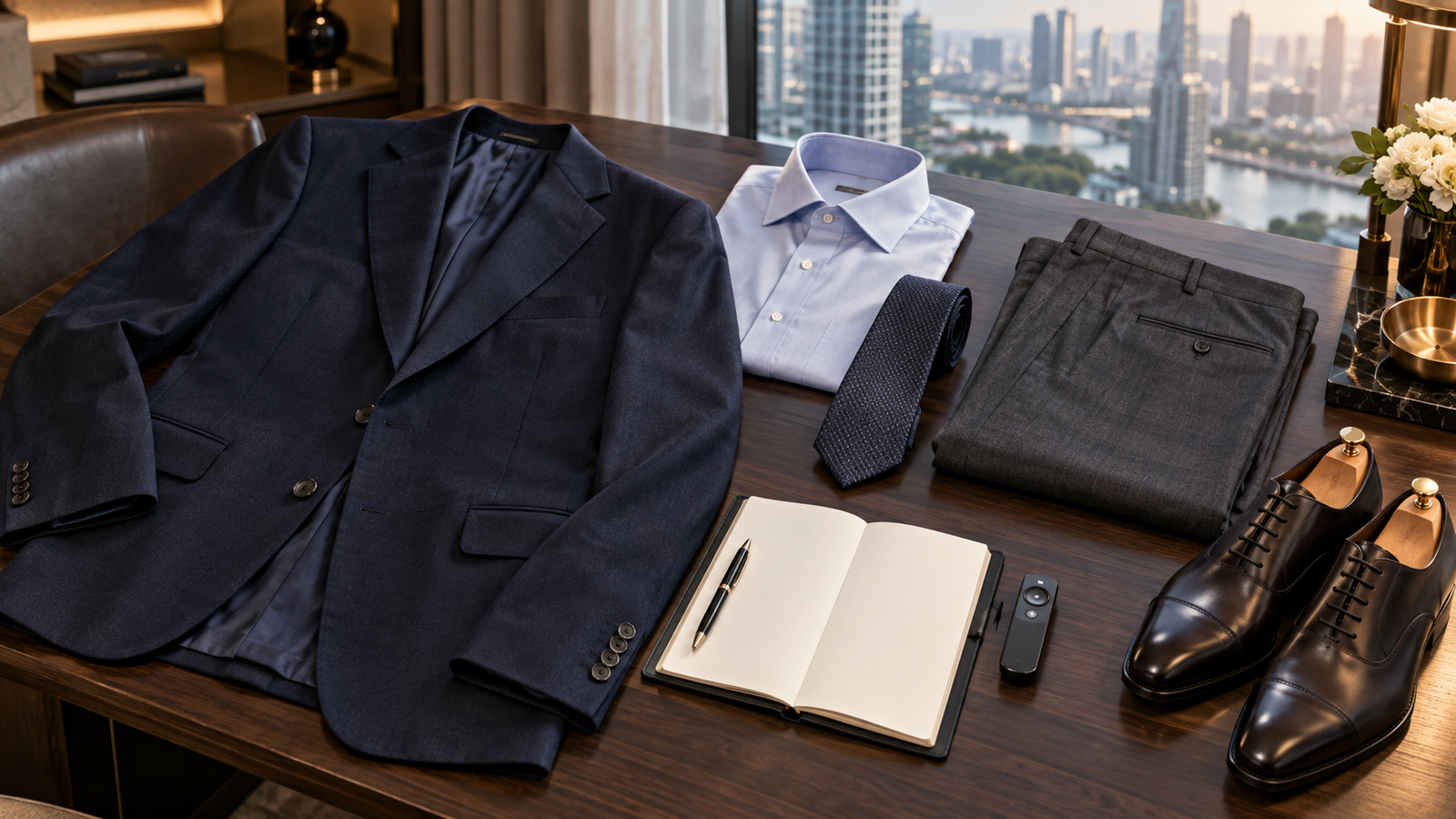
A conference plan may need more than one shirt for repeated wear, a trouser choice that supports long periods of sitting, and colours that coordinate across meetings and evening commitments. Collar, cuffs and shirt allowance should work with the jacket and intended tie or open-collar presentation. The shirt owner covers the available tailoring pathway.
Consider recovery time between wears and realistic packing. A coherent two- or three-garment plan is often more useful than adding unrelated styling details.
Keep colour and pattern legible rather than distracting
Navy, charcoal and other restrained choices are common because they coordinate easily, but the appropriate colour depends on the event, personal style and existing wardrobe. Pattern scale should be considered with the venue, lighting and camera use. The objective is not to disappear; it is to keep the clothing aligned with the message and setting.
Allow realistic time for consultation and fittings
Current Class Bespoke planning ranges are approximately 3–5 days for standard jacket construction, 5–10 days for half canvas and 15–30 days for full canvas. These are planning ranges, not guarantees. Final timing depends on cloth availability, design, construction, fitting requirements, workshop capacity and customer availability.
First-time suit commissions generally involve approximately two to three visits where required. If the event is close, share the date before ordering so the team can determine what is realistically possible. Eligible urgent work is governed separately by the Express Tailoring service owner.
Prepare a useful consultation brief
Bring the event dates, agenda, venue, dress code, speaking role, travel schedule and the shoes or accessories likely to be worn. Explain any microphone, equipment or movement requirements. Share references to communicate direction, but expect the final specification to be interpreted for your measurements, posture, cloth and intended use.
Choose between the verified Thonglor and Sukhumvit showrooms based on convenience. Hotel and on-site measuring can be arranged depending on location and scheduling; it is not a universal on-demand promise.
Questions about conference and presentation tailoring
Should I wear a suit to a business conference in Bangkok?
It depends on the event dress code, your role and the venue. A formal presentation or client meeting may call for a suit, while some conferences allow a tailored jacket with separate trousers.
Is a blazer and trousers enough for a presentation?
They can be appropriate when the event is business-casual or the speaker wants flexibility. The jacket and trousers should still be planned as a coherent combination rather than two unrelated garments.
Which colours work for a professional presentation?
Navy, charcoal and other restrained colours are versatile, but there is no universal requirement. Consider the audience, lighting, camera use, personal colouring and the level of formality.
How should a suit fit when speaking and moving on stage?
It should be assessed while standing, sitting, walking and gesturing. Jacket balance, collar and shoulder relationship, sleeve position, trouser rise and normal movement all matter.
How should I plan for Bangkok heat and air conditioning?
Explain how long you will be outdoors and indoors, then compare the actual cloth options by composition, weight, weave, drape and intended use. No cloth should be treated as universally suitable for every condition.
What should I bring to a tailoring consultation before a conference?
Bring the event dates, agenda, venue, dress code, role, travel schedule, footwear and any microphone or movement requirements. These details help the tailor plan the garment, fittings and timing.
Plan the garment around the event
A successful conference wardrobe supports the person speaking, meeting and moving through the day. Start with the schedule, choose the appropriate level of formality, test movement, compare cloth for the real conditions and allow enough time for fittings.
Discuss a conference or presentation wardrobe with Class Bespoke.