Aug 15, 2026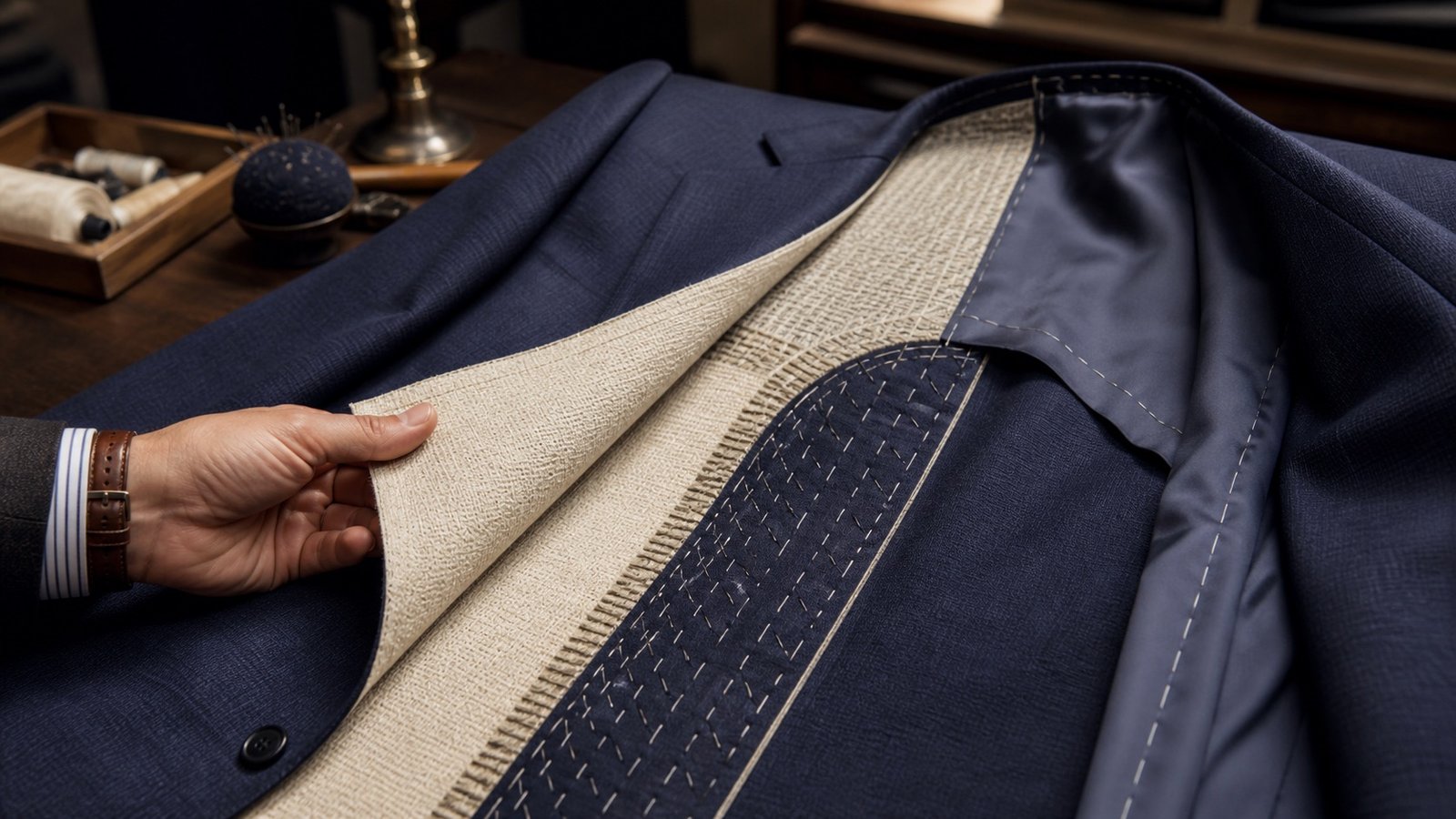
“Full canvas” is often treated as a simple badge of quality, but it is not the only question that matters when commissioning a suit in Bangkok. The construction should suit the cloth, the intended use, the desired shape, the budget and the time available. A light, well-balanced jacket can be made with a full canvas; a half-canvas jacket can be an excellent practical choice; and a well-specified fused jacket can serve a legitimate purpose when speed or accessibility matters.
This guide explains what each term means, how the choices affect a jacket, and which questions are more useful than asking for the “best” construction in isolation.
What the canvas does inside a suit jacket
A jacket front needs internal structure to support its shape. Between the outer cloth and the lining, a tailored jacket may use a floating interlining, an adhesive-bonded interlining, or a combination of techniques. The interlining helps establish the chest, lapel and front edge; it is separate from the visible lining that covers the inside of the garment.
Two distinctions are easy to confuse:
- Full versus half canvas describes how far a floating canvas extends down the jacket front.
- Floating versus fused describes whether the interlining is sewn into the jacket or bonded to the outer cloth with adhesive.
That is why “half canvas” does not automatically tell you every detail of the lower front. Construction methods vary, and the tailor should explain the actual specification rather than relying on a label.
Full-canvas construction
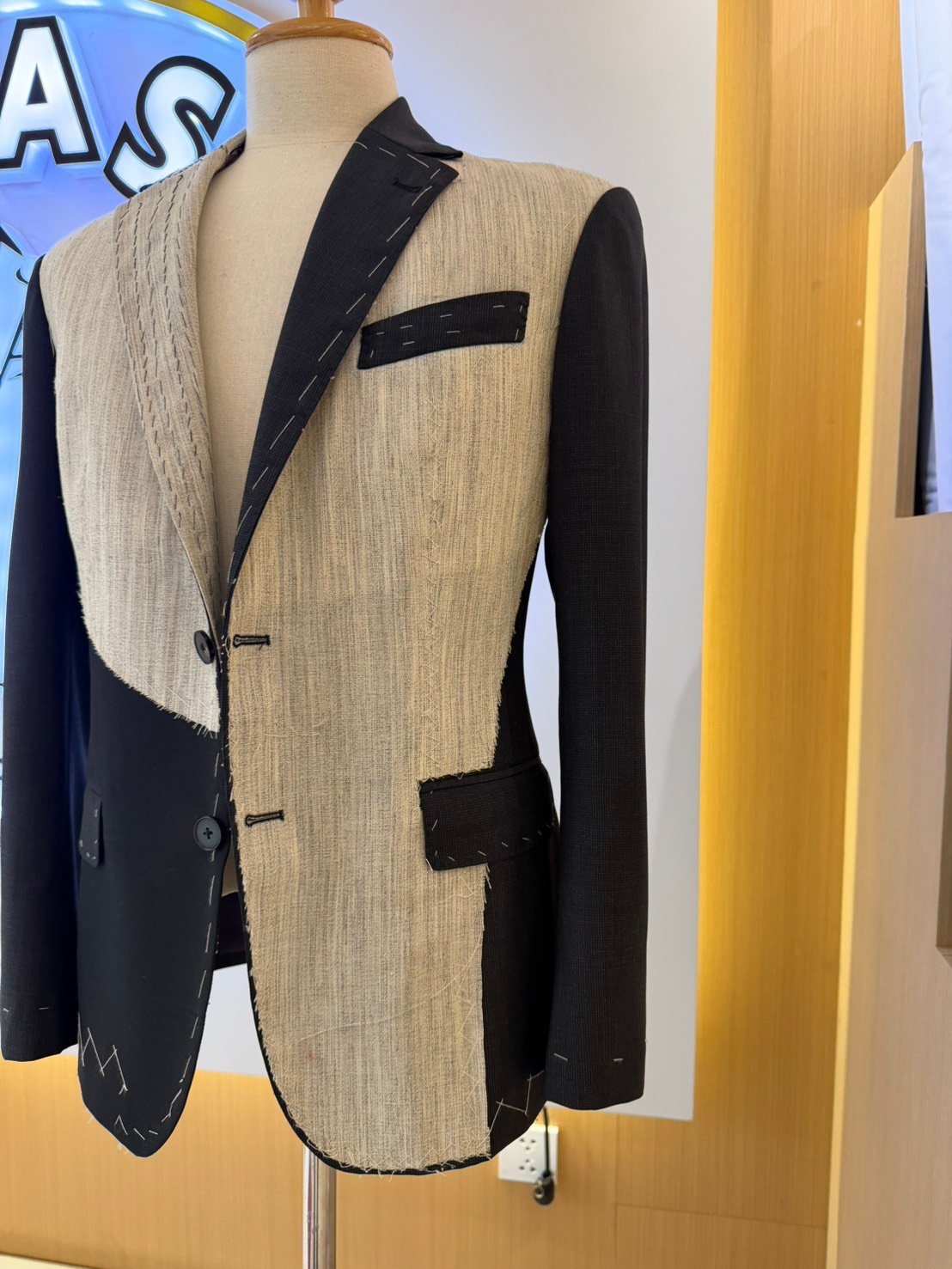
In a full-canvas jacket, a floating canvas extends through most or all of the front. It is secured by sewing rather than bonded across its surface to the face cloth. The canvas can be shaped to help the jacket develop a clean chest and a natural lapel roll.
Where full canvas is most useful
Full canvas is especially attractive when the commission prioritizes shape, drape and long-term refinement. It also gives the maker scope to choose the weight and character of the internal structure. “Full canvas” does not have to mean heavy: a lightweight canvas can be paired with a warm-weather cloth when the whole garment is designed coherently.
What to consider
It requires more work and normally more time than a fused construction. The value depends on the quality of the pattern, cutting, fitting and pressing as well as the canvas itself. A full-canvas label cannot rescue poor balance or an unsuitable fit.
At Class Bespoke, full-canvas construction is available for selected commissions. Cloth, specification, price and timing should be confirmed during consultation rather than assumed from a general label.
Half-canvas construction
A half-canvas jacket uses a floating canvas through the upper front, normally covering the chest and supporting the lapel, without extending the same structure through the full length of the front. The exact lower-front treatment can differ by maker.
Why buyers choose it
Half canvas concentrates floating structure where it has the strongest visual effect: the chest and lapel. It can offer a useful balance of shape, production time and cost. For many business suits and frequently worn travel wardrobes, that balance can be more relevant than choosing a construction by prestige alone.
Class Bespoke offers genuine half-canvas construction. The appropriate option depends on the fabric, intended use, climate, desired structure, budget and timing.
Fused construction
In a fused jacket, an interlining is bonded to the back of the outer cloth. Modern fusibles vary in weight and quality, so “fused” is a category rather than a complete verdict on a garment.
When fused construction makes sense
It is faster to produce and can make a tailored garment more accessible. It can be a rational choice for a time-sensitive order, an entry wardrobe or a garment whose budget is better directed toward fit and an appropriate cloth. It should still be selected honestly: buyers should know what they are receiving and how it differs from a floating canvas.
Class Bespoke offers fused construction as its faster and more accessible option. Suitability remains commission-specific; “faster” is not an unconditional turnaround promise.
Which construction works best in Bangkok heat?
Construction matters, but heat comfort is a system. The cloth’s weight and weave, the amount of lining, the jacket’s fit, the shirt beneath it and the wearer’s daily routine all influence how the garment feels. A close, restrictive jacket in an open-weave cloth can be less comfortable than a well-balanced jacket made from a slightly heavier material.
For Bangkok, discuss these decisions together:
- Cloth: consider an open weave and suitable weight rather than relying on fibre name alone. Our guide to choosing tropical wool for Bangkok explains how to assess warm-weather suiting.
- Canvas: choose the amount and weight of structure that supports the intended silhouette.
- Lining: fully lined, half lined and unlined options are available; each should be assessed with the cloth and design.
- Fit: adequate movement and clean balance matter. The Bangkok suit-fitting guide explains what the fitting stages are designed to resolve.
- Use: distinguish an air-conditioned business suit from a jacket intended for outdoor travel or frequent packing.
A common misconception is that full canvas must be the hottest option. Canvas is available in different weights, and a skilled specification can use lighter internal materials. Conversely, removing structure does not make every cloth or cut comfortable. Ask to evaluate the entire jacket rather than one component.
How to compare quotations accurately
Two jackets described with the same construction term may not be equivalent. Before comparing prices, ask the tailor to specify:
- Whether the interlining is floating, fused or a combination.
- How far the floating canvas extends down the front.
- Whether the proposed canvas weight suits the outer cloth and climate.
- Whether the jacket will be fully lined, half lined or unlined.
- How many fittings are expected and what can be adjusted at each stage.
- What production estimate applies to that exact specification.
Do not rely on a “pinch test” as proof of the complete construction. It may suggest that a loose internal layer is present in one area, but it cannot reliably identify every material, attachment method or quality detail inside a finished jacket.
A practical decision framework
Choose full canvas when long-term shape, a refined lapel and a carefully developed internal structure are priorities, and the commission allows the necessary budget and production time.
Choose half canvas when you want floating structure through the chest and lapel with a practical balance of cost, time and performance.
Choose fused construction when accessibility or speed is the priority and the specification is explained clearly. Judge the finished garment on fit, cloth, pressing and intended use—not the label alone.
For a commission, review the construction alongside the current Class Bespoke suit options and the available tailoring cloth collection. Individual cloths, compositions and bunches are subject to availability, so confirm the label on the actual swatch before making a final choice.
The short answer
Full canvas offers the greatest scope for a floating structure through the jacket front, but it is not a universal answer to every Bangkok commission. Half canvas can be a strong everyday choice, while fused construction can meet legitimate timing and budget needs. The best result comes from matching construction, cloth, lining, fit and use—and documenting the specification before production begins.
Reviewed by Class Bespoke Tailoring Team.
Technical references
For readers who want to see traditional jacket internals, the Savile Row Bespoke Association’s Inside Out guide illustrates hand-cut canvas and other coat-making components. Permanent Style’s guide to assessing suit construction clearly distinguishes the extent of canvassing from the way an interlining is attached.