Nov 5, 2026
Cotton, linen and lyocell are all cellulosic shirt fibres, yet they do not produce the same wearing experience. Cotton is the adaptable middle ground, linen usually brings the driest and most visibly relaxed character, and lyocell often gives the smoothest, most fluid drape. None is automatically coolest or least prone to wrinkles: yarn, fabric weight, openness, finishing and shirt fit can overturn a fibre-level assumption.
Cotton, linen and lyocell at a glance
| Fibre | Typical warm-weather character | Creasing | Typical drape |
|---|---|---|---|
| Cotton | Absorbent and familiar; performance ranges widely by construction | Usually visible but manageable; finishes can change recovery | From crisp to soft, generally between linen and lyocell |
| Linen | Often airy, dry-feeling and quick to spread moisture | Pronounced, irregular creases are part of its character | Crisp and slightly firm when new; relaxes with wear and washing |
| Lyocell | Smooth with effective moisture uptake and release | Can crease; not inherently “non-iron” | Usually supple, fluid and closer to the body |
These are useful tendencies, not specifications. Compare the actual swatches rather than choosing from the fibre name alone.
Start with the complete fabric, not the fibre label
Heat comfort depends heavily on the spaces through which air and water vapour can move. A light, open cloth may ventilate better than a dense cloth made from the same fibre. Thickness, yarn size, fabric density, surface finish and garment ease also matter. Textile research has long found thickness and porosity to be major influences on insulation and air permeability.
Fibre and construction therefore answer different questions. Fibre affects moisture behaviour, resilience and hand; construction controls much of the airflow, opacity and body. The separate guide to poplin, twill and Oxford explains the weave side of the decision without turning a weave name into a promise of comfort.
Cotton: the versatile reference point
Cotton absorbs moisture and becomes stronger when wet. Cotton Incorporated lists standard moisture regain at roughly 7–8.5%, while also noting cotton’s low resilience and tendency to wrinkle in wear. That combination explains its appeal and its limitation: it is comfortable and washable in many shirt constructions, but a pure cotton shirt will not remain perfectly smooth simply because the yarn is fine.
Cotton has the broadest range of familiar shirt expressions. It can be crisp enough for a formal collar, soft enough for an open-neck shirt, transparent or opaque, light or substantial. A dense, very smooth cotton may look refined yet move less air than a more open alternative. “Cotton” is therefore a starting category, not a complete warm-weather specification.
Linen: ventilation, structure and expressive creases
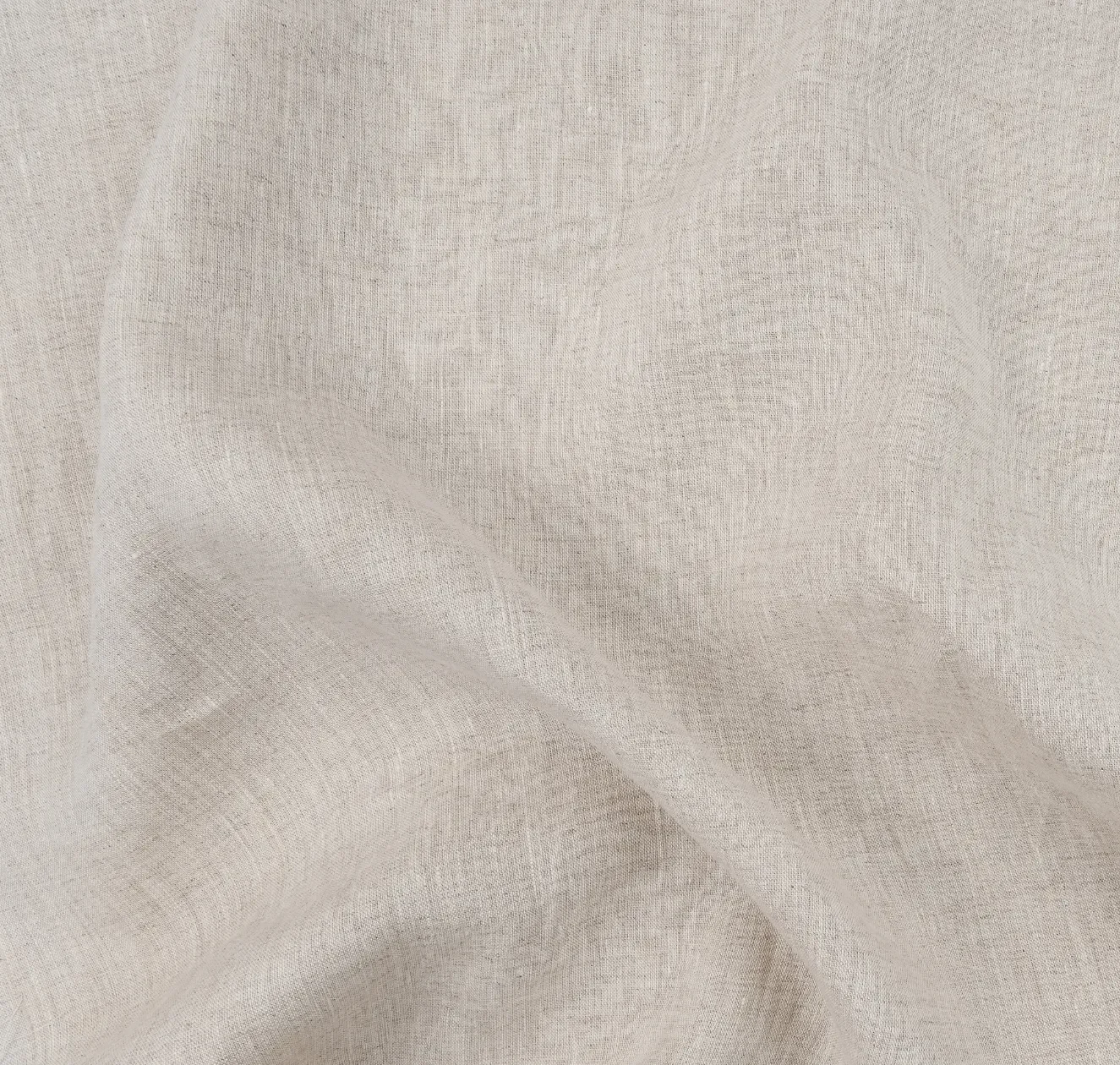
Linen is made from flax stem fibre. Its relatively low elasticity helps create a firm, dry hand and also explains why folds tend to remain visible. The Alliance for European Flax-Linen and Hemp reports strong ventilation, water-vapour permeability and rapid spreading of liquid in tested linen samples. Those properties can make a well-chosen linen shirting feel fresh in heat, especially when the fabric is not densely packed.
The trade-off is aesthetic as much as technical. Elbows, waist and seatbelt areas develop creases quickly, and the surface often has natural-looking irregularity. This is not evidence of poor cloth. It is the expected behaviour of a fibre with limited recovery. Linen commonly softens and becomes more relaxed with laundering and wear, but it does not turn into crease-free cotton.
Lyocell: smooth moisture management and fluid drape
Lyocell is a generic regenerated-cellulose fibre; TENCEL™ Lyocell is Lenzing’s branded version, not a synonym for every lyocell cloth. Lenzing describes its branded fibre as having high moisture uptake and the ability to absorb and release moisture. In shirting, lyocell is often selected for a smooth surface, soft hand and flowing line.
That fluidity has consequences. A soft lyocell cloth may hang closer to the torso than a crisp linen, so its cool touch does not guarantee more air circulation. It may also show wet cling or surface changes differently, depending on yarn and finish. Lyocell can wrinkle, and some fabrics receive treatments that alter crease recovery and hand. Check the exact composition and care label rather than treating “lyocell” as a promise of easy care.
Which feels coolest in heat?
There is no universal winner. Linen is often the strongest candidate when the brief is an airy, dry-feeling, relaxed shirt. Cotton offers the widest balance of polish, opacity and familiar care. Lyocell can feel smooth and cool against the skin and manage moisture effectively, but its softer drape may reduce the air gap between cloth and body.
Humidity makes the distinction more important. Absorbing sweat is not the same as making it disappear: moisture must spread and then evaporate. Airflow, exposed surface area and the rate at which the shirt dries all affect the result. A looser fit can sometimes improve comfort more than changing between two similar lightweight fabrics.
Wrinkling and drape are related—but not identical
Wrinkling describes how a cloth retains local folds after compression. Drape describes how the whole fabric hangs under its own weight. Linen can have attractive, sculptural drape while still creasing readily. Lyocell can fall fluidly but still pick up compression marks. Cotton can look crisp yet wrinkle across the elbow.
Finishing can shift all three fibres. Mercerisation can change cotton’s lustre and strength; easy-care treatments can improve crease recovery but may also change hand. Enzyme washes, softeners and mechanical finishing can relax linen. Lyocell finishing can control its surface and stability. Ask whether the sample’s softness is inherent to its construction or produced by a finish that may evolve with laundering.
Blends are design choices, not compromises by default
A cotton–linen blend may retain linen texture while moderating its firmness. Cotton–lyocell can combine familiar shirt structure with a softer fall. Linen–lyocell may balance dry texture with fluidity. The percentages alone do not predict the result: which fibre is in the warp or weft, yarn type, density and finish all matter. Judge the blended cloth as a new material rather than averaging assumptions about its ingredients.
A practical swatch test
- Hold it to the light: compare openness and opacity, especially for white and pale shirts.
- Drape it over a hand: observe whether it stands away, forms rounded folds or collapses closely.
- Compress it briefly: release the swatch and watch which marks remain after a minute. This comparison is indicative, not a laboratory test.
- Feel both faces: surface texture can affect comfort at the collar and cuffs.
- Confirm composition and care: verify the cloth label, blend percentages and laundering instructions before ordering.
Choose by use, not by fibre prestige
For a business shirt worn under tailoring, cotton or a cotton-rich blend often provides the cleanest balance of collar support, opacity and drape. For relaxed open-collar wear in sustained heat, linen or a linen blend may make its creases part of the design. For a softer overshirt or a shirt intended to fall rather than stand, lyocell or a lyocell blend can be useful.
Those are briefs, not rules. Start with the setting, dress code, time outdoors, laundering routine and preferred degree of polish. Then compare current swatches through the fabric collection and tailored shirt options. A consultation and fitting plan can align fabric, collar, ease and intended use before the shirt is cut.