Nov 5, 2026
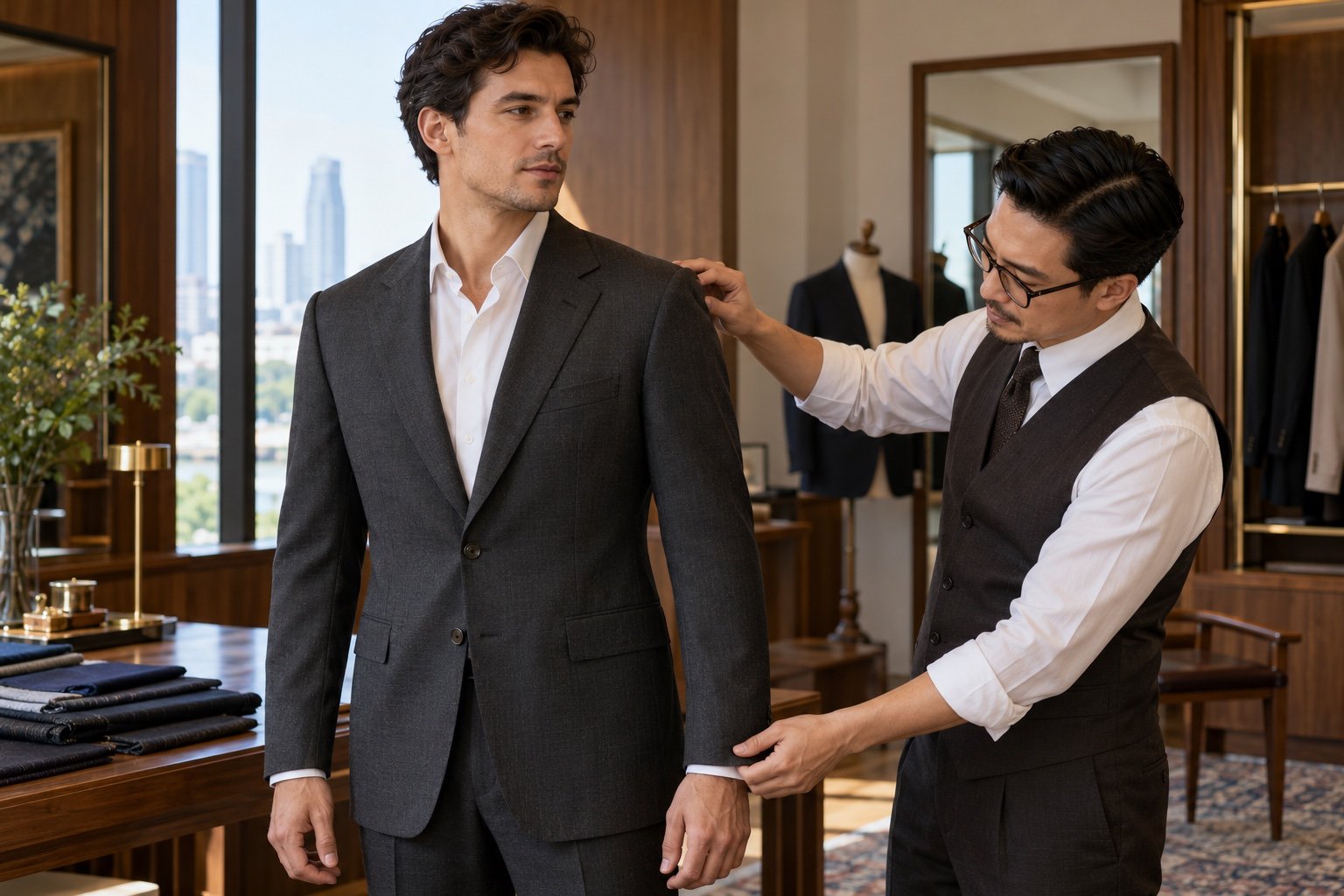
“High armholes” are often presented as a shortcut to a better-fitting suit. The underlying idea is sound but incomplete. Armhole height works only as part of a system that includes the opening’s shape, sleeve-cap geometry, upper-sleeve room, shoulder slope, chest and back ease, and sleeve pitch. On a tailored suit, the useful question is not simply whether the armhole is high, but whether the armhole and sleeve have been made to work together for the wearer.
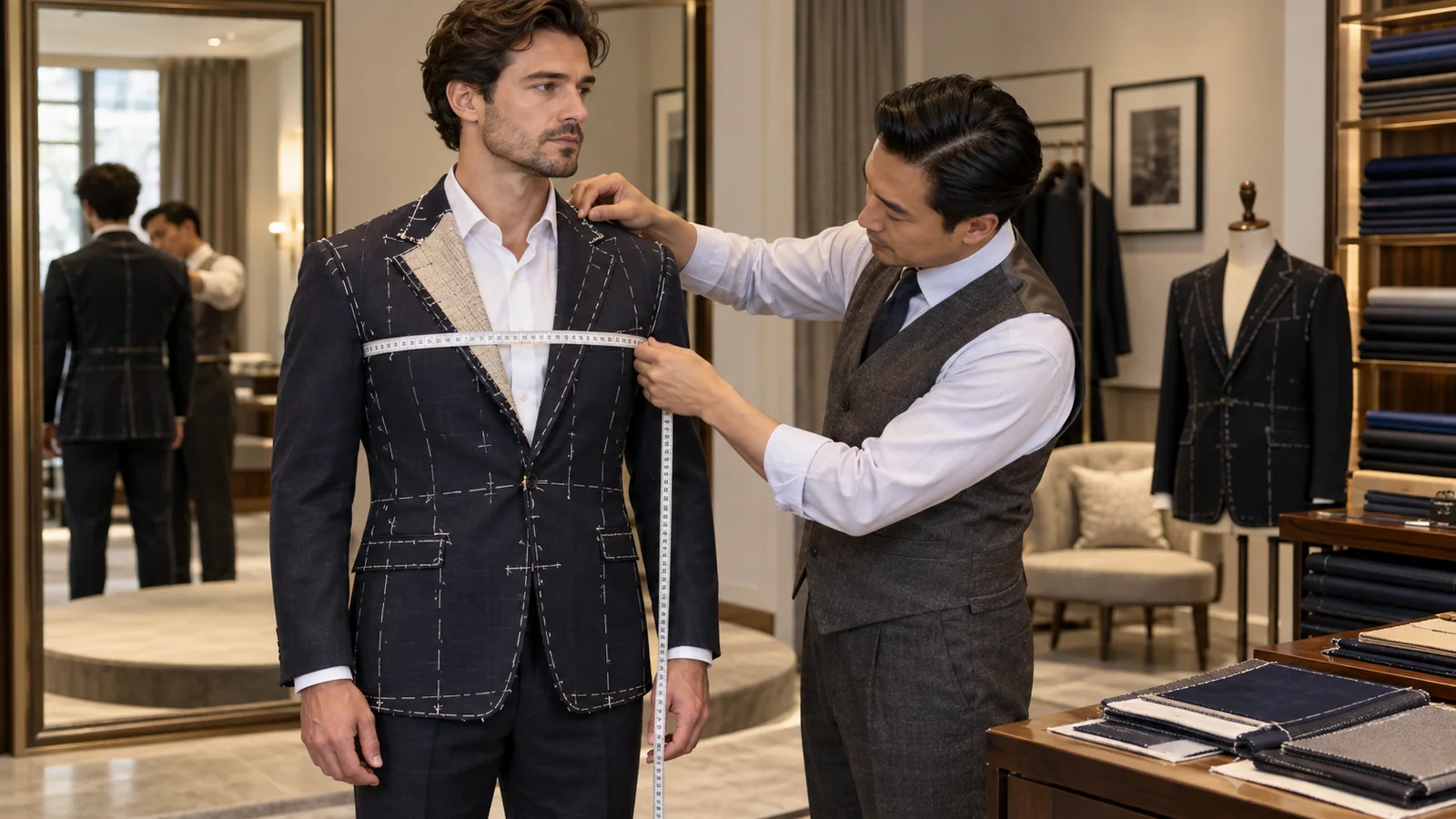
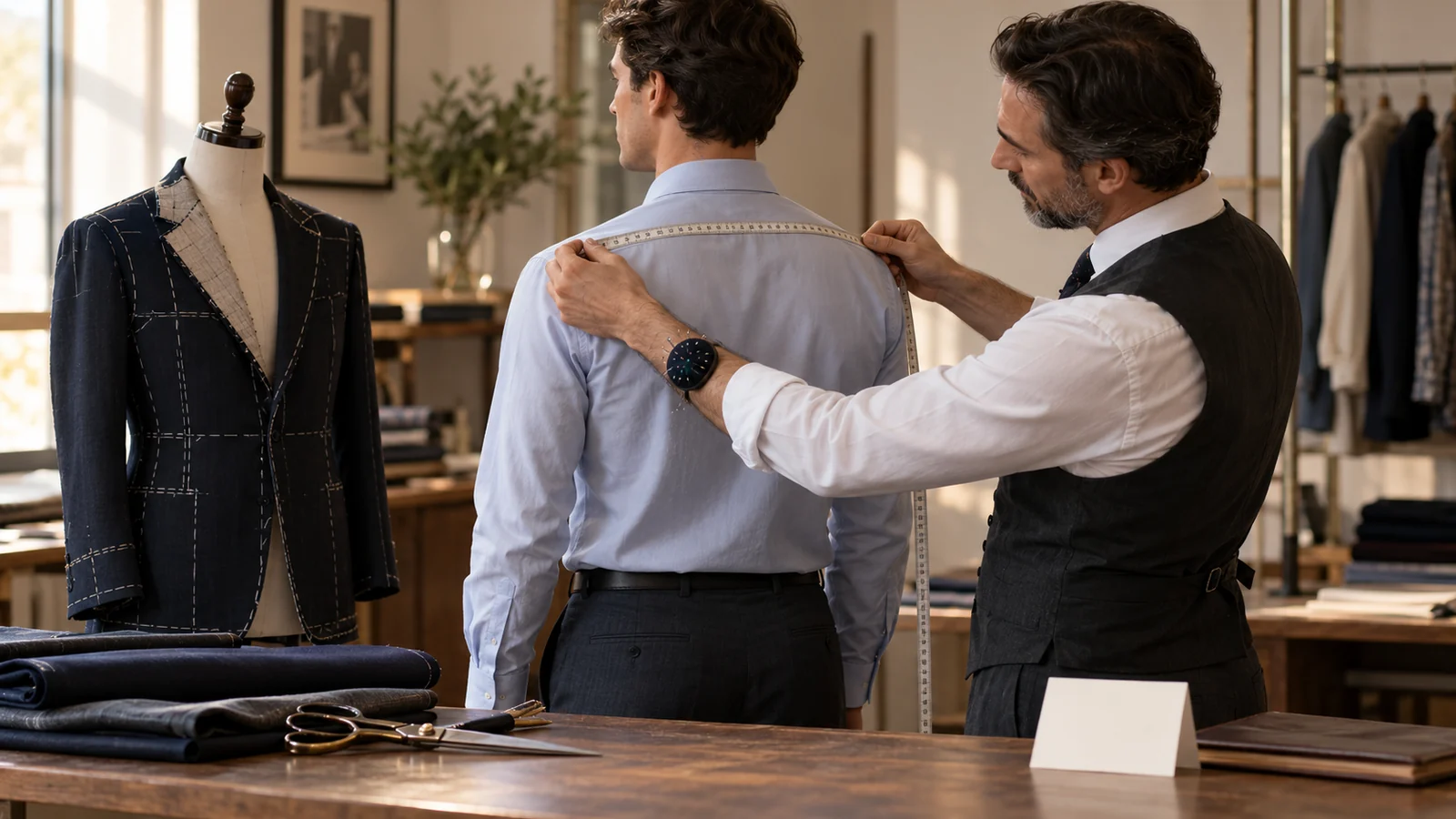
Image note: The visuals in this guide are AI-generated editorial illustrations of fictional people and fitting scenes. They are not customer photographs, workshop records or evidence of an actual Class Bespoke fitting.
What a high armhole actually describes
The armhole, also called the armscye, is the opening in the jacket body into which the sleeve is set. A higher armhole sits closer beneath the wearer’s underarm; a lower armhole leaves a deeper opening. “High” should not mean that the cloth presses painfully into the armpit. The useful limit is close enough to support movement without cutting, rubbing or forcing the wearer into an unnatural position.
Height is only one dimension. The front and back contours, shoulder point and total circumference determine how the opening meets the body. Two armholes can reach the same level beneath the arm and still behave differently because their shapes differ. One may follow the wearer closely; another may be too narrow at the front, too full at the back or incorrectly positioned relative to the shoulder joint.
Why a close armhole can improve mobility
When the armhole sits close to the shoulder joint and the sleeve is compatible with it, the sleeve can move with the arm while the jacket body remains relatively stable. With a deep, low armhole, the upper arm may meet the bottom of the opening early. Further movement then pulls the side body, waist and hem upward rather than allowing the sleeve to move more independently.
This does not mean that every close armhole produces easy movement. The benefit depends on the entire assembly. A restrictive back, narrow chest, tight upper sleeve or unsuitable sleeve cap can still limit reach. A relatively high armhole can also be used with soft or structured shoulders and with several jacket silhouettes; it is a fitting and patternmaking choice, not a complete style in itself.
Why higher is not automatically better
An armhole can be too high, too small or incorrectly scooped for the wearer. Pressure beneath the arm, chafing, numbness or folds formed as the body pushes the cloth downward are not signs of refined tailoring. A tight biceps area can also restrict the arm even when the opening itself is correctly positioned.
The sleeve cap must relate to the seam length and shape of the armhole. A tailored sleeve normally contains controlled ease at its head so that a three-dimensional cap can be set into the opening. The amount and distribution of that ease affect the sleeve’s appearance and behaviour. Simply cutting the body opening higher without redrafting or resetting the sleeve may replace one problem with another.
Extra width is not an automatic cure either. Too much cloth in the upper sleeve can collapse into folds, while an excessively narrow sleeve can bind during movement. The appropriate result comes from coordinating circumference, cap height, pitch and the contours of the armhole.
Sleeve pitch is the arm’s resting direction
Sleeve pitch is the angle at which the sleeve is set into the armhole. Human arms do not all hang in the same orientation. One wearer’s arms may rest relatively straight, another’s may angle forward, and the two sides of the same body may differ. The sleeve should be set to suit that resting position while remaining appropriate for the jacket’s intended stance.
When pitch is wrong, the sleeve may develop diagonal or spiral creases, twist toward the front or back, or feel strained in one direction. The symptoms may become clearer when the wearer moves an arm slightly forward or backward: the sleeve suddenly looks cleaner in a position that is not the wearer’s normal posture.
Pitch is distinct from shoulder slope and sleeve width, although the effects can overlap. Rotating a sleeve may improve its hang when pitch is the cause, but it cannot correct every line around the shoulder. The tailor must consider the sleeve, shoulder and jacket body together rather than treating a visible crease as proof of one diagnosis.
Read the symptoms in the right order
Possible armhole-height or shape issues
- The underarm cuts or rubs while the arm hangs naturally.
- Raising the arm immediately lifts a large section of the jacket body.
- Folds gather near the front or back of the opening because its contour does not follow the wearer.
- The jacket feels restrictive even though the chest and waist are not tight.
- One side feels materially different from the other despite similar sleeve widths.
Possible sleeve-pitch issues
- Diagonal or spiral drag lines remain on the upper sleeve at rest.
- The sleeve appears to twist consistently toward the front or back.
- One sleeve hangs cleanly while the other does not, despite equal finished lengths.
- The sleeve becomes cleaner only when the arm is held unnaturally forward or backward.
- The cuff rotates even though the sleeve length itself appears correct.
These are diagnostic clues, not remote verdicts. Similar wrinkles can arise from shoulder angle, cap shape, sleeve width, posture, pressing or the shirt worn underneath. The garment needs to be assessed on the wearer, preferably from the front, side and back.
Test armholes and pitch during a fitting
Begin with the arms hanging in the wearer’s habitual, relaxed position. Check that the collar sits at the neck, the shoulder and sleeve head look composed, and each sleeve falls without persistent twisting. Compare the two sides rather than assuming the body is symmetrical.
Next, make several ordinary movements: reach forward as if holding a steering wheel, place the forearms at desk height, reach into a jacket pocket and lift one arm toward a chest-height shelf. Some movement in the jacket body is normal. The useful question is whether the sleeve causes excessive lifting, pressure or distortion and whether the garment settles again when the arm returns.
Wear the type of shirt intended for the suit. A shirt with a low, tight or bulky armhole can restrict movement independently and may bunch inside the jacket, confusing the diagnosis. The shirt fabric, sleeve fullness and jacket lining also affect how smoothly the layers slide over one another.
The staged bespoke process gives the cutter opportunities to assess these relationships before the garment is completely finished. Feedback is most helpful when it describes the location, movement and sensation precisely rather than requesting a “higher armhole” without identifying the underlying problem.
Do not judge mobility from maximum arm lift alone
A tailored jacket is designed to look composed with the arms resting naturally. It is not cut like an athletic top intended for unrestricted overhead movement. A useful fitting therefore tests realistic actions while recognising that extreme arm lift will move almost any conventional jacket.
If the suit must support frequent driving, presentations, musical performance or another repeated reach, explain that requirement before cutting. The cutter can consider the back, chest, armhole and sleeve as a system instead of attempting to create movement later by adding indiscriminate width.
Why early assessment matters
Sleeve pitch can sometimes be adjusted by removing and resetting the sleeve, depending on the seam allowance, sleeve construction and stage of finishing. Significant changes to armhole height or contour can be more invasive because the jacket body has already been cut and cloth may be unavailable where it is needed. No alteration should be promised without inspecting the garment.
An early or basted fitting provides more freedom to review the shoulder, armhole and sleeve relationship. The suit fitting and final-delivery process also explains why comments made before final finishing are easier to assess and incorporate. Chalk notes should record the side and direction of a correction rather than reducing the observation to a general request for more room.
Questions to ask during the fitting
- Does the armhole sit close without creating underarm pressure?
- Is the sleeve shaped for the wearer’s upper arm and intended movement?
- Does each sleeve hang cleanly in the wearer’s natural posture?
- Are persistent lines caused by pitch, width, shoulder angle or another source?
- Does the jacket settle after an ordinary reach?
- What can still be changed safely at this construction stage?
A successful armhole is not the highest one that can be cut. It is an opening whose position and contour work with a correctly pitched sleeve, the wearer’s body and the jacket’s intended use. For an upcoming appointment, the guide to what to bring to a tailor consultation can help ensure that the relevant shirt, shoes and movement requirements are available for assessment.