Aug 20, 2026
The trouser break is the fold that forms where the front of a trouser hem meets the shoe. It is a small detail, but it changes the apparent length of the leg, the amount of fabric visible over the footwear and whether a pair of trousers reads as contemporary, traditional or simply too long.
There is no universally correct break. The right choice depends on trouser width, cloth, footwear, occasion and personal preference. A narrow trouser leg usually carries less excess length cleanly than a fuller cut, while a heavier cloth generally holds a deliberate fold more clearly than a very light fabric.
What does trouser break mean?
Break is created by the relationship between the trouser’s finished length and the shoe. If the front hem just clears or barely touches the shoe, there may be no visible fold. As the trouser is made longer, progressively more fabric rests on the shoe and creates a deeper break.
Break should be judged while standing naturally in the shoes the trousers will normally be worn with. A hem that looks correct in socks or with a different heel height may sit differently once the intended footwear is added.
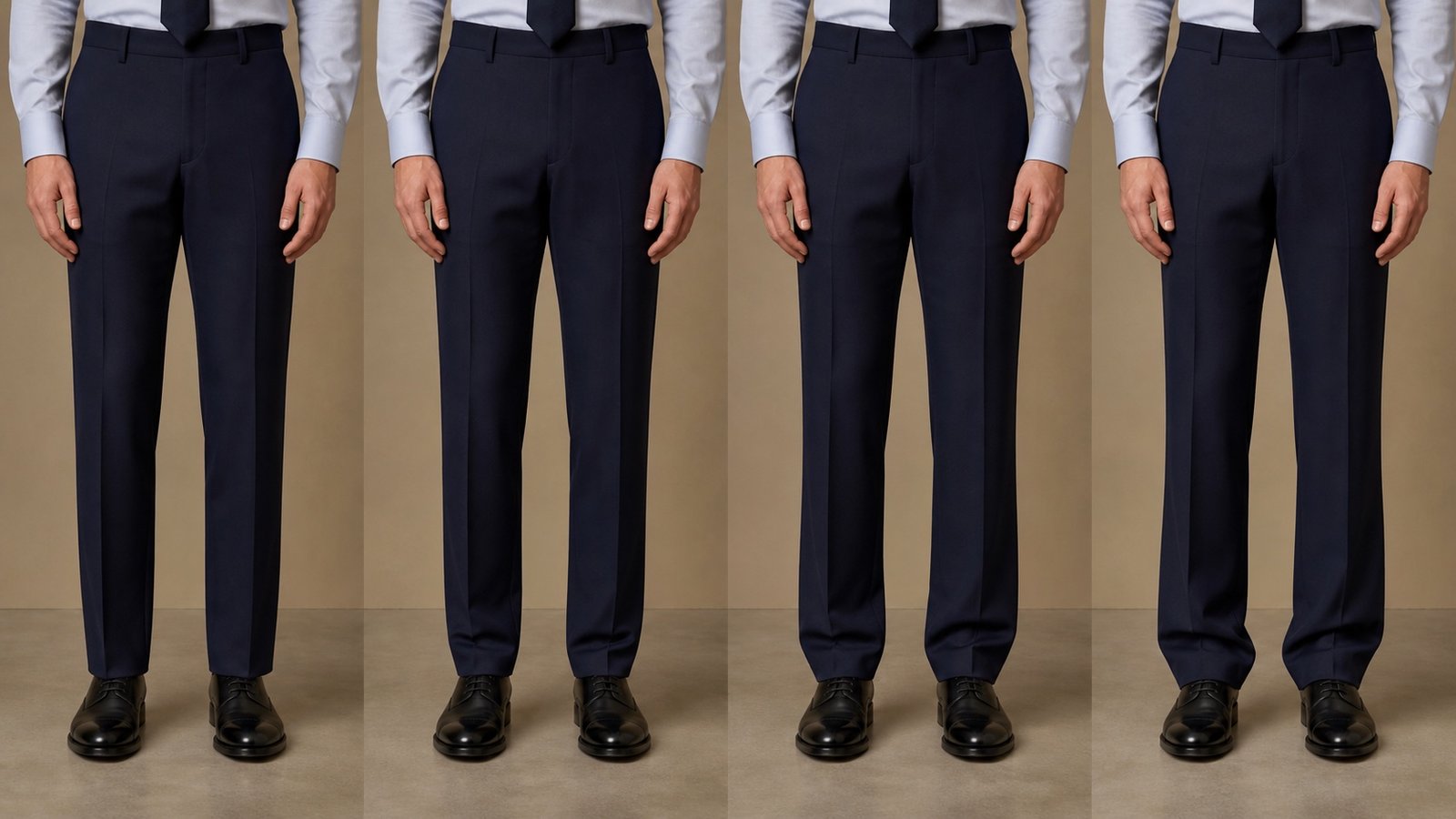
No break
No-break trousers finish with a clean front line and little or no fold over the shoe. Depending on the cut, a small amount of sock may be visible when standing or moving.
This treatment can suit narrow, contemporary trousers and smart-casual outfits where a clean ankle line is intentional. It also gives more visual emphasis to the shoes. The risk is that an overly short hem can look accidental rather than precise, especially with formal business clothing or when the trouser opening is too wide for the chosen length.
Quarter or slight break
A quarter break creates a small, controlled fold at the front of the shoe. It keeps much of the clean line associated with no break while giving the hem a more traditional relationship with formal footwear.
This is a versatile choice for slim-to-moderate trouser widths, business suits and customers who prefer a modern result without a visibly cropped hem. The fold should remain restrained; multiple wrinkles usually indicate excess length or a mismatch between the hem width and the chosen break.
Half break
A half break creates a clearly visible but moderate fold over the shoe. It is often a practical middle ground for business, wedding and other tailored trousers because it gives more coverage without allowing fabric to pool heavily around the ankle.
The half break works with a broad range of proportions, but it should still be assessed together with the leg line. A fuller trouser can carry more length naturally, while a narrow opening may buckle if the same length is applied without adjustment.
Full break
A full break produces a pronounced fold and a more traditional drape over the shoe. It is generally better suited to a fuller trouser leg and cloth with enough body to fall cleanly.
Full break does not mean the back hem should drag on the floor or collapse around the ankle. The result should look deliberate from the front, side and back. In very light cloth or a sharply tapered trouser, too much length can create untidy folds rather than a controlled traditional line.
Match the break to trouser width and cloth
Break cannot be chosen in isolation. The hem opening determines how easily the trouser can fall around the shoe, while the cloth determines how the fold forms and recovers during wear.
Light tropical wool may suit Bangkok and other warm climates, but it will not behave exactly like a heavier worsted or flannel. Linen and cotton can develop their own creasing patterns. The aim is not to force every fabric into the same silhouette; it is to choose length and width that allow the selected cloth to drape honestly.
The waistband position and rise also matter. If trousers sit lower or higher than intended during a fitting, the apparent hem length changes. This is one reason why trouser break should be evaluated as part of the complete fit rather than treated as an alteration measurement alone.
Consider the shoes and occasion
Bring the shoes—or at least the same type of shoes—you expect to wear most often. Oxford shoes, loafers and boots can meet the hem at different points. A trouser commissioned mainly for business may need a different balance from chinos intended for relaxed wear or formal trousers designed for black tie.
For a versatile first pair, a slight or half break is often easier to wear across several settings than either a pronounced crop or a very full traditional break. That is a practical starting point, not a rule: proportions, cloth and personal style should decide the final result.
How Class Bespoke assesses trouser length
During consultation and fitting, trouser rise, waistband, seat, thigh, taper, hem opening and break should be considered together. The number of fittings depends on the garment, the adjustments required and whether the client is new or returning; no identical fitting count is guaranteed for every pair.
Explore Class Bespoke’s bespoke trousers to review available design decisions, or read about the broader bespoke fitting process. If the trousers form part of a matched suit, the jacket and trouser proportions should be assessed as one composition; see the bespoke suits page for the commercial garment overview.
To discuss trouser length, footwear and intended use before commissioning, book a tailoring appointment.