Nov 5, 2026
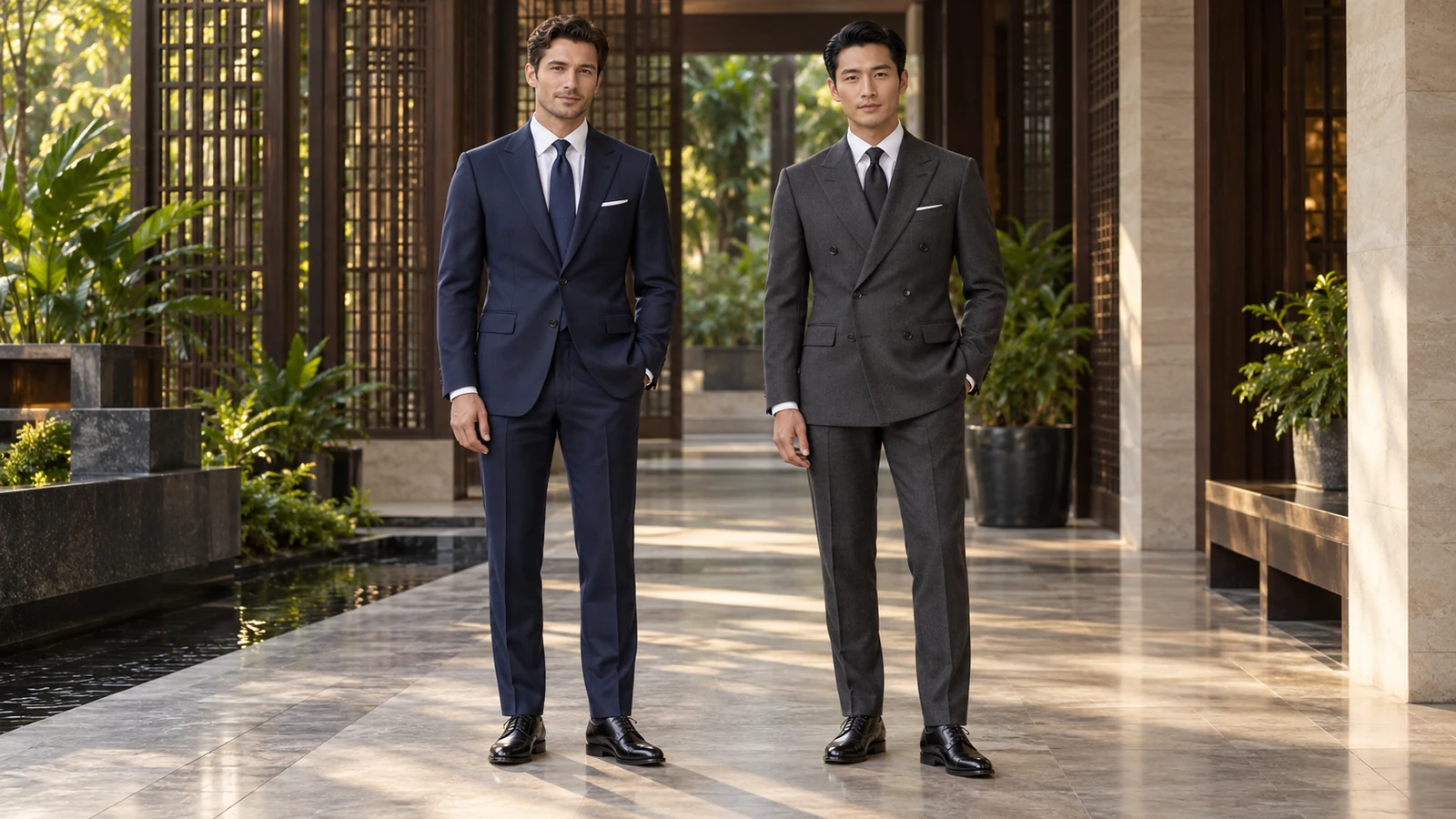
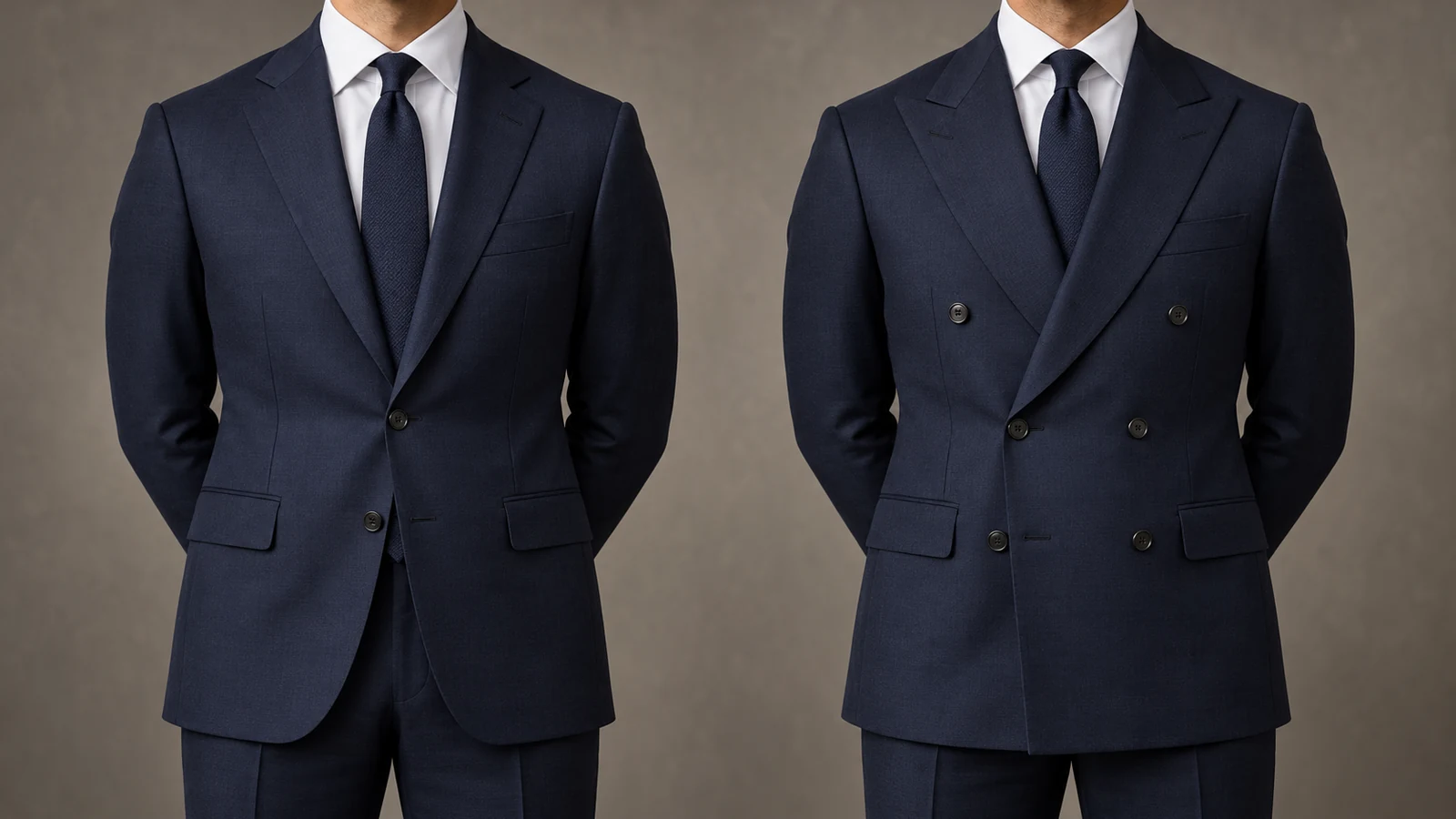
A suit jacket’s front changes more than the number of buttons you see. A single-breasted jacket uses one visible button column and a comparatively narrow overlap. A double-breasted jacket uses two visible button columns and a broader overlapping front. Those differences affect the lapel line, the visual width of the chest, the placement of the waist and the way the whole jacket reads.
Neither configuration is automatically the better suit. The useful question is which one supports your purpose, proportions, climate, cloth and wardrobe. This guide compares the two as complete design systems so you can arrive at a Bangkok tailoring consultation with clearer priorities.
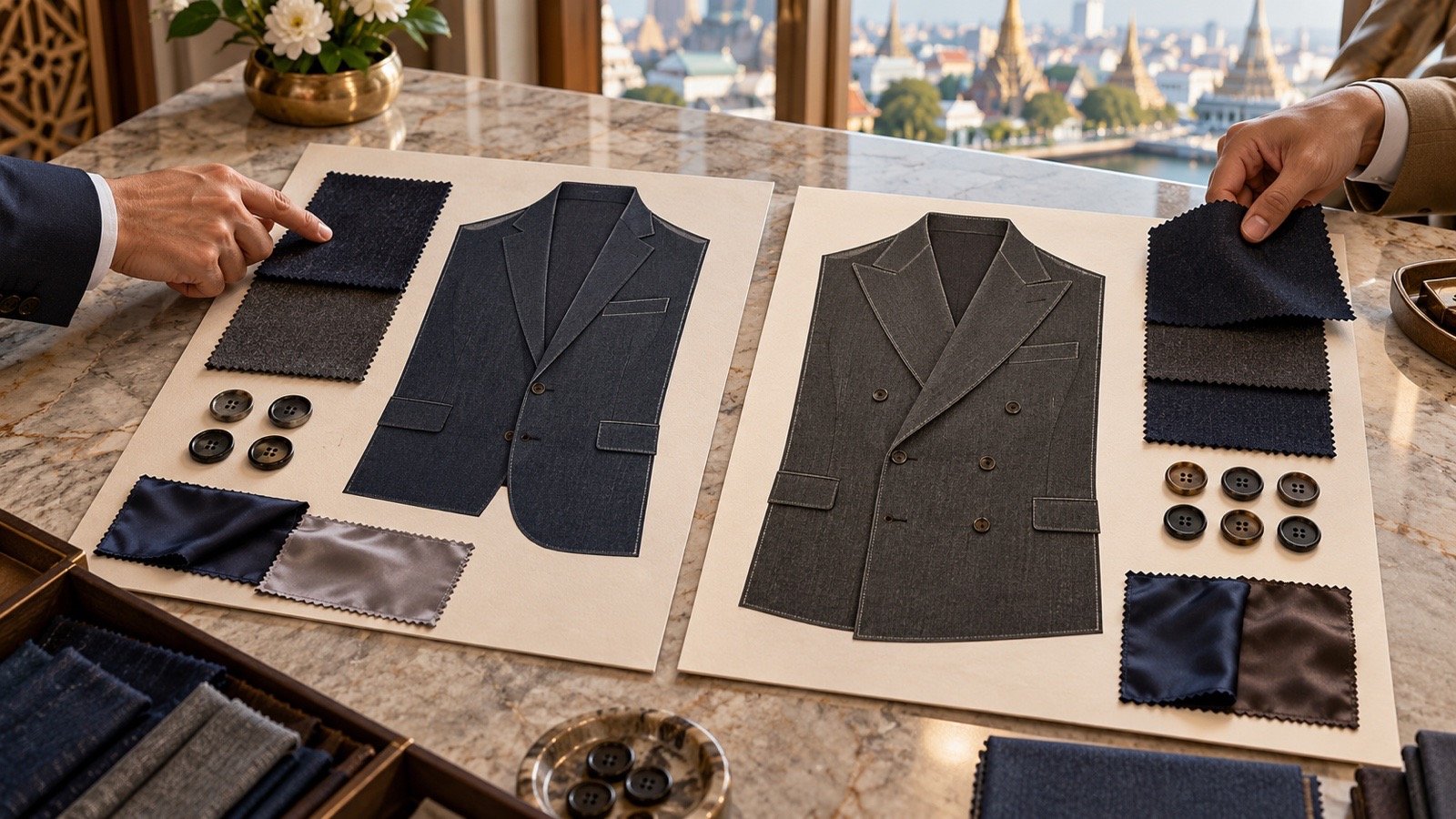
Featured image: AI-generated editorial illustration comparing one single-breasted and one double-breasted suit configuration; the models and setting are fictional, and the image is not evidence of a Class Bespoke commission.
Single-breasted and double-breasted at a glance
| Decision point | Single-breasted | Double-breasted |
|---|---|---|
| Visible front | One button column and a narrower overlap | Two button columns and a wider overlapping front |
| Common expression | Two-button front with notch or peak lapels | Classic 6×2 layout with peak lapels |
| Visual character | Open, direct and highly adaptable | Architectural, wrapped and more emphatic |
| Useful contexts | Business, travel, weddings and many evening specifications | Business, weddings, formal daywear and selected evening specifications |
| Important fitting question | Does the fastening point balance the lapel line and jacket skirt? | Does the overlap lie cleanly without pulling, collapsing or adding bulk? |
These are useful reference points, not fixed rules. Button layouts, lapels, pockets and construction vary. The final garment should be judged as one composition rather than by copying a single photograph.
What “single-breasted” actually means
A single-breasted jacket closes with one front edge overlapping the other by a relatively small amount. Its visible buttons form one vertical column. The familiar two-button suit is only one version: one-button and three-button designs also exist, and the fastening point can move within a carefully balanced pattern.
The narrower overlap leaves a larger uninterrupted area of shirt and tie visible when the jacket is open or fastened. That can make a single-breasted suit feel visually straightforward, but simplicity is not the same as neutrality. Lapel width, gorge, button stance, jacket length, waist suppression, pockets and cloth still determine its character.
For many buyers, the single-breasted jacket is an adaptable first commission because it can move between professional, wedding and travel settings. That does not make it inherently informal. A dark cloth, restrained details and disciplined fit can create a serious business suit, while a softer cloth and more relaxed pocket treatment can make the same basic closure feel less formal.

What “double-breasted” actually means
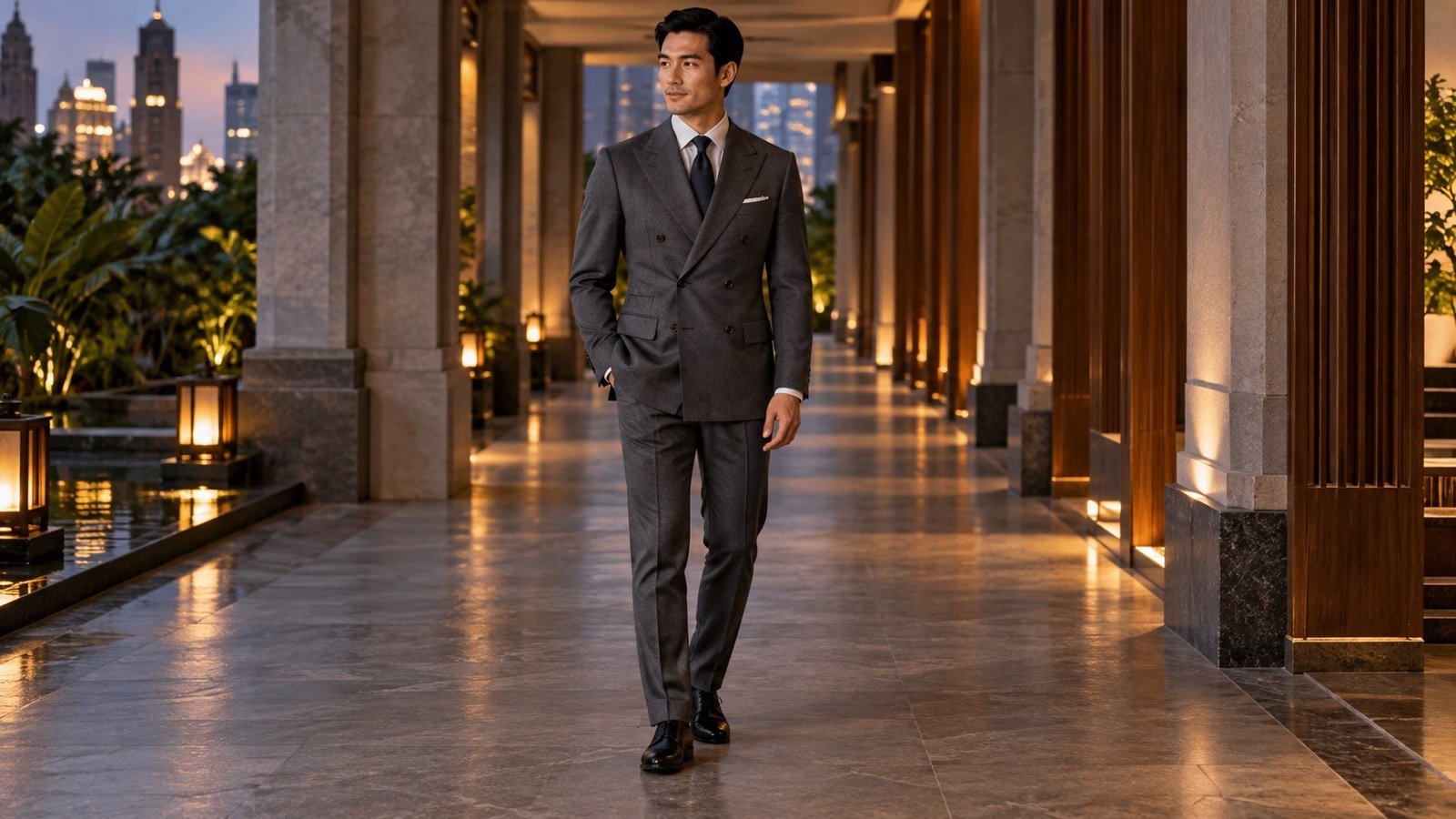
A double-breasted jacket has broader overlapping fronts and two visible columns of buttons. A classic 6×2 arrangement has six visible outer buttons, with two used as the principal fastening level; other arrangements exist. The inner fastening helps control the overlap, while the external closure shapes the jacket front.
Because more of the front is layered, the pattern must carry that overlap cleanly. The lapels, button columns and waist cannot be treated as separate decoration. If the geometry is wrong, the front may pull, bow or lose balance. When the pattern is coherent, the overlap creates a composed, architectural line rather than simply “more fabric.”
Peak lapels are strongly associated with double-breasted tailoring because their upward line complements the broader front. They are not a universal technical requirement, and a good design decision should reflect the garment’s purpose rather than a slogan about what is “correct.”
The front is a system, not a button choice
The closure sets up a chain of related decisions. On both configurations, the fastening level influences how long the lapels appear and how the jacket divides above and below the waist. The button stance must balance the complete jacket, including its length, gorge, pockets and the wearer’s torso.
Lapel choice also needs context. Notch lapels are familiar on versatile single-breasted business suits. Peak lapels can bring a stronger upward line to either configuration and are especially associated with double-breasted jackets. Shawl lapels belong mainly to selected eveningwear. Our separate guide to notch, peak and shawl lapels explains that choice without turning it into a rigid hierarchy.
Pockets matter as well. Jetted pockets usually read more cleanly and formally than patch pockets; flap pockets sit between those extremes depending on cloth and proportion. The correct answer is the combination that supports the intended suit, not the longest list of details.
Fit and proportion: avoid body-shape formulas
Rules such as “double-breasted is only for tall people” or “single-breasted always makes you look slimmer” are too crude to guide a commission. Two wearers with similar height can have different shoulder slopes, chest shapes, posture, torso length and preferences. Two jackets with the same button count can also look entirely different because of pattern and proportion.
A fitting should assess collar contact, shoulder line, chest allowance, front balance, waist position, jacket length, sleeve pitch and movement. With a double-breasted jacket, particular attention goes to the overlap and button alignment. With a single-breasted jacket, the open front, lapel length and skirt balance deserve equal care. Neither configuration compensates for a poorly balanced pattern.
Photographs can establish taste, but they are reference material rather than measurements. Bring examples of what you like, then allow the pattern and fittings to translate that direction into a garment that works on your body.
Which works better in Bangkok?
Bangkok’s heat and humidity make comfort important, but closure alone does not determine whether a jacket will feel warm. Cloth fibre, yarn, weave, weight, colour, lining coverage, canvas, shirt, fit and the balance between outdoor travel and air-conditioned interiors all contribute.
A double-breasted front does create more overlap across part of the torso. That does not prove that every double-breasted suit is hotter than every single-breasted suit. A heavy, tightly woven, fully lined single-breasted jacket may feel less suitable for a warm day than a carefully specified double-breasted jacket in a lighter, more open cloth.
Start with use. If most of your day is spent in offices, hotels and cars, you may value crease recovery and structure differently from someone walking between meetings. Review tropical wool and warm-weather cloth considerations together with full, half-lined and unlined jacket options. Comfort should be designed across the garment rather than promised by one feature.
Business wear
Both configurations can meet a professional lounge-suit brief. A single-breasted navy or charcoal suit is a dependable option when broad versatility is the priority. It can be worn across a range of offices and business travel settings without the closure becoming the dominant feature.
A double-breasted business suit can be equally credible. Its stronger front makes cloth, lapel width and button placement more visible, so restraint in the rest of the specification may be useful. A clean plain weave, controlled shoulder and coherent trouser line can keep it authoritative without becoming theatrical.
If you expect to wear the jacket open for long periods, discuss that honestly. A double-breasted jacket is generally designed around its overlapped, fastened shape; the pattern and intended use should be considered at the consultation rather than after delivery.
Weddings and formal occasions
For a wedding, the decision begins with time, venue, dress code and the role of the wearer. A single-breasted suit can move easily from ceremony to future business use. A double-breasted suit can give the groom or another key member of the party a more distinctive silhouette without requiring a different colour.
Neither choice should be made in isolation from the group plan. The groom, groomsmen and family members can share cloth or colour while varying the closure, lapel or waistcoat. Class Bespoke’s wedding-suit planning page explains how individual fittings can sit within a coordinated party.
For evening dress, do not assume that “double-breasted” automatically means black tie or that “single-breasted” cannot be formal enough. A dinner jacket follows a broader set of rules covering lapel facing, pockets, trousers, shirt and accessories. Use the Class Bespoke black-tie tailoring page to decide the dress category first, then choose a coherent closure within it.
Travel and wardrobe planning
For a compact business-travel wardrobe, a single-breasted suit is often the simpler foundation because the jacket’s familiar front can work across more mixed settings. But a traveller who already owns that foundation may gain more from a double-breasted commission that creates a genuinely different silhouette.
Consider what the suit must pair with, how often it will be packed, the climate at each destination and whether the jacket will be worn separately. Fabric resilience and trouser planning may matter more than the closure. A distinctive design that rarely fits the itinerary is less useful than a considered garment you will wear.
A practical consultation checklist
- Purpose: business, wedding, evening, travel or a combination?
- Existing wardrobe: are you filling a gap or replacing a core suit?
- Visual preference: a direct open front or a broader wrapped front?
- Reference images: which exact details appeal to you—closure, lapel, waist, length or cloth?
- Climate: how much time will be outdoors versus in air conditioning?
- Movement: how should the jacket feel when standing, sitting and walking?
- Coordination: which shirts, shoes and occasions must the suit support?
- Schedule: when are you in Bangkok for consultation and fittings?
Choosing with Class Bespoke
Class Bespoke’s suit service can be configured as single-breasted or double-breasted where appropriate to the commission. The consultation brings closure, lapels, pockets, cloth, lining, construction and trousers into one plan. Measurements and fittings then test the balance on the wearer rather than relying on a generic rule.
The strongest choice is the one you understand. If you want one versatile suit, say which situations it must cover. If you want a double-breasted statement, explain how restrained or expressive it should feel. If you are undecided, compare reference garments and cloths before finalizing the specification.
To discuss your wardrobe, dates and preferred Bangkok branch, request a tailoring appointment.
Frequently asked questions
Is a double-breasted suit always more formal?
No. A double-breasted front often has a stronger, more structured visual presence, but formality depends on the whole garment: cloth, colour, lapels, pockets, construction, trousers and the event’s dress code. A restrained double-breasted business suit and a highly formal single-breasted dinner jacket serve different purposes.
Can a double-breasted suit work for business?
Yes. A coherent double-breasted suit can be appropriate business wear. Plain cloth, balanced lapels, disciplined button placement and a clean fit help it read as professional rather than costume-like. Workplace expectations still vary, so context matters.
Is a double-breasted jacket too warm for Bangkok?
Not necessarily. It has more front overlap, but comfort also depends on cloth, weave, weight, lining, structure, shirt, fit and how much time you spend outdoors. Compare the complete specifications instead of using closure as a temperature guarantee.
Does a double-breasted suit have to use peak lapels?
No universal rule makes peak lapels technically compulsory, although their upward line is strongly associated with double-breasted tailoring. The lapel should be selected with the button layout, jacket proportions and intended level of formality.
Which configuration is better for a wedding?
Either can work. A single-breasted suit may offer broader future versatility; a double-breasted suit can create a more distinctive silhouette. Consider the venue, dress code, climate, group coordination and how you want to wear the suit after the wedding.
Can both single-breasted and double-breasted jackets be used for black tie?
Yes, provided the garment is designed as a dinner jacket and the complete outfit follows the intended dress code. Closure alone does not turn an ordinary business suit into black tie.