Aug 31, 2026
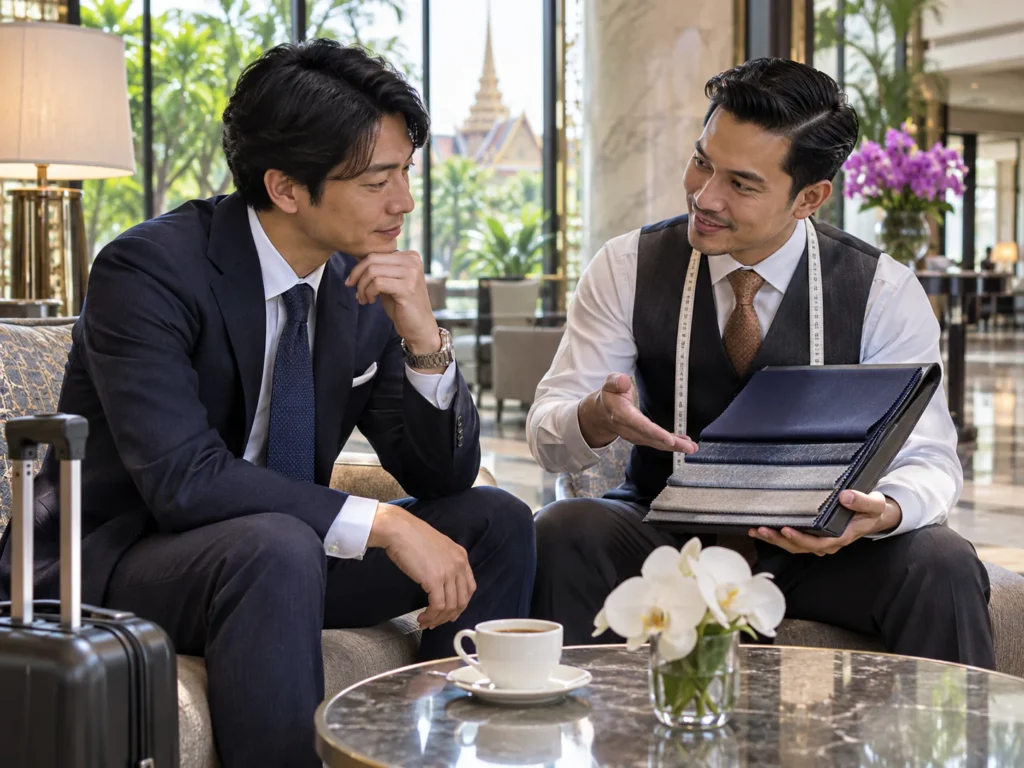
A 24-hour suit is attractive to a traveller with a flight, wedding or business meeting approaching. It is also a promise that should be unpacked. “Ready tomorrow” can mean an alteration to an existing garment, a simple made-to-measure order using an established block, an unfinished first fitting, or a fully finished suit. Those are not the same service.
A fast result is not automatically defective. An experienced team with available cloth, capacity and a familiar process can complete some work quickly. The concern is that a fixed 24-hour deadline may remove the time needed to develop a pattern, assess a basted garment, correct balance, rest or press the work, and review the finished suit on the customer.
The responsible question is not “Can a tailor sew quickly?” It is “Which stages will occur, which will be omitted, and what happens if the garment needs correction?”
Define “24-hour suit” before comparing offers
Ask the seller to state the deliverable and deadline in writing:
- Is the order a stock garment with alterations?
- Is it made-to-measure from an existing block?
- Is an individual paper or digital pattern created?
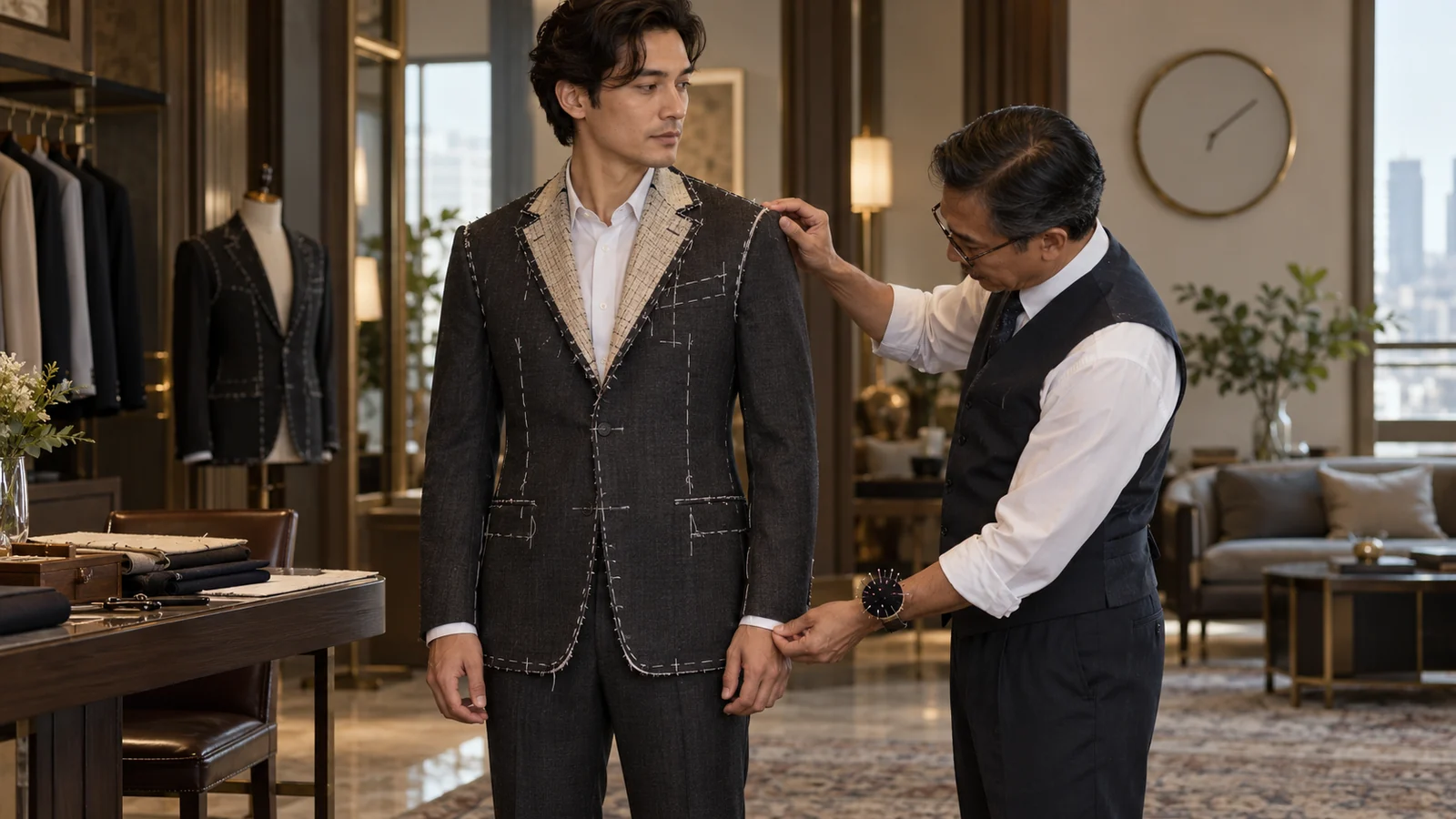
- Is the next-day appointment a basted fitting or final collection?
- What jacket construction is included?
- How many fitting and correction stages are planned?
- Will trousers, shirt and waistcoat be completed at the same time?
- What happens if the final review identifies a material fit issue?
The word “tailor-made” does not answer those questions. A customer can receive an honest, useful rapid service when the scope is clear. Risk increases when marketing compresses several different methods into one undefined promise.
A full tailoring process contains decision points
A considered suit process can include:
- consultation and use brief;
- cloth and construction selection;
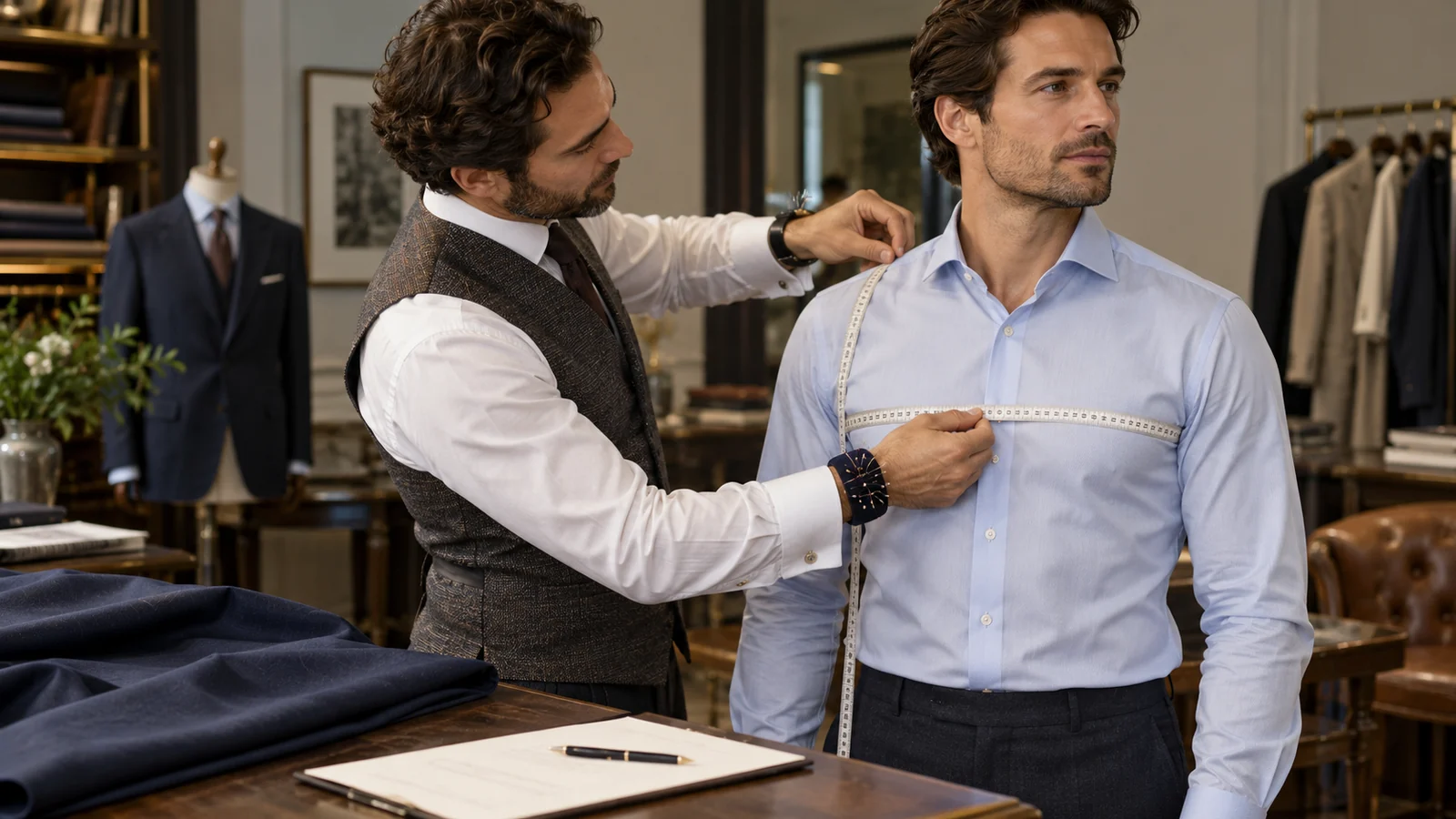
- measurements and posture assessment;
- pattern selection or development;
- cutting;
- internal preparation and assembly;
- one or more fittings at meaningful stages;
- corrections to balance, shape and comfort;
- finishing, pressing and quality control; and
- final try-on and delivery.
Not every tailoring system uses the same number of stages. Savile Row Bespoke’s own material describes an intensive benchmark involving an individual pattern, substantial skilled work and multiple intermediate fittings. That is evidence of one established bespoke tradition, not a rule that every legitimate suit must take the same calendar time.
The general lesson is that fittings and corrections are part of production, not delays added after it.
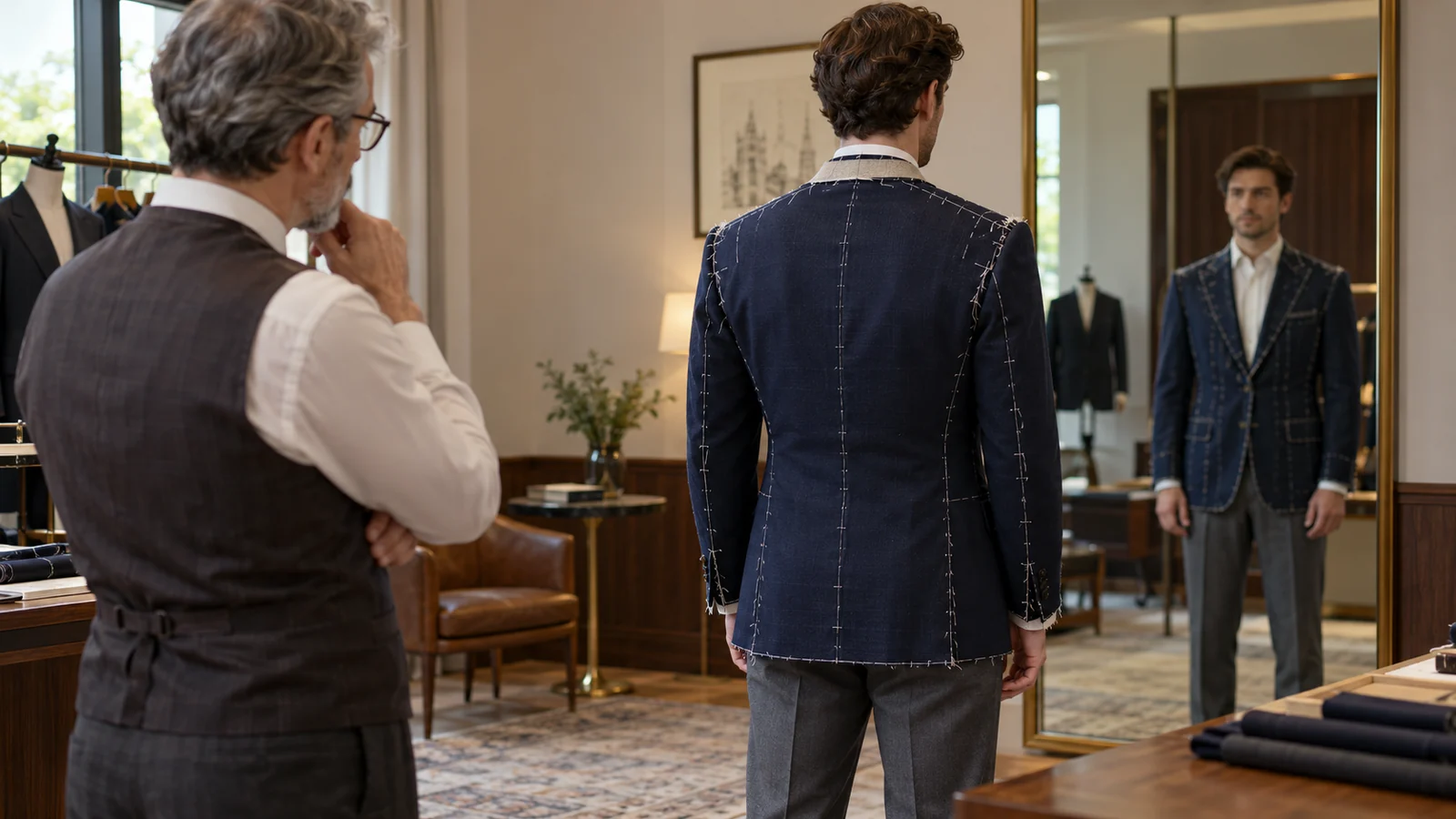
Where a fixed 24-hour deadline creates pressure
Consultation may become selection rather than design
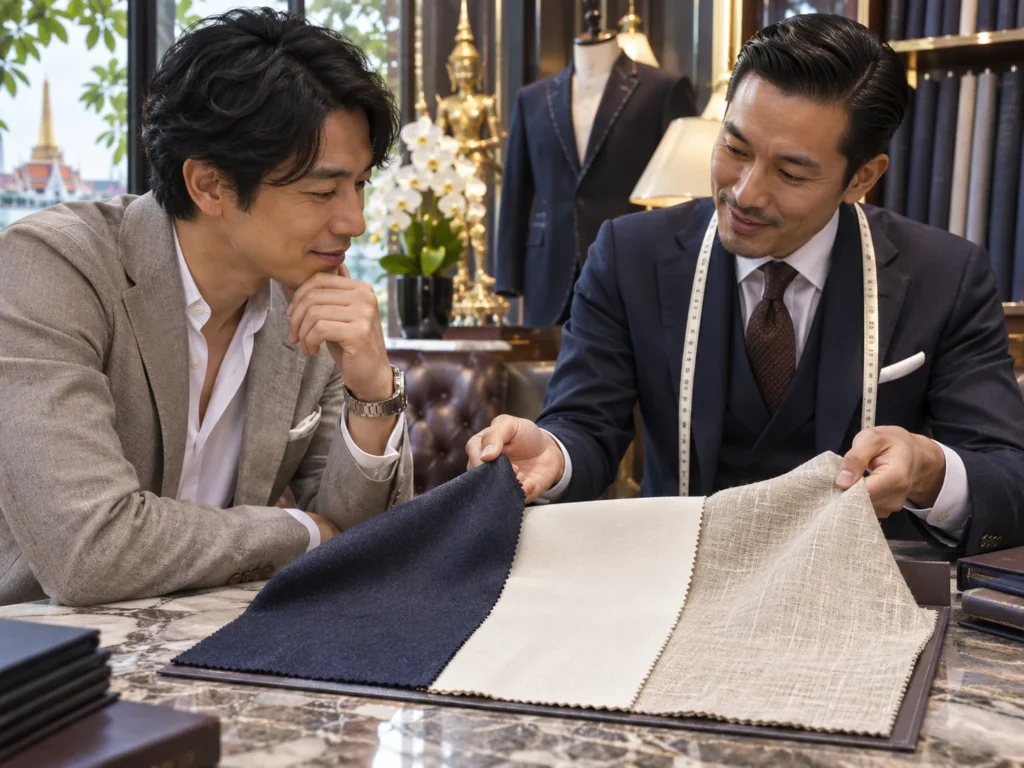
A rushed order may move quickly from cloth to payment without exploring use, climate, dress code, mobility, existing fit problems or wardrobe context. Missing these inputs can produce a garment that looks acceptable on a hanger but fails the client’s actual purpose.
Measurement errors have less room to surface
Measurements describe dimensions; they do not fully capture balance, posture, shoulder slope, stance or movement. A fitting lets the tailor see how the cut interacts with the individual. If the garment goes directly from measurements to finished delivery, the first real test may occur after most alteration options have narrowed.
Pattern and cutting decisions may rely on a standard block
Using an established block is not inherently wrong. It is the basis of many made-to-measure systems. The issue is whether the service is presented accurately and whether the block can accommodate the client without a meaningful trial stage.
Construction choices may be constrained
Some internal methods require more handwork, shaping and sequential assembly than others. A short deadline may limit available construction options or require several makers to work in parallel. Ask what is included rather than assuming a next-day “bespoke” suit has the same internal method as a longer commission.
Corrections become reactive
If the only fitting is at collection, alterations must happen under immediate travel pressure. Sleeve length and trouser hem may be manageable. Shoulder balance, jacket length, collar position, sleeve pitch or major trouser balance can require more considered work.
Finishing and quality control can be compressed
Buttoning, lining, pockets, seams, pressing, thread cleanup and final measurements all require inspection. A deadline can encourage the workshop to treat “wearable now” as final even when the garment would benefit from another review.
Fit risks are more than slimness
A rushed suit may still be tight and visually dramatic. That is not the same as correct fit. Evaluate:
- whether the collar sits cleanly against the shirt;
- shoulder line and chest comfort;
- front and back balance;
- lapel symmetry and button closure;
- sleeve pitch and length;
- jacket length and vent behaviour;
- trouser waist, seat and rise;
- leg line, break and movement; and
- comfort while sitting, walking and reaching.
These checks require the client to stand naturally rather than pose for a photograph. A garment that looks clean for ten seconds can still restrict normal movement or pull after sitting.
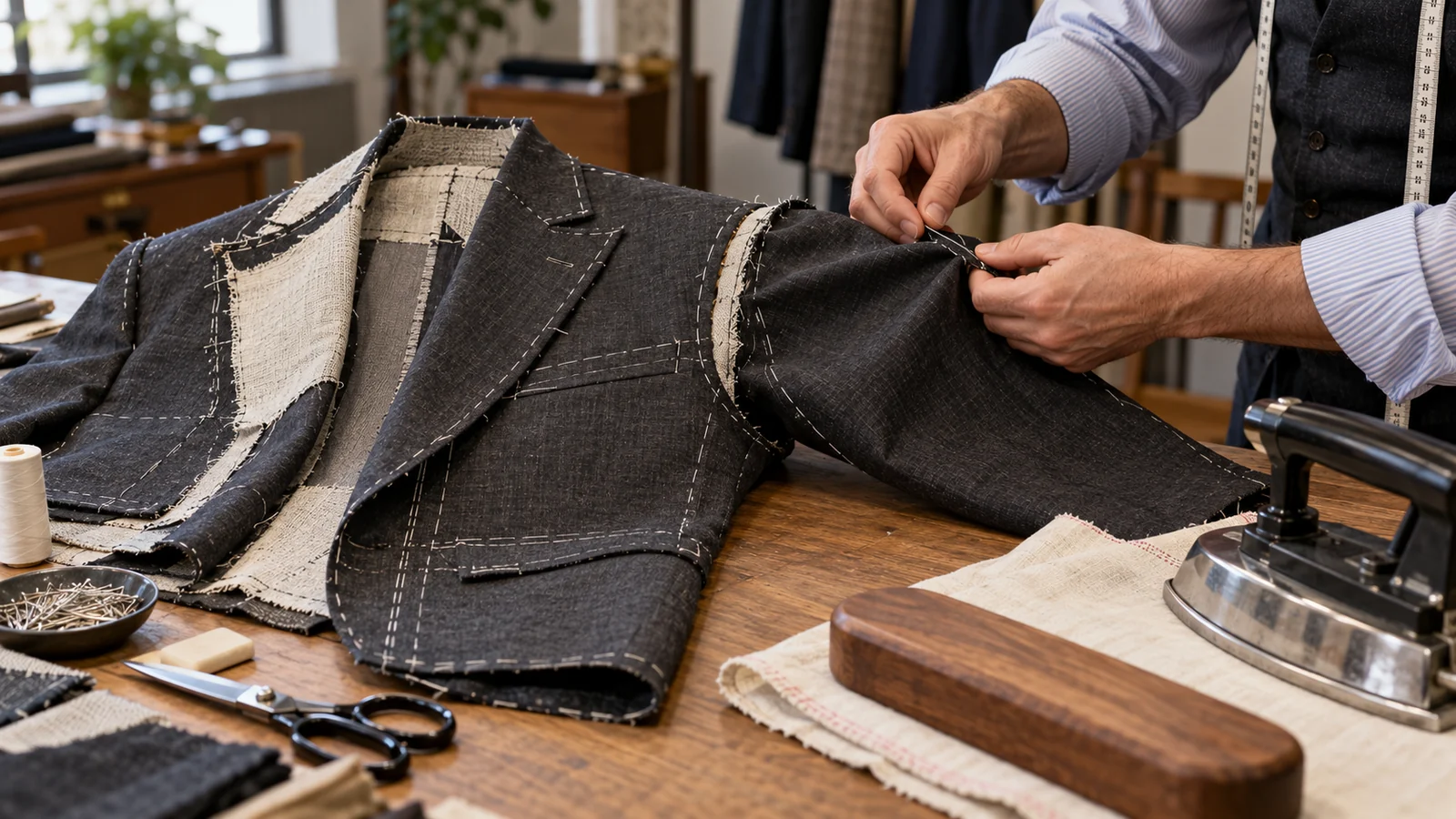
Craftsmanship risks under schedule compression
Craftsmanship is not simply the number of hand stitches. It is accurate cutting, appropriate internal support, controlled seams, matching, pocket placement, clean edges, consistent buttonholes, lining management, pressing and correction.
Rushing can increase the chance that small problems survive to delivery: uneven hems, puckered seams, mismatched pattern lines, loose threads, twisted sleeves, distorted lapels or hurried pressing. These defects are not inevitable in fast work, and their presence does not establish why they occurred. The point is that a short schedule leaves less time to find and correct them.
Durability depends on specification and fit
A 24-hour deadline does not directly determine durability. Cloth, yarn, weave, construction, seam allowances, fit, care and frequency of wear all contribute. Schedule pressure can affect durability indirectly if it leads to unsuitable cloth, insufficient seam allowance, excessive tightness, stressed pocket placement or incomplete finishing.
A very tight trouser can strain the seat and pockets. A jacket with restricted movement can load seams. An ultra-fine cloth chosen for status may not suit repeated travel. These are specification problems that a proper consultation and fitting sequence can reduce.
When rapid work may be reasonable
Fast work can be appropriate when scope and risk are limited. Examples include:
- hemming trousers after a confirmed fitting;
- sleeve or waist adjustments on an existing garment;
- replacing a button or completing a minor repair;
- preparing a preliminary fitting rather than a final suit;
- repeating a proven pattern for a known client, subject to current measurements; or
- a clearly described made-to-measure service with adequate workshop capacity and a realistic correction plan.
The customer should not infer that one tailor’s quick alteration proves that a new, complex suit can be developed to the same standard in the same time.
Plan a Bangkok commission around fittings, not marketing
International visitors should share their arrival, event and departure dates before choosing cloth. The tailor can then say what is possible. A useful schedule reserves time for:
- the consultation;
- a first assessment of the garment;
- corrections;
- a second assessment if required;
- final review before the last day; and
- contingency if a material issue appears.
Do not schedule final collection immediately before an airport transfer. If the visit is too short, consider whether the workshop can take measurements for a later commission, whether an existing garment can be altered, or whether the order should wait. Delivery after departure can be convenient, but remote delivery removes the chance to assess the finished garment in person.
Use the established Bangkok tailoring timeline guide as the canonical owner of this topic. Current capacity and dates must still be confirmed directly.

Protect the final review when the itinerary is fixed
Travellers should separate three dates: the date an outfit is needed, the date they leave Bangkok and the last sensible date for a full try-on. Those dates should not collapse into one appointment. The international-visitor planning guide explains how consultation, fitting and delivery decisions fit around a short stay without inventing transfer times or promising capacity that has not been confirmed.
Reserve a practical buffer between final review and departure. Use that time to wear the intended shirt and shoes, sit, walk and reach, and compare the finished garment with the written order. The established final-fitting and delivery checklist gives that review a consistent structure. If a justified correction is found, a buffer creates a real opportunity to address it; an airport-bound collection usually does not.
If the available visit cannot support those gates, ask the tailor to narrow the scope, propose a later delivery with written remote-alteration terms, or postpone the commission. A smaller, accurately described service is safer than treating the event date as proof that every stage can be compressed.
Questions to ask before accepting a rush promise
- What tailoring method is being offered?
- Is tomorrow’s appointment a fitting or final delivery?
- Which construction and cloth are included?
- Who will cut and assemble the garment?
- What checks occur before each fitting?
- Which fit issues can still be corrected at the planned stage?
- Is there time for a final review before departure?
- What happens if the suit is not ready or needs more work?
- Are alterations after delivery included?
- Will these terms appear on the written order?
A clear answer is more valuable than a universal promise.
How Class Bespoke should frame turnaround
Class Bespoke customers can discuss garment, cloth, construction and available Bangkok dates at either real showroom. The team should confirm a workable process for the specific order rather than treat “24 hours” as a default guarantee.
The brand’s tailoring process and suit page provide preparation context. At the appointment, ask which stages are proposed and preserve time for final assessment. Current availability, cloth and completion date must be confirmed for that commission.
A safer decision rule
A rapid timeline is more credible when:
- the service method is named accurately;
- the cloth is available;
- the workshop confirms capacity;
- at least one meaningful fitting occurs before completion;
- the final review is not at the last possible minute;
- correction responsibilities are written; and
- the client understands which bespoke stages are not included.
If the deadline is more important than every construction or fitting option, say so. An honest compromise is better than a premium promise whose stages cannot fit the available time.
Separate the event deadline from the garment deadline
A suit needed for a ceremony or meeting should be ready early enough for a complete try-on with the intended shirt, shoes and accessories. That review can reveal sleeve interaction, trouser break, collar contact or movement issues that are difficult to judge when the garment is viewed alone. The event date therefore should not be treated as the workshop’s final permissible completion time.
Ask the tailor to write three milestones: the first meaningful fitting, the planned final review and the contingency point for an agreed correction. If delivery will occur after the client leaves Bangkok, also record who approves shipment, who pays for a justified local alteration and how a problem will be documented. These terms do not guarantee a perfect result, but they make the trade-off between speed and correction capacity visible before payment.
Frequently asked questions
Can a good suit ever be made in 24 hours?
Some rapid work can be competent when the method, client, cloth and workshop capacity support it. The deadline alone does not prove quality or failure. Ask which stages and correction opportunities are included.
Is a 24-hour suit bespoke?
“Bespoke” should describe the pattern and making process, not simply speed or custom choices. A next-day service may instead be alteration or made-to-measure. Ask the seller to define the method.
How many fittings does a tailored suit need?
There is no responsible universal number. The method, garment, fit development and client determine the sequence. What matters is that fittings occur at stages where meaningful corrections remain possible.
What should I inspect at final collection?
Check collar, shoulders, balance, closure, sleeves, vents, trouser waist/seat/rise, leg line, movement, seams, pockets, buttons, lining, pressing and the written specification.
What if I leave Bangkok before final corrections?
Discuss this before ordering. Remote delivery may be possible, but it reduces in-person assessment. Agree responsibility, shipping, alteration and communication terms in writing.
Request a realistic appointment plan
Contact Class Bespoke with the garment, event date, arrival and departure dates. Ask the team to confirm the actual consultation, fitting, correction and final-review stages available for the proposed schedule.