Oct 28, 2026
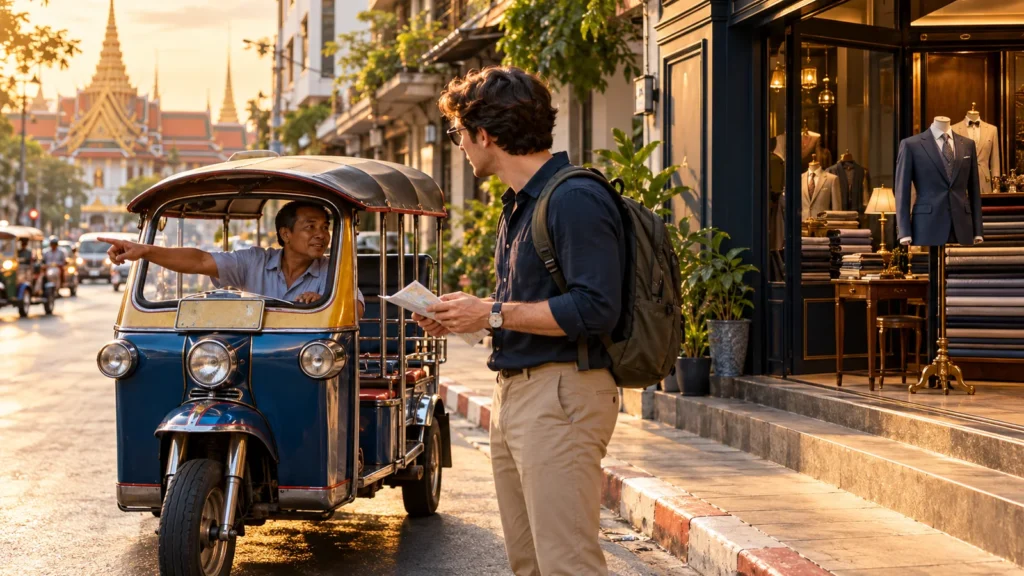
Bangkok is an excellent place to commission tailored clothing. The city has skilled cutters, established tailoring businesses and options for many budgets. It also has a documented tourist-referral pattern in which a visitor is diverted from an attraction, placed in a tuk-tuk and taken to a shop that may pay for the introduction.
That distinction matters. A recommendation is not automatically dishonest, a fast suit is not automatically defective, and fused construction is not automatically fraudulent. The risk arises when a commercial relationship is hidden, a customer is pressured, or claims about cloth, construction and delivery are not put in writing.
In November 2024, Thailand's Tourist Police described a case involving a false claim that the Grand Palace was closed, followed by a tuk-tuk trip to a tailor or jewellery shop. Police said they ordered enforcement action and continued work against conduct that exploits tourists. More generally, the Australian Government's Thailand travel guidance warns that apparently cheap tours may end at shops paying the driver a commission, while the U.S. State Department's Thailand guidance identifies gem and city-tour scams as common in tourist areas.
This guide explains how those patterns work, how to assess a hotel or online recommendation, and how to verify the cloth, process and written terms of a Bangkok tailoring order. It discusses documented risks without suggesting that every driver, hotel, concierge or tailor behaves improperly.
1. The Bangkok Tuk-Tuk Tailor Referral Trap
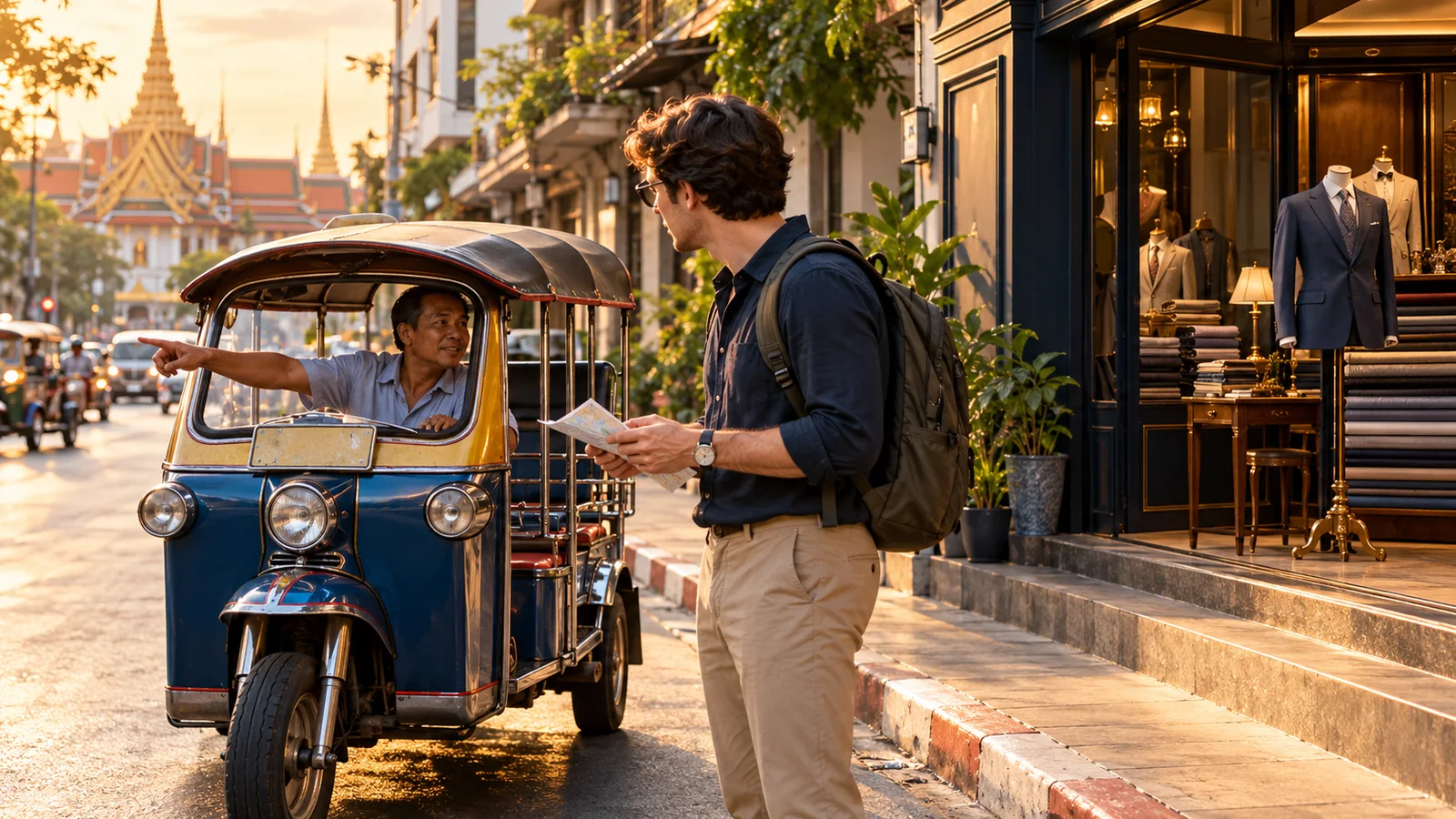
The approach often begins before tailoring is even part of the visitor's plan. Someone near a tourist area may offer an unusually inexpensive tuk-tuk ride, a short city tour or friendly advice about where to shop. During the journey, the driver proposes “one quick stop” at a tailor, jewellery store or another retailer.
The price of the ride may be low because the stop has value to someone else. A shop can reward a driver for bringing in potential customers, whether or not a purchase follows. That creates a conflict between the passenger's chosen destination and the driver's financial incentive.
Thailand's Tourist Police documented a version of this pattern in its 13 November 2024 public notice. Smartraveller similarly advises travellers to be suspicious of cheap tours that lead to commission-paying shops.
The visit may then become a high-pressure sale: a promotion that supposedly ends today, an insistence on a large deposit, or a promise that several garments can be completed before a flight. None of those signals alone proves fraud, but together they should slow the decision down.
A visitor can simply say, “No shopping stops—please take me directly to this destination.” Agree on the destination and fare before departure. If the route changes or pressure begins, leave safely and use a licensed taxi, public transport or a trusted ride-hailing service. A legitimate purchase does not require an unplanned detour.
Not every tuk-tuk driver accepts commissions, and a referred tailor may still make satisfactory clothes. The essential point is that an undisclosed incentive makes the introduction less independent than it appears.
2. Temple and Tourist-Attraction Approaches
A common diversion starts with unexpected information: “The temple is closed,” “foreign visitors cannot enter until later,” or “there is a private ceremony today.” A helpful stranger may then recommend another temple, a special promotion or a waiting vehicle.
The best response is to verify the claim at the official entrance. The Grand Palace publishes its own visitor FAQ and daily schedule, including genuine changes to visiting hours. A person standing away from the gate is not a substitute for the official ticket office or website.
Some traveller accounts add stories about a lucky shopping day, astrology, spiritual advice or an “auspicious” colour that should be ordered immediately. Those variations are not as consistently documented by official authorities as the closed-attraction and commission-shop pattern. Treat them as anecdotal warning signs rather than proof about any individual. Most importantly, do not infer that a temple, monk or religious institution is involved merely because religious language or a nearby location is used in the approach.
Warning signs include:
- unsolicited help that begins with bad news about your destination;
- a promotion supposedly available for only a few hours;
- a stranger selecting the vehicle and shopping stops;
- several apparently unrelated people repeating the same recommendation;
- resistance when you ask to check the attraction's official schedule; and
- pressure to pay before you have compared businesses or received written specifications.
A calm “No, thank you” is enough. Continue to the official entrance, verify current conditions and make any tailoring decision separately.

3. Hotel Recommendations and Undisclosed Commercial Referrals
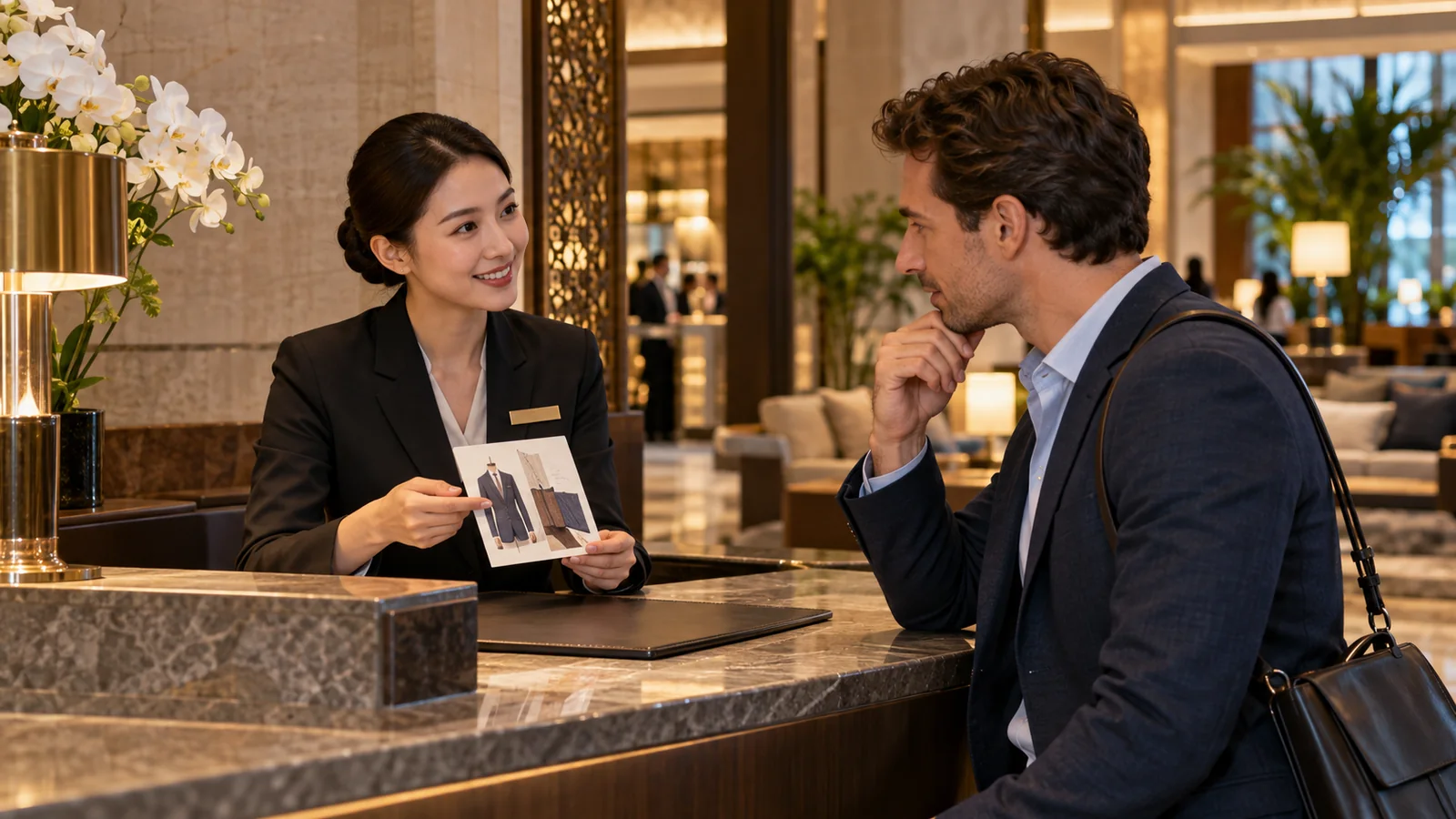
A hotel recommendation naturally carries more authority than a street approach. Guests may assume that a concierge, transport desk, hotel driver or travel representative has independently assessed the tailor's cloth, cutting, construction and after-sales service. Sometimes that may be true. In other cases, the recommendation may be based on convenience, an established commercial relationship or a referral payment.
No reliable evidence reviewed for this guide establishes that Bangkok hotels as a class—or any named hotel—participate in tailor scams. The responsible issue is narrower: is the recommendation independent, and is any material commercial connection disclosed?
Consumer-protection guidance offers a useful principle. The U.S. Federal Trade Commission explains that a relationship capable of affecting the weight or credibility of an endorsement should be disclosed clearly; its Endorsement Guides FAQ uses paid or incentivised recommendations as examples. That is not a statement of Thai law for a hotel concierge. It illustrates why knowing about compensation helps a buyer evaluate advice.
Before accepting a hotel-recommended tailor, ask:
- Is this an independent recommendation or a commercial partner?
- Does the hotel, employee, driver or booking desk receive a fee, gift or other benefit?
- Are there several tailors the hotel can suggest?
- What criteria were used—guest feedback, service history, convenience or commercial terms?
- Can you contact the tailor directly and receive a written quotation before travelling there?
Hotel pickup and drop-off can be convenient, particularly for business travellers. They do not prove cloth authenticity, pattern-making quality or construction. The same applies to an impressive showroom, polished advertising, influencer content or a high sponsored-search position. Marketing can establish visibility; it cannot independently establish what is inside a jacket.
Compare the recommendation with alternatives you find yourself. Check the business's consistent name, address, telephone number and website. Thailand's Department of Business Development offers online business-information services, although registration confirms an identity record rather than the quality of its tailoring. Read detailed reviews across more than one platform, look for specific descriptions of fittings and problem resolution, and be cautious with repetitive or uninformative praise.
The decisive questions should remain the same regardless of who made the introduction: What cloth is being sold? What construction is included? Who is responsible for fitting? How many stages are realistic? What happens if the garment needs correction?
4. False Fabric Claims and Luxury Presentation
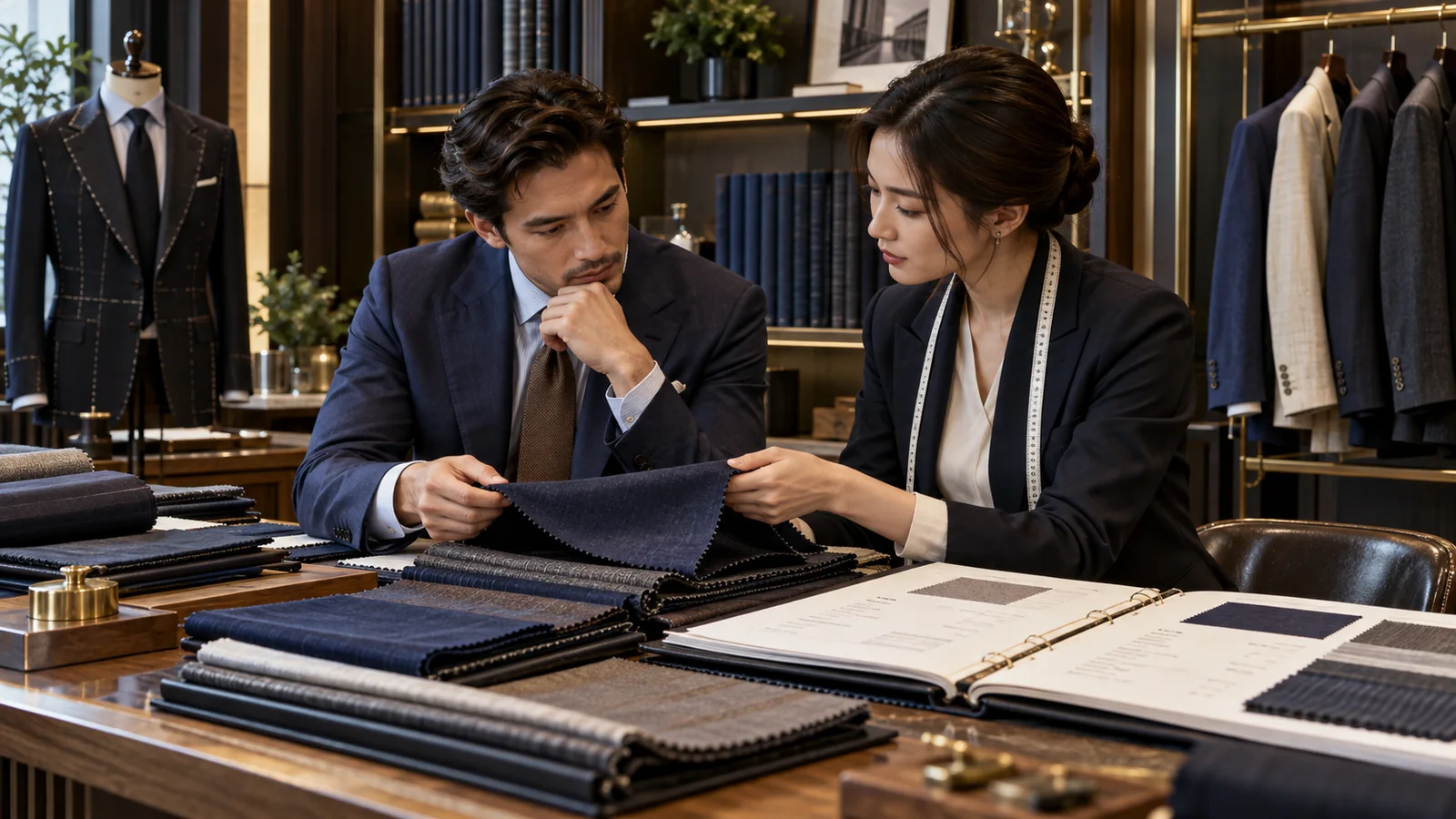
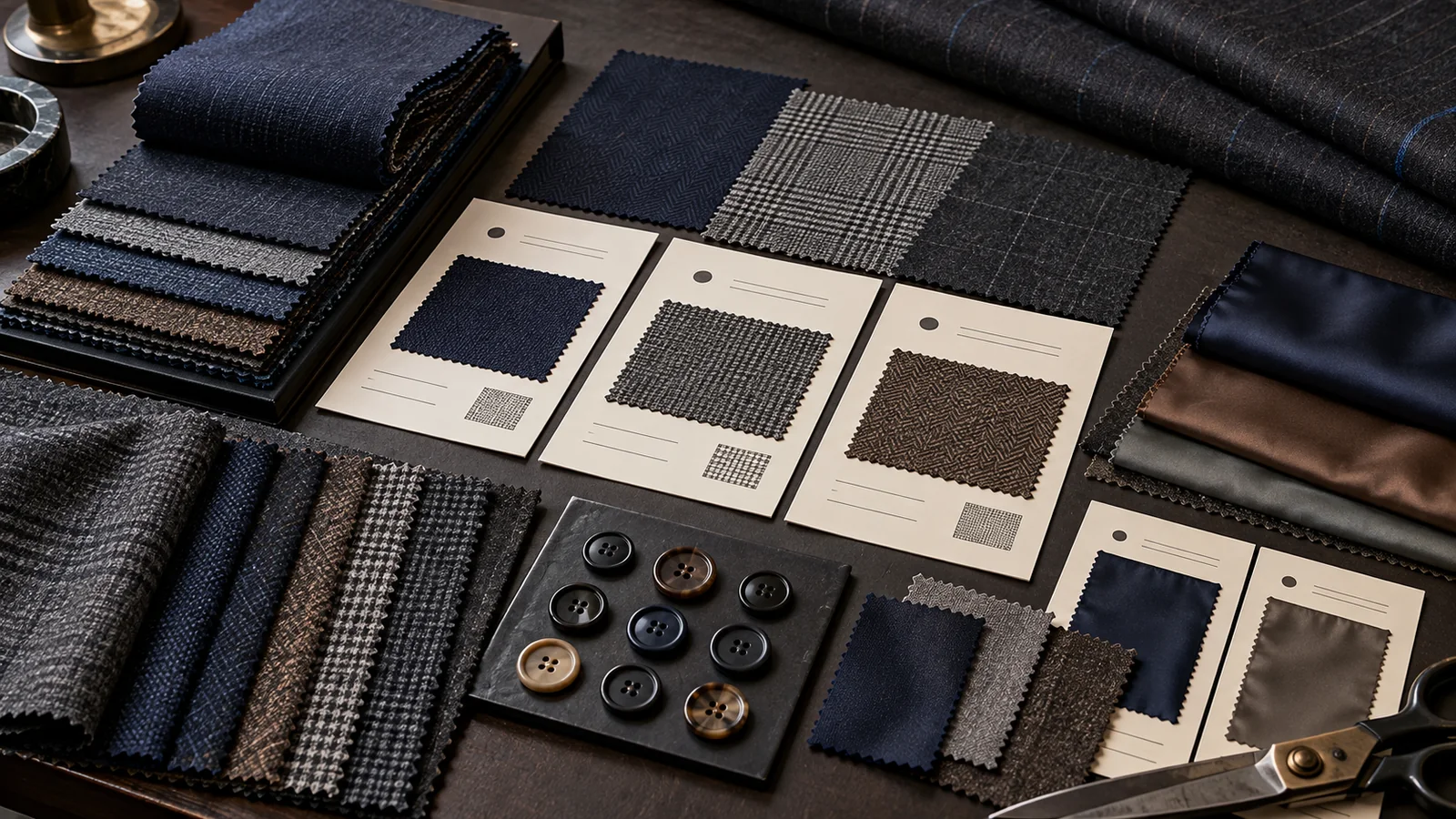
Words such as “Italian wool,” “Australian Merino,” “Super 150s” or a famous mill name can sound precise while leaving important questions unanswered.
Start with fibre content. Is the cloth 100% wool, a wool blend or another fibre? “Merino” identifies wool from Merino sheep; it does not by itself prove Australian origin, a named mill or a particular level of finished-garment quality. The International Wool Textile Organisation and Woolmark's fibre guide explain the underlying fibre terminology.
A Super S number is also narrower than many sales presentations imply. ISO 18103 defines a fineness code for finished woven fabric made from pure virgin wool. A higher number denotes a finer fibre class under that code; it does not independently prove better fit, greater durability or superior jacket construction.
Ask the tailor to write the following on the order:
- fibre composition and percentage;
- fabric bunch or reference number;
- claimed mill or supplier;
- claimed country of fabric manufacture;
- garment construction;
- lining and button choices; and
- any certification being represented.
A branded bunch book or selvedge can support a claim, but neither is a complete chain-of-custody record. A credible traceability record links identities, parties, places and events; the GS1 traceability standard illustrates why a generic label or QR code is not conclusive on its own. If certification such as Woolmark is claimed, ask which product is certified and verify the mark with the scheme owner. Woolmark says its authorised laboratories test specified attributes such as fibre content, colourfastness and durability; certification does not certify every claim about provenance, fit or tailoring.
For practical Thai consumer due diligence, the Office of the Consumer Protection Board advises buyers to inspect label information and check origin, condition and quality with the seller. Thailand's TIS 4013-2567 provides a technical benchmark for fibre-composition labelling, but it should not be treated as proof that every bespoke cloth complies or as a blanket rule for every commission.
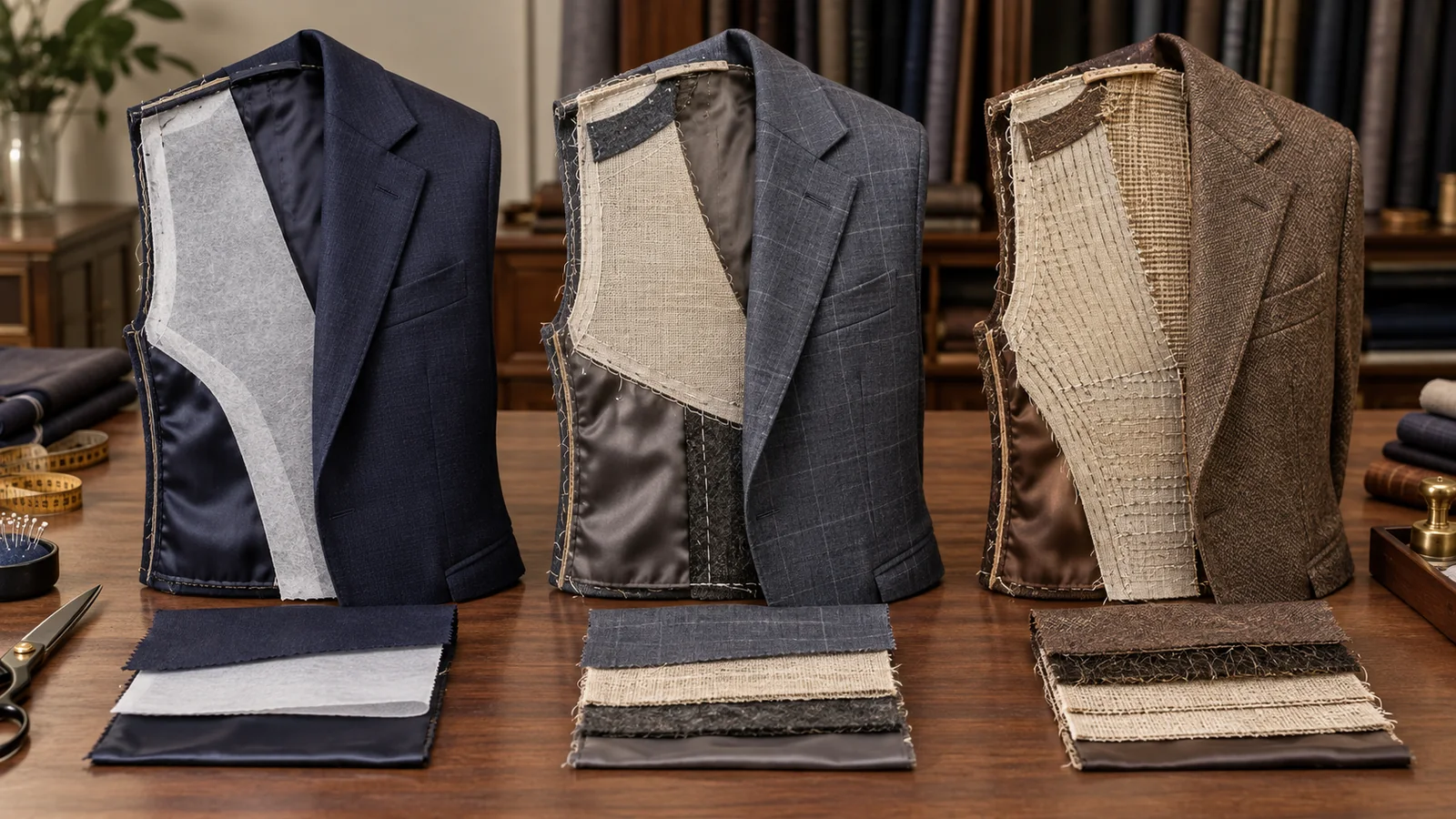
Construction language deserves equal precision:
- Fused jackets use interlining bonded with heat, pressure and adhesive.
- Full- or floating-canvas jackets use a sewn-in canvas structure through more of the front.
- Half-canvas usually combines systems, but the extent varies.
Fusing is a legitimate construction method, not evidence of fraud. New Mexico State University's garment guidance describes both sew-in and fusible interfacing. Ask where canvas and fusible materials are used, what result each option is intended to deliver, and whether the written price matches the selected construction. Class Bespoke's cloth-comparison guide and construction guide explore those questions in greater detail.
5. Rushed Suits, Fittings and Garment Quality
A 24-hour promise does not prove fraud, and a rapid made-to-measure garment can be useful when expectations are clear. The concern is whether the schedule matches the process being sold.
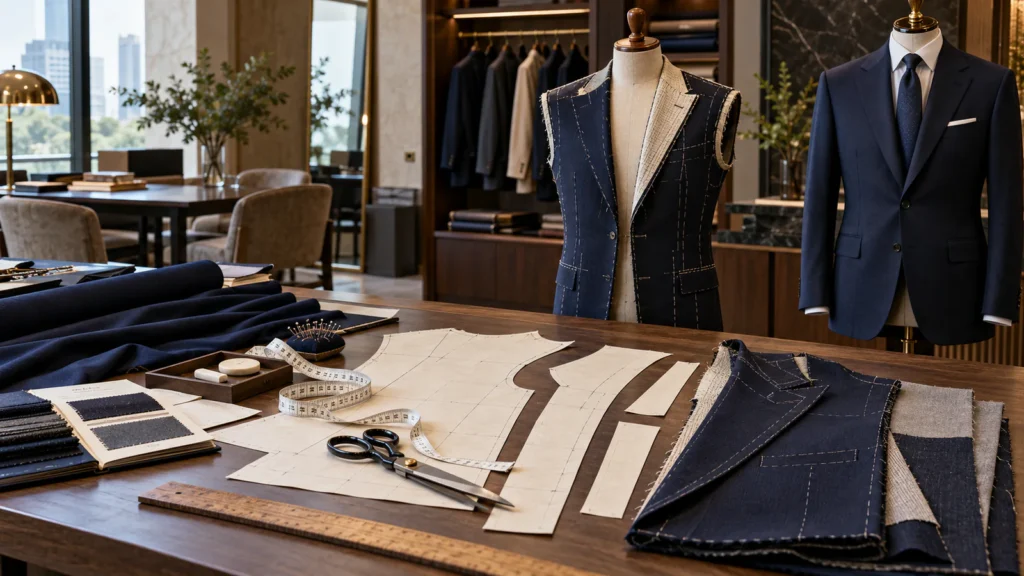
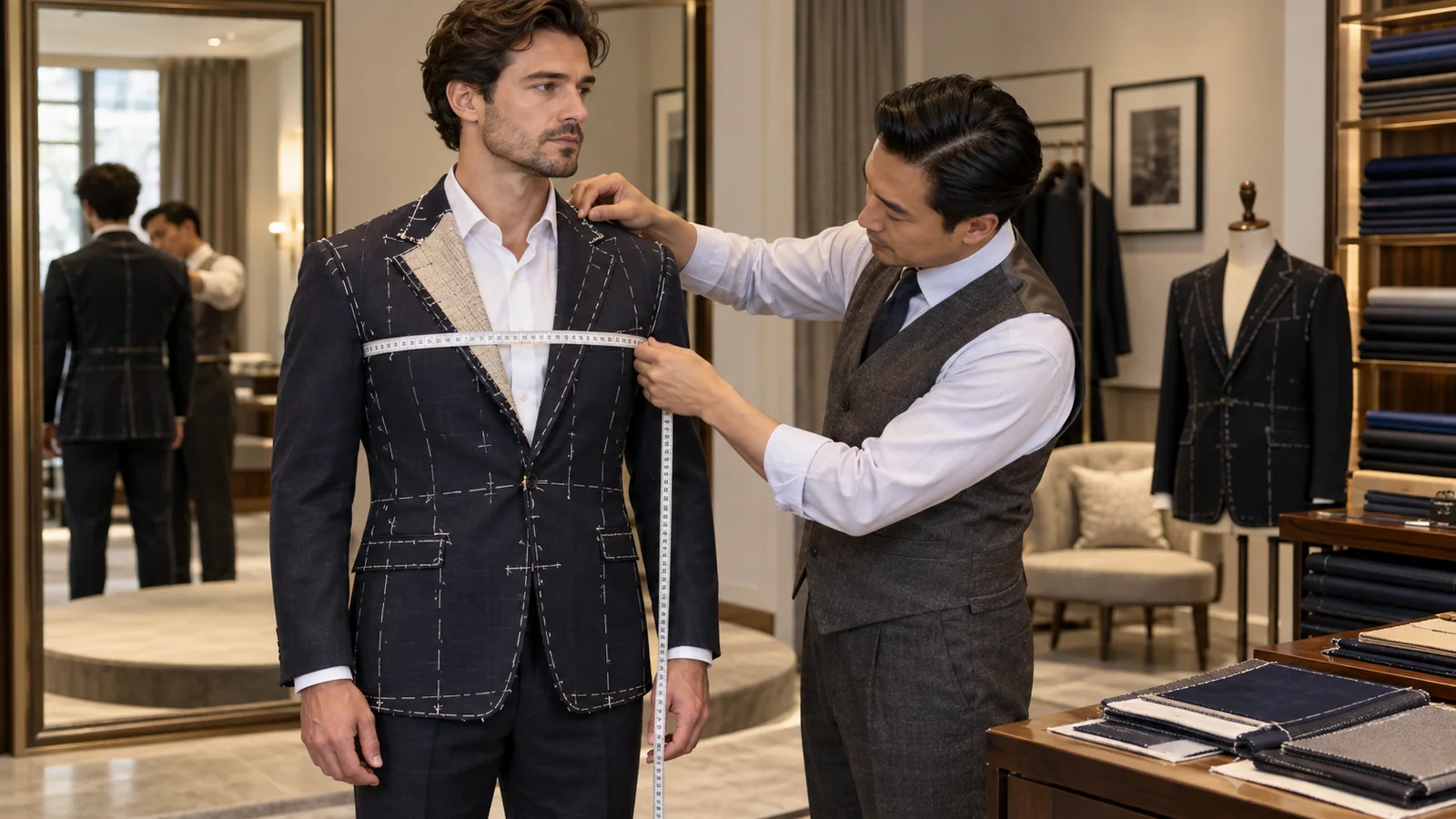
A more involved bespoke workflow normally includes consultation, figure assessment and measurements; pattern development; cutting and construction; an initial fitting; marked corrections; one or more later fittings when required; finishing; and final inspection. The exact number of fittings depends on the garment, maker and client.
Terminology is inconsistent, so ask about the work rather than relying on the label. Made-to-measure generally adjusts a standard or base pattern. Traditional bespoke develops an individual pattern and uses iterative fittings. The UK's Skills England occupational standard describes measuring, individual pattern work, a basted garment, fitting, adjustment, finishing and inspection.
For context—not as a universal Bangkok rule—the Savile Row Bespoke Association describes a much longer member benchmark involving an individual pattern, multiple fittings and substantial handwork. That shows why a complex individual process takes time, but it does not mean every good garment must follow a Savile Row timetable.
A compressed schedule leaves fewer opportunities to assess balance, sleeve pitch, collar position, trouser line and movement after corrections. Before accepting a rush order, ask:
- Is the pattern individual or adapted from a standard block?
- Will there be a basted or intermediate fitting?
- Which construction is included?
- When can corrections be made?
- What happens if the client has already left Bangkok?
- Does the deadline include final pressing and quality control?
Use Class Bespoke's Bangkok tailoring-time guide to plan your visit, then obtain a schedule for the specific order.
6. How to Choose a Genuine Bespoke Tailor in Bangkok
A trustworthy decision is built from verifiable details, not a single ranking or recommendation. Use this checklist before paying a deposit.
Bangkok tailoring buyer's checklist
- Choose the business independently. Research before the trip where possible. Compare several options instead of allowing a driver or stranger to choose for you.
- Verify identity and location. Match the trading name, website, telephone number and physical address. A business-registration record can help verify identity but does not guarantee quality.
- Ask about referrals. If a hotel, driver, guide or influencer introduced the tailor, ask whether compensation or another benefit is involved.
- Describe the intended use. Climate, travel, office wear, weddings and frequency of use may affect cloth weight, construction and styling.
- Record the cloth specification. Put fibre percentages, bunch or reference number, supplier or mill claim, colour and claimed origin in writing. Separate raw-fibre origin, fabric manufacture and garment manufacture.
- Verify certifications. Check any logo or certification with its issuer. A premium showroom, high price, selvedge or QR code is not complete proof.
- Define construction precisely. Record fused, half-canvas or full-canvas, and ask where canvas or fusible components extend. Also specify lining, buttons, pockets, vents and other agreed details.
- Ask how the pattern is created. Find out whether the tailor starts with an individual pattern or adjusts a standard block. Neither answer alone determines value; it should match the service description and price.
- List the fitting stages. Record expected fitting dates, final delivery and the procedure for post-delivery corrections. Use a final-fitting checklist rather than judging only the mirror view while standing still.
- Get an itemised quotation. Identify each garment, cloth, construction, included fittings, taxes or delivery charges, deposit and balance. Class Bespoke's Bangkok tailoring quotation guide shows useful comparison points.
- Understand remedies before paying. Ask for alteration, remake, cancellation and refund terms. Do not assume that policies match those in your home country.
- Keep evidence. Retain the written order, receipt, emails or messages, promised delivery date and photographs of the selected cloth reference. If a dispute develops, those records are more useful than a verbal recollection.
Avoid pressure to pay before you understand the purchase. A genuine tailor should be able to explain what is being offered, what is not included and what remains uncertain—such as changing cloth availability.
If you believe you were deceived, prioritise your safety and preserve the evidence. Thailand's Tourist Police can be reached at 1155, with official information about the Tourist Police app. The Office of the Consumer Protection Board explains consumer rights and complaints through its FAQ, online complaint portal and hotline 1166. Contact your card issuer promptly if a disputed card transaction or card security is involved. Those channels do not guarantee a particular remedy, but they are safer than escalating a confrontation at a shop.
For a broader evaluation framework, read 10 checks before choosing a Bangkok tailor.

7. Class Bespoke as a Transparent Tailoring Option
Class Bespoke publishes this guide because better-informed customers can have clearer tailoring conversations—whether they ultimately choose Class Bespoke or another Bangkok tailor.
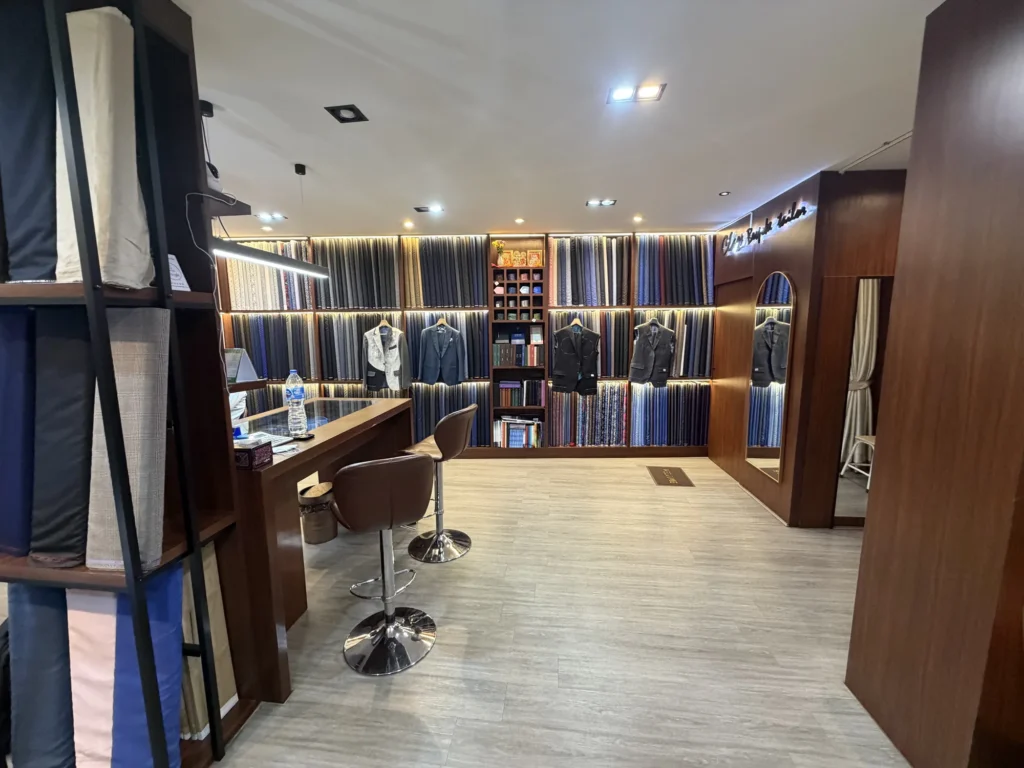
Class Bespoke describes its family tailoring heritage as dating to 1999 and operates Thonglor and Sukhumvit showrooms. Its services include bespoke suits, jackets, shirts, trousers and formalwear, with consultations about cloth, styling, construction, measurements and fittings. Hotel or on-site appointments may be arranged, subject to availability; such convenience should still be accompanied by clear specifications and realistic delivery expectations.
Customers can review both showroom details on the Class Bespoke branches page and discuss the intended garment, timeline and fitting plan directly. Class Bespoke does not claim that publication of this guide makes it independently certified as Bangkok's best or only trustworthy tailor.
To request an appointment, use the official Class Bespoke contact page.
Frequently Asked Questions
1. Are all tuk-tuk-recommended tailors in Bangkok scams?
No. Some drivers may make sincere suggestions, and a referred tailor may provide satisfactory work. The warning sign is an unplanned detour combined with a hidden incentive, false attraction-closure claim or sales pressure. Choose independently, ask whether a commission is paid, and leave if the visit is not voluntary.
2. Is a hotel-recommended tailor in Bangkok trustworthy?
Possibly, but the source of the recommendation matters. Ask whether it is independent or commercially compensated, what selection criteria the hotel uses, and whether alternatives are available. Then verify the tailor's identity, written cloth specification, construction, fitting schedule and remedies yourself. Pickup service and a premium showroom are conveniences, not quality certification.
3. How can I verify claims such as Italian wool or Australian Merino?
Ask for fibre percentages, the cloth bunch or reference, the named mill or supplier and the claimed country of fabric manufacture in writing. “Merino” identifies a type of wool, not automatically Australia or a particular mill. Verify any certification with its issuer. Definitive fibre disputes may require laboratory analysis; appearance and touch alone are not conclusive.
4. Is a 24-hour Bangkok suit always poor quality?
No. Speed alone does not establish quality or fraud. It does, however, compress the time available for pattern development, intermediate fittings, adjustments and inspection. Ask exactly which stages are included, what construction is used and how corrections will be handled after delivery or after you leave Bangkok.
5. Is fused jacket construction a scam?
No. Fused interlining is a recognised construction method and can suit certain budgets and requirements. The problem is misrepresentation—for example, charging for full canvas while supplying something different. Have the selected construction and its extent written on the order.
6. What should I do if a Bangkok tailoring order goes wrong?
Keep the quotation, order, receipt, messages, photographs and promised specifications. Write to the business with the exact problem and requested remedy. If you feel unsafe, leave rather than confront staff. Depending on the issue, contact your card provider, Tourist Police at 1155 or Thailand's OCPB through its complaint portal or hotline 1166.