Sep 3, 2026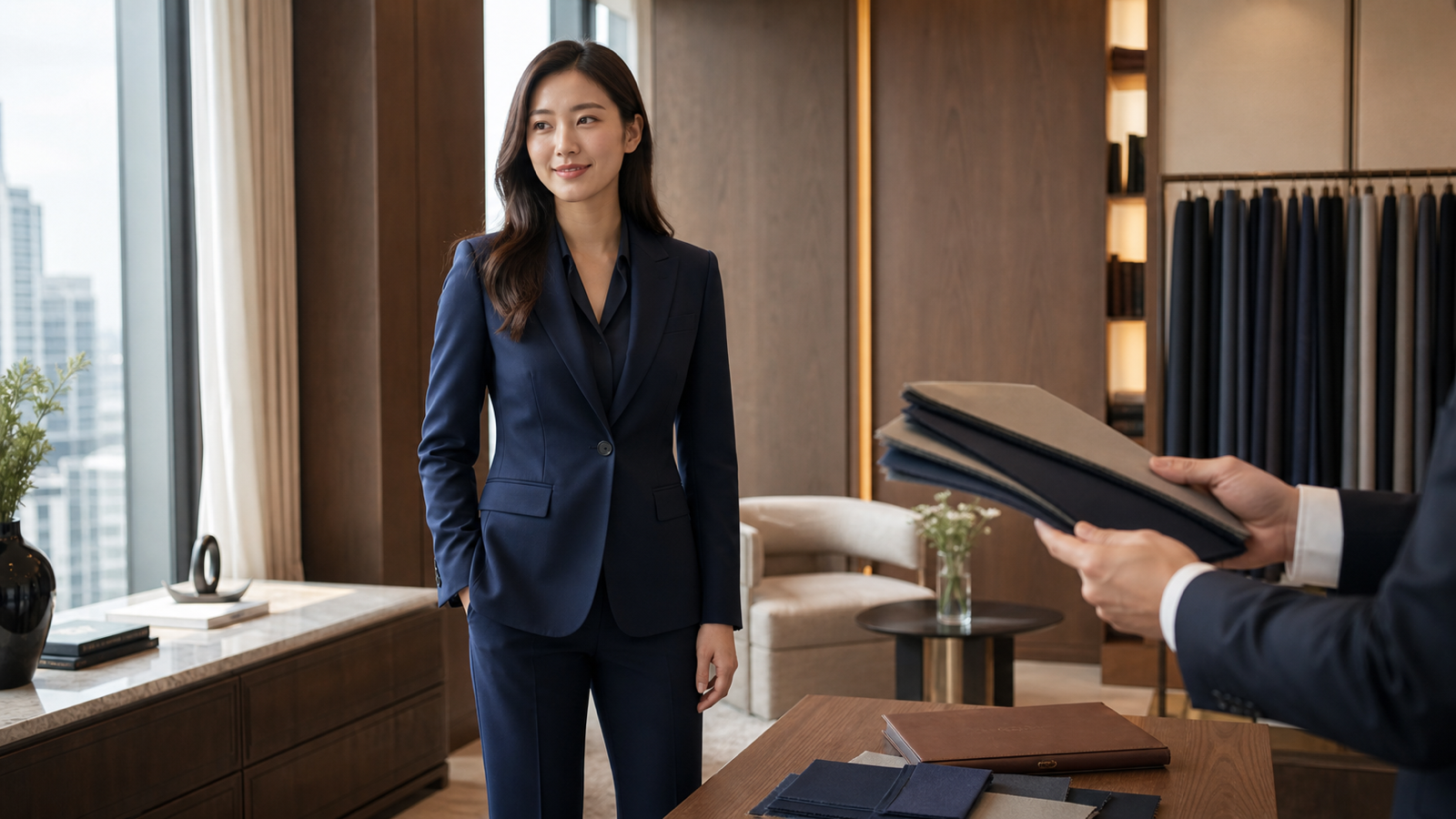
A women’s business suit should be planned around the work it needs to do. A formal boardroom suit, a travel-friendly jacket-and-trouser set and a softer everyday office wardrobe may use different cloth, structure and proportions even when all three are navy.
Before a Bangkok tailoring consultation, it helps to decide which garments must work together, how often they will be worn and what the local climate and office environment demand. Those answers give the fitting process a clearer direction than a reference photograph alone.
Start with the Role of the Suit
Explain where the suit will be worn and what it must communicate. Client meetings may call for a restrained line and dependable rotation. Creative or hospitality roles may allow a softer jacket, a wider trouser or a more expressive colour. A wedding, presentation or evening event can change the balance between professional restraint and occasion dressing.
Class Bespoke accepts confirmed womenswear commissions including suits, tailored trousers, skirts and dress shirts. The exact garment, cloth, construction and schedule are discussed before an order is confirmed.
Choose the Wardrobe Configuration Before the Details
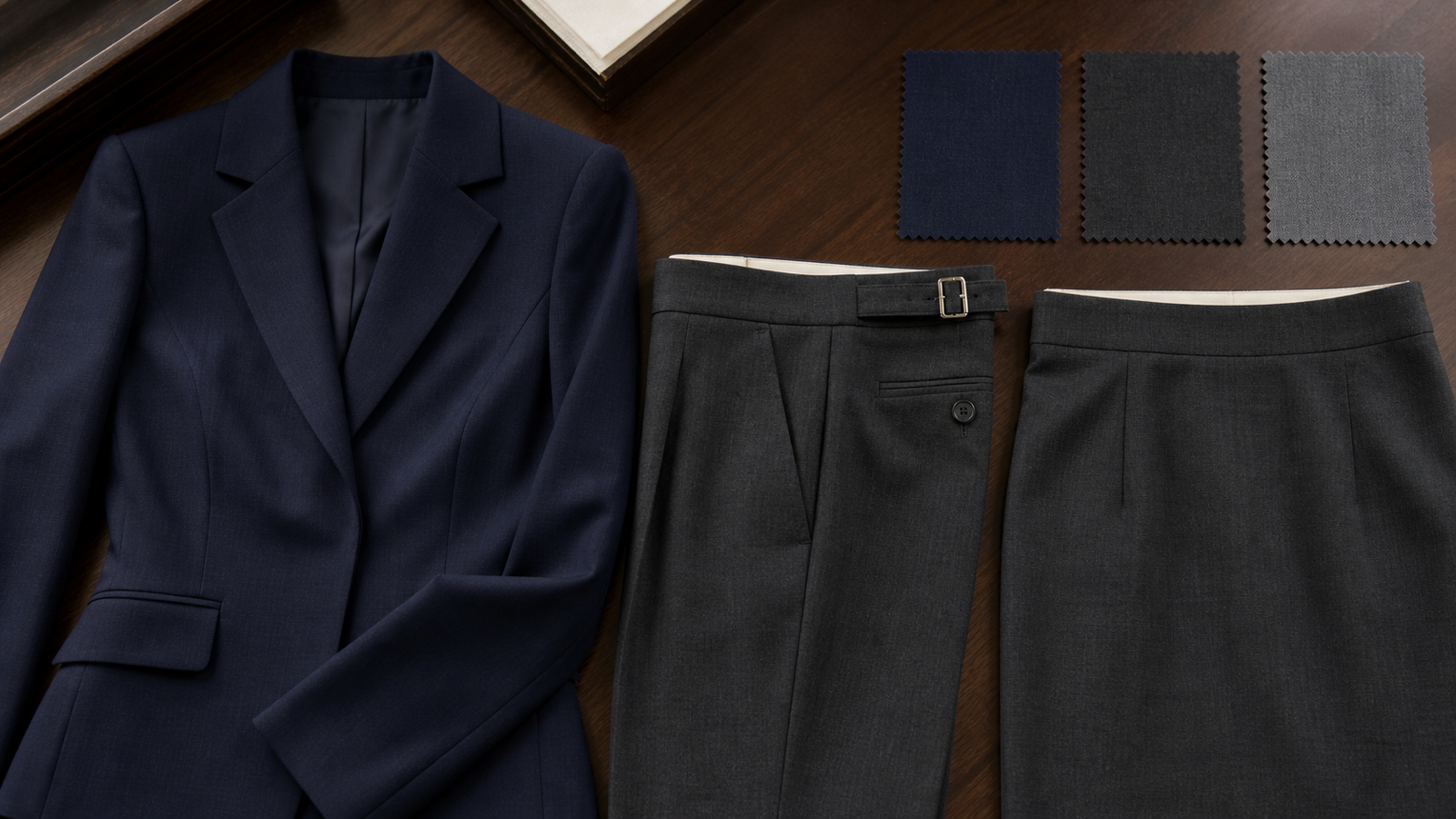
A two-piece suit can mean a jacket with trousers or a jacket with a skirt. A coordinated three-piece working wardrobe may combine one jacket with both, allowing the same cloth to cover different meetings and levels of formality. Separates can also be useful when a client wants more combinations, but the colours and textures should be compared together rather than selected in isolation.
- Jacket and trousers: a versatile foundation for business travel and frequent office wear.
- Jacket and skirt: useful when the intended workplace or personal style calls for that silhouette.
- Jacket, trousers and skirt: a coordinated rotation from one cloth, subject to the agreed commission.
- Separate jackets and trousers: more combinations, but greater care is needed to keep colour, texture and proportion coherent.
Plan Jacket Proportion Around the Wearer
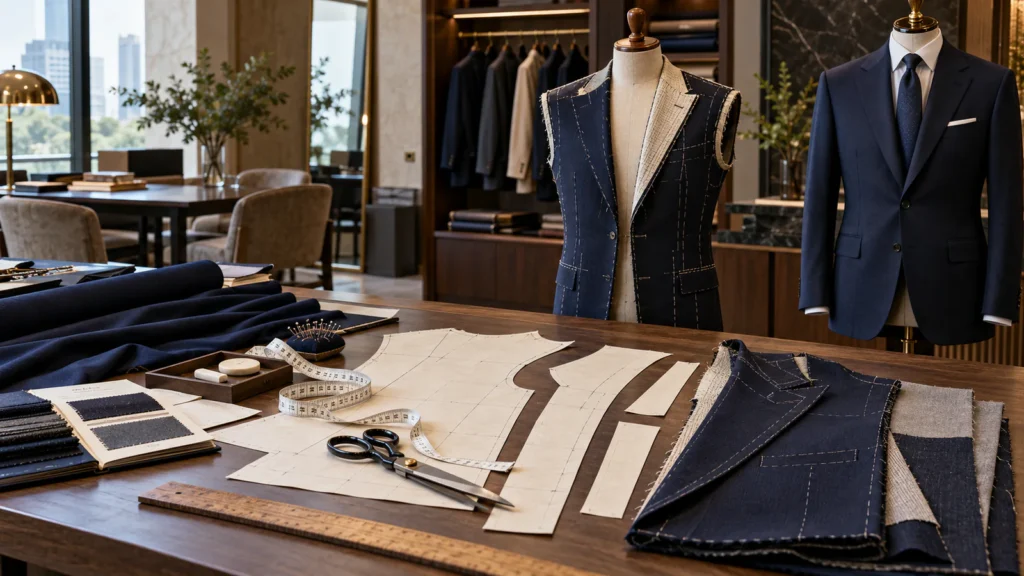
Jacket length, shoulder line, waist position, lapel shape and button stance work together. The goal is not to force every figure into one fashionable template, but to decide where the jacket should create structure, where it should follow the body and how it should move when sitting, walking and reaching.
Bring the shoes, blouse or shirt style and typical underlayers that will be worn with the suit. Their volume and proportions affect sleeve length, trouser line and how the jacket closes. The Bespoke Tailoring page explains the wider measurement and construction approach.
Compare Trouser and Skirt Decisions Separately
Trouser rise, waistband treatment, pleats, leg width and hem should be judged for movement as well as appearance. A line that looks clean while standing must also remain comfortable when seated. The Tailored Trousers page provides the commercial pathway, while the Journal guide to rise, pleats and side adjusters explains how those choices interact.
For a skirt, discuss intended length, movement, pocket needs, waistband position and how it should relate to the jacket. Availability and feasibility are confirmed for the individual commission rather than assumed from a generic style image.
Select Cloth for Bangkok and the Working Day
Bangkok heat matters, but many professional days move repeatedly between outdoor conditions, vehicles and strong air-conditioning. Cloth weight, weave, opacity, recovery and lining choice should therefore be considered together. A very light cloth is not automatically the most useful if it becomes transparent, loses its line or creases too readily for the intended role.
Compare actual swatches in the showroom and ask how they behave in a jacket, trouser or skirt. Current stock varies, so mill, fibre and country-of-origin claims should be confirmed from the selected cloth label. The Fabrics collection and the guide to full, half and unlined jackets are useful preparation.
Use Fittings to Review Balance and Movement
Individual measurements establish the starting point; fittings allow the garment’s balance, comfort and proportion to be reviewed on the wearer. The number of fittings varies with the garment, construction, whether the client is new or returning, the adjustments required and the available schedule.
At a fitting, wear the intended shoes and underlayers. Sit, walk, reach and check how the jacket behaves open and closed. Review sleeve and trouser length, pocket position, waist comfort and the relationship between the jacket and lower garment. Feasible adjustments depend on the garment and available allowances, so concerns should be raised during the process rather than saved for collection.
What to Bring to the Consultation
- The dates by which the garments are genuinely needed.
- The shoes, blouse or shirt type and usual underlayers.
- A short description of the workplace, travel and presentation requirements.
- Reference images that show specific proportions or details—not an expectation of an exact copy.
- A list of practical needs such as pockets, laptop travel, frequent sitting or wardrobe rotation.
- Any existing jacket, trouser or skirt that demonstrates a comfort preference or recurring fit problem.
The broader guide to what to bring to a Bangkok tailor consultation covers the preparation process in more detail.
Plan a Women’s Business Suit with Class Bespoke
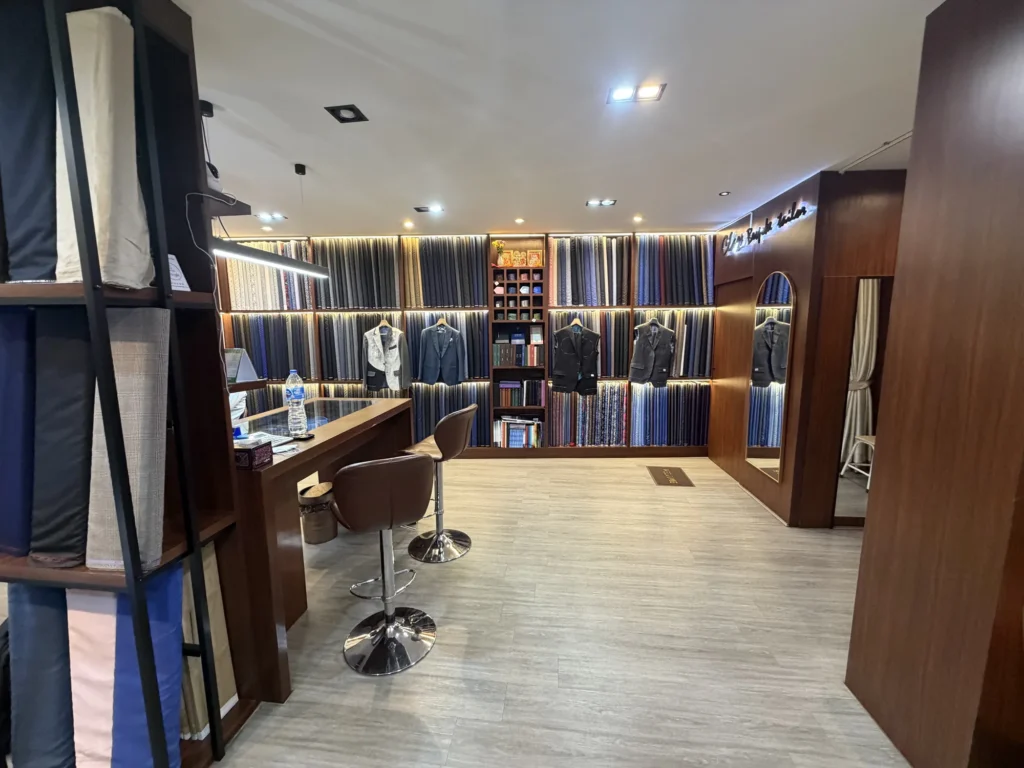
Class Bespoke offers consultations, individual measurements and fittings for confirmed women’s tailoring commissions at its Thonglor and Sukhumvit showrooms. Construction, cloth, lining, garment configuration, fitting requirements, quotation and timing are confirmed for the project rather than presented as one universal package.
Review the verified addresses and hours on the Our Branches page, then request a consultation with the garment list, intended use and available Bangkok dates. A useful first conversation should define the wardrobe and working conditions before it narrows the lapel, pocket or button details.