
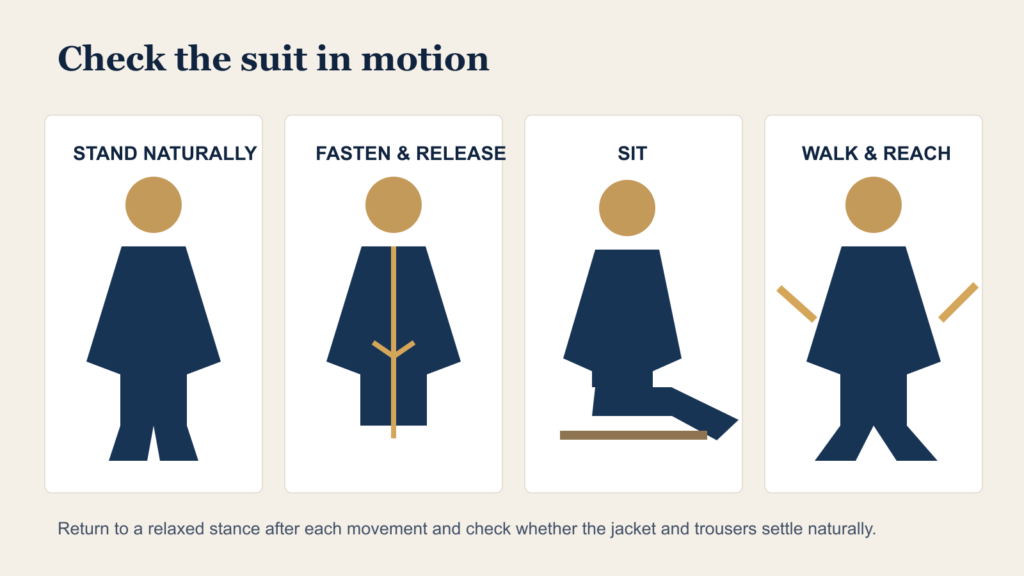
How a Suit Should Fit When Sitting, Walking and Reaching
A mirror shows only one posture. A useful fitting tests how the jacket and trousers respond to sitting, walking and ordinary reaching without expecting activewear mobility.

A mirror shows only one posture. A useful fitting tests how the jacket and trousers respond to sitting, walking and ordinary reaching without expecting activewear mobility.
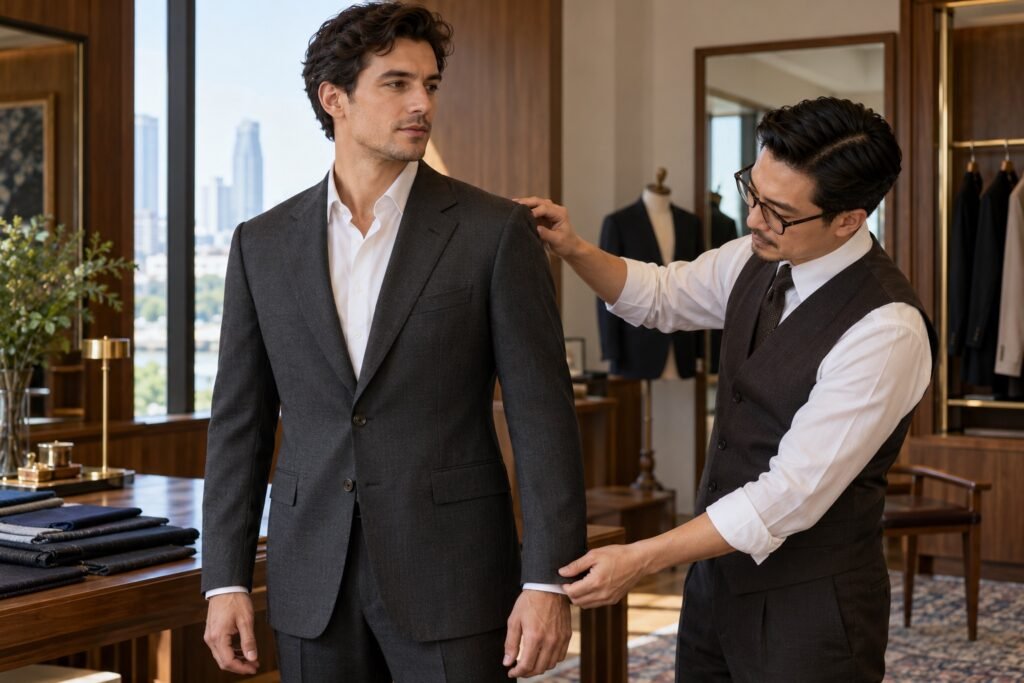
A close armhole can improve mobility when its shape, sleeve and pitch suit the wearer. Height alone cannot compensate for a tight upper sleeve, incorrect sleeve angle or poor jacket balance.
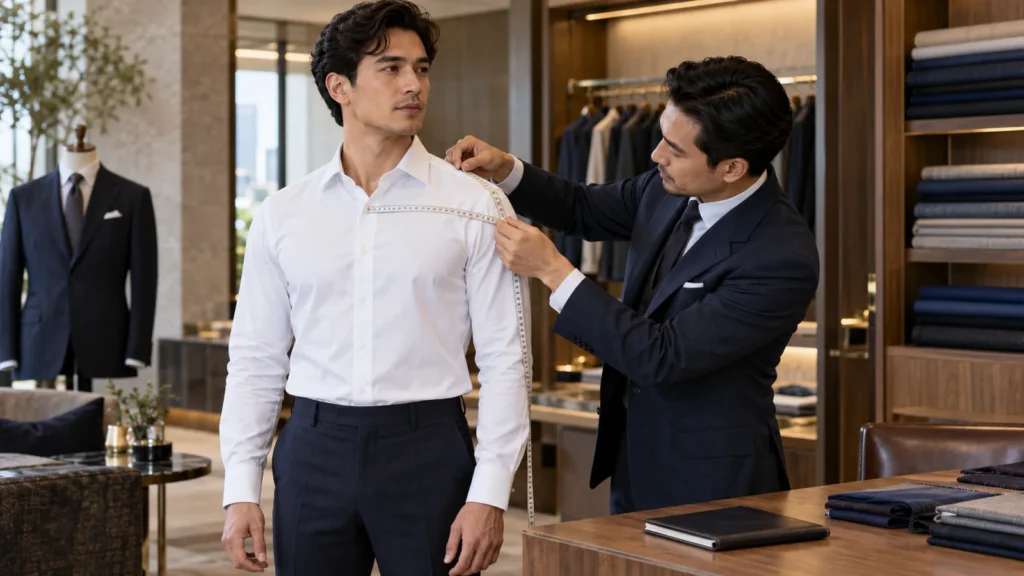
Repeat clients can build on an established pattern, but body, posture, cloth and style can change. A concise recheck protects the fit without discarding useful records.
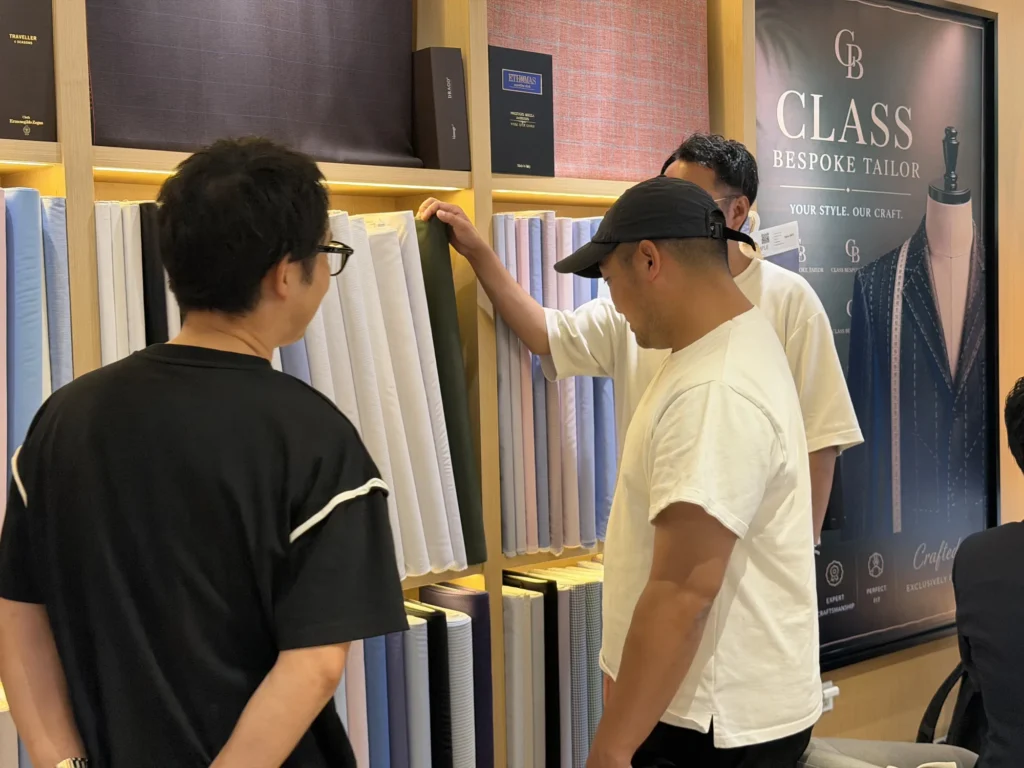
A practical comparison of cotton, linen and lyocell shirting, separating fibre behaviour from construction and finish to explain heat comfort, crease character, drape and hands-on swatch testing.
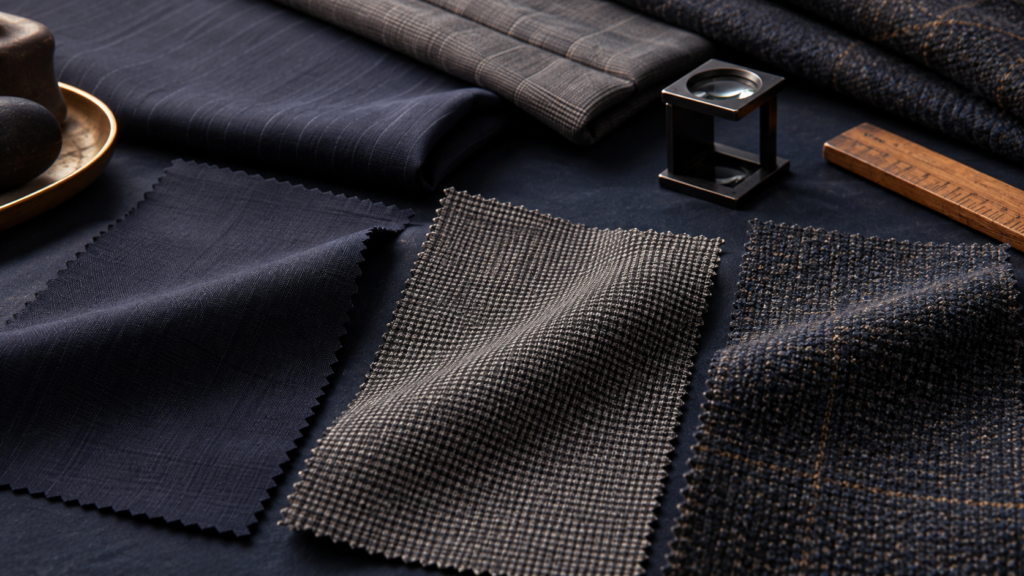
Fabric weight matters, but it does not measure airflow or complete-garment comfort. This guide explains how openness, drape, lining, fit and real wearing conditions can overturn a simple weight comparison.

Worsted and woollen describe spinning systems, not quality tiers. This guide explains how fibre preparation and finishing shape a suiting’s surface, drape, pattern clarity and intended use.
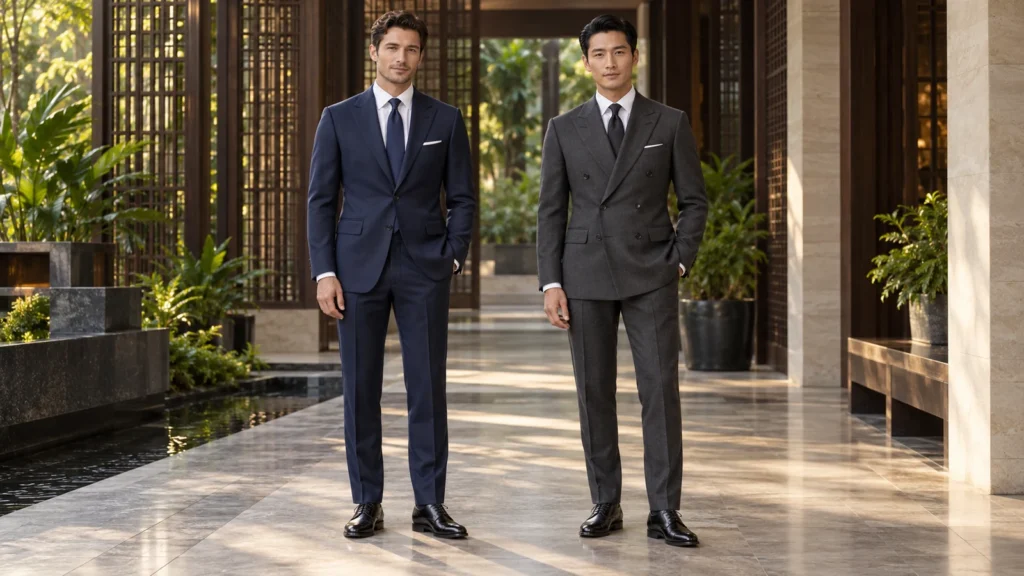
Compare single- and double-breasted jacket fronts as complete design systems, including buttons, overlap, lapels, fit, Bangkok comfort, business, weddings and travel.
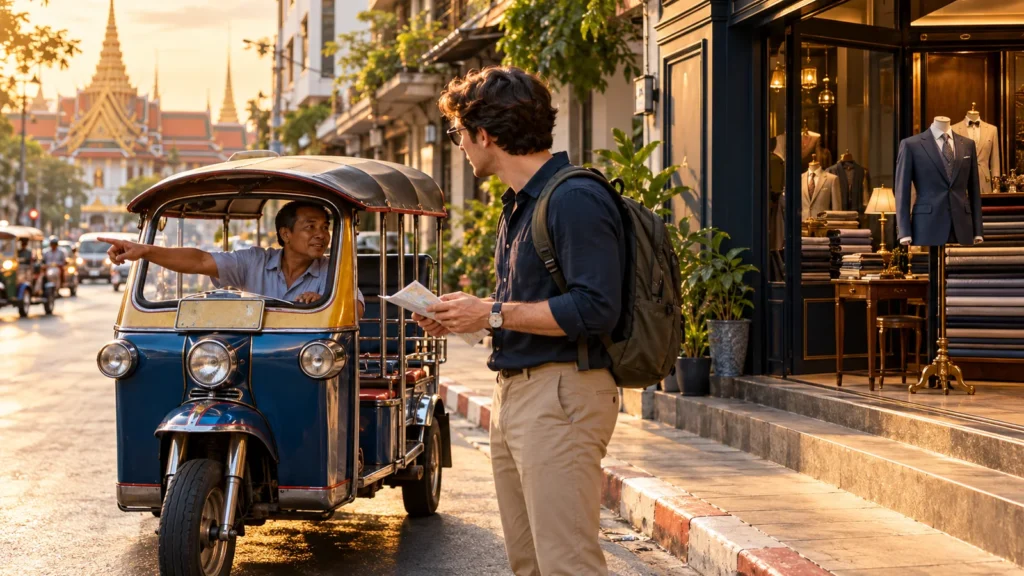
A practical, evidence-led guide to Bangkok tuk-tuk and tourist-attraction referral traps, hotel recommendations, fabric claims, construction, fittings and written order checks.
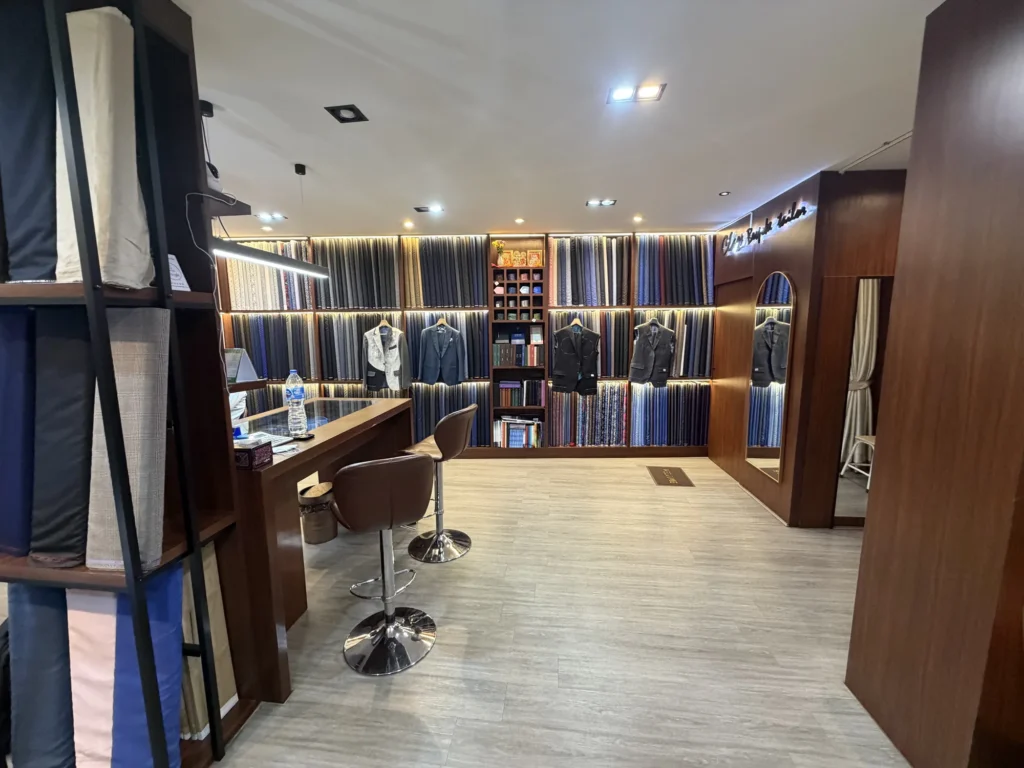
Bangkok has no shortage of shops offering a custom suit, but the words custom, made to measure and bespoke do
FIT & CRAFTSMANSHIP A tailored garment is not made by measurements alone. The result develops through a connected sequence of